Chicken Noodle Soup Comforting, Hearty & Ready in 45 Minutes
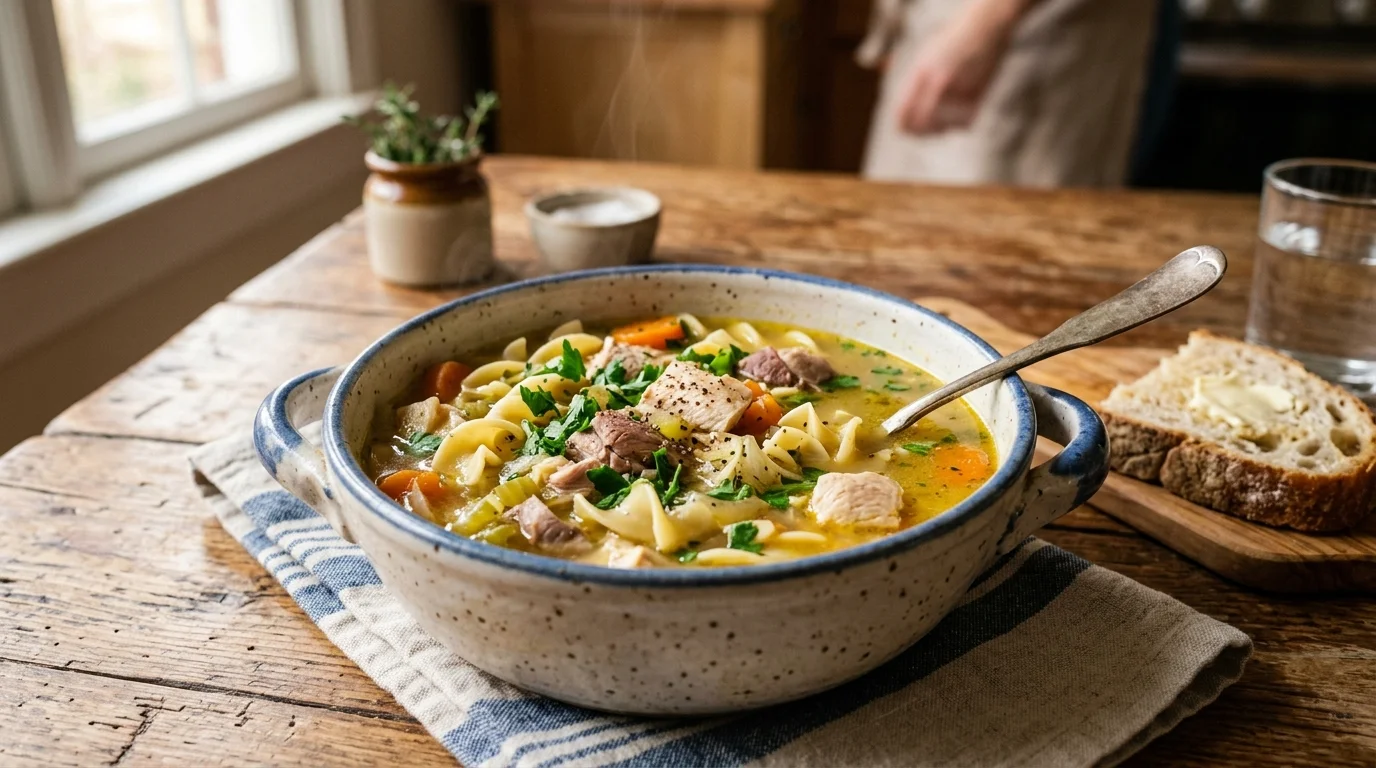
Chicken noodle soup is the one recipe that earns its place in every kitchen, every season, without exception. Tender chicken, soft noodles, and a deeply savory broth built from simple vegetables — it’s the kind of bowl that works equally well as a warming weeknight dinner, a quick lunch, or a restorative meal when you’re feeling under the weather. No complicated techniques, no hard-to-find ingredients — just pure chicken noodle soup goodness in every spoonful.
Ingredients List
For chicken noodle soup (serves 4–6):
- 1 lb boneless, skinless chicken breasts or thighs (thighs stay more tender and juicy; breasts for a leaner result)
- 8 oz egg noodles (wide or medium; rotini, pappardelle, or gluten-free pasta as substitutes)
- 2 tbsp olive oil (or unsalted butter for a richer base)
- 1 medium yellow onion, diced
- 3 medium carrots, peeled and sliced into rounds
- 3 celery stalks, sliced
- 4 cloves garlic, minced
- 8 cups chicken broth (low-sodium preferred; homemade stock for the deepest flavor)
- 1 tsp dried thyme
- 1 tsp dried parsley (or 2 tbsp fresh flat-leaf parsley, added at the end)
- ½ tsp dried oregano
- 1 bay leaf
- 1 tsp salt, plus more to taste
- ½ tsp black pepper
- 1 tbsp fresh lemon juice (optional — brightens the entire bowl)
- ¼ tsp turmeric (optional — adds color and mild anti-inflammatory benefit)
- Parmesan rind (optional — simmered in the broth for extra depth and umami)
Step-by-Step Instructions
Step 1: Gather and Prep Your Ingredients
Dice the onion, slice the carrots and celery, and mince the garlic before anything goes near the stove. Chicken noodle soup builds in layers, and having every vegetable prepped means each one hits the pot at the right time without the broth sitting over heat longer than it should.
Check your chicken and trim any excess fat. If using chicken breasts, slice them in half horizontally so they cook through evenly in the broth. Thighs can go in whole — they’re more forgiving and stay moist even if they cook a few minutes longer than planned.
Pro Tip: Use cold chicken straight from the fridge — it poaches more gently in the broth and stays noticeably more tender than room-temperature chicken cooked at the same heat.
Step 2: Build the Aromatic Base
Heat olive oil in a large Dutch oven or heavy-bottomed pot over medium heat. Add the diced onion, sliced carrots, and sliced celery — the classic mirepoix base that forms the flavor foundation of every good chicken noodle soup. Cook for 5–6 minutes, stirring occasionally, until the onion is translucent and the vegetables have softened slightly.
Add the garlic and stir for 30 seconds until fragrant. Follow immediately with thyme, oregano, parsley, and turmeric if using — stirring the dried herbs into the hot oil for 30 seconds before the broth goes in blooms their flavor and gives the soup a noticeably deeper, more complex base.
Pro Tip: Don’t rush the vegetable sauté — properly softened aromatics build a sweeter, more rounded broth than vegetables added raw to liquid.
Step 3: Add Broth and Poach the Chicken
Pour in the chicken broth and add the bay leaf, salt, pepper, and Parmesan rind if using. Stir well and bring the pot to a gentle boil over medium-high heat. Once boiling, add the chicken pieces, reduce the heat to medium-low, and maintain a steady gentle simmer.
Poach the chicken for 15–18 minutes, until it’s cooked through and reaches an internal temperature of 165°F. Avoid a rolling boil — aggressive heat toughens chicken protein quickly and makes the broth cloudy. A gentle simmer keeps the meat tender and the broth clear and clean-tasting.
Pro Tip: Skim any foam that rises to the surface in the first 5 minutes of simmering — it keeps the broth clear and removes any bitter off-flavors from the chicken.
📖 Read More: Chinese Noodles
Step 4: Shred the Chicken and Return It to the Pot
Remove the cooked chicken from the pot using tongs or a slotted spoon and transfer to a cutting board. Remove and discard the bay leaf and Parmesan rind at this stage. Let the chicken rest for 2–3 minutes — cutting into it immediately releases the juices and leaves you with drier, less flavorful meat.
Shred the chicken using two forks, pulling it apart along the grain into bite-sized pieces. Return all the shredded chicken back to the pot along with any resting juices on the board. Those juices are flavor — every drop goes back into the broth.
Pro Tip: Shredding chicken is fastest using a stand mixer with the paddle attachment on low speed for 20 seconds — perfect, even shreds with zero effort.
Step 5: Cook the Noodles Directly in the Broth
Bring the soup back to a gentle boil over medium heat. Add the egg noodles directly to the pot and cook according to package directions — typically 6–8 minutes for wide egg noodles — stirring occasionally to prevent sticking.
Cooking noodles in the broth rather than separately means they absorb the savory chicken flavor as they cook, which deepens every bite. That said, if you’re planning to store leftovers, cook noodles separately and add them to individual bowls at serving time — noodles left in soup overnight absorb the broth and turn mushy by the next day.
Pro Tip: Pull noodles 1 minute before the package directions suggest — they continue cooking in the hot broth after the heat is off and will be perfectly tender by the time the soup reaches the table.
Step 6: Taste, Adjust, and Serve
Remove the pot from heat and stir in fresh lemon juice if using. Taste the broth carefully and adjust — more salt if it tastes flat, a pinch of pepper if it needs lift, or another squeeze of lemon if the richness needs cutting. A well-seasoned broth is the difference between a bowl you finish and one you leave half-eaten.
Ladle the chicken noodle soup into warmed bowls and garnish with freshly chopped parsley and a crack of black pepper. Serve with crusty bread, soft dinner rolls, or on its own — the soup is substantial enough to stand alone as a complete meal. Eat while hot; the noodles absorb broth quickly as it cools.
Pro Tip: Warm your bowls by filling them with hot tap water for 60 seconds before ladling — hot soup in a warm bowl stays at the right temperature far longer.
Cook Time
Total Time: 45 minutes | Prep: 10 minutes | Simmer: 25 minutes | Noodle Cook: 8 minutes | Rest: 2 minutes One pot required.
Servings
Serves 4–6 | Approximately 14–16 oz per serving
Nutritional Information (approx. per serving)
| Nutrient | Amount |
|---|---|
| Calories | 340 kcal |
| Fat | 9g |
| Saturated Fat | 2g |
| Carbohydrates | 32g |
| Protein | 30g |
| Sugar | 4g |
| Fiber | 3g |
| Sodium | 720mg |
| Vitamin C | 8mg |
| Potassium | 480mg |
| Calcium | 55mg |
Values are approximate and will vary based on ingredients used.
Storage Instructions
Chicken noodle soup is best eaten fresh, but it stores well when handled correctly — with one important caveat. If noodles are already in the soup, they’ll absorb most of the broth overnight and turn soft and bloated by the next day. Store soup and noodles separately whenever possible: soup base in one airtight container, cooked noodles in another. Both keep refrigerated for up to 4 days.
Reheat the soup base in a pot over medium heat until simmering, then add noodles directly to the bowl before ladling. Freezing works well for the broth and chicken — freeze without noodles in portioned containers for up to 3 months. For the freezer pack method, portion raw chicken and chopped vegetables into zip-lock bags with measured spices, freeze flat, and build the soup fresh from frozen components on the night you need it.
📖 Read More: Indomie Noodles
Suggestions
- Creamy Version: Stir in ½ cup of heavy cream or full-fat coconut cream during the final 2 minutes of cooking for a rich, velvety broth. The cream mellows the acidity of the vegetables and gives the soup a restaurant-quality finish. Coconut cream keeps it dairy-free while adding a subtle sweetness that works surprisingly well with the chicken and herbs.
- High-Protein Version: Use chicken thighs exclusively and double the chicken quantity to 2 lbs. Add a can of drained white cannellini beans during the last 10 minutes of simmering — they blend into the broth slightly and increase both protein and fiber per serving without altering the classic flavor profile of the soup.
- Dairy-Free Option: Every ingredient in the base recipe is naturally dairy-free as written — simply skip the optional Parmesan rind. For the creamy version, full-fat coconut cream is the most reliable substitute. It adds body and richness without any dairy, and the coconut flavor is subtle enough that it doesn’t compete with the chicken and vegetable base.
- Kid-Friendly Version: Cut carrots and celery into small, uniform pieces so they cook soft enough for younger eaters. Use alphabet pasta or small star-shaped pasta instead of wide egg noodles — familiar shapes make the bowl more appealing to children. Keep seasoning mild, skip the lemon juice, and serve with soft buttered bread alongside for a complete, crowd-pleasing kid’s meal.
- Weight-Loss Version: Use chicken breasts only, reduce noodles to 4 oz, and load the pot with extra carrots, celery, and a handful of baby spinach stirred in at the very end. Spinach wilts in under 60 seconds and adds vitamin C, iron, and fiber for almost no additional calories. Each serving drops to approximately 260 calories with these adjustments.
- Lemon Herb Twist: Double the lemon juice to 2 tablespoons, add the zest of one lemon to the broth, and finish the bowl with a generous amount of fresh dill instead of parsley. The result is a brighter, more aromatic soup with a Mediterranean character that feels lighter and more spring-like than the classic version — ideal from March through June.
- Spicy Ginger Version: Add a 1-inch piece of fresh ginger, grated, to the pot alongside the garlic, and stir in 1–2 teaspoons of chili flakes when the broth goes in. Finish each bowl with a drizzle of chili oil and sliced green onions. The ginger adds warmth and genuine anti-inflammatory benefit — particularly useful as a post-workout recovery meal or during cold and flu season.
Seasonal Relevance
Chicken noodle soup belongs to every season, but it earns its place most naturally from October through March when cold weather and illness season overlap. Fresh herbs — particularly flat-leaf parsley, thyme, and dill — are at their most vibrant from May through September, and using them instead of dried versions during those months makes a noticeable difference in the brightness of the finished broth. Summer versions benefit from lighter, higher-quality broths and the addition of fresh corn or zucchini stirred in during the final minutes. During peak winter months, January and February especially, a deeply simmered broth made from a whole chicken carcass transforms the soup entirely — richer, more gelatinous, and genuinely restorative in a way that store-bought broth cannot replicate.
Conclusion
Few recipes are as dependable, nourishing, or genuinely satisfying as a well-made chicken noodle soup. Built on simple ingredients and straightforward technique, it rewards patience at the sauté stage and careful seasoning at the end. Try the lemon herb variation for a brighter spring version, or lean into the spicy ginger twist when you want something with more warmth and complexity. Either way, once this recipe is in your repertoire, it becomes the bowl you reach for first — every single time. Get the pot on and start building.
FAQs
Q: Can I use a rotisserie chicken instead of raw chicken?
Rotisserie chicken is one of the best shortcuts for this recipe. Skip the poaching step entirely — pull the meat off the bones, shred it, and add it directly to the broth after the vegetables have sautéed and the broth has come to a simmer. It saves 20 minutes and produces a deeply flavorful result, particularly if you simmer the carcass in the broth for 10 minutes before discarding it.
Q: Why does my chicken noodle soup taste flat and watery?
Flat soup almost always traces back to under-seasoned broth or aromatics that weren’t properly sautéed before the liquid was added. Salt the broth in layers — once when the broth goes in, once after the chicken is shredded, and a final adjustment before serving. Additionally, ensure the onion, carrot, and celery are softened and slightly golden before any liquid enters the pot.
Q: What type of noodles work best in chicken noodle soup?
Wide egg noodles are the classic choice — they have enough body to hold up in hot broth without turning mushy quickly and their egg-enriched texture complements the richness of the chicken. Rotini and penne also hold their shape well for leftovers. Avoid very thin pasta like angel hair or vermicelli — they overcook within minutes and disintegrate into the broth by the next day.
Q: Can I make chicken noodle soup in a slow cooker?
Slow cooker chicken noodle soup works well with a small adjustment. Add all ingredients except the noodles to the slow cooker and cook on low for 6–7 hours or high for 3–4 hours. Shred the chicken directly in the pot, then switch to high, add the noodles, and cook for a final 15–20 minutes until just tender. Add noodles only at the end — they turn to mush if cooked for the full duration.
Q: How do I make chicken noodle soup thicker without cream?
Remove 1 cup of the cooked vegetables and broth once the soup is finished, blend until smooth, and stir the purée back into the pot. It thickens the broth naturally using the starch from the cooked carrots and celery without adding any cream or flour. Alternatively, add ¼ cup of small pasta or orzo early in the cook — it releases starch as it cooks and gradually thickens the broth from the inside out.