Hobo Casserole Ground Beef Hearty, Comforting & Done in 1 Hour
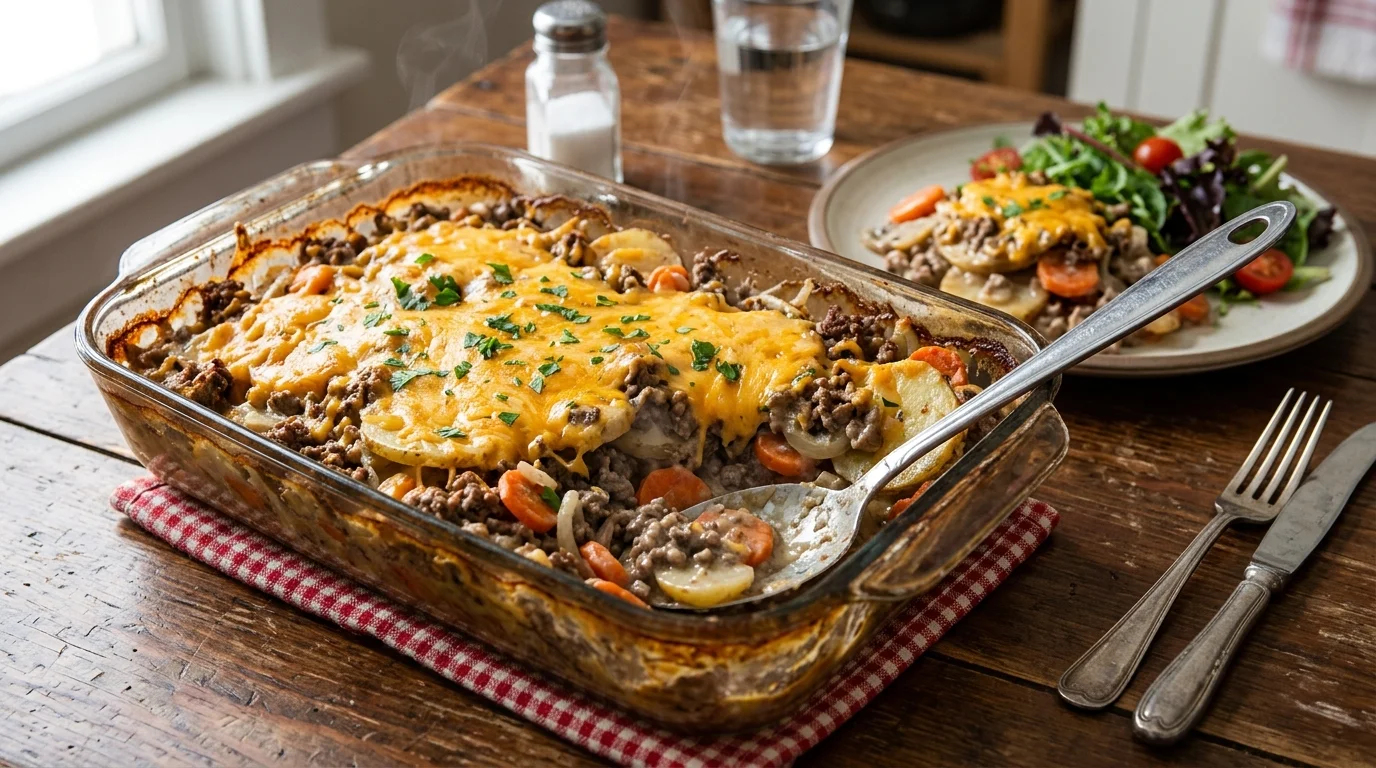
Hobo casserole ground beef is the kind of meal that proves simple ingredients, layered correctly, produce something far greater than the sum of their parts. Seasoned ground beef, tender sliced potatoes, and soft vegetables baked together in a rich, savory sauce — it’s a complete dinner in one dish. Pull it together for a busy weeknight family meal, a no-fuss Sunday dinner, or an easy meal prep that reheats beautifully all week. No complicated steps — just pure hobo casserole ground beef goodness straight from your oven.
Ingredients List
For hobo casserole ground beef (serves 4–6):
- 1 lb ground beef (80/20 fat ratio for best flavor; 93/7 for a leaner version)
- 4 medium russet potatoes, peeled and sliced ¼-inch thick (Yukon Gold for a creamier texture)
- 1 medium yellow onion, thinly sliced
- 2 medium carrots, peeled and sliced into thin rounds
- 2 celery stalks, sliced (optional — adds texture and savory depth)
- 1 can (10.5 oz) cream of mushroom soup (cream of chicken as a substitute)
- ½ cup beef broth (or water for a lighter sauce)
- 1 tbsp Worcestershire sauce
- 1 tsp garlic powder
- 1 tsp onion powder
- 1 tsp smoked paprika
- ½ tsp dried thyme
- 1 tsp salt, plus more to taste
- ½ tsp black pepper
- 1 cup shredded cheddar cheese (sharp cheddar recommended; Monterey Jack for a milder melt)
- 2 tbsp olive oil (or butter for richer flavor)
- Fresh parsley, chopped, for garnish (optional)
- 1 can (15 oz) green beans, drained (optional — adds color and extra vegetable content)
- ½ tsp red pepper flakes (optional — for a gentle kick)
Step-by-Step Instructions
Step 1: Gather and Prep Your Ingredients
Peel and slice the potatoes first — they take the longest to cook and benefit from sitting in cold water while you prep everything else. Submerging potato slices in cold water prevents browning and removes excess surface starch, which helps them cook more evenly and absorb the sauce better once everything is layered.
Preheat your oven to 375°F (190°C) and grease a 9×13-inch baking dish with olive oil or non-stick spray. Slice the onion, carrots, and celery while the oven heats. Drain the potatoes and pat them completely dry with a clean kitchen towel before layering — excess water on the potatoes dilutes the sauce and prevents proper browning.
Pro Tip: Slice potatoes as uniformly as possible — uneven thickness means some pieces turn mushy while others stay underdone at the same cook time.
Step 2: Brown the Ground Beef
Heat olive oil in a large skillet over medium-high heat. Add the ground beef in one flat, even layer and leave it undisturbed for 2 minutes — that contact time is what builds the deep brown crust where most of the flavor develops. Break the meat apart after 2 minutes and continue cooking until no pink remains, about 6–8 minutes total.
Drain most of the rendered fat, leaving about one tablespoon behind. Add garlic powder, onion powder, smoked paprika, thyme, salt, and pepper directly to the browned beef and stir for 60 seconds to toast the spices into the meat. Add Worcestershire sauce and stir once more. Remove from heat.
Pro Tip: Season the beef in the pan, not just at the end — spices toasted into hot fat develop far more flavor than the same spices stirred in cold.
Step 3: Mix the Sauce and Build the First Layer
Whisk together the cream of mushroom soup and beef broth in a bowl until smooth and evenly combined. This sauce is what binds the whole casserole — it coats the potatoes as they cook, keeps the beef moist, and creates the rich, savory gravy that pulls every layer together into a cohesive dish rather than separate ingredients sitting in the same pan.
Spread half the potato slices in an even layer across the bottom of the prepared baking dish. Scatter the sliced onion, carrots, and celery over the potatoes. Pour roughly half the sauce mixture evenly over this first layer — making sure the vegetables are coated rather than just the edges of the dish.
Pro Tip: Overlap potato slices slightly like roof tiles — complete gaps between slices allow the sauce to sink straight to the bottom and leave the potatoes dry on top.
📖 Read More: Indomie Noodles
Step 4: Add the Beef Layer and Remaining Potatoes
Spoon the seasoned ground beef evenly over the first vegetable layer. Distribute it from edge to edge — a concentrated pile of beef in the center means the outer sections of the casserole are potato-heavy and underflavored while the middle gets all the seasoning. Even distribution matters more in a casserole than in almost any other dish.
Add the green beans over the beef layer if using, then arrange the remaining potato slices on top in an overlapping layer. Pour the remaining sauce mixture evenly over the entire surface, making sure it reaches the edges and soaks down through the layers. The sauce will thin slightly as it bakes and migrate through the casserole naturally.
Pro Tip: Give the baking dish a gentle shake after adding the final sauce layer — it helps the liquid settle into the gaps between potato slices rather than sitting on the surface.
Step 5: Cover and Bake Until Potatoes Are Tender
Cover the baking dish tightly with aluminum foil — this is the most important step in the entire recipe. Covered baking traps steam inside the dish, which is what cooks the potatoes through evenly and prevents the top layer from drying out or browning before the interior is done.
Bake covered at 375°F for 45 minutes. After 45 minutes, test the potatoes by inserting a sharp knife or skewer through the foil into the thickest part of the casserole — it should slide through with no resistance. If you feel any firmness, recover and bake for another 10 minutes before testing again.
Pro Tip: Don’t lift the foil to peek during the first 40 minutes — every time you open it, steam escapes and the potatoes take longer to cook through.
Step 6: Add Cheese, Finish Uncovered, and Serve
Remove the foil once the potatoes are fully tender. Scatter shredded cheddar cheese generously and evenly across the entire surface of the casserole. Return the dish to the oven, uncovered, for 10–15 minutes until the cheese is fully melted, bubbling, and beginning to turn golden at the edges.
Remove from the oven and allow the hobo casserole ground beef to rest for 5 minutes before serving — resting allows the sauce to thicken slightly and the layers to set, making it far easier to portion cleanly. Garnish with freshly chopped parsley and serve directly from the baking dish. It needs nothing alongside it to be a complete meal.
Pro Tip: For extra cheese browning, switch to the broiler for the final 90 seconds — watch it closely, as shredded cheese goes from golden to scorched very fast under direct heat.
Cook Time
Total Time: 1 hour 15 minutes | Prep: 15 minutes | Bake Covered: 45 minutes | Bake Uncovered: 15 minutes One baking dish required.
Servings
Serves 4–6 | Approximately 14–16 oz per serving
Nutritional Information (approx. per serving)
| Nutrient | Amount |
|---|---|
| Calories | 480 kcal |
| Fat | 22g |
| Saturated Fat | 9g |
| Carbohydrates | 42g |
| Protein | 28g |
| Sugar | 5g |
| Fiber | 4g |
| Sodium | 780mg |
| Vitamin C | 14mg |
| Potassium | 820mg |
| Calcium | 180mg |
Values are approximate and will vary based on ingredients used.
Storage Instructions
Hobo casserole ground beef stores exceptionally well — arguably better than the day it’s made, once the layers have had time to fully absorb the sauce overnight. Allow the casserole to cool completely before covering and refrigerating. Store in the baking dish covered tightly with foil, or transfer to airtight containers. Refrigerated leftovers keep for up to 4 days with no quality loss.
Reheat individual portions in the microwave for 2–3 minutes, or return the entire dish to a 350°F oven covered with foil for 20 minutes until heated through. Freezing works well — portion cooled casserole into individual servings, wrap tightly, and freeze for up to 3 months. For the freezer pack method, layer raw sliced potatoes, uncooked beef, vegetables, and sauce mixture into a freezer-safe dish, seal, and freeze unbaked. Thaw overnight in the refrigerator and bake fresh at 375°F as directed.
Suggestions
- Cheesy Loaded Version: Double the cheese to 2 cups and add a layer of cream cheese dotted across the beef layer before the final potatoes go on. The cream cheese melts into the sauce and creates a richer, more indulgent result — closer to a loaded potato casserole than a simple weeknight bake. Top with crispy bacon bits after the cheese melts for extra texture.
- High-Protein Version: Increase ground beef to 1½ lbs and add a drained can of kidney beans to the beef layer. Together they push protein per serving above 38g without significantly changing the overall flavor profile. Using 93/7 lean ground beef keeps the fat content in check while the beans contribute fiber and additional plant-based protein alongside the meat.
- Dairy-Free Option: Replace cream of mushroom soup with a dairy-free condensed mushroom soup — several brands produce reliable versions. Swap shredded cheddar for a dairy-free cheese blend that melts under oven heat. Every other core ingredient in this recipe is naturally dairy-free, so this variation requires only two straightforward substitutions to be fully suitable for dairy-free diets.
- Kid-Friendly Version: Use mild cream of chicken soup instead of mushroom, reduce smoked paprika to ½ teaspoon, and skip the red pepper flakes entirely. Cut carrots into smaller pieces so they cook completely soft — firm vegetables are the most common complaint from younger eaters in a casserole. A mild cheddar on top instead of sharp keeps the flavor approachable for picky palates.
- Weight-Loss Version: Use 93/7 extra-lean ground beef, reduce cheese to ½ cup of low-fat shredded cheddar, and replace cream of mushroom soup with a homemade version — simply whisk 1 cup of low-sodium chicken broth with 2 tablespoons of cornstarch and ½ cup of diced mushrooms cooked soft. Each serving drops to approximately 360 calories while retaining the full satisfying volume of the original.
- Southwest Twist: Season the beef with taco seasoning instead of the standard spice blend, and swap cream of mushroom for a can of diced tomatoes with green chiles. Top the finished casserole with shredded Monterey Jack, and serve with sour cream, fresh salsa, and sliced jalapeños alongside. The result is a Tex-Mex casserole that uses the same technique and structure but delivers an entirely different flavor experience.
- Italian-Style Variation: Replace the spice blend with Italian seasoning, swap cream of mushroom soup for a jar of marinara sauce thinned with ¼ cup of beef broth, and top with a blend of shredded mozzarella and Parmesan. Add a layer of thinly sliced zucchini between the beef and final potato layer for extra vegetable content. Finish with fresh basil scattered over the melted cheese before serving.
Seasonal Relevance
Hobo casserole ground beef is built for the colder months — October through February especially — when a hot, filling oven dish is exactly what the evening calls for. Russet potatoes are harvested from August through November, making early autumn the ideal time to use them at their freshest and starchiest. During summer months, June through August, swap russets for new potatoes or thin-skinned Yukon Golds, which cook faster and suit the lighter seasonal appetite better. Carrots are available year-round, but they’re at their sweetest from September through January when cold weather converts their starches to sugar. Out of season, frozen diced vegetables perform reliably in this casserole — the long covered bake time means textural differences between fresh and frozen are minimal in the finished dish.
Conclusion
Few dishes are as honest, filling, or reliably good as hobo casserole ground beef — and once you understand how the layers work together, the recipe becomes endlessly adaptable without ever losing what makes it satisfying. The covered bake does most of the work, the seasoned beef carries the flavor, and the cheese finish pulls it all together into something that feels far more considered than a one-dish oven bake has any right to be. Try the Southwest twist when you want something bolder, or the Italian variation when you’re in the mood for something lighter. Either way, this is a recipe worth returning to. Preheat the oven — dinner is already halfway done.
FAQs
Q: Can I use sweet potatoes instead of russet potatoes in hobo casserole?
Sweet potatoes work well — they cook at roughly the same rate as russets when sliced to ¼-inch thickness and add natural sweetness that contrasts nicely with the savory beef. The texture is slightly softer and less starchy, which means the casserole layers hold together a little less firmly when portioned. Yukon Gold potatoes are the closest substitute if you want the same structure as the original.
Q: Why are my potatoes still hard after the recommended bake time?
Undercooked potatoes in a covered casserole almost always come from slices that are too thick or foil that wasn’t sealed tightly enough. Slice potatoes to a consistent ¼-inch — no thicker. Make sure the foil is crimped firmly around the entire edge of the dish so no steam escapes during baking. If potatoes are still firm after 45 minutes, recover and continue baking in 10-minute increments until a knife slides through cleanly.
Q: Can I make hobo casserole ground beef ahead of time?
Assembling the casserole the night before and refrigerating it unbaked is one of the most practical approaches for a busy week. Cover tightly with foil and refrigerate for up to 24 hours. Add 10–15 minutes to the covered bake time when cooking from cold — a refrigerator-cold dish takes longer to heat through than one assembled at room temperature and baked immediately.
Q: What can I use instead of cream of mushroom soup?
Several alternatives work reliably. Cream of chicken soup is the most neutral swap — same texture, slightly lighter flavor. A homemade condensed substitute using broth, cornstarch, and sautéed mushrooms gives you full control over sodium content. For a dairy-free option, use a plant-based condensed soup or whisk together coconut cream, broth, and cornstarch with sautéed mushrooms — it thickens as it bakes and produces a comparable result.
Q: How do I stop the casserole from being too watery?
Excess water usually comes from wet potato slices or vegetables that release a lot of liquid during baking. Always pat potato slices completely dry before layering. If using fresh vegetables with high water content — zucchini, tomatoes — roast or sauté them briefly first to drive off moisture before they go into the dish. Additionally, make sure the sauce ratio is correct — too much broth relative to the condensed soup produces a thin, watery result.