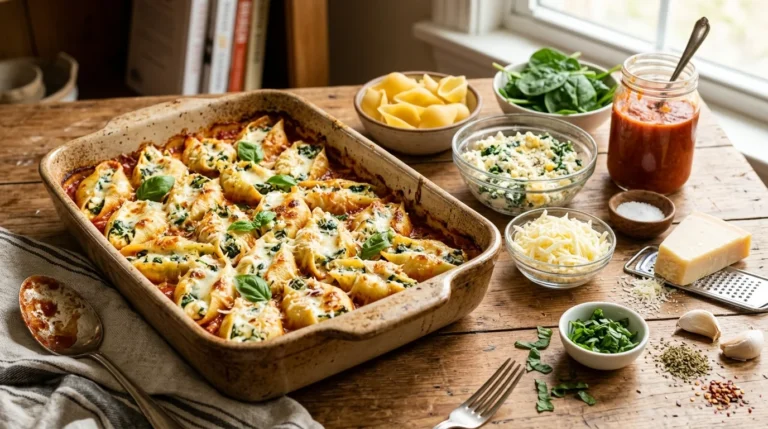
Stuffed Shells With Ground Beef Hearty, Cheesy & Ready in 55 Minutes
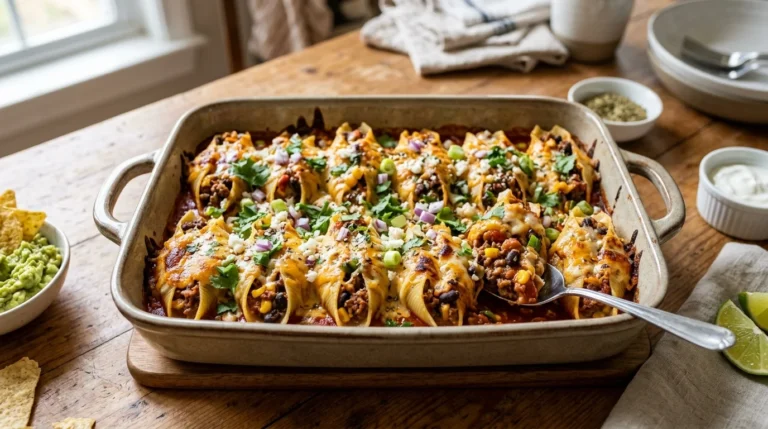
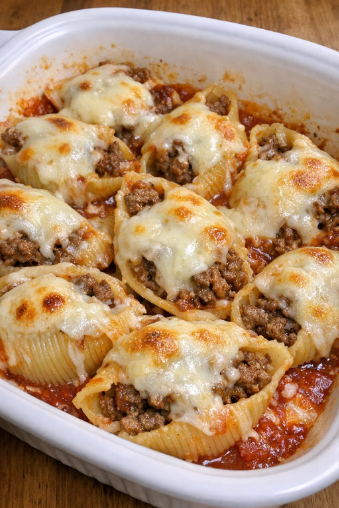
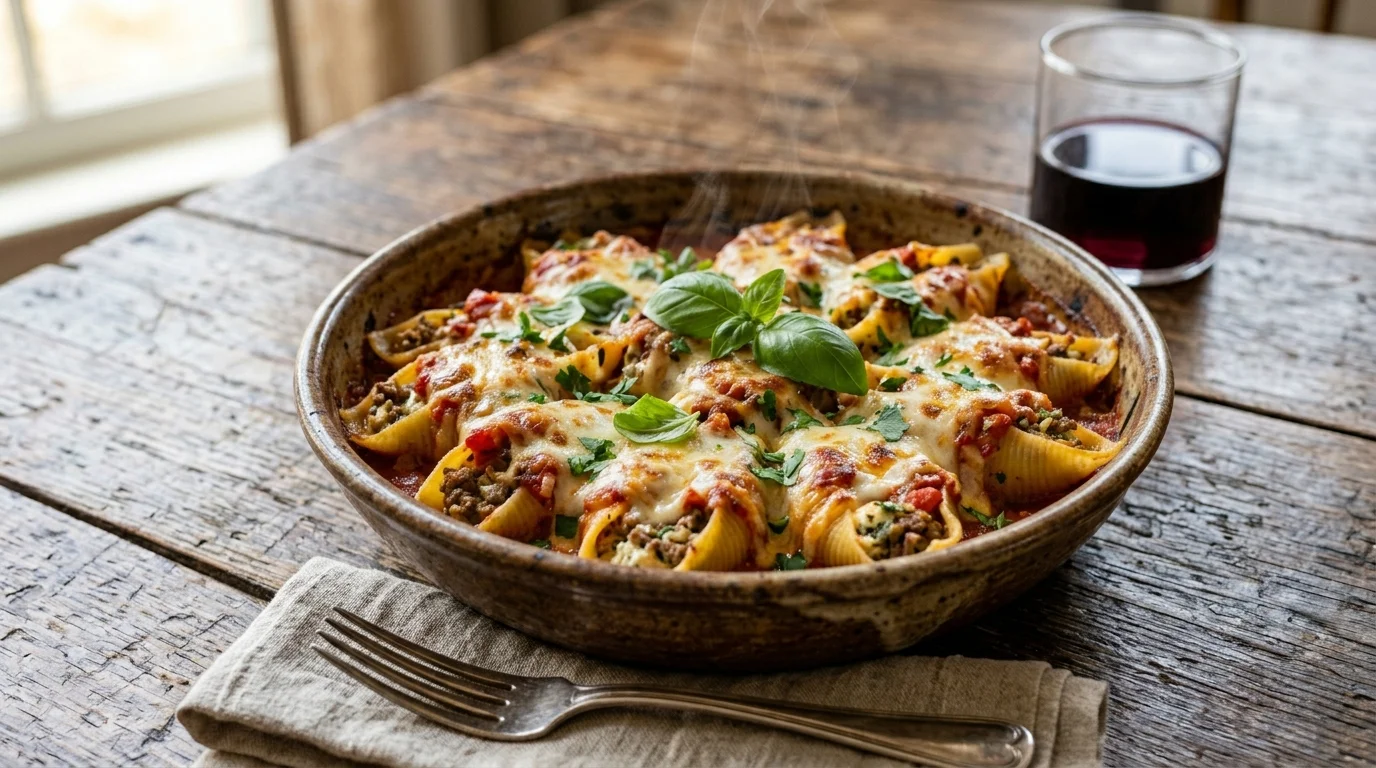
Stuffed shells with ground beef are the baked pasta dish that earns a place in the permanent dinner rotation from the very first time you make them. Jumbo pasta shells packed with a rich mixture of seasoned ground beef, ricotta, and Parmesan, nestled into a bold marinara sauce, blanketed in melted mozzarella, and baked until bubbling and golden — this is comfort food at its most complete and most satisfying.
It works as a hearty weeknight dinner that feeds a family without demanding more than 20 minutes of hands-on work, a make-ahead dish that bakes fresh when you’re ready, and a crowd-feeding main that holds beautifully in the oven until the table is set. Once you understand the layering and the filling ratio, the whole process becomes second nature. No complicated steps — just pure stuffed shells with ground beef satisfaction, golden from the oven and ready to serve.
Ingredients
For the Jumbo Pasta Shells:
- 22–24 jumbo pasta shells [cook 3 extra in case of splitting]
- 1 tbsp fine salt [for the pasta water]
- 1 tsp olive oil [to prevent sticking after draining]
For the Ground Beef and Ricotta Filling:
- 400g (14 oz) lean ground beef [80/20 for flavour]
- 1 cup (250g) whole milk ricotta cheese, room temperature
- ½ cup (50g) freshly grated Parmesan cheese
- 1 cup (100g) shredded mozzarella cheese [from the total amount below]
- 1 large egg
- 3 cloves garlic, minced
- 1 medium yellow onion, finely diced
- 2 tbsp fresh flat-leaf parsley, finely chopped
- 1 tsp dried Italian seasoning
- 1 tsp smoked paprika
- ½ tsp fine salt
- ¼ tsp black pepper
- ¼ tsp crushed red pepper flakes [optional]
- 1 tbsp olive oil
For the Marinara Sauce:
- 1 can (28 oz) crushed tomatoes [or 3 cups good quality marinara]
- 3 cloves garlic, minced
- 2 tbsp olive oil
- 1 tsp dried oregano
- 1 tsp dried basil
- ½ tsp sugar [balances the acidity]
- ½ tsp fine salt
- ¼ tsp black pepper
- ¼ tsp crushed red pepper flakes [optional]
For the Cheese Topping:
- 1½ cups shredded mozzarella cheese
- ¼ cup freshly grated Parmesan cheese
- Fresh basil leaves, for garnish after baking
Optional Add-Ins:
- ½ cup cream cheese, softened — adds richness to the filling (optional)
- 1 cup frozen spinach, thawed and squeezed dry — folded into filling (optional)
- ½ cup sliced mushrooms, sautéed and cooled (optional)
- ¼ tsp ground nutmeg — a classic Italian meat and cheese pairing (optional)
Step-by-Step Instructions
Step 1: Gather and Prep Your Ingredients
Before anything goes on the heat, prep every component. Bring the ricotta to room temperature — cold ricotta doesn’t mix smoothly with the browned beef and leaves a grainy texture in the finished filling that no amount of stirring corrects. Dice the onion, mince the garlic for both the filling and the sauce separately, chop the parsley, and measure the cheeses into individual bowls. Open and measure the crushed tomatoes. Having everything staged before the beef goes into the skillet means the cook moves at the right pace — the filling needs to cool slightly before the egg and ricotta go in, and that cooling time is where the pasta cooks. Stuffed shells with ground beef are a momentum dish — prep work done upfront makes every subsequent step faster and cleaner.
Pro Tip: Cook 3 extra jumbo shells beyond the quantity you need — jumbo shells split during boiling more frequently than any other pasta shape, and having spares means the full baking dish gets filled without any awkward gaps where broken shells couldn’t hold their filling. Fill the most intact shells first and use any splitting ones for the centre of the dish where they’re least visible.
Step 2: Cook the Ground Beef Filling
Heat 1 tablespoon of olive oil in a large skillet over medium-high heat. Add the diced onion and cook for 3–4 minutes until softened. Add the ground beef and break it apart thoroughly — spread across the full pan surface and leave undisturbed for 2 minutes to develop browning before breaking up. Cook for 6–8 minutes total until no pink remains and the beef has some golden colour at the edges. Drain the excess fat, leaving approximately 1 tablespoon in the pan. Add the garlic, Italian seasoning, smoked paprika, salt, pepper, and red pepper flakes. Stir for 60–90 seconds until the spices are fragrant and fully toasted into the hot beef. Remove from heat and spread across a large plate or baking sheet to cool for 10 minutes before the cheese is added.
Pro Tip: The beef must be cooled before the ricotta and egg go in — hot beef curdles the ricotta immediately and scrambles the egg, producing a grainy, separated filling rather than the smooth, cohesive mixture that makes these shells worth making. Ten minutes of cooling on a flat surface is all the time needed — the beef doesn’t need to be cold, just no longer actively steaming.
Step 3: Cook the Pasta Shells and Make the Marinara
Bring a large pot of heavily salted water to a rolling boil. Add the jumbo shells and cook for exactly 2 minutes less than the package directions — al dente shells finish cooking in the oven without going mushy. Drain carefully, rinse under cold water to stop the cooking, drizzle with olive oil, and spread in a single layer on an oiled baking sheet to cool. While the pasta cooks, heat 2 tablespoons of olive oil in a saucepan over medium heat. Add the garlic and stir for 45 seconds, then add the crushed tomatoes, oregano, basil, sugar, salt, and pepper. Simmer for 8–10 minutes until slightly thickened and the raw tomato taste has cooked off. Taste and adjust seasoning — the marinara should be bold and well-seasoned before it goes into the baking dish.
Pro Tip: The marinara sauce for stuffed shells with ground beef should be slightly more aggressively seasoned than a standard pasta sauce. It gets diluted when it contacts the pasta and the cheese filling during baking and needs to taste a notch bolder in the pan than you want it to taste in the finished dish. Season it past where it tastes exactly right and trust that the bake will balance everything out.
📖 Read More: Seafood Stuffed Shells
Step 4: Make the Filling and Fill the Shells
In a large bowl, combine the cooled ground beef with the ricotta, grated Parmesan, 1 cup of shredded mozzarella, egg, parsley, and any optional add-ins. Mix thoroughly with a spatula until completely uniform — every spoonful of filling should have an even distribution of beef, cheese, and herbs with no pockets of unmixed ricotta. Taste the filling carefully before filling the shells — it should be well-seasoned, slightly rich from the cheese, and beef-forward in flavour. Adjust salt and pepper if needed. Using a small spoon or a piping bag with the tip cut to a wide opening, fill each cooled shell with approximately 2 heaped tablespoons of the filling — the shell should be generously full with the filling mounded slightly above the opening without spilling over the sides.
Pro Tip: A piping bag makes filling jumbo shells faster, cleaner, and significantly less frustrating than a spoon — the filling goes directly into the centre of each shell without smearing along the edges or falling out the sides. A zip-lock bag with one corner snipped off works identically. Fill the bag generously, work quickly, and the entire batch of shells can be filled in under 3 minutes using this method.
Step 5: Assemble the Baking Dish
Preheat the oven to 375°F (190°C). Pour two-thirds of the marinara sauce into the base of a 9×13-inch baking dish and spread evenly — the sauce base protects the underside of the shells from direct heat, keeps them moist throughout baking, and adds flavour to the bottom of each shell from below. Arrange the filled shells open-side up in the sauced dish in a single, tight layer — press them gently together so they support each other upright and don’t tip during baking. Spoon the remaining marinara sauce generously over the tops of the filled shells, covering the exposed filling completely. Scatter the remaining mozzarella and Parmesan across the entire surface. The cheese topping should be generous — a thin layer disappears into the dish during baking and produces none of the bubbling, golden top that defines a properly finished baked pasta.
Pro Tip: Spoon the sauce over each individual shell rather than pouring it across the whole tray at once. Pouring causes the sauce to pool between shells rather than coating the tops, leaving some shells well-sauced and others almost bare. A tablespoon of sauce spooned directly onto each shell top takes 30 extra seconds and produces dramatically more even coverage across every shell in the dish.
Step 6: Bake, Rest, and Serve
Cover the baking dish tightly with aluminium foil and bake at 375°F for 25 minutes — the foil traps steam that heats the filling through completely and keeps the pasta moist. Remove the foil and bake for a further 10–12 minutes until the cheese is fully melted, bubbling at the edges, and developing golden patches across the surface. For an extra-golden, slightly crisped cheese top, switch to broil for the final 2–3 minutes and watch closely. Remove from the oven and rest for 5 full minutes before serving — the sauce and filling need this time to settle from a loose, actively bubbling state to a set, portionable consistency. Scatter fresh basil leaves across the top and serve from the baking dish with a wide spatula, inserting it fully under each shell before lifting.
Pro Tip: Score the cheese topping with a sharp knife into portion-sized sections before using the serving spatula — cutting through the set cheese layer first means each shell portion comes out with a clean, intact cheese top rather than dragging melted cheese across adjacent shells as the spatula moves through the dish. One set of cuts, then serve — it makes the entire dish look significantly more presentable on each plate.
Cook Time
Total Time: 55 minutes | Prep: 15 minutes | Beef and Sauce: 15 minutes | Shell Cooling: 5 minutes | Bake: 37 minutes | Rest: 5 minutes One skillet, one saucepan, one baking dish — stuffed shells with ground beef on the table in under an hour.
Servings
Serves 4–6 — approximately 4 shells per person as a generous main course.
Nutritional Information (approx. per serving — 4 shells with marinara and cheese topping, based on 5 servings)
| Nutrient | Amount |
|---|---|
| Calories | 580 kcal |
| Fat | 28g |
| Saturated Fat | 13g |
| Carbohydrates | 44g |
| Protein | 38g |
| Sugar | 8g |
| Fiber | 4g |
| Sodium | 820mg |
| Vitamin C | 12mg |
| Potassium | 540mg |
| Calcium | 380mg |
Values are approximate and will vary based on ingredients used.
Storage Instructions
Stuffed shells with ground beef store exceptionally well and are worth making in a larger batch than needed for one meal. Allow the baked dish to cool completely before covering tightly with plastic wrap or transferring individual portions to airtight containers. Refrigerate for up to 4 days — the filling and sauce flavours deepen overnight and the shells absorb the marinara fully, producing a day-two result that is arguably better than the freshly baked version. Reheat individual portions in the microwave loosely covered with a damp paper towel in 60-second intervals, or reheat the full dish covered with foil at 325°F for 20–25 minutes with a small splash of broth or water added across the surface first. The added liquid prevents the pasta from drying out during the second bake and the sauce from over-reducing. For freezing, stuffed shells with ground beef freeze best before baking — assemble the dish completely, cover with foil and then plastic wrap, and freeze for up to 3 months. Bake from frozen, still covered, at 375°F for 50 minutes, then uncover for the final 12–15 minutes. Avoid freezing already-baked shells — the pasta texture softens significantly on thawing and the ricotta filling becomes slightly grainy after a freeze-thaw cycle. The unbaked freeze method consistently produces a result indistinguishable from a freshly assembled dish and is worth planning around whenever making a large batch.
📖 Read More: Alfredo Stuffed Shells
Suggestions
- Spinach and Beef Stuffed Shells: Add 1 cup of frozen spinach — thawed and squeezed completely dry between several layers of paper towel — to the ground beef and ricotta filling. The spinach adds a mild earthy note that works well with the beef and tomato combination, and the green flecks through the white filling look visually appealing when the shells are cut open. Squeeze the spinach thoroughly until absolutely no moisture remains — any residual water makes the filling loose and watery during baking, causing the shells to slide in the sauce.
- Spicy Arrabbiata Beef Shells: Replace the standard marinara with a spicy arrabbiata sauce — double the crushed red pepper flakes in the sauce and add 1 teaspoon of Calabrian chili paste. Use the same ground beef filling but add an extra ¼ teaspoon of cayenne to the spice blend. The bold heat of the arrabbiata against the rich, cheesy beef filling creates a contrast that is deeply satisfying — the heat builds with each bite and the cheese in the filling provides the creamy counterbalance that makes spicy pasta dishes genuinely addictive.
- Beef and Mushroom Stuffed Shells: Add 1 cup of finely diced cremini mushrooms sautéed in butter with a splash of Worcestershire sauce until deeply caramelised and dry — approximately 8 minutes over medium heat. Cool completely before folding into the beef and ricotta filling. The mushrooms add an earthy, umami-rich depth that makes the filling taste more complex and layered than beef and cheese alone. This is the variation most likely to earn a request for the recipe from any dinner guest.
- Three-Meat Stuffed Shells: Replace half the ground beef with Italian sausage removed from its casings and crumbled — use a 200g/200g split of beef and mild or spicy Italian sausage. The sausage brings built-in fennel, garlic, and herb seasoning that enriches the filling in a direction the plain beef version doesn’t reach. Brown both proteins together in the same skillet — they release complementary fats that season each other during cooking and produce a more deeply flavoured base than either meat cooked alone.
- Make-Ahead Stuffed Shells: Prepare and fill the shells completely, arrange in the sauced baking dish, and top with cheese — but don’t bake. Cover tightly with foil and refrigerate for up to 24 hours before baking. When ready, bake covered at 375°F for 30 minutes since the dish is starting cold, then uncover for the final 12–15 minutes. This make-ahead method is the most practical approach for dinner parties — all the work happens the day before and the dish goes into the oven 45 minutes before guests sit down with zero day-of preparation beyond preheating the oven.
- Beef Stuffed Shells With Béchamel: Replace the marinara sauce with a simple béchamel — melt 3 tablespoons of butter, whisk in 3 tablespoons of flour, then slowly add 2 cups of warm whole milk while whisking until thick, smooth, and seasoned with salt, white pepper, and nutmeg. The white sauce produces a more delicate, cream-forward dish that contrasts with the bold seasoned beef filling in a more sophisticated way than the tomato version. Top with Gruyère instead of mozzarella for a version that belongs at a dinner party.
- Low-Carb Stuffed Zucchini Boats: Replace the jumbo pasta shells with large zucchini cut lengthwise and hollowed with a spoon — approximately ¼ inch of flesh remaining. Fill with the same ground beef and ricotta mixture, top with marinara and mozzarella, and bake at 375°F for 25–28 minutes. The zucchini softens slightly during baking and absorbs the filling flavour in a way that makes this low-carb version genuinely satisfying rather than a pale substitute. The filling recipe requires no adjustment and can be used identically across both the shell and zucchini formats.
- Weight-Loss Friendly Stuffed Shells: Use 90/10 lean ground beef — drain very thoroughly after browning. Replace the whole milk ricotta with part-skim ricotta. Reduce the mozzarella topping to 1 cup total and use a marinara sauce with no added oil. Limit to 3 shells per serving and pair with a large green salad dressed with lemon and olive oil rather than a heavy side. Each serving comes in under 420 calories while delivering over 30g of protein — a genuinely filling, high-protein dinner that fits a calorie-controlled eating plan without tasting compromised.
Seasonal Relevance
Stuffed shells with ground beef are firmly in the autumn and winter category — the baked, sauced, cheesy format is exactly what cold weather appetites respond to, and the oven time that makes the kitchen warm is an asset rather than a cost during the colder months. From October through February, this is the dinner that belongs in weekly rotation — filling, budget-friendly, and requiring minimal active effort for a result that consistently impresses. The three-meat version and the beef and mushroom build suit December and January particularly well — richer, more complex, and appropriate for the season’s appetite for indulgent comfort food. The spicy arrabbiata version earns its place in autumn — September through November — when the shift toward heartier flavours begins and a bold, warming sauce feels more appropriate than it does in spring or summer. From March through May, the spinach version transitions naturally into the warmer season — lighter colour, more vegetable content, and a fresher finish make it the appropriate stuffed shell for spring. In summer, the make-ahead method is the most practical approach — assembling the night before and baking in the cool of the morning to serve at dinner keeps oven time during the warmest part of the day to a minimum.
Conclusion
Stuffed shells with ground beef earn their reputation as one of the most reliably satisfying baked pasta dishes you can make because the combination of seasoned beef, creamy ricotta, bold marinara, and melted cheese covers every comfort food requirement in a single baking dish. The technique is learnable in one cook — cool the beef before adding the ricotta, season the marinara boldly, fill the shells generously, and rest the dish before serving. Those four things done correctly produce a result that is genuinely better than most restaurant versions and available on any weeknight with under an hour and one baking dish. Work through the suggestions — the mushroom build, the three-meat version, the make-ahead approach — and find the stuffed shells with ground beef that earn a permanent place in your household’s regular rotation. Every version feeds the table completely and asks very little in return.
FAQs
Q: Can I use the filling without pre-cooking the ground beef? No — raw ground beef cannot be safely used in the filling for stuffed shells. The oven temperature and baking time for stuffed shells are calibrated to heat a pre-cooked filling through rather than cook raw meat from scratch. Raw ground beef in the filling would need significantly higher internal temperatures sustained for longer than the baking method allows, and the filling would release excess liquid during baking that makes the shells watery and causes the ricotta to become grainy. Always brown and drain the beef fully before combining with the ricotta and cheese — the 10 minutes of cooling time before mixing is the only patience the recipe requires beyond the standard bake.
Q: My stuffed shells are watery after baking — what went wrong? Excess water in baked stuffed shells comes from three sources — residual moisture in the ground beef that wasn’t fully drained after browning, ricotta that was too cold and released water during baking rather than absorbing it, and spinach or other vegetables that weren’t squeezed dry enough before being folded into the filling. Drain the beef thoroughly after browning — press paper towels against the surface to absorb any pooling fat or liquid. Bring ricotta to room temperature before using and drain it in a fine mesh sieve for 15 minutes if it looks particularly wet. For spinach, squeeze until absolutely no moisture can be extracted — wrap in a clean kitchen towel and wring firmly rather than just pressing between paper towels.
Q: How do I stop the jumbo shells from splitting when I boil them? Three things reduce splitting — using a large pot with plenty of water so the shells have room to move without colliding, cooking them exactly 2 minutes less than the package directions so they retain structural integrity, and handling them gently with tongs rather than a slotted spoon when draining. Rinse immediately under cold water after draining to stop the cooking and firm the pasta slightly before handling. Even with perfect technique, some shells will always split — cook 3 extra per batch to account for it, fill the intact ones first, and use the split ones in the centre of the baking dish where they’re partially concealed by the shells around them.