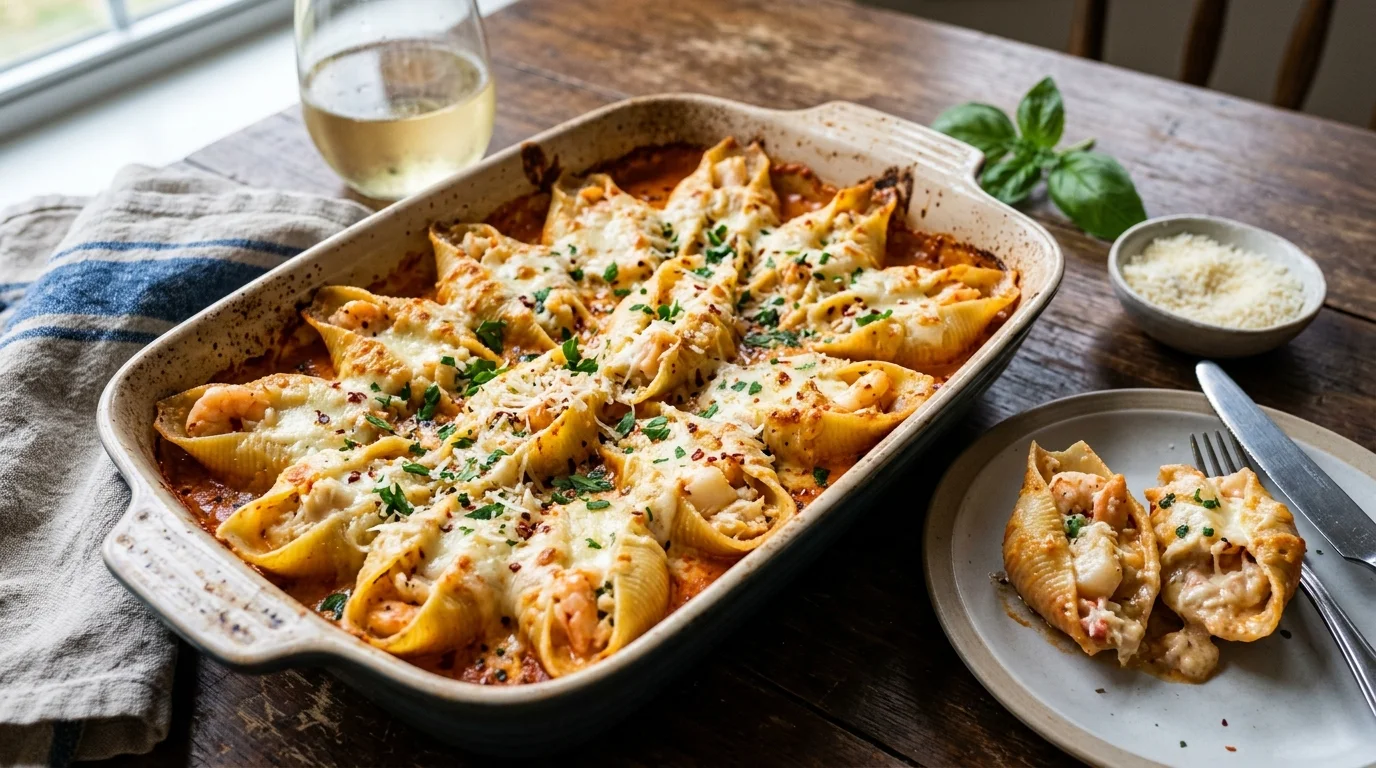
Seafood Stuffed Shells Rich, Impressive & Ready in 50 Minutes
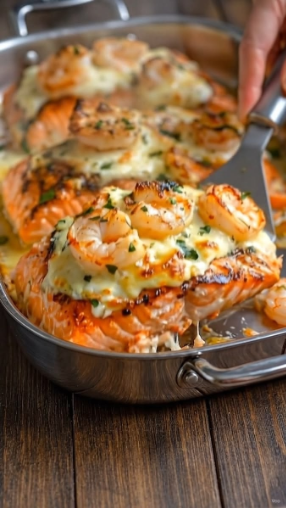
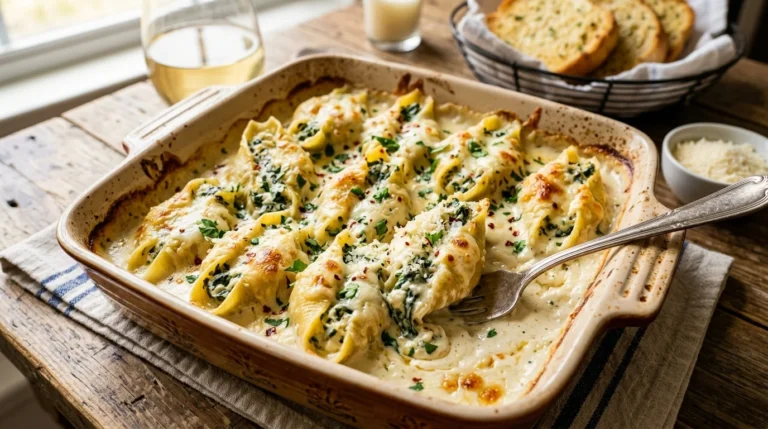
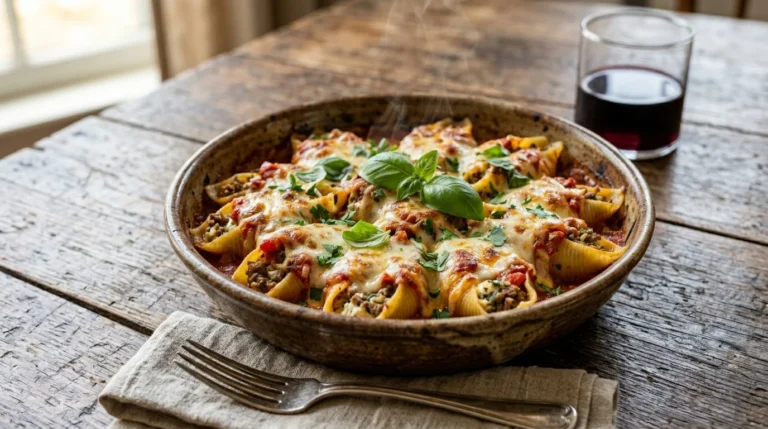
Seafood stuffed shells are the dinner that looks like it took all day and actually comes together in under an hour. Jumbo pasta shells filled with a creamy mixture of shrimp, crab, ricotta, and herbs, nestled into a rich tomato or cream sauce, blanketed in melted cheese and baked until bubbling and golden this is a dish that earns its place at any table it appears on.
It works as a showstopper dinner party main, a special occasion meal that feeds a crowd without requiring professional cooking skills, and a weekend project that produces leftovers worth looking forward to the next day. Once you understand the stuffing and baking method, the variations are limited only by what seafood is in the refrigerator. No complicated steps — just pure seafood stuffed shells satisfaction, golden from the oven and ready to serve.
Ingredients
For the Jumbo Shells:
- 20–24 jumbo pasta shells [dried — cook 2 extra in case of splitting]
- 1 tbsp olive oil [to prevent sticking after draining]
- 1 tbsp fine salt [for the pasta water]
For the Seafood Filling:
- 250g (9 oz) large raw shrimp, peeled, deveined, and roughly chopped
- 200g (7 oz) lump crab meat, drained [canned or fresh — pick through for shells]
- 1 cup (250g) whole milk ricotta cheese
- ½ cup (50g) freshly grated Parmesan cheese
- 1 large egg
- 2 cloves garlic, minced
- 2 tbsp fresh flat-leaf parsley, finely chopped
- 1 tbsp fresh lemon juice
- 1 tsp lemon zest
- ½ tsp Old Bay seasoning [or a pinch of cayenne and paprika]
- ½ tsp fine salt
- ¼ tsp white pepper
- ¼ tsp dried Italian seasoning
For the Sauce:
- 1 can (24 oz) crushed tomatoes [or 2 cups of good quality marinara]
- 3 cloves garlic, minced
- 2 tbsp olive oil
- 1 tsp dried oregano
- ½ tsp crushed red pepper flakes [optional]
- Salt and black pepper, to taste
- ½ cup heavy cream [optional — for a rosa sauce finish]
For the Topping:
- 1 cup shredded mozzarella cheese
- ¼ cup freshly grated Parmesan cheese
- Fresh parsley or basil, for garnish
- Lemon wedges, for serving
Optional Add-Ins:
- 100g (3.5 oz) scallops, halved — folded into the filling (optional)
- ½ cup cream cheese, softened — adds richness to the filling (optional)
- ½ cup frozen spinach, thawed and squeezed completely dry (optional)
- ¼ tsp smoked paprika — for depth (optional)
Step-by-Step Instructions
Step 1: Gather and Prep Your Ingredients
Before the pasta water goes on, prep every filling component. Peel, devein, and roughly chop the shrimp into pieces no larger than 1cm — smaller pieces distribute evenly through each shell and prevent any single bite from being all shrimp and no filling. Drain the crab meat and pick through it carefully for any shell fragments — a missed shell piece ruins a bite completely and is easy to prevent with 60 seconds of attention. Mince the garlic, chop the parsley, zest and juice the lemon, and measure the ricotta and Parmesan. The seafood stuffed shells filling comes together in under 3 minutes once everything is prepped — having it ready before the pasta is cooked means the shells get filled while they’re still slightly warm and pliable rather than cold and brittle.
Pro Tip: Cook 2–3 extra jumbo shells beyond the quantity you need. Jumbo shells split and tear more frequently than any other pasta shape — the large surface area and thin walls make them vulnerable during boiling and handling. Having spares means the whole batch gets filled without any gaps in the baking dish from shells that didn’t survive the cooking process.
Step 2: Cook and Cool the Pasta Shells
Bring a large pot of heavily salted water to a rolling boil. Add the jumbo shells and cook for exactly 2 minutes less than the package directions — they should be pliable but still firm enough to hold their shape during filling and baking. Al dente shells that retain some bite will finish cooking in the oven without becoming soft and collapsing. Drain carefully in a colander and rinse under cold water to stop the cooking immediately. Drizzle the drained shells with a tablespoon of olive oil and toss gently — the oil prevents them from sticking together while you prepare the filling. Spread them in a single layer on a clean baking sheet or linen to cool and dry slightly before filling.
Pro Tip: Never stack cooked jumbo shells on top of each other — they adhere and tear when separated. A single layer on a flat surface gives each shell enough space to cool without contact with another shell. If counter space is limited, lay them open-side down on an oiled baking sheet — they won’t stick and they’re easy to pick up and fill one at a time without handling them more than necessary.
Step 3: Make the Seafood Filling
In a large bowl, combine the ricotta, grated Parmesan, egg, minced garlic, parsley, lemon juice, lemon zest, Old Bay seasoning, salt, white pepper, and Italian seasoning. Mix until completely smooth and well combined. Fold in the chopped shrimp and drained crab meat gently — use a spatula rather than a spoon and fold rather than stir to keep the crab lumps as intact as possible. Overmixing the crab breaks it down into fibrous shreds that lose their texture and flavour in the baked dish. The finished filling should be thick, creamy, and hold its shape on a spoon — loose enough to pipe or spoon into the shells but firm enough not to run out the moment it’s placed.
Pro Tip: Taste the filling before it goes into the shells — it should be well-seasoned, bright from the lemon, and clearly seafood-forward. The filling gets diluted slightly by the pasta shell and the sauce during baking, so what tastes bold raw will taste perfectly balanced cooked. If it seems flat, add an extra pinch of salt, a few more drops of lemon juice, and a small extra amount of Old Bay — these three adjustments sharpen the seafood flavour immediately.
📖 Read More: Italian Pasta Salad
Step 4: Make the Sauce and Prepare the Baking Dish
Heat 2 tablespoons of olive oil in a saucepan over medium heat. Add the minced garlic and stir for 45 seconds until fragrant but not browned. Add the crushed tomatoes, dried oregano, red pepper flakes, salt, and pepper. Stir to combine and simmer for 8–10 minutes until slightly thickened and the raw tomato taste has cooked off. For a rosa sauce, stir in the heavy cream in the final 2 minutes of simmering — it immediately transforms the sauce from sharp and acidic to rich, velvety, and a perfect complement to the delicate seafood stuffed shells filling. Pour approximately two-thirds of the finished sauce into the base of a 9×13-inch baking dish and spread it evenly — this prevents the shells from sticking and keeps their undersides moist during baking.
Pro Tip: The sauce in the base of the dish should be generous enough to fully coat the bottom of every shell that sits in it. Shells sitting on a dry or barely sauced surface will have a leathery, tough underside by the end of baking — shells sitting in an adequate amount of sauce stay moist on all sides and absorb flavour from the tomato base throughout the bake.
Step 5: Fill and Arrange the Shells
Using a small spoon, a teaspoon, or a piping bag fitted with a large round tip, fill each cooled jumbo shell with approximately 2 tablespoons of the seafood filling. Don’t overfill — the shell should be generously full but able to close partway, with the filling mounded slightly above the opening rather than spilling out the sides. Place each filled shell open-side up in the sauce-lined baking dish, nestling them tightly together in a single layer so they support each other rather than tipping over. Spoon the remaining sauce over the tops of the filled shells, covering the exposed filling completely. Scatter the shredded mozzarella and extra Parmesan evenly across the entire surface.
Pro Tip: A piping bag makes filling jumbo shells dramatically faster and cleaner than a spoon — the filling goes directly into the centre of each shell without smearing along the edges. If you don’t have a piping bag, a sturdy zip-lock bag with one corner snipped off works identically. For either method, fill the bag or spoon generously and work quickly while the shells are still warm and pliable.
Step 6: Bake, Rest, and Serve
Cover the baking dish tightly with aluminium foil and bake at 375°F (190°C) for 20 minutes — the foil traps steam that finishes cooking the shrimp through gently and keeps the pasta moist. Remove the foil and bake for a further 10–12 minutes until the cheese is melted, bubbling at the edges, and beginning to turn golden. Remove from the oven and rest for 5 minutes before serving — this brief rest allows the filling to set slightly and the sauce to stop actively bubbling, which means the shells lift cleanly from the dish rather than breaking apart on the spatula. Scatter fresh parsley or torn basil across the top, add lemon wedges to the side of each plate, and serve immediately while the cheese is still molten.
Pro Tip: Use a wide, flat spatula to lift the seafood stuffed shells from the baking dish — insert it fully under each shell from the open end and lift with one confident motion rather than tipping. A shell that’s tilted rather than lifted flat will spill its filling into the sauce as it’s transferred to the plate. Flat spatula, flat lift, and each shell arrives on the plate exactly as it looked in the dish.
Cook Time
Total Time: 50 minutes | Prep: 15 minutes | Sauce: 10 minutes | Bake: 32 minutes | Rest: 5 minutes One pot, one bowl, one baking dish — seafood stuffed shells on the table in 50 minutes.
Servings
Serves 4–6 — approximately 4 shells per person as a main course.
Nutritional Information (approx. per serving — 4 shells with rosa sauce and cheese topping, based on 5 servings)
| Nutrient | Amount |
|---|---|
| Calories | 520 kcal |
| Fat | 22g |
| Saturated Fat | 11g |
| Carbohydrates | 46g |
| Protein | 34g |
| Sugar | 6g |
| Fiber | 3g |
| Sodium | 780mg |
| Vitamin C | 14mg |
| Potassium | 480mg |
| Calcium | 320mg |
Values are approximate and will vary based on ingredients used.
Storage Instructions
Seafood stuffed shells store well in the refrigerator for up to 3 days in an airtight container or covered tightly in the baking dish with plastic wrap. The flavours deepen overnight as the seafood filling continues to absorb the lemon, herbs, and garlic.
Reheat covered with foil in a 350°F oven for 15–18 minutes until heated through — the foil prevents the cheese from over-browning on a second bake. Individual portions can be microwaved loosely covered in 60-second intervals until hot. The seafood filling holds together well through reheating the ricotta and egg binder keep the shrimp and crab cohesive rather than separating into dry pieces.
For freezing, seafood stuffed shells freeze best before baking. Assemble the dish completely — filled shells, sauce, and cheese topping — cover tightly with foil and then wrap the whole dish in plastic wrap. Freeze for up to 2 months. Bake from frozen, still covered with foil, at 375°F for 45 minutes, then uncover for a final 15 minutes. Do not freeze already-baked shells — reheated previously-frozen cooked seafood has a significantly less appealing texture than shells baked fresh from frozen. The raw shrimp and crab in the filling freeze well unbaked but become rubbery and lose texture when frozen after cooking.
📖 Read More: indomie noodles
Suggestions
- Lobster and Crab Stuffed Shells: Replace the shrimp with 200g of cooked lobster tail meat, roughly chopped. Use fresh lump crab meat rather than canned for the most premium result. The lobster adds a sweet, delicate richness to the filling that shrimp alone can’t replicate — this version is the showstopper build for a dinner party or special occasion where the quality of the seafood is the point. Serve with a simple cream sauce rather than tomato to let the lobster flavour come forward without competition.
- Creamy White Wine Sauce Version: Replace the crushed tomato sauce entirely with a white wine cream sauce — melt 2 tablespoons of butter with 3 cloves of minced garlic, add ½ cup of dry white wine and reduce by half, add 1½ cups of heavy cream and simmer until slightly thickened, then season with salt, white pepper, and fresh thyme. The white sauce complements delicate seafood filling more gently than tomato and produces a more elegant, restaurant-style finished dish.
- Spinach and Seafood Stuffed Shells: Add ½ cup of frozen spinach — thawed and squeezed completely dry — folded into the ricotta and seafood filling. The spinach adds a mild earthy note that works well with the lemon and crab, and the green specks throughout the white filling look visually appealing when the shells are cut open at the table. This is also the most nutritionally complete version in the list — the spinach adds iron, vitamin K, and folate alongside the high protein seafood filling.
- Spicy Arrabbiata Seafood Shells: Build a spicy arrabbiata sauce by doubling the red pepper flakes and adding 1 teaspoon of Calabrian chili paste to the tomato base. The heat of the arrabbiata against the cool, creamy, lemon-forward seafood filling creates a contrast that is deeply satisfying — bold enough to feel like a complete sensory experience rather than just a rich pasta dish. Use whole milk ricotta for the creamiest possible filling to offset the heat of the sauce.
- Dairy-Free Seafood Stuffed Shells: Replace the ricotta with a cashew ricotta — blend 1 cup of soaked raw cashews with 3 tablespoons of water, 1 tablespoon of lemon juice, and a pinch of salt until completely smooth. Use dairy-free mozzarella shreds and a vegan Parmesan alternative for the topping. The cashew ricotta holds together during baking and provides a similar creamy binding function to dairy ricotta — the finished shells are indistinguishable in texture from the dairy version and completely plant-friendly with the exception of the seafood filling itself.
- Baked Stuffed Shells With Scallops: Replace the crab with 150g of fresh bay scallops — their small size means they can be used whole in the filling without chopping. Pat them completely dry before folding into the ricotta base — any surface moisture on scallops creates steam during baking that makes the filling loose and watery. The scallops add a sweet, slightly caramelised note to the filling after baking and their tender texture contrasts well against the firmer shrimp pieces throughout the shell.
- Kid-Friendly Seafood Stuffed Shells: Use only shrimp in the filling — skip the crab and scallops — and finely chop the shrimp into very small pieces so the seafood is well-distributed and less identifiable as a whole piece for selective eaters. Replace the Old Bay and red pepper flakes with a simple seasoning of salt, garlic powder, and Italian herbs. Use a mild marinara sauce rather than a spicy or complex tomato base, and top generously with mozzarella — generous cheese coverage makes almost any pasta dish more appealing to younger palates.
- Weight-Loss Friendly Seafood Stuffed Shells: Use part-skim ricotta instead of whole milk, reduce the mozzarella topping to ½ cup total, skip the cream in the sauce, and limit the shells to 3 per serving rather than 4. Add 1 cup of thawed frozen spinach to the filling to increase the volume and nutritional density without adding meaningful calories. Use a simple crushed tomato sauce without cream — the clean tomato flavour is actually a better complement to delicate seafood flavours than the richer rosa version at this build level. Each serving comes in under 380 calories with over 28g of protein.
Seasonal Relevance
Seafood stuffed shells are naturally an autumn and winter dish — the rich, baked, sauced format is precisely the kind of food that earns its place at the table when the weather is cold and a hot, cheesy baking dish in the centre of the table feels exactly right. From October through February, this is the dinner party dish that impresses without requiring professional technique — it looks elaborate, it tastes complex, and it can be assembled completely the day before and baked fresh when guests arrive.
The lobster and crab version particularly suits December and January when a special occasion dinner calls for something genuinely elevated. From March through May, the spinach version transitions naturally into spring — lighter greens, brighter lemon flavour in the filling, and a slightly less heavy sauce make the dish feel appropriate as the weather warms.
In summer, June through August, the white wine cream sauce version served with a simple green salad is the most season-appropriate build — the lighter sauce and fresh herbs keep the dish from feeling too heavy for warm-weather eating. Fresh shrimp at peak quality from May through September makes summer the best time for the shrimp-dominant version of the filling — the flavour of peak-season fresh shrimp versus frozen is noticeable and worth seeking out when available.
Conclusion
Seafood stuffed shells earn their place as one of the most impressive pasta dishes you can produce from a home oven because the components are genuinely straightforward and the result consistently looks and tastes far more elaborate than the effort involved. Get the pasta shells slightly underdone before filling, season the ricotta base boldly, fold the seafood gently to preserve the crab lumps, and bake covered before uncovered for the best texture and cheese finish. Those four things done correctly produce a dish that holds its own at any table without any apology for being a home cook’s version. Try the white wine sauce, the lobster build, the arrabbiata spice level — each variation brings a completely different character to the same reliable method. Seafood stuffed shells done well are the kind of dinner people specifically request for their next birthday, and that is the only measure of a recipe worth keeping.
FAQs
Q: Can I assemble seafood stuffed shells ahead of time? Yes — and it’s one of the best make-ahead baked pasta dishes available. Assemble the dish completely — filled shells in sauce with cheese on top — cover tightly with foil and refrigerate for up to 24 hours before baking. When ready to cook, bake from cold adding 8–10 extra minutes to the covered baking time since the dish is starting at refrigerator temperature rather than room temperature. This approach is particularly practical for dinner parties — all the prep happens the day before and the dish goes into the oven 45 minutes before guests sit down with zero day-of preparation beyond preheating the oven.
Q: How do I stop the jumbo shells from tearing when I cook them? Three things reduce shell tearing — cooking them 2 minutes less than the package directions, using a large enough pot with plenty of water so the shells have room to move without bumping into each other, and handling them gently with tongs rather than a slotted spoon when draining. Immediately rinsing under cold water after draining stops the cooking and makes the shells significantly more pliable and easier to handle. Even with perfect technique, some shells will always split — cook 2–3 extras per batch to account for it and fill those first for quality control before moving to the intact ones.
Q: Can I use imitation crab meat instead of real crab in seafood stuffed shells? Yes — imitation crab, also called surimi, works adequately in stuffed shells and is a significantly more affordable alternative to real lump crab. The texture is softer and the flavour is milder and sweeter than real crab, which means you’ll want to increase the Old Bay seasoning slightly and add an extra squeeze of lemon juice to compensate for the reduced natural seafood flavour. Chop it into small pieces rather than shredding it — large shredded pieces of imitation crab can become slightly rubbery after baking in a way that small chopped pieces don’t. The finished shells with imitation crab are still very good — just different in character from the real crab version.