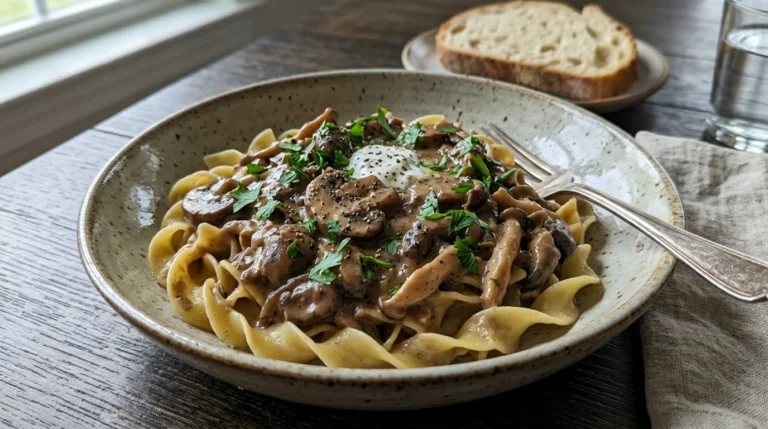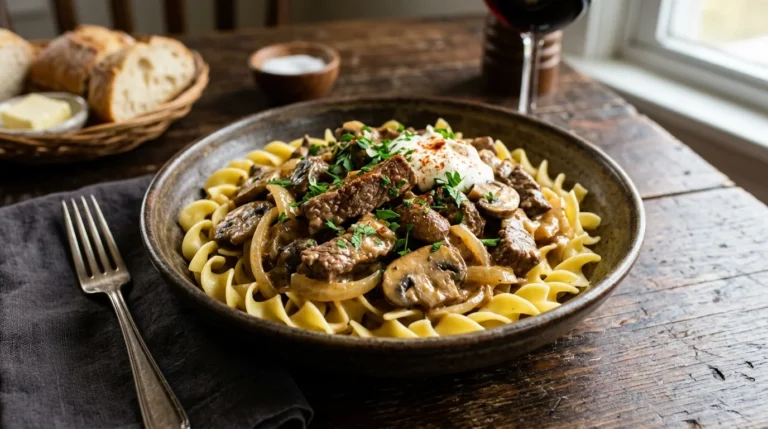
Steak Stroganoff Recipe Tender, Luxurious & Ready in 35 Minutes
Steak stroganoff recipe takes the beloved comfort dish to a completely different level — tender strips of seared beef, golden mushrooms, and a deeply savory sour cream sauce that coats every strand of egg noodle exactly as it should. It’s the version you make when you want something genuinely special without spending hours in the kitchen. Serve it for a date night dinner, an impressive weekend meal, or whenever a weeknight deserves more than a basic pan sauce. No complicated steps — just pure steak stroganoff goodness on the table in 35 minutes.
Ingredients List
For steak stroganoff recipe (serves 4):
- 1½ lbs beef sirloin or ribeye steak, sliced into thin strips against the grain (flank steak or tenderloin as substitutes)
- 8 oz wide egg noodles (pappardelle or fettuccine work equally well)
- 10 oz cremini mushrooms, sliced ¼-inch thick (portobello mushrooms for a meatier, earthier result)
- 1 medium yellow onion, finely diced
- 3 cloves garlic, minced
- 3 tbsp unsalted butter, divided
- 1 tbsp olive oil
- 2 tbsp all-purpose flour
- 1½ cups beef broth, low-sodium preferred
- ¼ cup dry white wine (optional — adds depth; substitute with extra broth)
- 1 tbsp Worcestershire sauce
- 1 tsp Dijon mustard
- 1 tsp smoked paprika
- 1 tsp salt, plus more to taste
- ½ tsp black pepper, plus extra for finishing
- ¾ cup full-fat sour cream, room temperature
- 1 tbsp cream cheese (optional — enriches and thickens the sauce)
- 1 tsp fresh thyme leaves (optional — adds herbal brightness)
- Fresh flat-leaf parsley, chopped, for garnish
- ½ tsp red pepper flakes (optional)
Step-by-Step Instructions
Step 1: Gather and Prep Your Ingredients
Slice the steak into thin strips — approximately ¼-inch thick — cutting against the grain. This is the single most important prep step in the entire recipe. Slicing against the grain shortens the muscle fibers, which makes every strip noticeably more tender regardless of which cut of beef you use. Cutting with the grain leaves long fibers intact and produces chewy, tough meat.
Pat the steak strips completely dry with paper towels. Moisture on the surface of the meat creates steam in the pan rather than a sear — and steam produces gray, soft beef instead of the deep brown crust that carries most of the flavor in this dish. Dry meat browns fast, seals well, and stays tender under the sauce.
Pro Tip: Place the steak in the freezer for 20 minutes before slicing — partially frozen meat is significantly easier to cut into uniform thin strips.
Step 2: Cook the Egg Noodles
Bring a large pot of well-salted water to a rolling boil. Cook the egg noodles one minute less than the package directions — they’ll finish in the sauce at the end and continue cooking in residual heat, so pulling them slightly underdone prevents mushiness in the final dish.
Reserve ½ cup of pasta water before draining — this starchy liquid is your safety net if the sauce turns too thick when the noodles are added. Drain, toss with a light drizzle of olive oil to prevent sticking, and set aside while the sauce comes together.
Pro Tip: Keep the pasta water warm in a small cup rather than letting it cool — cold starchy water doesn’t loosen a hot sauce as effectively as warm does.
Step 3: Sear the Steak Strips
Heat 1 tablespoon of butter and olive oil together in a large skillet over high heat until the butter begins to brown at the edges. Add the steak strips in a single layer — work in two batches if necessary. Overcrowding drops the pan temperature immediately and causes the meat to steam rather than sear.
Cook each batch for 60–90 seconds per side only — steak strips are thin and cook fast. The goal is a deep brown exterior with a just-pink center. Overcooked steak turns tough and dry in the sauce no matter how good the rest of the dish is. Transfer to a plate immediately and tent loosely with foil while the rest of the recipe comes together.
Pro Tip: Use the highest heat your pan can hold safely — a properly screaming-hot pan is what separates a restaurant-quality sear from pale, gray beef.
📖 Read More: Ground Beef Stroganoff Recipe
Step 4: Sauté the Mushrooms and Aromatics
Reduce heat to medium and add the remaining 2 tablespoons of butter to the same pan — all those browned bits from the steak are still there and loaded with flavor. Add the diced onion and cook for 3–4 minutes until softened. Add the garlic and stir for 30 seconds, then add the sliced mushrooms.
Cook the mushrooms for 5–6 minutes without stirring too frequently — they need consistent contact with the hot pan surface to develop a golden, slightly caramelized exterior. Stirring constantly keeps them pale and soft. Once they’re deeply golden and their liquid has fully evaporated, the base is ready for the sauce.
Pro Tip: Add fresh thyme leaves with the garlic if using — herbs bloom beautifully in hot butter and infuse the whole sauce with herbal depth from the base up.
Step 5: Build the Stroganoff Sauce
Sprinkle flour over the mushroom mixture and stir continuously for 60 seconds to cook out the raw taste. Pour in white wine if using and let it bubble for 30 seconds, scraping up any browned bits from the pan bottom — those bits are concentrated flavor that belongs in the sauce. Add beef broth gradually, stirring constantly to prevent lumps.
Stir in Worcestershire sauce, Dijon mustard, and smoked paprika, then bring to a gentle simmer over medium heat. Cook uncovered for 4–5 minutes until the sauce thickens enough to coat a spoon cleanly. Taste carefully at this point — the seasoning should be assertive before the sour cream goes in, as the dairy will mellow everything slightly.
Pro Tip: If the sauce reduces too quickly before the noodles are ready, add a splash of broth to slow it — a thick sauce that sits too long on heat before finishing becomes gluey.
Step 6: Finish the Sauce, Return the Steak, and Serve
Remove the pan from heat completely before stirring in the sour cream. Adding sour cream to a pan still over direct heat causes it to curdle instantly — the proteins seize and the sauce breaks into a grainy, separated mess that cannot be fixed. Off-heat, it incorporates silkily and smoothly every time without exception.
Return the seared steak strips and any resting juices from the plate to the pan, then add the cooked egg noodles and toss everything together gently. If the sauce feels too thick, loosen with reserved pasta water one tablespoon at a time. Garnish with fresh parsley, a crack of black pepper, and serve immediately — steak stroganoff waits for no one.
Pro Tip: Add the steak at the very end, off heat — returning it to the burner toughens the strips quickly and undoes all the work of the careful sear.
Cook Time
Total Time: 35 minutes | Prep: 10 minutes | Cook: 25 minutes One pan required.
Servings
Serves 4 | Approximately 12–14 oz per serving
Nutritional Information (approx. per serving)
| Nutrient | Amount |
|---|---|
| Calories | 580 kcal |
| Fat | 26g |
| Saturated Fat | 12g |
| Carbohydrates | 44g |
| Protein | 42g |
| Sugar | 4g |
| Fiber | 3g |
| Sodium | 640mg |
| Vitamin C | 5mg |
| Potassium | 680mg |
| Calcium | 95mg |
Values are approximate and will vary based on ingredients used.
Storage Instructions
Steak stroganoff is best eaten immediately — the steak strips are at their most tender straight off the stove, and the sour cream sauce is silkiest when freshly made. Refrigerate leftovers in an airtight container within two hours of cooking and consume within 2–3 days. Reheat gently on the stovetop over low heat, stirring frequently, with a splash of beef broth to loosen the sauce as it warms.
Avoid reheating in the microwave on high — rapid heat toughens the steak strips considerably and the sour cream sauce can break. Use 50% microwave power in 60-second intervals if stovetop isn’t an option. Freezing the complete assembled dish is not recommended — sour cream separates on thawing and steak strips lose their texture entirely. For the freezer pack method, freeze only the seared steak and mushroom base without sauce in portioned bags for up to 2 months, then build the sour cream sauce fresh when reheating.
📖 Read More: Mushroom Stroganoff Recipe
Suggestions
- Stroganoff Bowl Version: Serve the steak and sour cream sauce over steamed jasmine rice or cauliflower rice instead of egg noodles. Top with thinly sliced green onions and a drizzle of truffle oil for an elevated finish. It’s naturally lower in carbohydrates and the rich sauce pairs particularly well with the neutral base of plain rice.
- High-Protein Version: Increase the steak to 2 lbs and reduce the noodle portion to 4 oz. Add a tablespoon of Greek yogurt blended into the sour cream for extra protein without altering the sauce’s flavor or texture. Each serving pushes above 50g of protein with this adjustment — a genuinely satisfying post-workout meal that doesn’t feel like a compromise.
- Dairy-Free Option: Replace sour cream with full-fat coconut cream and use plant-based butter throughout. Coconut cream holds together well in this sauce and adds a subtle richness that complements the beef without competing with it. The coconut note is mild enough that most people don’t identify it — they simply notice the sauce is creamy and well-balanced.
- Kid-Friendly Version: Use beef sirloin cut slightly thicker for easier chewing, reduce Dijon mustard to ¼ teaspoon, and skip red pepper flakes entirely. A teaspoon of ketchup stirred into the sauce alongside the sour cream adds gentle sweetness that younger eaters respond to well. Serving over wide egg noodles keeps the meal in familiar comfort-food territory for the whole family.
- Weight-Loss Version: Swap full-fat sour cream for plain Greek yogurt, use cooking spray instead of butter for sautéing vegetables, and reduce steak to 1 lb while loading in extra mushrooms and a large handful of baby spinach stirred in at the end. Spinach wilts in under 60 seconds and adds iron, vitamin C, and fiber for almost no additional calories per serving.
- Red Wine Elevation: Replace white wine with ¼ cup of a dry red wine — Cabernet Sauvignon or Merlot work best. Red wine deepens the sauce color, adds tannin structure, and brings a complexity that suits the richer flavor of seared steak far better than white wine in this context. Let it reduce fully before adding broth so the alcohol cooks off completely.
- Creamy Peppercorn Twist: Add 1 teaspoon of coarsely crushed black peppercorns to the sauce alongside the broth, and finish with a splash of brandy before the sour cream goes in. The result is a stroganoff that crosses into classic French bistro territory — bold, peppery, and deeply aromatic. Serve over mashed potatoes instead of noodles for the full steakhouse experience.
Seasonal Relevance
Steak stroganoff recipe sits naturally in the colder months — October through February especially — when rich, warming dishes with deep sauces feel exactly right for the occasion. Cremini mushrooms are at their firmest and most flavorful from September through November during domestic peak harvest, making early autumn the ideal time to let them shine as a feature ingredient. During spring months, March through May, the dish lightens well with fresh thyme, a squeeze of lemon stirred into the finished sauce, and a side of steamed asparagus rather than noodles. Summer versions, June through August, benefit from a shorter cook time and a slightly thinner sauce — reduce broth to 1 cup and skip the wine to keep the dish feeling appropriately lighter for the season. Out of season, dried porcini mushrooms rehydrated in warm water and used alongside fresh cremini add remarkable depth to the sauce at any time of year.
Conclusion
A properly executed steak stroganoff recipe is one of those dishes that consistently punches above its preparation time — 35 minutes of focused cooking produces a result that tastes far more considered and indulgent than the effort involved suggests. The sear is what sets it apart from ground beef versions, and the sour cream finish is what makes it genuinely memorable. Try the red wine elevation for a more complex weeknight dinner, or the creamy peppercorn twist when you want something that feels like a proper restaurant dish at home. Either way, once this recipe is in your rotation, it earns its place there permanently. Get the pan hot — it’s time to sear.
FAQs
Q: What is the best cut of steak to use for stroganoff?
Sirloin is the most reliable choice — it’s tender enough to stay soft in the sauce, has good flavor, and is widely available at a reasonable price. Ribeye produces a richer, more indulgent result due to its higher fat content. Tenderloin is the most luxurious option but the most expensive. Flank steak works well when sliced very thin against the grain — any thicker and it turns chewy quickly once it hits the sauce.
Q: Why did my steak turn tough and chewy in the stroganoff?
Tough steak in stroganoff almost always traces back to one of three causes: slicing with the grain instead of against it, overcooking during the initial sear, or returning the steak to the heat for too long at the end. Steak strips need only 60–90 seconds per side in a screaming-hot pan. Return them to the sauce only off-heat, at the very last moment, just long enough to warm through before serving.
Q: Can I make steak stroganoff ahead of time for a dinner party?
Preparing components separately works well for entertaining. Cook the mushroom and sauce base up to the point before sour cream is added, and refrigerate for up to 24 hours. Sear the steak strips fresh on the night — it takes under 5 minutes. Reheat the sauce base gently, remove from heat, stir in sour cream and the freshly seared steak, toss with noodles, and serve immediately. The whole finish takes under 10 minutes on the night.
Q: Can I use a cheaper cut of beef to keep costs down?
Chuck steak works if it’s sliced very thin against the grain and the pan is genuinely hot enough to sear it fast. The risk with tougher cuts is that any hesitation — a crowded pan, insufficient heat, or a few extra seconds of cook time — tips them from acceptable to chewy immediately. For a more affordable stroganoff with guaranteed tender results every time, ground beef is a more forgiving choice than a budget steak cut.
Q: How do I stop the sour cream sauce from curdling?
Two rules prevent curdling entirely. First, always remove the pan from heat before adding sour cream — direct heat above medium causes the proteins to seize and separate. Second, bring the sour cream to room temperature before it goes into the pan — cold sour cream hitting a hot sauce cools the pan unevenly and increases the risk of breaking. Follow both rules together and a broken sauce becomes essentially impossible.