Beef Stroganoff Recipe Rich, Creamy & Ready in 35 Minutes
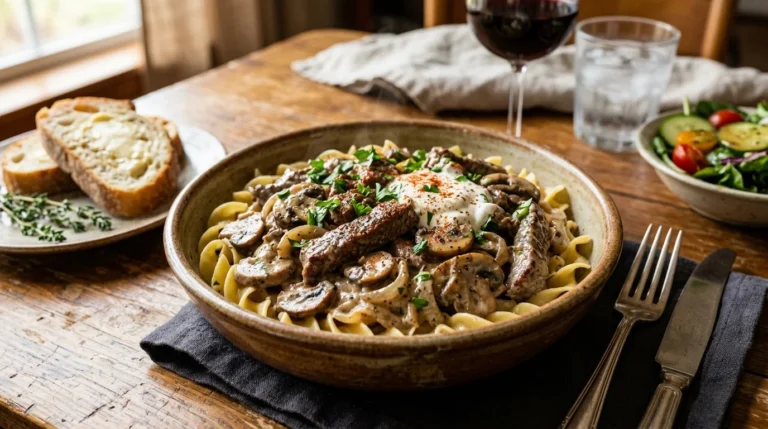
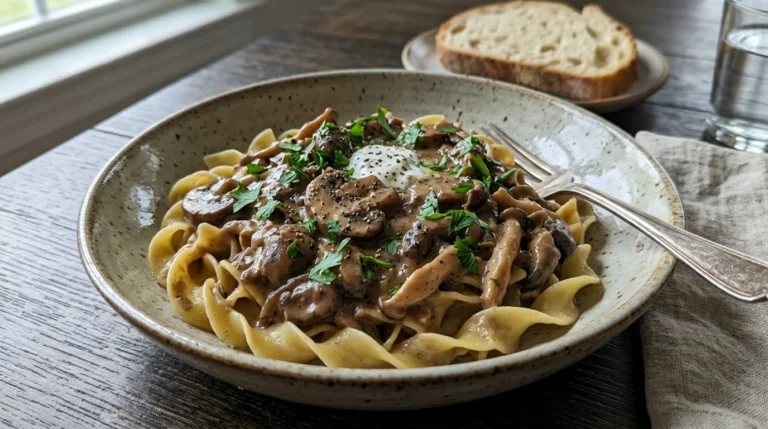
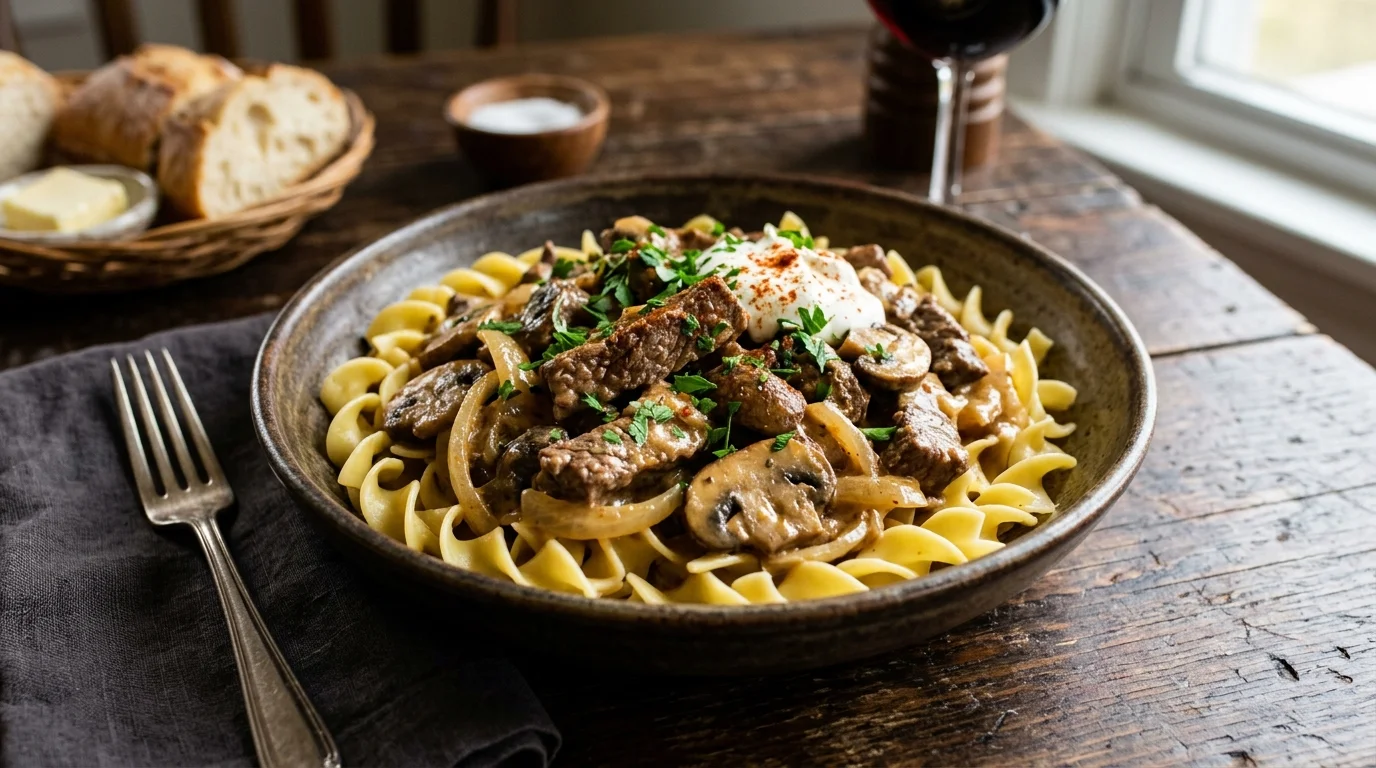
Beef stroganoff recipe is one of those dishes that has earned its place in home kitchens for generations — and for very good reason. Tender beef strips, golden mushrooms, and a silky sour cream sauce served over egg noodles deliver comfort, depth, and genuine satisfaction in under 40 minutes. Pull it together for a weeknight family dinner, a relaxed weekend meal, or an impressive dish when company arrives without warning. No complicated steps — just pure beef stroganoff goodness in every bowl.
Ingredients List
For beef stroganoff recipe (serves 4):
- 1½ lbs beef sirloin, sliced thin against the grain (ribeye for richer flavor; ground beef for a budget-friendly version)
- 8 oz wide egg noodles (pappardelle or fettuccine as substitutes)
- 10 oz cremini mushrooms, sliced ¼-inch thick (white button mushrooms work equally well)
- 1 medium yellow onion, finely diced
- 3 cloves garlic, minced
- 3 tbsp unsalted butter, divided
- 1 tbsp olive oil
- 2 tbsp all-purpose flour (cornstarch as a gluten-free substitute — use 1 tbsp)
- 1½ cups beef broth, low-sodium preferred
- ¼ cup dry white wine (optional — substitute with extra broth)
- 1 tbsp Worcestershire sauce
- 1 tsp Dijon mustard
- 1 tsp smoked paprika
- 1 tsp salt, plus more to taste
- ½ tsp black pepper
- ¾ cup full-fat sour cream, room temperature (plain Greek yogurt as a lighter substitute)
- 1 tbsp cream cheese (optional — adds body and richness to the finished sauce)
- 1 tsp fresh thyme leaves (optional — adds herbal depth)
- ½ tsp red pepper flakes (optional — for gentle heat)
- Fresh flat-leaf parsley, chopped, for garnish
Step-by-Step Instructions
Step 1: Gather and Prep Your Ingredients
Slice the beef into strips approximately ¼-inch thick, cutting firmly against the grain. Cutting against the grain shortens the muscle fibers, which is what makes every strip tender when it hits the pan — cutting with the grain leaves long fibers intact and produces tough, chewy meat that no sauce can rescue.
Pat the beef strips completely dry with paper towels before seasoning. Surface moisture creates steam in the pan instead of a sear, and steam produces gray, soft meat rather than the deeply browned crust that carries most of the flavor. Dry beef browns fast, caramelizes properly, and stays tender throughout the dish.
Pro Tip: Freeze the beef for 20 minutes before slicing — partially frozen meat is far easier to cut into uniform thin strips quickly and cleanly.
Step 2: Cook the Egg Noodles
Bring a large pot of generously salted water to a rolling boil. Cook the egg noodles one full minute less than the package directions indicate — they’ll finish cooking in the sauce at the end and continue softening in residual heat, so underdone is exactly right at this stage.
Scoop out ½ cup of pasta water before draining — this starchy liquid loosens the sauce if it thickens too much when the noodles are added. Drain the noodles, toss with a drizzle of olive oil to prevent clumping, and set aside while the sauce builds.
Pro Tip: Keep pasta water warm in a small cup beside the stove — cold starchy water doesn’t integrate into a hot sauce as smoothly as warm does.
Step 3: Sear the Beef Strips
Heat 1 tablespoon of butter and olive oil together in a large skillet over high heat until the butter begins to foam and brown at the edges. Add the beef strips in a single even layer — work in two batches if the pan feels crowded. Overcrowding drops the pan temperature immediately and causes the meat to steam rather than sear.
Cook each batch for 60–90 seconds per side only. Thin beef strips cook extremely fast at high heat — the goal is a deep brown exterior with a just-pink center. Transfer immediately to a plate and tent loosely with foil. Overcooked beef toughens in the sauce and cannot be rescued regardless of how good everything else tastes.
Pro Tip: Use the highest heat your pan holds safely — a properly hot pan is the single biggest difference between pale, gray beef and a proper restaurant-quality sear.
📖 Read More: Steak Stroganoff Recipe
Step 4: Build the Aromatic Base
Reduce heat to medium and add the remaining 2 tablespoons of butter to the same pan — all the browned bits from the beef are still there and packed with flavor. Add the diced onion and cook for 3–4 minutes until softened and translucent. Add garlic and stir for 30 seconds, then add the sliced mushrooms.
Cook the mushrooms for 5–6 minutes, stirring occasionally rather than constantly. They need consistent contact with the hot pan surface to develop a golden, slightly caramelized exterior — constant stirring keeps them pale and soft. Wait until their moisture has fully evaporated and the pan looks almost dry before moving to the next step.
Pro Tip: Add thyme leaves with the garlic if using — herbs bloom in hot butter and infuse the entire sauce base with herbal depth from the ground up.
Step 5: Build the Stroganoff Sauce
Sprinkle flour over the mushroom and onion mixture and stir continuously for 60 seconds to cook out the raw flour taste. Pour in white wine if using and let it bubble for 30 seconds, scraping up any browned bits from the pan base — those bits belong in the sauce. Add beef broth gradually while stirring to prevent lumps.
Stir in Worcestershire sauce, Dijon mustard, and smoked paprika, then bring to a gentle simmer over medium heat. Cook uncovered for 4–5 minutes, stirring occasionally, until the sauce thickens enough to coat the back of a spoon. Taste and adjust seasoning before the sour cream is added — the dairy will mellow the flavors slightly once incorporated.
Pro Tip: Keep heat at medium-low once the broth is in — a hard boil reduces the sauce too aggressively and produces a gluey texture before the sour cream goes in.
Step 6: Finish with Sour Cream, Combine, and Serve
Remove the pan from heat completely before adding the sour cream. Adding sour cream to a pan still over direct heat causes it to curdle immediately — the proteins seize, the fat separates, and the sauce turns grainy and broken beyond recovery. Off-heat, it folds in silky and smooth without exception.
Stir until fully combined, then return the seared beef strips and all resting juices to the pan. Add the cooked egg noodles and toss everything together gently. Use reserved pasta water one tablespoon at a time if the sauce needs loosening. Garnish with fresh parsley, crack black pepper over the top, and serve immediately.
Pro Tip: Serve in warmed bowls — cold bowls cause the sour cream sauce to thicken and set within minutes, before the last portion even reaches the table.
Cook Time
Total Time: 35 minutes | Prep: 10 minutes | Cook: 25 minutes One pan required.
Servings
Serves 4 | Approximately 12–14 oz per serving
Nutritional Information (approx. per serving)
| Nutrient | Amount |
|---|---|
| Calories | 560 kcal |
| Fat | 25g |
| Saturated Fat | 11g |
| Carbohydrates | 44g |
| Protein | 40g |
| Sugar | 4g |
| Fiber | 3g |
| Sodium | 630mg |
| Vitamin C | 5mg |
| Potassium | 650mg |
| Calcium | 90mg |
Values are approximate and will vary based on ingredients used.
Storage Instructions
Beef stroganoff is best eaten fresh — the beef is at its most tender straight from the pan, and the sour cream sauce is silkiest when freshly made. Refrigerate leftovers in an airtight container within two hours and consume within 3 days. Reheat gently on the stovetop over low heat, stirring frequently, with a splash of beef broth added to loosen the sauce as it warms back up.
Avoid microwaving on full power — rapid heat toughens the beef strips noticeably and risks breaking the sour cream sauce. Use 50% power in 60-second intervals with a splash of broth if stovetop isn’t available. Freezing the fully assembled dish is not recommended — sour cream separates on thawing. For the freezer pack method, freeze only the seared beef and mushroom base without sauce in portioned zip-lock bags for up to 2 months. Build the sour cream sauce fresh when reheating.
📖 Read More: Ground Beef Stroganoff Recipe
Suggestions
- Stroganoff Bowl Version: Skip the egg noodles and serve the creamy beef sauce over steamed jasmine or brown rice instead. Top with sliced green onions and a drizzle of sesame oil for a subtle East-meets-West finish. It’s naturally lower in carbohydrates and the rich sour cream sauce pairs particularly well with the neutral, absorbent base of plain rice.
- High-Protein Version: Increase beef to 2 lbs and reduce noodles to 4 oz. Blend ½ cup of smooth cottage cheese into the sour cream before adding it to the sauce — most people cannot detect the difference in flavor, yet the protein per serving jumps significantly. Greek yogurt stirred in alongside the sour cream is another reliable high-protein swap with the same tangy result.
- Dairy-Free Option: Replace sour cream with full-fat coconut cream and use plant-based butter throughout. Coconut cream holds together well in this sauce and carries the savory base flavors cleanly. The coconut note is subtle enough that most people identify it as richness rather than a specific flavor — it works particularly well when the Dijon and Worcestershire are kept at full measure.
- Kid-Friendly Version: Reduce Dijon mustard to ¼ teaspoon, skip red pepper flakes entirely, and use mild smoked paprika rather than a bold variety. Stirring a small teaspoon of ketchup into the sauce alongside the sour cream adds gentle sweetness that younger eaters consistently respond well to. Serving over familiar wide egg noodles keeps the meal firmly in comfort-food territory for the whole table.
- Weight-Loss Version: Swap full-fat sour cream for plain Greek yogurt, use cooking spray instead of butter for the vegetable sauté, and load the sauce with extra mushrooms and a large handful of baby spinach stirred in during the final 60 seconds. Spinach wilts almost instantly and adds vitamin C, iron, and fiber for minimal extra calories. Each serving drops to approximately 420 calories with these adjustments.
- Paprika-Forward Hungarian Twist: Double the smoked paprika to 2 teaspoons and add 1 teaspoon of sweet Hungarian paprika alongside it. Stir in a tablespoon of tomato paste with the flour for extra body and a deeper red color in the finished sauce. The result shifts the dish noticeably toward classic Hungarian goulash territory — bolder, more complex, and genuinely distinctive from the standard version.
- Creamy Peppercorn Variation: Add 1 teaspoon of coarsely crushed black peppercorns to the sauce with the broth, and finish with a splash of brandy before the sour cream goes in. The peppercorn heat builds slowly through every bite while the brandy adds a warm, aromatic roundness that elevates the sauce into bistro territory. Serve over mashed potatoes instead of noodles for the full steakhouse experience at home.
📖 Read More: Mushroom Stroganoff Recipe
Seasonal Relevance
Beef stroganoff recipe fits most naturally into the colder months — October through February — when rich, warming dishes with deep sauces are exactly what the season calls for. Cremini mushrooms reach peak firmness and flavor from September through November during domestic harvest season, making early autumn the ideal time to let them feature prominently in the sauce. During spring months, March through May, the dish adapts well with fresh thyme, a squeeze of lemon stirred into the finished sauce, and lighter sides like steamed green beans instead of noodles. Summer versions from June through August benefit from a slightly thinner sauce and a shorter simmer time to keep the dish feeling seasonally appropriate. Out of season, dried porcini mushrooms rehydrated in warm water and added alongside fresh cremini deepen the sauce considerably at any time of year.
Conclusion
Few recipes reward consistent technique as reliably as a well-made beef stroganoff recipe — the sear sets the flavor foundation, the sauce builds on it, and the sour cream finish brings everything together into something genuinely satisfying. Built from accessible ingredients and ready in 35 minutes, it belongs in every regular weekly rotation not just for convenience, but because it actually delivers every time. Try the Hungarian paprika twist for a bolder weeknight variation, or the creamy peppercorn version when you want something that feels like a proper restaurant dish at home. Either way, once this recipe is yours, it stays yours. Get the pan hot — dinner is already closer than you think.
FAQs
Q: What is the best cut of beef for beef stroganoff?
Sirloin is the most reliable and widely available choice — tender enough to stay soft in the sauce and flavorful enough to hold its own against the mushrooms and sour cream. Ribeye produces a richer result due to its higher fat content. Tenderloin is the most luxurious option but the most expensive. Flank steak works well when sliced very thin against the grain — any thicker and it turns chewy quickly once it reaches the sauce.
Q: Why does my beef stroganoff sauce keep breaking and turning grainy?
A broken sauce traces back to one cause almost every time — sour cream added to a pan still over direct heat. The proteins in sour cream seize and separate from the fat the moment they contact high heat. Remove the pan completely from the burner before the sour cream goes in, and ensure it has warmed to room temperature beforehand. Both steps together make a broken sauce essentially impossible under normal cooking conditions.
Q: Can I make beef stroganoff without mushrooms?
Mushrooms add earthiness and textural contrast, but the dish functions without them. For comparable depth, add an extra tablespoon of Worcestershire sauce and a teaspoon of soy sauce into the broth — both contribute umami without any mushroom flavor. Diced zucchini or finely chopped bell pepper substitute well for texture if you want a vegetable presence in the sauce without mushrooms specifically.
Q: What can I use instead of egg noodles in beef stroganoff?
Wide egg noodles are traditional, but pappardelle, fettuccine, and rotini all hold up well in the creamy sauce. For a low-carb option, cauliflower mash or zucchini noodles work surprisingly well — the sauce clings to both and the flavor carries through cleanly. Mashed potatoes are a particularly satisfying base that suits the richness of the sour cream sauce in a way that feels genuinely classic rather than like a substitution.
Q: How do I make beef stroganoff thicker without adding more flour?
Simmer the sauce uncovered for an extra 3–5 minutes before the sour cream is added — natural evaporation concentrates it without any thickener. Alternatively, stir a tablespoon of cream cheese in alongside the sour cream. Cream cheese melts in smoothly, adds immediate body and richness, and thickens the sauce noticeably without altering the flavor in any way the finished bowl reveals.