5 Dairy Free Milk Creamy, Ready in Under 10 Minutes
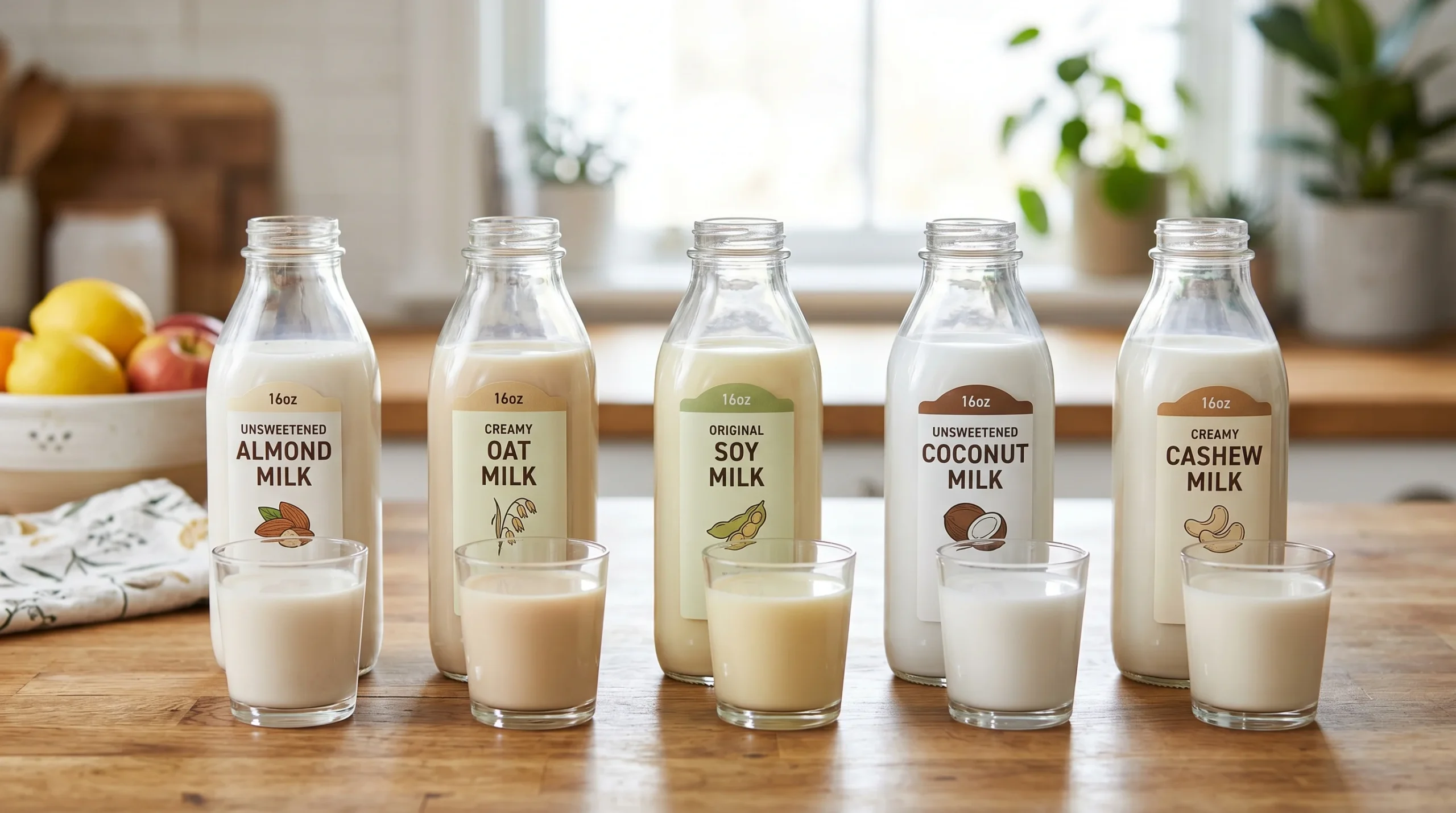
Dairy free milk belongs in every kitchen not just for those avoiding lactose, but for anyone wanting a cleaner, plant-based swap. These five varieties cover morning coffee, smoothies, baking, and savory cooking without compromise. Each one takes under 10 minutes to make at home with a blender and simple pantry staples. No complicated steps — just pure dairy free milk goodness, ready when you are.
Ingredients
1. Homemade Oat Milk (makes about 4 cups)
- 1 cup rolled oats [use certified GF oats for gluten-free]
- 4 cups cold water
- 1 tablespoon maple syrup (optional)
- ¼ teaspoon vanilla extract (optional)
- Pinch of salt
2. Homemade Almond Milk (makes about 4 cups)
- 1 cup raw almonds, soaked overnight [or blanched almonds for whiter milk]
- 4 cups cold water
- 1 tablespoon maple syrup or honey (optional)
- ¼ teaspoon vanilla extract (optional)
- Pinch of salt
3. Homemade Coconut Milk (makes about 2 cups full-fat)
- 1 cup unsweetened shredded coconut [or 1 cup fresh coconut flesh]
- 2 cups hot water [around 170°F — not boiling]
- Pinch of salt
4. Homemade Soy Milk (makes about 4 cups)
- 1 cup dried soybeans, soaked overnight
- 4 cups fresh water (for blending)
- 1–2 tablespoons sugar or maple syrup (optional)
- ¼ teaspoon vanilla extract (optional)
- Pinch of salt
5. Homemade Cashew Milk (makes about 4 cups)
- 1 cup raw cashews, soaked 2–4 hours [or unsoaked for a thinner result]
- 4 cups cold water
- 1 tablespoon maple syrup (optional)
- ¼ teaspoon vanilla extract (optional)
- Pinch of salt
Step-by-Step Instructions
Milk 1: How to Make Oat Milk
Add the rolled oats and cold water to a blender. Blend on high for 30–45 seconds — no longer. Over-blending activates the starches in the oats and turns your milk slimy and thick. That’s the most common oat milk mistake, and it’s entirely avoidable. Short and fast is the correct method here.
Pour the blended mixture through a fine mesh strainer or nut milk bag into a large bowl or pitcher. Don’t squeeze or press the oat pulp — just let it drain naturally. Pressing forces starch through the bag and creates that gluey texture you’re trying to avoid.
Add maple syrup, vanilla, and salt if using, stir to combine, and transfer to a sealed jar or bottle. Refrigerate immediately and shake well before every use — separation is completely normal. Oat milk is the creamiest of the five, with a mild, slightly sweet flavor that works seamlessly in coffee, cereal, and baking.
Pro Tip: Use ice-cold water and pre-chill your blender jug — cold temperature actively helps prevent sliminess.
Milk 2: How to Make Almond Milk
Drain and rinse the soaked almonds thoroughly, discarding the soaking water. Add to a blender with fresh cold water and blend on high for 60–90 seconds until the mixture is completely white and frothy. The overnight soak is non-negotiable — it softens the almonds and produces a noticeably smoother, creamier result.
Strain through a nut milk bag or double-layered cheesecloth, squeezing out as much liquid as possible. Unlike oat milk, you want to press the pulp here — almond pulp is dry and fibrous, not starchy, so squeezing only improves your yield. Add maple syrup, vanilla, and salt, then stir to combine.
Don’t throw away the leftover almond pulp — dry it in a low oven and use it as almond flour in baking, or stir it into oatmeal for extra fiber and protein. Almond milk keeps well refrigerated for 4–5 days in a sealed glass jar. Shake before every use.
Pro Tip: For a barista-style version that froths better, blend in ½ teaspoon of sunflower lecithin — it emulsifies the fat and holds foam.
Milk 3: How to Make Coconut Milk
Add the shredded coconut to a blender with the hot water. Let it sit for 5 minutes so the heat softens the coconut and begins releasing its natural fats. Then blend on high for 60–90 seconds until the mixture looks thick, white, and completely opaque.
Strain through a nut milk bag or fine cheesecloth, squeezing firmly to extract every drop of the rich, creamy liquid. The result is a full-fat homemade coconut milk — significantly richer and more flavorful than the carton variety. Season with a pinch of salt and use immediately or refrigerate.
Coconut milk is the richest and most calorie-dense of these five options, making it ideal for curries, soups, smoothies, and dairy-free desserts. For a lighter version, use 4 cups of water instead of 2. It will separate in the fridge — the fat rises to the top naturally and that’s a good sign.
Pro Tip: The solid layer that forms on top after refrigeration is coconut cream — scoop it off and whip it for a dairy-free topping.
📖 Read More: 5 small batch desserts
Milk 4: How to Make Soy Milk
Drain and rinse the soaked soybeans thoroughly. Add to a blender with 4 cups of fresh water and blend on high for a full 2 minutes until completely smooth. Soy milk requires a longer blend time than the other milks — soybeans are denser and need more work to fully break down.
Strain through a nut milk bag, squeezing firmly. Transfer the strained liquid to a saucepan and bring to a gentle simmer over medium heat, stirring regularly. Simmer for 10–15 minutes — this step is essential for soy milk specifically, as raw soy contains compounds that can cause digestive discomfort when uncooked.
Let it cool slightly, then add sugar, vanilla, and salt if using. Soy milk has the highest protein content of any plant-based milk — around 7–8g per cup — making it the strongest nutritional match for dairy. It also froths well, making it a reliable choice for lattes and cappuccinos.
Pro Tip: Don’t skip the simmering step — it’s what makes soy milk fully safe and comfortable to digest.
Milk 5: How to Make Cashew Milk
Drain and rinse the soaked cashews. Add to a blender with cold water, maple syrup, vanilla, and salt. Blend on high for 60–90 seconds. Cashews are soft enough after soaking that they blend almost completely smooth — no straining required in most cases, which makes this the most hands-off of the five.
If you want an ultra-smooth, silky result, pass it once through a fine mesh strainer to catch any remaining particles. But for smoothies, coffee, baking, or cereal, you can pour directly from the blender without any extra step. The texture is naturally creamy and rich without being as heavy as coconut milk.
Cashew milk is the most versatile option on this list. Its neutral flavor and thick consistency make it an excellent substitute in cream sauces, pasta dishes, and soups where you want body without a competing flavor. It also works beautifully as a base for dairy-free ice cream.
Pro Tip: For a noticeably creamier result, use only 3 cups of water instead of 4 — the higher cashew ratio makes a real difference.
Cook Time
Total Time: 5–25 minutes | Prep: 5 minutes | Blend: 1–2 minutes | Simmer (soy only): 10–15 minutes Oat, almond, cashew, and coconut milk require zero cooking. Soy milk is the only option that needs heat. Note: soaking times (almonds: overnight, soybeans: overnight, cashews: 2–4 hours) are not included in the above.
Servings
Each recipe makes approximately 4 cups (32 fl oz) — about 4 servings. Full-fat coconut milk yields roughly 2 cups (16 fl oz), or 4 cups when diluted with extra water for a lighter version.
Nutritional Information (approx. per 1 cup / 240ml serving, unsweetened)
| Nutrient | Amount |
|---|---|
| Calories | 25–80 kcal |
| Fat | 2–6g |
| Saturated Fat | 0.2–5g |
| Carbohydrates | 2–14g |
| Protein | 0.5–8g |
| Sugar | 0–5g |
| Fiber | 0–1g |
| Sodium | 40–100mg |
| Vitamin C | 0–1mg |
| Potassium | 30–160mg |
| Calcium | 20–60mg |
Values are approximate and will vary based on ingredients used.
Storage Instructions for Dairy Free Milk
All five dairy free milk varieties keep well in a sealed glass jar or bottle in the refrigerator for 3–5 days. Almond and cashew milk last closer to 5 days, while oat and soy milk are best within 3–4. Always shake or stir before using — separation is natural and expected in every homemade plant-based milk.
None of these milks freeze especially well in finished liquid form — the texture separates and turns grainy or watery after thawing. The exception is coconut milk: it freezes cleanly for up to 1 month in an airtight container. Thaw it in the fridge overnight and stir well before use.
For longer storage, use the freezer prep method. Measure and portion raw almonds, cashews, or oats into labelled freezer bags at the exact amount per batch. Freeze for up to 3 months. When you need fresh milk, pull a bag, soak overnight, and blend in the morning — fresh dairy free milk on demand, no planning needed.
Suggestions
- Use oat milk for baking: Oat milk’s neutral flavor and creamy body make it the most seamless dairy substitute in muffins, pancakes, and quick breads. It behaves closest to whole milk in both structure and moisture — swap it in at a 1:1 ratio with zero adjustment needed.
- Use soy milk for high-protein smoothies: With 7–8g of protein per cup, soy milk is the most nutritionally comparable plant-based option to dairy. Blend it with frozen banana, peanut butter, and cocoa powder for a post-workout shake that’s thick, filling, and genuinely satisfying.
- Use coconut milk for creamy soups and curries: Full-fat homemade coconut milk adds a richness to Thai curries and roasted vegetable soups that no other non-dairy option can match. Substitute it for heavy cream at a 1:1 ratio — it holds up to heat without splitting.
- Use cashew milk for cream sauces and pasta: Cashew milk has the most neutral flavor and naturally thick consistency of the five. It blends into Alfredo-style sauces and dairy-free mac and cheese without altering the flavor profile — just pure creaminess and body.
- Kid-friendly version: Oat milk and cashew milk are both mild, slightly sweet, and well-tolerated by kids. For children with nut allergies, oat milk is the safest bet. Add a small splash of vanilla and a touch of maple syrup for a milk kids actually enjoy cold.
- Barista versions for coffee: Soy milk and oat milk froth the most reliably for lattes and cappuccinos. Heat either to around 140°F and froth immediately — don’t overheat or the foam collapses. Both hold microfoam well enough for simple latte art at home.
- Weight-loss friendly option: Unsweetened almond milk has the lowest calorie count of the five — typically 25–35 calories per cup with no added sweetener. It’s light and clean, making it the go-to for anyone tracking intake while still wanting a plant-based milk in their daily routine.
- Build a dairy-free milk variety pack: Batch-make two or three of these options on a Sunday and store them in labelled bottles. Oat milk for coffee, cashew milk for cooking, almond milk for smoothies — having all three on hand at once turns plant-based eating into something genuinely effortless.
When to Make These Dairy Free Milk Options
There’s no season for dairy free milk — these recipes work year-round with pantry staples. Late summer (July–September) is the best window for fresh coconut, which peaks in availability and flavor. In winter, oat and soy milk shine in warm drinks. April through August, almond and cashew milk are ideal blended cold. Keep two varieties in the fridge to cover every use case.
Conclusion
These five dairy free milk options cover every use case — morning coffee, smoothies, cream sauces, baking, and everything in between. Once you’ve made any of them at home, store-bought cartons start to feel like an unnecessary expense. The ingredients are minimal, the process is fast, and the result is noticeably fresher.
Pick whichever one matches how you cook most and start there — then try a second. Dairy free milk isn’t a compromise; it’s just a different, often better way to stock your kitchen. Make one batch this week and see how quickly it becomes a regular habit.