Smash Burger Ready in 15 Minutes
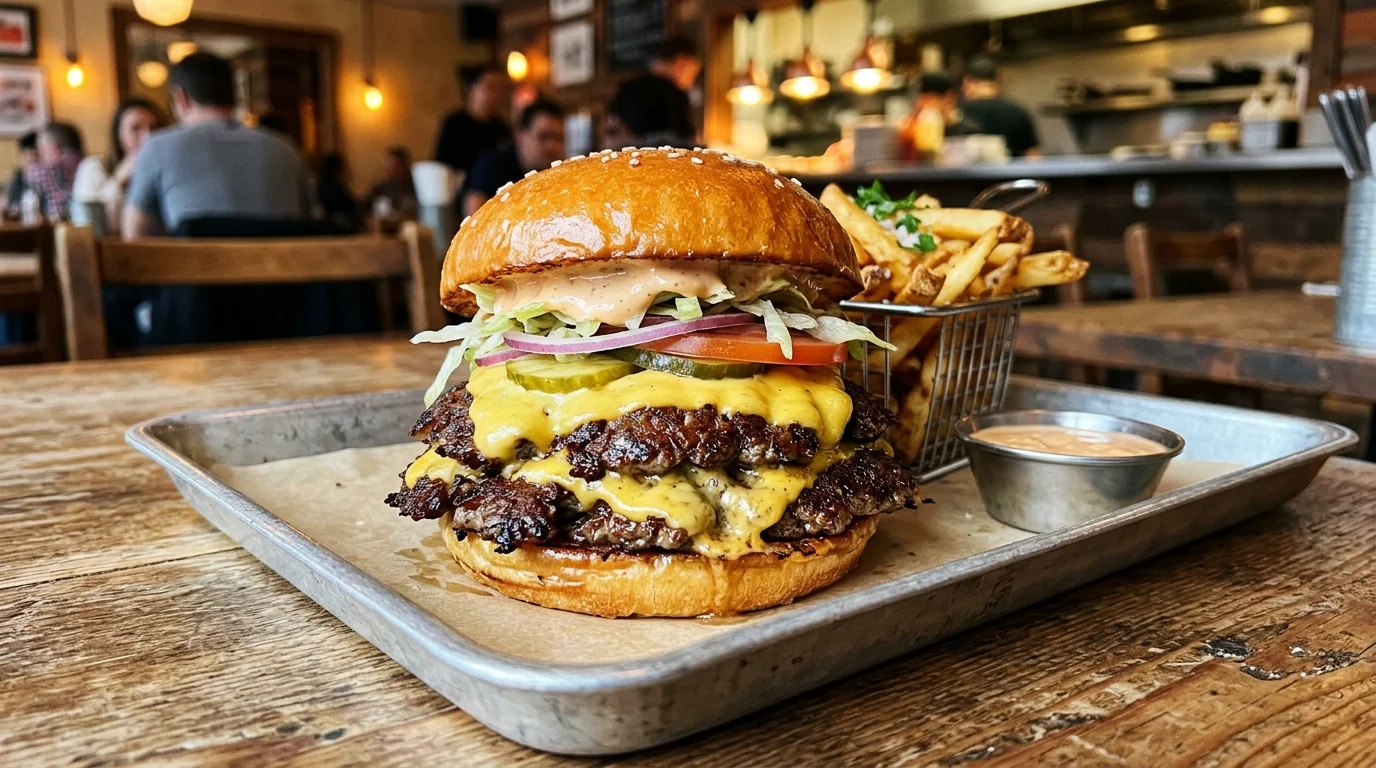
A smash burger is not a regular burger. The moment that ball of ground beef hits a screaming hot cast iron and gets pressed flat, something happens that no thick, paddy-style burger can replicate the edges go lacey and crispy, the fat renders into the crust, and the centre stays juicy and deeply savoury all the way through.
It’s the Maillard reaction at full throttle, and it produces more flavour per square inch than any other burger method. Whether you’re making these on a weeknight or cooking for a crowd on the weekend, once you go smash burger you will not go back. No complicated steps just pure smash burger satisfaction, done properly in one pan.
Ingredients
For the Smash Burger Patties (makes 4 double smash burgers):
- 700g (1.5 lb) 80/20 ground beef [the fat ratio is non-negotiable — leaner beef won’t deliver]
- 1 tsp fine salt
- 1 tsp black pepper, freshly ground
- ½ tsp garlic powder
- 1 tbsp neutral oil [vegetable or canola — high smoke point essential]
For the Smash Burger Sauce:
- ½ cup mayonnaise
- 2 tbsp ketchup
- 1 tbsp yellow mustard
- 1 tbsp sweet pickle relish [or finely chopped dill pickles]
- 1 tsp white wine vinegar
- ½ tsp garlic powder
- ½ tsp smoked paprika
- Pinch of sugar
- Salt and black pepper, to taste
For the Build:
- 4 brioche burger buns, split and toasted
- 8 slices American cheese [or sharp cheddar — American melts faster and more evenly]
- 1 cup shredded iceberg lettuce
- 1 large white or yellow onion, very finely diced
- 8–12 dill pickle slices
- 2 medium tomatoes, thinly sliced (optional)
- Yellow mustard, for extra spread (optional)
Step-by-Step Instructions
Step 1: Gather and Prep Your Ingredients
Before the pan goes on the heat, get every element ready and within arm’s reach. Divide the ground beef into 8 equal balls — roughly 85g (3 oz) each — without working the meat too much. Overworking compacts the fat and protein structure, which fights against the crust you’re trying to build. Season the balls lightly on the outside with salt, pepper, and garlic powder. Finely dice the onion, shred the lettuce, slice the tomatoes if using, and lay out the cheese slices so they’re ready to go the moment the patties come off the heat. The actual cooking of a smash burger moves fast — everything needs to be staged before the first ball hits the pan.
Pro Tip: Refrigerate the seasoned beef balls for 15–20 minutes before cooking. Cold beef holds together better during the smash and produces a thinner, more even patty. Warm beef spreads inconsistently and can tear when pressed.
Step 2: Make the Smash Burger Sauce
Combine the mayonnaise, ketchup, yellow mustard, sweet pickle relish, white wine vinegar, garlic powder, and smoked paprika in a small bowl. Stir well until completely smooth and uniform in colour. Taste it — it should be tangy, slightly sweet, a little smoky, and rich enough to hold its own against the bold flavour of the smash burger patty. Adjust with a pinch of sugar if it needs rounding, or a small extra splash of vinegar if you want a sharper edge. Cover and refrigerate until you’re ready to build. This sauce can be made up to 5 days in advance and stored in an airtight jar — it only gets better as the flavours settle together.
Pro Tip: Make the sauce at least 30 minutes before you plan to eat. Even a short rest in the refrigerator allows the garlic powder and smoked paprika to bloom fully into the mayo base, giving the sauce a noticeably more rounded, cohesive flavour than one used immediately after mixing.
Step 3: Toast the Buns
Split the brioche buns and place them cut-side down in a dry skillet over medium heat for 60–90 seconds until golden and lightly toasted. Don’t rush this step and don’t skip it — a toasted bun is a structural necessity for a smash burger, not just a preference. The toasted surface creates a barrier that prevents the sauce and burger juices from soaking straight through and turning the bread to mush before you’ve taken three bites. Brioche toasts faster than a standard bun, so watch it closely. Set the toasted buns aside and increase the heat to high for the cooking step.
Pro Tip: Add a thin scrape of butter to the cut face of each bun before placing it in the pan. Butter-toasted brioche has a richer, more caramelised surface than dry-toasted, and it adds another layer of flavour to the finished smash burger without any additional effort.
📖 Read More: pizza casserole
Step 4: Smash and Sear the Patties
Heat a cast iron skillet or heavy flat-bottomed pan over high heat until it is genuinely, properly hot — 3–4 minutes minimum. Add a thin film of neutral oil and let it shimmer. Place two beef balls into the pan, spacing them apart. Immediately place a square of parchment paper over each ball and press down hard and flat with a heavy spatula, a small pot, or a dedicated burger press — hold the pressure for a full 10 seconds. The patty should be no more than ¼ inch thick. Sprinkle a pinch of finely diced onion directly onto the raw face of each patty while it cooks. Cook undisturbed for 2–2.5 minutes until the edges are deeply browned and visibly crispy.
Pro Tip: Do not move the patties once they’re smashed. The crust builds through sustained contact with the hot pan surface — lifting or shifting the patty before it’s ready breaks the crust and releases the juices you’re trying to keep inside. If the patty sticks when you try to flip it, it’s not ready yet. A properly crusted smash burger releases cleanly on its own.
Step 5: Flip, Cheese, and Finish
Flip each patty in one confident, firm motion using a thin metal spatula — get the blade flat and low against the pan surface and scrape rather than lift. The crust should come away cleanly and look deeply golden to dark brown at the edges. Immediately place a slice of American cheese on each patty and let it melt for 30–45 seconds. For a double smash burger, stack one cheesed patty directly on top of the other in the pan for the final 20 seconds so the cheese between them gets slightly melty and the two patties bond together. Remove from the pan and repeat with the remaining beef balls. Work in batches — never crowd the pan, or the temperature drops and you get steaming instead of searing.
Pro Tip: American cheese is the right choice here, and it’s not up for debate on a smash burger. It melts completely and evenly at the exact temperature of a just-flipped patty, creating that glossy, fully melted layer in under a minute. Cheddar, provolone, and most other cheeses need more time and heat to reach the same result.
Step 6: Build, Stack, and Serve
Spread the smash burger sauce generously across both the top and bottom of each toasted bun — don’t be shy with it. On the bottom bun, layer the shredded iceberg lettuce first, followed by tomato slices if using, then the double patty stack. Add dill pickle slices directly on top of the cheese, where they can nestle into the melted surface and stay in place. Close with the sauced top bun and press down lightly. Serve immediately — a smash burger is at its absolute peak the moment it’s built, while the crust is still crispy, the cheese is still molten, and the bun is warm from toasting.
Pro Tip: Build the burger in the order listed — sauce, lettuce, tomato, patty, pickles, top bun. Lettuce directly on the bottom bun acts as a second moisture barrier beneath the patty, protecting the bread from the meat juices while still keeping every bite crisp and cold against the hot beef.
Cook Time
Total Time: 15 minutes | Prep: 8 minutes | Cook: 7 minutes One cast iron pan, one skillet for buns — dinner on the table in under 20 minutes.
Servings
Makes 4 double smash burgers — serves 4.
Nutritional Information (approx. per serving — one double smash burger with sauce and toppings)
| Nutrient | Amount |
|---|---|
| Calories | 720 kcal |
| Fat | 46g |
| Saturated Fat | 18g |
| Carbohydrates | 38g |
| Protein | 42g |
| Sugar | 8g |
| Fiber | 1g |
| Sodium | 980mg |
| Vitamin C | 6mg |
| Potassium | 520mg |
| Calcium | 260mg |
Values are approximate and will vary based on ingredients used.
Storage Instructions
A smash burger is one of those meals that is genuinely best eaten immediately — the crispy, lacey crust that defines the whole experience softens within minutes of the patty coming off the pan. If you need to store cooked patties, let them cool completely and refrigerate in an airtight container for up to 3 days. Reheat in a dry cast iron skillet over medium-high heat for 1–2 minutes per side rather than in the microwave — the microwave steams the patty and destroys any remaining crust entirely. The pan revival won’t fully restore the original sear, but it gets meaningfully closer than any other reheating method. The smash burger sauce stores beautifully — keep it in an airtight jar in the refrigerator for up to 5 days and use it across the week as a dipping sauce, sandwich spread, or burger topping. For meal prep, the most practical approach is to portion the raw beef balls and refrigerate them uncooked for up to 24 hours — they go from fridge to plate in under 10 minutes when you’re ready. Freezing raw beef balls is also an excellent option. Place the portioned, unseasoned balls on a lined baking sheet, freeze until solid, then transfer to a freezer bag with parchment between each ball. They keep well for up to 3 months. Season and cook directly from frozen, adding an extra 60–90 seconds per side to account for the lower starting temperature.
📖 Read More: Hamburger Meat Recipes
Suggestions
- Bacon Smash Burger: Fry 8 strips of thin-cut bacon in the same cast iron before cooking the patties — the rendered bacon fat left in the pan adds another layer of flavour to the sear. Stack two strips of crispy bacon on top of each double patty alongside the pickles. The combination of bacon fat, beef crust, melted American cheese, and smash burger sauce is difficult to improve on and deeply satisfying in every single bite.
- Spicy Jalapeño Build: Stir 1 tablespoon of hot sauce and ½ teaspoon of cayenne directly into the smash burger sauce. Add 4–5 slices of fresh or pickled jalapeño on top of the cheese layer of each burger. Finish with a drizzle of hot honey across the patty just before closing the bun — the sweet heat against the salty, crispy beef crust is one of the best flavour combinations a smash burger can carry.
- Mushroom and Swiss Version: Sauté 1 cup of sliced cremini mushrooms in butter with a splash of Worcestershire sauce until deeply caramelised and glossy. Replace the American cheese with Swiss, which melts more slowly but pairs with mushrooms in a way that American simply doesn’t. Add the mushroom pile on top of the melted Swiss and finish with a Dijon-mayo spread in place of the standard smash burger sauce.
- Smash Burger Sliders: Use dinner rolls instead of brioche buns and portion the beef into 40g balls instead of 85g. Smash and cook identically — the smaller size means they cook in about 90 seconds per side. Arrange eight to twelve sliders on a platter with the sauce on the side for dipping. This version is ideal for parties, game day, or any occasion where people want to eat with their hands and try more than one.
- Dairy-Free Build: Skip the American cheese entirely and replace the mayo-based sauce with a vegan aioli or cashew-based mayo. The smash burger itself is naturally dairy-free — the technique is about the beef and the crust, not the cheese. Load the dairy-free version with extra pickles, shredded lettuce, tomato, and a generous pour of the adjusted sauce to compensate for the missing richness of the cheese.
- Smash Burger Bowl (Low-Carb): Skip the bun entirely and serve the double patty stack over a base of shredded iceberg lettuce, diced tomato, sliced pickles, and finely diced white onion. Drizzle the smash burger sauce generously over everything. All the flavour of the classic build arrives intact — the crispy patty, the melted cheese, the tangy sauce — just without the carbohydrate load of the bun.
- Kid-Friendly Single Patty Version: Use a single 85g patty instead of a double stack, keep the seasoning mild, and skip the mustard and vinegar in the sauce — replace with a simple ketchup-mayo blend that young eaters tend to prefer. Serve on a smaller potato roll rather than a full brioche bun for a portion size that’s manageable for little hands without being wasteful.
- Weight-Loss Friendly Option: Use 90/10 lean ground beef instead of 80/20 — the crust won’t be quite as lacey, but it still smashes and sears well with a properly hot pan. Swap the brioche for a whole grain bun or serve open-faced on a single toasted half. Thin the sauce with extra vinegar and a tablespoon of water to reduce the calorie density while keeping the flavour intact. Load up on shredded lettuce, tomato, and pickles for volume without meaningfully increasing the calorie count.
Seasonal Relevance
A smash burger belongs year-round, but the setting shifts with the season. From May through September, smash burgers move naturally to the outdoor flat-top or griddle — a cast iron placed over a gas grill on high heat replicates the indoor result almost perfectly, and cooking outside keeps the kitchen cool during the warmer months. Summer is also the best time for fresh tomato slices on the build — peak-season tomatoes from July through September add a sweetness and acidity that supermarket tomatoes in other months simply can’t match, and they’re worth seeking out specifically for burger season. From October through March, the smash burger becomes a pure indoor cast iron exercise — the kind of fast, satisfying weeknight meal that comes together in the time it takes to heat the pan properly. In winter, lean into heartier builds: caramelised onions cooked low and slow, mushroom and Swiss, or a bacon-loaded version that feels appropriately indulgent when the weather calls for it. The technique stays identical regardless of season — only the toppings and setting need to adapt.
Conclusion
A smash burger proves that fast food done right at home is better than anything served through a drive-through window. The technique is simple but specific — hot pan, cold beef, hard smash, no moving — and once you’ve nailed it once, the whole process feels effortless. The crispy, lacey crust is not achievable any other way, and that texture is the entire point of making a smash burger instead of any other style. Build your first one this week, get the sauce made ahead, and have your cast iron screaming hot before the beef goes in. Try the bacon version, the jalapeño build, the slider format — each one is a different experience built on the same reliable foundation. Once you’ve cooked a proper smash burger at home, the only thing that changes is how rarely you order burgers anywhere else.
FAQs
Q: Why is 80/20 ground beef so important for a smash burger? The 20% fat content in 80/20 beef is what creates the crispy, lacey crust that defines a smash burger. When the beef ball is pressed flat against a screaming hot pan surface, the fat renders immediately into the contact zone and fries the exterior while the interior stays juicy. Leaner beef — 90/10 or above — doesn’t have enough fat to produce the same result. The crust comes out pale, the texture is drier, and the flavour is significantly more muted. 80/20 is the minimum fat content for this technique to work the way it should.
Q: What pan is best for cooking smash burgers at home? A cast iron skillet is the best tool for a smash burger, full stop. Cast iron retains heat at high temperatures better than any other home cookware, which means the surface temperature barely drops when the cold beef balls make contact. That sustained high heat is what creates the crust. A heavy stainless steel pan is the next best option. Non-stick pans are not suitable — they cannot handle the high heat required without degrading, and they don’t produce the same sear quality even when used at lower temperatures.
Q: Can I make smash burgers on a grill instead of a stovetop? Yes — place a cast iron skillet or griddle plate directly on the grill grates over high heat and let it preheat for at least 5 minutes. The technique is identical to the stovetop version. Avoid trying to smash burgers directly on standard grill grates — the beef falls through the gaps and you lose the flat-surface contact that creates the crust. A flat cast iron surface over high grill heat is the outdoor equivalent of the indoor setup and produces the same result.
Q: How thin should I smash the patty? No more than ¼ inch — roughly the thickness of two stacked coins. The thinner the patty, the more surface area contacts the hot pan, and the more crust you develop relative to the total size of the burger. This is why a double smash burger — two thin patties stacked — delivers more flavour than a single thick patty of the same total weight. The ratio of crust to interior is dramatically higher with thin patties, and that crust is where all the flavour lives.
Q: My smash burger patties are sticking to the pan — what’s going wrong? Two likely causes: the pan wasn’t hot enough before the beef went in, or you’re trying to flip before the crust has fully formed. A properly hot cast iron with a thin film of neutral oil should release the patty cleanly once the crust is set. If it sticks when you try to flip, leave it for another 30 seconds and try again — a crusted smash burger releases on its own without force. If it’s still sticking, the pan temperature was likely too low to begin with. Let the pan reheat fully between batches.
Q: Can I use pre-formed burger patties instead of fresh-rolled beef balls? You can, but the result won’t be the same. Pre-formed patties are typically too compact and too even to smash effectively — the beef has already been worked and pressed, which means it doesn’t spread as naturally under pressure and the crust forms unevenly. Fresh ground beef rolled loosely into balls smashes flat in a way that creates the characteristic irregular, lacey edge. If pre-formed patties are your only option, let them come to room temperature first and press as firmly as you can — it’s a compromise but still produces a better result than a thick patty.
Q: What’s the best way to serve smash burgers for a crowd? Set up an assembly line before you start cooking. Toast all the buns, make the sauce in advance, and prep all the toppings so building is instant the moment each batch comes off the pan. Cook in batches of two patties at a time — never more, because the pan temperature drops with each additional ball and you lose the sear. Wrap each finished double burger loosely in parchment paper while you finish the rest of the batch — the paper traps just enough steam to keep the bun warm and the cheese melted without making anything soggy. Serve the whole batch together rather than handing them out one at a time.