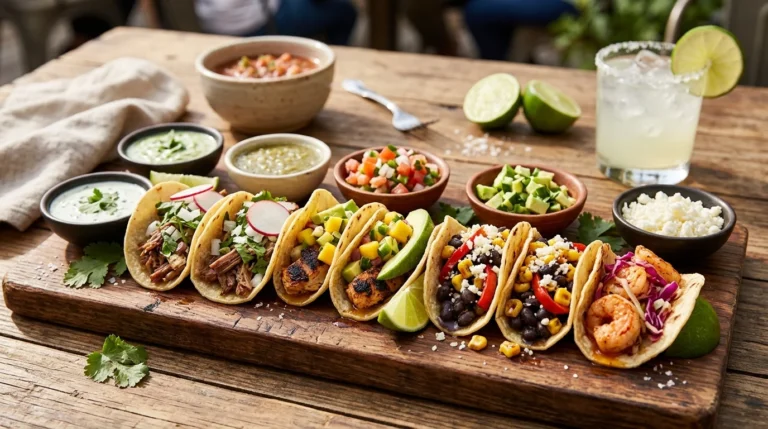
Shrimp Tacos Ready in 20 Minutes
Shrimp tacos are the kind of meal that earns a permanent spot in your weeknight lineup after the very first time you make them. The shrimp cook in under 5 minutes, the toppings come together while the pan heats up, and the whole thing lands on the table faster than most delivery orders arrive at your door.
What makes them genuinely great not just quick is the layering of textures and flavours in every bite: seasoned, slightly charred shrimp against cool, crunchy slaw, a creamy chipotle sauce, and a hit of fresh lime that ties everything together. Whether you’re feeding a family on a Tuesday or setting up a taco bar for the weekend, shrimp tacos deliver every single time. No complicated steps — just pure shrimp taco freshness, ready in 20 minutes flat.
Ingredients
For the Shrimp:
- 500g (1.1 lb) large raw shrimp, peeled and deveined [fresh or thawed from frozen]
- 1 tbsp olive oil
- 1 tsp smoked paprika
- 1 tsp cumin
- ½ tsp garlic powder
- ½ tsp onion powder
- ½ tsp chili powder
- ¼ tsp cayenne pepper [adjust to heat preference]
- ½ tsp fine salt
- ¼ tsp black pepper
- Juice of ½ lime
For the Chipotle Lime Sauce:
- ½ cup mayonnaise [or sour cream, or a mix of both]
- 2 tbsp chipotle peppers in adobo sauce, finely minced [1–2 peppers depending on heat preference]
- 1 tbsp fresh lime juice
- 1 tsp honey
- ½ tsp garlic powder
- Salt, to taste
For the Slaw:
- 2 cups shredded purple cabbage [or green cabbage, or a mix]
- 1 cup shredded green cabbage
- ¼ cup fresh cilantro, roughly chopped
- 2 tbsp fresh lime juice
- 1 tbsp olive oil
- 1 tsp honey
- ½ tsp fine salt
- ¼ tsp black pepper
For the Build:
- 8–10 small corn tortillas [or flour tortillas]
- 1 large avocado, sliced or roughly mashed
- ½ cup mango salsa or fresh pico de gallo [store-bought or homemade]
- 1 lime, cut into wedges for serving
- Extra fresh cilantro, for garnish
- Sliced jalapeño, for serving (optional)
- Crumbled cotija cheese or feta (optional)
Step-by-Step Instructions
Step 1: Gather and Prep Your Ingredients
Before the pan goes on, get every component ready. Peel and devein the shrimp if not already done, pat them completely dry with paper towels, and place them in a bowl. Shred the cabbage, chop the cilantro, slice the avocado, and have your lime wedges cut and ready. The chipotle sauce and slaw can both be made before the shrimp ever hit the pan — having them finished and waiting means the moment the shrimp are cooked, everything comes together instantly without losing heat or momentum at the stove.
Pro Tip: Patting the shrimp dry is the single most important prep step. Moisture on the surface of the shrimp creates steam in the pan, which prevents browning entirely. Dry shrimp sear — wet shrimp boil in their own liquid, and the difference in flavour is significant.
Step 2: Make the Chipotle Lime Sauce
In a small bowl, combine the mayonnaise, finely minced chipotle peppers in adobo, lime juice, honey, and garlic powder. Stir well until completely smooth. Taste it — the sauce should be smoky, tangy, slightly sweet, and have a slow-building heat that doesn’t overwhelm. Add salt to taste and adjust the chipotle quantity based on your preferred heat level. One chipotle pepper produces a mild to medium heat; two gives a genuine kick. Cover and refrigerate until needed. The sauce keeps for up to 5 days in the refrigerator and gets better after the first day.
Pro Tip: Don’t discard the adobo sauce from the tin — stir a teaspoon of it directly into the chipotle lime sauce for extra depth and colour. The adobo liquid is packed with tomato, vinegar, and spice flavour that amplifies the whole sauce without adding any extra chopping or steps.
Step 3: Dress the Slaw
In a medium bowl, combine the shredded purple cabbage, green cabbage, and chopped cilantro. In a small separate bowl, whisk together the lime juice, olive oil, honey, salt, and pepper. Pour the dressing over the cabbage and toss thoroughly until every strand is coated. Taste and adjust — if it needs more brightness, add an extra squeeze of lime. Set aside for at least 10 minutes before serving. The brief resting time allows the cabbage to soften very slightly in the acid while still keeping its crunch, and the flavours settle into each other in a way they don’t immediately after tossing.
Pro Tip: Purple cabbage is the better choice for shrimp tacos beyond just the colour. It holds its crunch longer than green cabbage after being dressed, which means the slaw stays textural even if the tacos are assembled a few minutes before eating.
📖 Read More: pizza casserole
Step 4: Season and Cook the Shrimp
In the bowl with the dry shrimp, add the olive oil and all the spices — smoked paprika, cumin, garlic powder, onion powder, chili powder, cayenne, salt, and pepper. Toss until every shrimp is evenly and thoroughly coated in the spice mixture. Heat a large cast iron or heavy skillet over medium-high heat until properly hot — about 2 minutes. Add the seasoned shrimp in a single layer, making sure not to crowd the pan. Cook for 90 seconds without touching them, then flip each shrimp and cook for another 60–90 seconds until pink, slightly charred at the edges, and just cooked through. Squeeze the lime juice directly over the pan in the final 15 seconds and toss once to coat.
Pro Tip: Shrimp are done the moment they curl into a loose C shape and turn opaque throughout. An O shape means they are overcooked — the protein has contracted too far and the texture turns rubbery. Pull them off the heat at the C and carry-over heat does the rest.
Step 5: Warm the Tortillas
While the shrimp rest for 60 seconds off the heat, warm the corn tortillas directly over a gas flame for 20–30 seconds per side until they have light char marks and are pliable and fragrant. If you don’t have a gas stove, warm them in a dry skillet over high heat for 30 seconds per side, or wrap a stack in a damp paper towel and microwave for 45 seconds. Warm tortillas are not optional — a cold, stiff tortilla cracks when folded, drops its fillings, and contributes nothing to the eating experience. A warm, slightly charred corn tortilla is structurally sound and adds its own toasted, earthy flavour to every shrimp taco bite.
Pro Tip: Double up the tortillas for each taco — two corn tortillas stacked together is the traditional street taco build, and it gives each taco the structural strength to hold the shrimp, slaw, and sauce without tearing. One corn tortilla on its own is rarely enough.
Step 6: Build, Garnish, and Serve
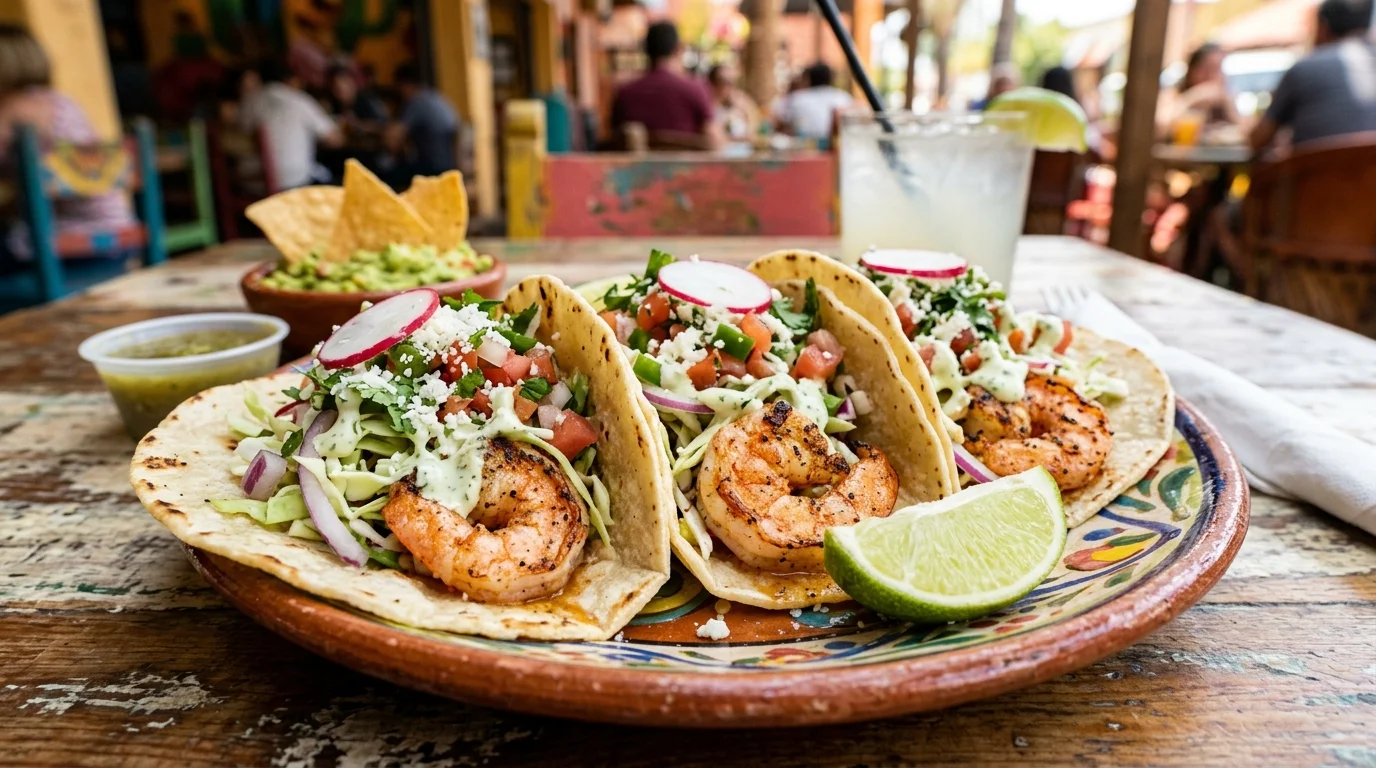
Lay two stacked tortillas flat and spread a generous spoonful of chipotle lime sauce down the centre. Add a layer of dressed slaw, then 3–4 shrimp per taco. Spoon mango salsa or pico de gallo over the shrimp, add a few slices of avocado, and finish with a scattering of fresh cilantro. Add sliced jalapeño and crumbled cotija cheese if using. Squeeze a wedge of fresh lime over the top of each assembled shrimp taco just before eating — this final hit of acid is what brings the whole taco into focus. Serve immediately, with extra sauce and lime wedges on the side.
Pro Tip: Build each shrimp taco to order rather than assembling them all at once and letting them sit. Pre-built tacos lose their textural contrast within minutes as the sauce and salsa soften the tortilla and wilt the slaw. Lay everything out and let people build their own — it’s faster and produces a better result.
Cook Time
Total Time: 20 minutes | Prep: 12 minutes | Cook: 8 minutes One pan for the shrimp, one for the tortillas — dinner on the table in 20 minutes.
Servings
Makes 8–10 shrimp tacos — serves 3 to 4.
Nutritional Information (approx. per serving — 2–3 tacos with sauce and toppings)
| Nutrient | Amount |
|---|---|
| Calories | 480 kcal |
| Fat | 22g |
| Saturated Fat | 4g |
| Carbohydrates | 42g |
| Protein | 32g |
| Sugar | 8g |
| Fiber | 6g |
| Sodium | 720mg |
| Vitamin C | 28mg |
| Potassium | 540mg |
| Calcium | 140mg |
Values are approximate and will vary based on ingredients used.
Storage Instructions
Shrimp tacos are best assembled and eaten immediately — the components are excellent for storing separately, but the assembled taco deteriorates quickly as the sauce softens the tortilla and the slaw loses its crunch. Store each element in its own airtight container in the refrigerator for the best results. Cooked shrimp keep well for up to 2 days — reheat gently in a dry skillet over medium heat for 60–90 seconds per side, just until warmed through. Avoid the microwave for leftover shrimp; it overcooks them further and turns the texture rubbery within seconds. The chipotle lime sauce keeps in a sealed jar for up to 5 days and actually improves after 24 hours as the chipotle flavour deepens and mellows into the mayo base. The dressed slaw is best eaten within 24 hours — it softens significantly after that point and loses the crunch that makes it worth including in the first place. For undressed slaw, shredded cabbage stays crisp in the refrigerator for up to 3 days when stored dry and dressed just before serving. Corn tortillas keep well at room temperature in their original packaging for several days, or refrigerated for up to a week. For freezing, raw seasoned shrimp freeze well — toss in the spice mixture, spread flat on a lined baking sheet, freeze solid, then transfer to a freezer bag for up to 3 months. Cook directly from frozen in a hot pan, adding an extra 60–90 seconds to the cooking time on the first side.
📖 Read More: smash burger
Suggestions
- Grilled Shrimp Tacos: Thread the seasoned shrimp onto metal or pre-soaked wooden skewers and grill over high heat for 2 minutes per side instead of pan-searing. Grilled shrimp tacos have a smokier, slightly charred flavour that works beautifully with the chipotle lime sauce and the fresh slaw. This is the summer version of the recipe — outdoor grill, cold drinks, and a taco bar laid out on the table.
- Crispy Battered Shrimp Tacos: Dip the seasoned shrimp in a light beer batter — 1 cup flour, 1 cup cold beer, a pinch of salt and cumin — and fry in 350°F neutral oil for 2–3 minutes until golden and crispy. Drain on a wire rack and build immediately. This is the Baja-style approach to shrimp tacos, and the contrast between the crispy battered shell and the cool slaw and sauce is genuinely outstanding.
- Dairy-Free Build: The base shrimp taco recipe is naturally dairy-free when made with mayonnaise rather than sour cream in the sauce, and when cotija is skipped. Use a dairy-free mayo if needed. Load up on avocado for the creamy richness that cheese would otherwise provide, and don’t skip the mango salsa — its sweetness plays the same balancing role that dairy fat would in the build.
- High-Protein Meal Prep Version: Cook a double batch of the seasoned shrimp and store in the refrigerator. Prep individual containers with shredded cabbage, chipotle sauce in a small side container, and pre-portioned avocado with lime juice to prevent browning. Warm tortillas and assemble fresh when ready to eat — the whole build takes under 3 minutes once the components are ready. Each portion delivers over 35g of protein and makes a genuinely fast, nutritious weekday lunch.
- Mango Habanero Shrimp Tacos: Add ½ teaspoon of habanero hot sauce or finely minced fresh habanero to the chipotle lime sauce, and use a generous mango salsa as the primary topping instead of pico de gallo. The fruity sweetness of the mango against the fiery habanero and the smoky shrimp is one of the best flavour combinations in the taco world — bright, hot, and completely addictive.
- Kid-Friendly Mild Version: Reduce the cayenne to a pinch or skip it entirely, use mild chili powder, and replace the chipotle lime sauce with a simple sour cream and lime dressing. Skip the jalapeño and offer the mango salsa as the only topping alongside the slaw. Younger eaters tend to enjoy the sweetness of the shrimp and mango combination without any heat, and corn tortillas are naturally fun and manageable for small hands.
- Flour Tortilla Build: Swap the corn tortillas for small flour tortillas if corn isn’t available or preferred. Flour tortillas are softer, more pliable, and less likely to crack, which makes them a more forgiving option when building shrimp tacos for the first time or feeding a crowd quickly. They carry the fillings well and toast nicely in a dry pan with a light char mark on each side.
- Weight-Loss Friendly Option: Replace the mayonnaise in the chipotle sauce with low-fat Greek yogurt — the texture stays creamy and the tang actually enhances the chipotle flavour rather than fighting it. Use one corn tortilla per taco instead of two, load generously with slaw and avocado for volume, and portion 3 medium shrimp per taco. The calorie count drops to around 320 per serving of two tacos while the flavour and satisfaction hold up well.
Seasonal Relevance
Shrimp tacos are a year-round dish, but they are definitively at their best from May through September when the full produce lineup that makes them great is in season simultaneously. Fresh mango for the salsa peaks from June through August, avocados are at their richest and most affordable from spring through summer, and fresh limes are most fragrant and juicy from May onwards. This is the season to make shrimp tacos at full strength — every component fresh, nothing substituted. In autumn and winter, October through February, lean on frozen mango in the salsa, use a jarred chipotle salsa in place of fresh pico de gallo, and keep the slaw simple with just cabbage and lime. The shrimp are available year-round from frozen and cook identically to fresh once thawed properly — run them under cold water for 10–15 minutes in their sealed bag until fully thawed before drying and seasoning. Spring, March through April, is an excellent time to bring shrimp tacos back to the regular rotation as produce quality improves and the weather calls for lighter, brighter meals after the heavier food of winter.
Conclusion
Shrimp tacos earn their reputation as one of the fastest and most satisfying dinners you can make at home. The shrimp cook in minutes, the sauce takes two minutes to stir together, and the slaw comes together while the pan heats up. What you get on the other side of that 20-minute window is a meal with genuine depth — smoky, zesty, fresh, creamy, and crunchy in every single bite. Once you’ve made the chipotle lime sauce from scratch, you’ll find reasons to put it on everything. Try the grilled version in summer, the crispy battered version when you want something more indulgent, and the mango habanero build when you want heat with fruit behind it. Shrimp tacos are never just a quick dinner — they’re the kind of quick dinner people ask you to make again the following week.
FAQs
Q: Can I use frozen shrimp for shrimp tacos? Absolutely — and frozen shrimp are often a better choice than so-called fresh shrimp at the grocery store, which has typically been previously frozen and thawed at the counter anyway. Buy large raw frozen shrimp, already peeled and deveined where possible, and thaw them by placing the sealed bag in a bowl of cold water for 10–15 minutes until fully thawed. Dry them thoroughly with paper towels before seasoning. The result is identical to cooking fresh shrimp when dried and cooked properly.
Q: How do I stop my shrimp from becoming rubbery? Overcooked shrimp are rubbery, and shrimp overcook extremely fast — 30 seconds past done is enough to ruin the texture. Watch for the colour and shape: shrimp are done when they’ve turned fully pink and curled into a loose C shape. The moment that happens, pull them off the heat immediately. They continue cooking from residual heat for 30–60 seconds off the pan, so removing them at the C rather than waiting for a tight curl is the right call every time.
Q: Can I make shrimp tacos ahead of time for a party? The best approach for a crowd is to prep all the components ahead and assemble to order at the table. Cook the shrimp up to 2 hours before serving and keep them warm in a low oven — 200°F — covered loosely with foil. Make the sauce and slaw the day before and refrigerate separately. Warm the tortillas in batches as needed. Set up a taco station with each component in its own bowl and let guests build their own — it removes the pressure of timing everything perfectly and produces better individual tacos than pre-assembling.
Q: What’s the difference between corn and flour tortillas for shrimp tacos? Corn tortillas are the traditional choice for shrimp tacos — they’re thinner, have a distinct earthy flavour, and their slight firmness provides better structural contrast against the soft, juicy toppings. They need to be warmed before use or they crack. Flour tortillas are softer, more flexible, and more forgiving — they’re a better option when speed matters or when feeding people who are less comfortable with corn tortillas. Both work well; the choice is largely one of texture preference and tradition.
Q: Can I use pre-cooked shrimp instead of raw? You can, but the result is noticeably less flavourful. Pre-cooked shrimp only need to be warmed through — about 60 seconds in a hot pan with the spice rub — but they don’t develop the same sear and char that raw shrimp do during proper cooking. The texture also tends to be slightly tougher since they’ve already been cooked once. Raw shrimp are always the better option when available, and frozen raw shrimp are widely accessible and affordable year-round.
Q: Is there a substitute for chipotle peppers in adobo? Yes. Smoked paprika and a small amount of hot sauce — about ½ teaspoon of each per serving — produces a reasonable approximation of the smoky heat that chipotles bring. Alternatively, chipotle powder mixed with a teaspoon of tomato paste and a dash of Worcestershire creates a similar depth. The adobo sauce from the tin is harder to replicate precisely, but the combination of smokiness, heat, and acidity is achievable with pantry staples if the tinned chipotles aren’t available.
Q: How do I keep the avocado from browning if I’m prepping ahead? Toss sliced avocado immediately in fresh lime juice after cutting — the acid slows oxidation significantly. If you’re mashing it, press plastic wrap directly against the surface of the mash before refrigerating to eliminate air contact. Both methods buy you several hours before browning becomes a problem. Adding the avocado component last during assembly, rather than building it into pre-assembled tacos, is the most reliable approach when you’re working ahead of time.