Mixed-Berry Cheesecake Protein Fluff
Yield: about 6 generous servings
Prep: 10–15 minutes
Chill: 30–60 minutes
No baking required
Ingredients
2 cups (about 450 g) FAGE Total 0% plain Greek yogurt
1 cup (about 220 g) 2% cottage cheese
1 cup light whipped topping, such as Cool Whip Lite
1 package (3.4 oz/96 g) Jell-O Cheesecake Instant Pudding Mix
½ cup fairlife Fat-Free Ultra-Filtered Milk
1 teaspoon pure vanilla extract
1 cup strawberries, chopped
¾ cup blueberries
½ cup raspberries
½ cup blackberries
Optional: 1–2 tablespoons zero-calorie sweetener, if you want it sweeter
Optional topping: 2–3 tablespoons crushed graham crackers
The brands pictured are sensible choices for this style of recipe. FAGE 0% supplies substantial protein with little fat, while fairlife fat-free milk provides 13 g protein per cup. Good Culture’s 2% cottage cheese provides 14 g protein per ½ cup.
Instructions
1. Make the creamy base.
Add the Greek yogurt and cottage cheese to a large mixing bowl.
For an especially smooth, cheesecake-like texture, blend the cottage cheese first with an immersion blender or food processor until nearly smooth.
2. Add the pudding mix.
Sprinkle in the dry cheesecake pudding mix.
Pour in the milk gradually while whisking. Don’t dump all the milk in at once—the mixture thickens quickly.
3. Add vanilla.
Mix in the vanilla extract. Taste before adding sweetener because the pudding mix and whipped topping already provide sweetness.
4. Fold in the whipped topping.
Gently fold the light whipped topping into the cheesecake mixture. Don’t aggressively beat it or you’ll lose some of the fluffy texture.
5. Add the berries.
Reserve a little of each berry for garnish. Fold the remainder into the mixture.
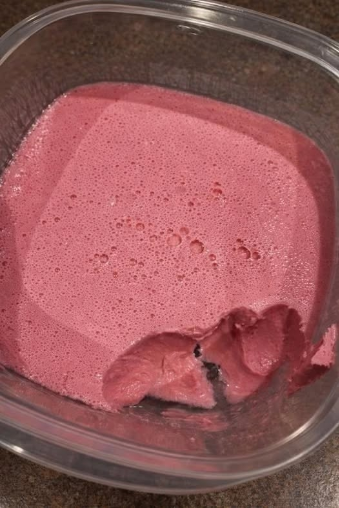
For the best appearance, don’t overmix. A few gentle folds will leave beautiful berry streaks rather than turning the whole dessert uniformly purple.
6. Chill.
Cover and refrigerate for at least 30 minutes, preferably about an hour. This allows the pudding mix to fully thicken.
7. Serve.
Spoon into individual cups and top with reserved berries. If desired, sprinkle a small amount of crushed graham cracker over the top.
Nutrition — estimated
Because the exact quantities and brands in the photograph aren’t specified, these are estimates rather than label-accurate numbers.
Using the quantities above and dividing into 6 servings, a reasonable estimate is approximately:
Per serving Approx. amount
Calories 200–230 kcal
Protein 20–23 g
Total carbohydrate 25–30 g
Fiber 3–5 g
Net carbs 22–26 g
Fat 2–4 g
Sugar 15–20 g
The biggest source of variation is the pudding mix and whipped topping. Regular Jell-O cheesecake pudding alone contributes 90 calories and 23 g carbohydrate per 24 g serving, according to the manufacturer’s current information.
If you use Jell-O Zero Sugar Cheesecake Pudding instead, the pudding mix is substantially lower in calories and sugar: the manufacturer lists 25 calories and 5 g carbohydrate per 7 g serving. That makes a much more appropriate version if your goal is genuinely low-carb.
Lower-carb version
For a lower-carb version, use:
2 cups FAGE 0%
1 cup cottage cheese
1 cup light whipped topping
1 package sugar-free cheesecake pudding
½ cup fairlife fat-free milk
1 teaspoon vanilla
1½–2 cups mixed berries
Keep the graham-cracker topping optional or leave it out.
Important: even this version isn’t literally zero-carb. The yogurt, milk, cottage cheese and berries naturally contain carbohydrate. FAGE 0%, for example, lists 5 g carbohydrate per 170 g serving, and Good Culture 2% cottage cheese lists 4 g per ½ cup.
Why it feels so filling
The main advantage is protein and volume, not some special fat-burning or “drying out” effect.
Greek yogurt and cottage cheese provide substantial protein; FAGE 0% lists 18 g protein per 170 g serving, while the pictured style of Good Culture cottage cheese provides 14 g per ½ cup.
The berries also add water and fiber, while the whipped topping gives the dessert a large, airy volume.
So it can be a good high-protein dessert or snack, but eating unlimited portions can still add up in calories and carbohydrates.
Questions & Answers
Q: Is this really zero carb?
A: No. The claim in the image is misleading. Dairy products and berries naturally contain carbohydrate, and regular cheesecake pudding mix contains added sugar.
Q: Can I eat as much as I want?
A: No. Portion size still matters. Even a relatively low-calorie dessert contributes calories when eaten repeatedly.
Q: Will it “dry me out”?
A: Not in the sense of safely removing body fat or excess water. There isn’t a special ingredient here that causes meaningful fat loss or dehydration. If your weight temporarily changes after eating differently, that’s not the same thing as losing body fat.
Q: Is it good for weight loss?
A: It can fit into a weight-loss diet because it can provide a lot of protein for relatively few calories. The overall calorie intake for the day still matters.
Q: Can I make it without cottage cheese?
A: Yes. Replace the cottage cheese with another ¾–1 cup Greek yogurt. The result will be smoother but somewhat less cheesecake-like and may have less protein depending on the yogurt used.
Q: Can I make it without Jell-O?
A: Yes, but the pudding mix is doing more than providing flavor—it helps thicken the mixture. For a whole-food version, use thick Greek yogurt, cottage cheese, vanilla and a little sweetener, then chill it thoroughly. It won’t have exactly the same fluffy texture.
Q: Can I use frozen berries?
A: Yes. Thaw and drain them first. Otherwise their excess water can make the fluff runny.
Q: Can I make it ahead?
A: Yes. Refrigerate it covered and ideally eat it within 1–2 days. The berries gradually release liquid, so the texture is best relatively fresh.
Q: Can I freeze it?
A: You can, but the texture changes. Dairy and whipped topping can become icy or slightly grainy after thawing. For the best cheesecake-fluff texture, refrigerate rather than freeze.
Q: Is it keto?
A: The regular-pudding version is generally not keto-friendly because of its carbohydrate content. A sugar-free pudding version is lower in carbs, but the yogurt, milk, cottage cheese and berries still need to be counted.
Q: Can I make it higher in protein?
A: Yes. Increase the Greek yogurt and cottage cheese and reduce the whipped topping. You can also use a high-protein yogurt. fairlife fat-free milk itself provides 13 g protein per cup, so it is a useful choice when milk is needed.
Q: Why blend the cottage cheese?
A: It eliminates the curds and produces a much smoother, cheesecake-mousse texture.
Q: What are the best berries?
A: Strawberries, raspberries and blackberries are particularly good here. Blueberries add sweetness and color but tend to contribute more carbohydrate per serving than raspberries or blackberries.