Artisan Bread Recipes Crusty, Chewy & Ready in 3 Hours
Artisan bread recipes are the baking project that transforms a home kitchen into something that smells and produces results like a professional bakery — without requiring professional training, specialty equipment, or years of practice. The word artisan refers to bread made by hand, with simple ingredients, and with time doing most of the work that machinery does in commercial production.
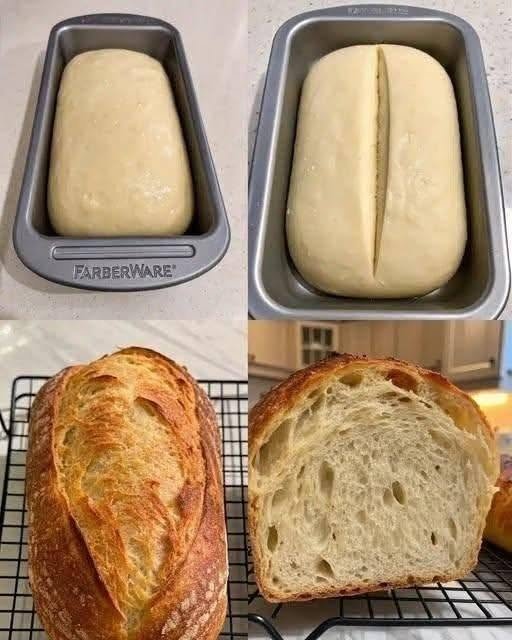
What you get is a loaf with a crackling, deeply coloured crust, an open, chewy crumb with visible air pockets, and a flavour that develops through fermentation rather than additives. All of it is achievable at home with flour, water, salt, and yeast — and a Dutch oven that creates the steam environment professional deck ovens use. Whether you’re baking your first loaf or your fiftieth, this guide gives you the base technique and the best variations to work through. No complicated steps — just pure artisan bread recipe results, golden and crackling from the oven.
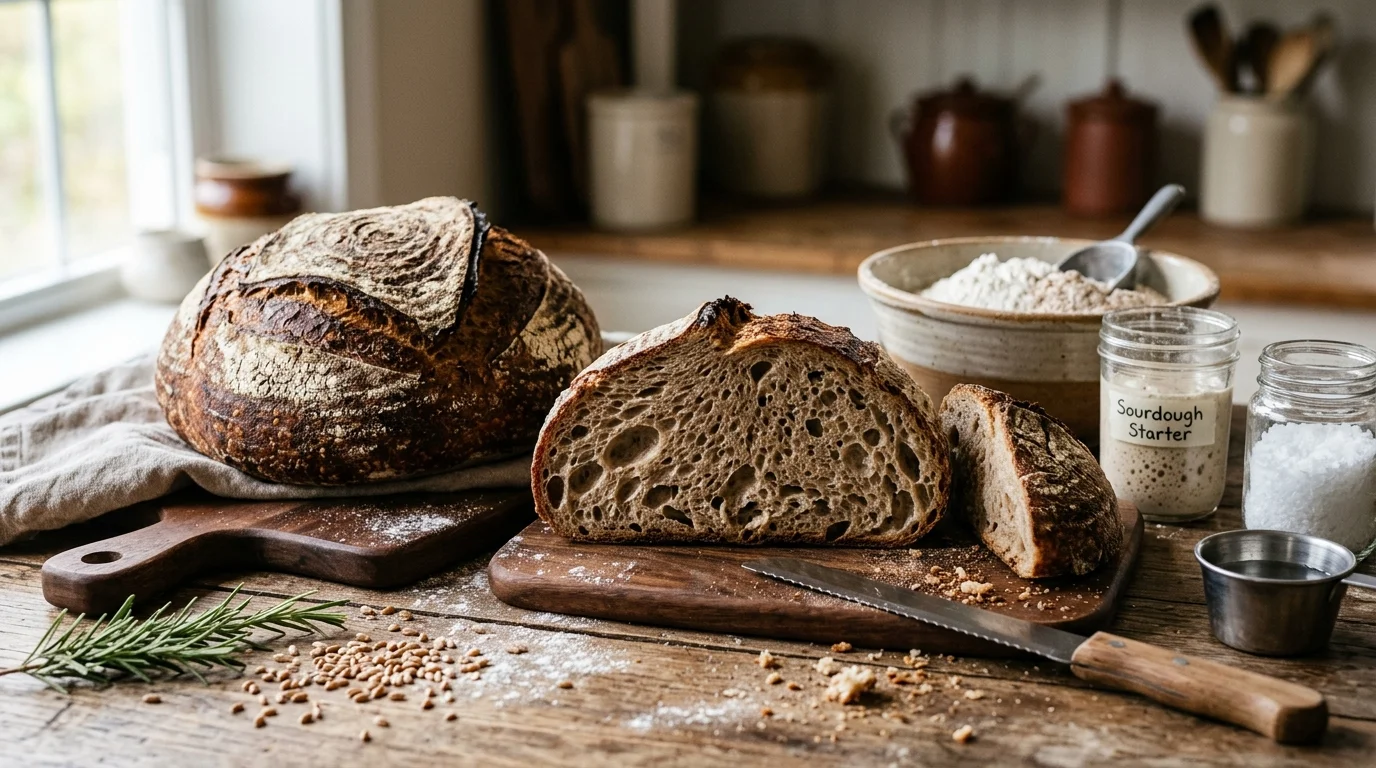
Ingredients
For the Classic Artisan Bread Dough (makes one large loaf):
- 3 cups (360g) bread flour [the higher protein content is essential for structure]
- ¼ tsp instant yeast [a small amount — the long fermentation does the work]
- 1½ tsp fine salt
- 1½ cups (360ml) warm water [around 110°F]
Optional Enrichments and Variations:
- 1 tbsp extra virgin olive oil — for a slightly softer crumb (optional)
- 1 tsp honey or sugar — adds slight sweetness and deepens crust colour (optional)
- 1 cup whole wheat flour — replace 1 cup bread flour for a more complex flavour (optional)
- ½ cup rolled oats — for a seeded oat loaf (optional)
- 2 tbsp mixed seeds — sunflower, pumpkin, sesame, or poppy (optional)
- 1 tsp dried rosemary or caraway seeds — for a herb loaf (optional)
Equipment Required:
- Dutch oven or heavy lidded cast iron pot [4.5–6 quart — non-negotiable for the crust]
- Large mixing bowl
- Bench scraper or sharp knife
- Parchment paper
- Instant-read thermometer (strongly recommended)
- Banneton proofing basket (optional but helpful for shaping)
Step-by-Step Instructions
Step 1: Gather and Prep Your Ingredients
Artisan bread recipes require very few ingredients — which means the quality of each one matters more than in recipes where complexity masks individual flavour. Use bread flour rather than all-purpose — the higher protein content (12–14%) builds the gluten network that gives artisan bread its characteristic chew and open crumb structure. Measure every ingredient precisely using a kitchen scale where possible — bread baking is chemistry and small errors in flour or water quantity compound into significant texture and structure problems. Have warm water at exactly the right temperature before mixing — water above 120°F kills yeast and water below 100°F activates it too slowly for the timing in this recipe.
Pro Tip: The small quantity of yeast — just ¼ teaspoon — is intentional and correct. A low-yeast, long-fermentation approach produces a more complex, more flavourful bread than a standard recipe with more yeast and a shorter proof. The yeast quantity is not a typo. Don’t increase it — more yeast means faster rise and less flavour development. The fermentation time is what builds the character of a proper artisan loaf.
Step 2: Mix the Dough — No Kneading Required
In a large bowl, whisk together the bread flour and salt. In a separate jug, combine the warm water and instant yeast — stir briefly. Pour the yeast water over the flour and mix with a fork or wooden spoon until no dry flour remains and a shaggy, sticky, uniformly wet dough has formed. The dough will look rough, unpromising, and far too wet — this is exactly correct. Artisan bread recipes built on a high-hydration, no-knead method don’t require the smooth, elastic dough of traditional kneaded bread. Cover the bowl tightly with plastic wrap and leave at room temperature for 12–18 hours — overnight is the most practical approach, mixing before bed and baking the following morning.
Pro Tip: Stir the dough vigorously for 60 seconds after it first comes together rather than just mixing until combined. That 60 seconds of energetic stirring begins the gluten development that the long fermentation will complete — it produces a more structured, better-risen loaf than a dough that was barely stirred and left to ferment without any initial gluten development at all.
Step 3: Shape the Dough After Overnight Fermentation
After 12–18 hours, the dough will have roughly doubled in size, be covered with bubbles across the surface, and smell slightly tangy and fermented — all of which are correct and desirable signs. Flour a work surface generously and turn the dough out in one motion. The dough will be soft, sticky, and gassy — handle it gently to preserve the air bubbles built during fermentation. Using a bench scraper or floured hands, fold the edges of the dough toward the centre 4–6 times to build surface tension, then gently flip it so the seam is on the bottom. Shape into a tight round by cupping the dough with both hands and dragging it toward you across the floured surface — this creates tension in the outer skin that helps the loaf hold its shape and rise upward rather than spreading flat during baking.
Pro Tip: Flour your hands and the surface generously but don’t incorporate extra flour into the dough itself during shaping. Adding flour during shaping stiffens the dough structure and reduces the open, airy crumb that overnight fermentation worked to build. Work quickly with well-floured hands and a confident touch — the stickiness of the dough is not a problem to be solved with more flour, it’s the hydration level that creates the open crumb.
📖 Read More: Focaccia Bread Recipes
Step 4: Second Proof in the Refrigerator
Place the shaped dough seam-side up in a well-floured banneton proofing basket, or seam-side up in a bowl lined with a generously floured clean kitchen towel. Dust the top of the dough with flour, cover loosely with plastic wrap, and refrigerate for 1–4 hours. This cold second proof — called retarding — continues the flavour development while the cold slows the rise and firms the dough surface, which makes scoring easier and produces a more dramatic oven spring when the cold dough meets the hot Dutch oven. The artisan bread dough can be held in the refrigerator for up to 12 hours at this stage, giving you complete control over when to bake without the dough over-proofing.
Pro Tip: Flour the banneton or the towel-lined bowl generously — more than seems necessary. Under-floured proofing containers cause the dough to stick when turned out, which tears the surface tension built during shaping and produces a flat, poorly risen loaf. Rice flour is the most effective flour for lining proofing baskets — it doesn’t absorb moisture from the dough the way bread flour does and releases the dough completely cleanly every time.
Step 5: Preheat the Dutch Oven and Score the Dough
Place the Dutch oven with its lid on in the oven and preheat to 500°F (260°C) for at least 45 minutes before baking — the Dutch oven itself needs to be as hot as the oven air for the steam-trapping bake to work correctly. While the oven preheats, cut a sheet of parchment paper large enough to act as a sling for the dough. Remove the proofed dough from the refrigerator and turn it seam-side down onto the parchment. Using a sharp bread lame, a razor blade, or a very sharp serrated knife, score the surface of the dough with one confident slash at a 45-degree angle — or a cross pattern, or an ear score along one side. Scoring must be fast, deliberate, and deep — slow, hesitant scoring drags through the dough and tears rather than cutting cleanly.
Pro Tip: Score the dough immediately after removing it from the refrigerator while it’s still cold and firm — cold dough holds its shape under the blade and produces a clean, defined cut. Room-temperature dough is softer and more likely to drag, deflate, or collapse when the scoring blade passes over it. The cold surface is a significant advantage — use it deliberately by scoring the moment the dough comes out of the fridge.
Step 6: Bake Covered Then Uncovered
Carefully remove the preheated Dutch oven from the oven using heavy oven mitts — it will be extremely hot. Lift the dough using the parchment paper as a sling and lower it into the Dutch oven, parchment and all. Put the lid on immediately and place back in the oven. Bake covered at 500°F for 20 minutes — the trapped steam from the dough mimics the professional steam-injection environment of a bakery oven and allows maximum oven spring and a thin, crackly crust. After 20 minutes, remove the lid and reduce the oven temperature to 450°F (230°C). Continue baking uncovered for 20–25 minutes until the crust is a deep, rich mahogany brown all the way across and the internal temperature reads 205–210°F on an instant-read thermometer. Transfer to a wire rack and cool for at least 1 hour before cutting.
Pro Tip: Do not cut into artisan bread before the 1-hour cooling mark — this is the step most people skip and the one that costs the most quality. The interior of a freshly baked loaf is still setting as it cools — the starch is gelatinising and moisture is redistributing through the crumb. Cutting too early releases steam and produces a gummy, wet interior rather than the clean, open crumb of a properly cooled artisan loaf.
Cook Time
Total Time: 15 hours (mostly hands-off) | Active Prep: 20 minutes | Overnight Ferment: 12–18 hours | Cold Second Proof: 2 hours | Dutch Oven Preheat: 45 minutes | Bake: 45 minutes | Cool: 60 minutes Active hands-on time: under 20 minutes. The fermentation and oven do the rest.
Servings
Makes 1 large round loaf — approximately 16 slices.
Nutritional Information (approx. per slice — plain artisan bread, based on 16 slices)
| Nutrient | Amount |
|---|---|
| Calories | 95 kcal |
| Fat | 0.5g |
| Saturated Fat | 0g |
| Carbohydrates | 19g |
| Protein | 3g |
| Sugar | 0g |
| Fiber | 1g |
| Sodium | 220mg |
| Vitamin C | 0mg |
| Potassium | 40mg |
| Calcium | 10mg |
Values are approximate and will vary based on flour type and enrichments used.
Storage Instructions
Artisan bread stores differently from commercial bread and requires a different approach to maintain its quality. Store the completely cooled loaf cut-side down on a wooden cutting board at room temperature — this protects the cut face and allows the crust to remain crispy by keeping air circulation around the rest of the loaf. Never store artisan bread in plastic bags at room temperature — the trapped moisture immediately softens and completely destroys the crackling crust that defines the bread. A paper bag is the best room-temperature storage option — it allows the crust to breathe while protecting the cut interior from drying out. Store for up to 2 days at room temperature. Refresh day-old artisan bread by running it briefly under cold water on the crust only — a 5-second pass under the tap — then baking at 400°F directly on the oven rack for 8–10 minutes. The water creates surface steam during baking and the crust snaps back to close to its original crackling quality. For freezing, slice the completely cooled loaf and freeze individual slices in a sealed freezer bag for up to 3 months. Toast directly from frozen — no thawing required — in a toaster or oven for the cleanest, most practical result. Alternatively, freeze the whole unsliced loaf wrapped tightly in foil for up to 3 months and thaw overnight at room temperature before refreshing in a 400°F oven for 10 minutes.
Suggestions
- Whole Wheat Artisan Bread: Replace 1 cup of bread flour with 1 cup of whole wheat flour. The whole wheat adds a nutty, complex flavour and increases the fibre content significantly — but the reduced gluten in whole wheat flour means the dough needs a slightly longer knead or fold time to develop adequate structure. Add 2 extra tablespoons of water to compensate for the higher absorbency of whole wheat flour. The resulting loaf is slightly denser than the all-white version but noticeably more flavourful and nutritionally more complete.
- Olive and Rosemary Artisan Bread: After the overnight ferment, fold ¾ cup of pitted and roughly chopped Kalamata olives and 1 tablespoon of fresh rosemary leaves into the dough during the first shaping step. The olives add brine, richness, and a distinctly Mediterranean character — the rosemary infuses through the crumb during baking and produces a bread that smells like Tuscany and requires nothing more than good olive oil for dipping to be a complete experience.
- Seeded Artisan Loaf: Toast a mixture of sunflower seeds, pumpkin seeds, and sesame seeds in a dry pan for 3 minutes until fragrant. Cool completely and fold ½ cup into the dough after the overnight ferment. Roll the shaped dough in extra seeds before the cold second proof so the entire exterior is coated — the seeds toast against the hot Dutch oven surface during baking and produce a loaf that is crunchy, nutty, and deeply satisfying in a way that plain white artisan bread isn’t.
- Sourdough-Style Artisan Bread: Extend the overnight ferment to 18–24 hours at room temperature for a more pronounced tangy flavour. Add 1 tablespoon of plain Greek yogurt to the dough at the mixing stage — the lactic acid bacteria in the yogurt contribute natural fermentation compounds that approximate the sourness of a sourdough starter without requiring one. The result is not a true sourdough but produces a noticeably more complex, tangy loaf than a standard 12-hour overnight ferment.
- Garlic Parmesan Artisan Bread: Add 1 teaspoon of garlic powder and ¼ cup of finely grated Parmesan to the flour before mixing. After scoring and before baking, brush the surface of the dough with a garlic butter wash — 1 tablespoon of melted butter with 1 minced garlic clove — and scatter extra Parmesan across the top. The garlic butter and Parmesan toast against the hot lid of the Dutch oven during the covered bake and create a flavoured, slightly crispy surface that is completely unexpected and genuinely outstanding.
- Rye and Caraway Artisan Bread: Replace 1 cup of bread flour with 1 cup of dark rye flour and add 1½ teaspoons of caraway seeds to the flour before mixing. Rye flour has very little gluten and produces a significantly denser, more compact loaf than all-wheat versions — this is expected and appropriate. The caraway and rye combination produces a flavour profile closer to a German bakery loaf than a French-style country bread — earthy, slightly sweet from the rye, and deeply savoury in a way that works particularly well sliced thin and served with aged cheese or cured meats.
- Discard Artisan Bread: Add ½ cup of sourdough discard — the unfed starter removed when refreshing an active sourdough — to the mixing step along with all standard ingredients. Reduce the water by 2–3 tablespoons to compensate for the additional liquid in the discard. The discard adds mild tang, additional fermentation activity, and a slightly more complex flavour than a pure commercial yeast loaf — this is the most practical use of accumulated sourdough discard for anyone who maintains a starter but doesn’t always want to bake a full sourdough loaf.
- Herb and Cheese Artisan Bread: Add ½ cup of shredded sharp cheddar and 2 teaspoons of dried herbs — thyme, rosemary, and sage work well together — to the dough after the overnight ferment. Fold gently to distribute without deflating the dough entirely. The cheese melts through the crumb during baking and creates pockets of rich, slightly sharp flavour throughout the interior, while the herbs infuse the crumb with a warmth that makes this version of artisan bread particularly suited to serving alongside soups and stews in autumn and winter.
Seasonal Relevance
Artisan bread recipes earn their place in every season of the year but the rhythm of the bake shifts naturally with the weather and the appetite. From October through February, artisan bread baking is at its most rewarding — the oven heats the kitchen, the long overnight ferment happens while you sleep, and a fresh loaf ready in the morning alongside butter and coffee is one of the most specifically winter-appropriate pleasures available from a home kitchen. The rye and caraway loaf, the garlic Parmesan version, and the herb and cheese build all suit cold weather eating in flavour and in the density of their crumb. From May through September, artisan bread shifts to a supporting role — it accompanies salads, carries cold-cut sandwiches, and appears at the side of summer soups and stews. The olive and rosemary version and the seeded loaf are the most summer-appropriate builds — lighter in character, more suitable alongside a cold glass of wine and a Mediterranean-style spread than the heavier winter versions. Spring, March through May, is the most natural season to begin an artisan bread habit — the instinct toward new projects and fresher food aligns well with learning a new baking technique, and the cool but not cold kitchen temperature provides ideal proofing conditions without the need for any additional warmth or chilling.
Conclusion
Artisan bread recipes prove that the best baking is not the most complicated baking — four ingredients, one bowl, one Dutch oven, and time doing most of the work produces a loaf that looks, smells, and tastes like something from a professional bakery. The overnight fermentation builds the flavour. The high hydration builds the open crumb. The Dutch oven builds the crust. Get those three things right and every loaf you bake will be worth the wait. Start with the classic white loaf, bake it twice to understand the dough feel and the timing, then move through the variations — whole wheat, seeded, garlic Parmesan, olive and rosemary. Each one builds on the same method and each one produces something genuinely different and worth making. Once artisan bread becomes a weekend habit, very little else from a supermarket bread aisle will feel like an adequate substitute.
FAQs
Q: Why didn’t my artisan bread rise — it came out flat and dense? Flat, dense artisan bread is almost always caused by one of three problems — dead yeast, over-proofing during the overnight ferment, or insufficient gluten development during mixing. Test yeast freshness before committing to an overnight bake by combining a pinch with warm water and a pinch of sugar and waiting 10 minutes for foam. If the overnight ferment goes beyond 18 hours at room temperature the dough can over-proof and lose its structural integrity — refrigerate the dough after 14–16 hours if you’re not ready to bake. Stir the dough vigorously for a full 60 seconds when first mixing rather than just combining — this initial gluten development is critical for the rise, since no-knead doughs don’t get the gluten development that kneaded doughs receive.
Q: Do I need a Dutch oven to make artisan bread? A Dutch oven is the most effective single piece of equipment for home artisan bread baking and produces results that are significantly better than any alternative — but it is not absolutely irreplaceable. The Dutch oven’s role is to trap steam from the dough during the first 20 minutes of baking, which allows maximum oven spring and produces the thin, crackly crust. Without it, create a steam environment by placing a shallow metal pan on the oven floor, preheating a heavy baking sheet for the bread, and adding 1 cup of boiling water to the floor pan the moment the bread goes in. Close the oven door immediately to trap the steam. The crust won’t be quite as crackling as a Dutch oven loaf, but it will be significantly better than an unsteamed loaf baked on a standard sheet.
Q: How do I know when artisan bread is fully baked? The most reliable method is an instant-read thermometer inserted into the thickest part of the loaf — fully baked artisan bread reads 205–210°F internally. Visually, the crust should be a deep, uniform mahogany brown across the entire surface with no pale patches remaining. Tap the bottom of the loaf with your knuckle — a properly baked loaf sounds hollow rather than solid. A solid thud means the interior is still doughy and needs more time. Colour alone is not a reliable indicator — some ovens brown the crust faster than the interior cooks through, which is why the thermometer is the most trustworthy guide and worth using on every loaf until the timing of your specific oven is fully understood.