White Chocolate Cake Creamy, Elegant & Done in 55 Minutes
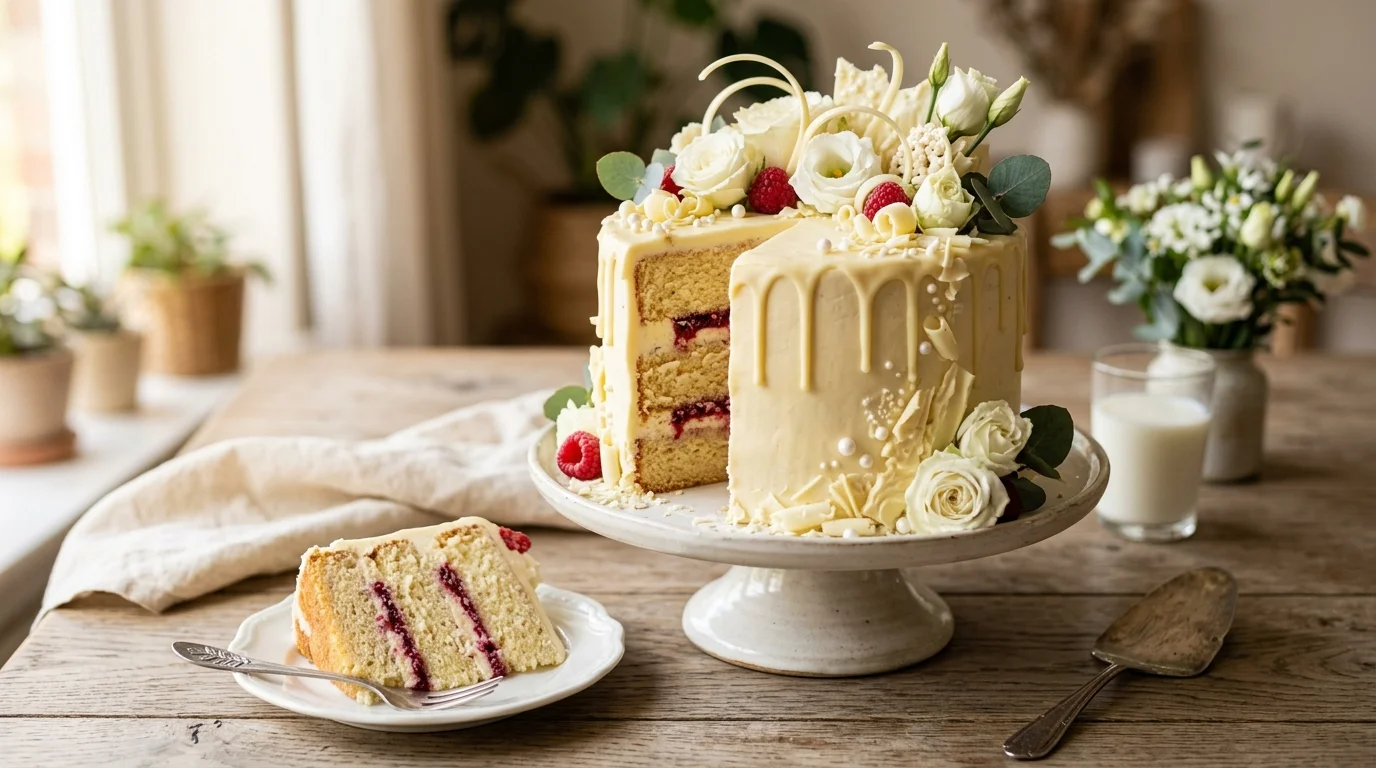
White chocolate cake is the kind of bake that looks impressive before you’ve even sliced into it. Built around real melted white chocolate — not extract, not flavouring — it’s delicate, tender, and quietly rich in every bite. Serve it for a celebration, a dinner party, or whenever the table calls for something a little more refined. No complicated techniques — just pure white chocolate cake elegance on a plate.
Ingredients
For the Cake:
- 2 cups (250g) all-purpose flour
- 1½ tsp baking powder
- ½ tsp baking soda
- ½ tsp fine salt
- 170g (6 oz) good-quality white chocolate, finely chopped [use a bar, not chips — melts far more evenly]
- ½ cup (120ml) whole milk [or oat milk or almond milk]
- ¾ cup (170g) unsalted butter, softened
- 1½ cups (300g) granulated sugar
- 4 large eggs, room temperature
- 2 tsp pure vanilla extract
- ½ cup (120ml) sour cream [or full-fat plain Greek yogurt]
For the White Chocolate Buttercream:
- 1 cup (225g) unsalted butter, softened
- 170g (6 oz) white chocolate, melted and cooled to room temperature
- 3 cups (360g) powdered sugar, sifted
- 3–4 tbsp heavy cream [or whole milk, oat milk, or any plant-based milk]
- 1 tsp pure vanilla extract
- Pinch of salt
Optional Add-Ins:
- ½ cup (75g) fresh raspberries, folded gently into the batter (optional)
- White chocolate shavings or curls, for garnish (optional)
- Edible flowers or freeze-dried raspberry powder, for decoration (optional)
Step-by-Step Instructions
Step 1: Gather and Prep Your Ingredients
Set everything out before you begin. Room-temperature butter and eggs are non-negotiable here — cold butter won’t cream properly, and cold eggs cause the batter to split. Pull both from the fridge at least 30 minutes ahead of time.
Preheat your oven to 350°F (175°C). Grease two 8-inch round cake pans and line the bottoms with parchment paper. Proper pan prep means the layers release cleanly every time — no tearing, no sticking.
Pro Tip: Use a good-quality white chocolate bar — cheap chips contain vegetable oil rather than cocoa butter and won’t melt as smoothly or taste as clean.
Step 2: Melt the White Chocolate
Place the finely chopped white chocolate and whole milk in a heatproof bowl set over a pot of gently simmering water. Stir constantly and remove from heat as soon as the mixture is smooth. Don’t rush this step.
Let the mixture cool to room temperature before it touches the batter. White chocolate burns faster than dark and has far less margin for error — low heat, constant stirring, and patience are the only tools you need here.
Pro Tip: The bowl must not touch the water directly — indirect, gentle steam is what melts white chocolate without scorching it.
Step 3: Mix Your Dry Ingredients
In a medium bowl, whisk together the flour, baking powder, baking soda, and salt. Sifting the flour before measuring helps prevent a heavy, compact crumb — particularly important in a delicate white chocolate cake that relies on a light structure.
Whisk for a full 30 seconds to ensure the leavening agents are evenly distributed throughout. Uneven powder or soda leads to an uneven rise — a few extra seconds of whisking is always worth it.
Pro Tip: Spoon flour into the measuring cup and level off the top — scooping straight from the bag compacts it and adds up to 20% more than the recipe needs.
Step 4: Combine the Wet Ingredients
In a large bowl, beat the softened butter and sugar with an electric mixer on medium-high for 3–4 minutes, until the mixture is pale and noticeably fluffy. This creaming step is what gives white chocolate cake its tender, airy crumb — don’t cut it short.
Add the eggs one at a time, beating well after each. Mix in the vanilla extract and sour cream, then pour in the cooled white chocolate and milk mixture. Beat until smooth and fully combined.
Pro Tip: Properly creamed butter and sugar should look almost white and feel light — if it still looks yellow and dense, keep going.
📖 Read More: Moist Chocolate Cake
Step 5: Bring the Batter Together and Bake
Add the dry ingredients to the wet mixture in two or three additions, folding gently with a rubber spatula between each. Stop as soon as the flour streaks disappear — overmixing at this stage toughens the crumb and undoes all the work of creaming.
Divide the batter evenly between both pans and smooth the tops. Bake for 28–33 minutes, until a toothpick inserted in the centre comes out with just a few moist crumbs. Don’t open the oven before the 25-minute mark.
Pro Tip: Tap each filled pan once firmly on the counter to release any large air bubbles before sliding them into the oven.
Step 6: Cool, Frost, and Serve
Allow the cakes to cool in their pans for 10 minutes, then turn them out onto a wire rack to cool completely. Frosting a warm cake melts the buttercream instantly — patience here saves you from a sliding, uneven finish.
Once fully cooled, beat the softened butter until fluffy. Add the cooled melted white chocolate, powdered sugar, cream, vanilla, and salt, and beat until silky and spreadable. Frost the first layer, stack the second, then coat the top and sides evenly.
Pro Tip: Chill the frosted cake for 20 minutes before slicing — it firms the buttercream and gives you clean, defined cuts every time.
Cook Time
Total Time: 55 minutes | Prep: 20 minutes | Bake: 28–33 minutes
Servings
Serves 12 slices from one two-layer 8-inch round white chocolate cake.
Nutritional Information (approx. per serving)
| Nutrient | Amount |
|---|---|
| Calories | 520 kcal |
| Fat | 28g |
| Saturated Fat | 17g |
| Carbohydrates | 64g |
| Protein | 6g |
| Sugar | 48g |
| Fiber | 0g |
| Sodium | 270mg |
| Vitamin C | 0mg |
| Potassium | 125mg |
| Calcium | 90mg |
Values are approximate and will vary based on ingredients used.
Storage Instructions
White chocolate cake is best consumed within 2 days at room temperature. Keep it tightly covered under a cake dome or wrapped in plastic wrap — the frosting absorbs fridge odours quickly if left uncovered. After 2 days, refrigerate for up to 5 days total.
Let refrigerated slices come to room temperature before serving — at least 20 minutes on the counter. Cold white chocolate buttercream firms up and loses its silky texture. A brief 10-second warm in the microwave restores softness when you’re in a hurry.
To freeze, wrap individual unfrosted cake layers in two layers of plastic wrap and place in a sealed freezer bag. Freeze for up to 3 months. Thaw overnight in the refrigerator, then bring to room temperature and frost fresh for the best texture and finish.
📖 Read More: Chocolate Cake
Suggestions
- White Chocolate Raspberry Cake: Fold ½ cup of fresh raspberries into the batter and layer raspberry jam between the tiers. The tartness cuts through the sweetness of white chocolate perfectly — vibrant, elegant, and one of the most popular variations of this cake.
- Dairy-Free Version: Use oat milk in place of whole milk, coconut cream instead of sour cream, and a quality plant-based butter for both the batter and the frosting. Choose a dairy-free white chocolate bar — several brands melt and taste beautifully without compromise.
- High-Protein Option: Reduce flour by ¼ cup and add 2 scoops of vanilla protein powder. Replace sour cream with plain Greek yogurt for added protein and a slightly denser crumb — a satisfying post-workout treat that still feels like a proper dessert.
- Kid-Friendly Cupcakes: Pour the batter into lined muffin tins and bake at 350°F for 16–18 minutes. Pipe white chocolate buttercream in a generous swirl and finish with rainbow sprinkles or mini white chocolate chips. Same great batter — easy portioning, big smiles.
- Weight-Loss Friendly: Reduce the sugar to 1¼ cups and swap butter in the batter for unsweetened applesauce. Skip the buttercream and use a lighter whipped cream cheese frosting with a small amount of melted white chocolate stirred through. Serve with fresh berries.
- White Chocolate Lemon Cake: Add the zest of 2 lemons to the batter and 1 tablespoon of lemon juice to the frosting. The citrus lifts the richness of the white chocolate and gives the whole cake a bright, refreshing quality — a natural fit for spring and summer tables.
- White Chocolate Coconut Cake: Stir ½ cup of desiccated coconut into the batter and press toasted coconut flakes onto the outside of the frosted cake. The creaminess of white chocolate and the crunch of toasted coconut are a combination that works every single time.
📖 Read More: Chocolate Cherry Cake
Seasonal Relevance
White chocolate cake shines brightest in spring and early summer — April through June — when fresh raspberries and strawberries are at their peak and a lighter, elegant dessert suits the mood. In December and January, it transitions beautifully into a celebration centrepiece — dress it with sugared cranberries and powdered sugar for a stunning winter finish. Out of season, frozen raspberries or blueberries work just as well folded into the batter or layered between the tiers with no noticeable difference in flavour.
Conclusion
White chocolate cake doesn’t demand much — good chocolate, butter and eggs at room temperature, and a cooled melt before it hits the batter. Get those three details right and the rest follows naturally. Try the raspberry version for something vibrant, the lemon twist for a lighter finish, or keep it classic and let the white chocolate do all the talking. However you serve it, this white chocolate cake is one that earns its place in the permanent rotation.
FAQs
Q: Can I use white chocolate chips instead of a white chocolate bar?
White chocolate chips contain stabilisers that prevent smooth melting. A quality white chocolate bar — Lindt, Ghirardelli, or similar — gives a cleaner melt and better flavour throughout the cake. If chips are all you have, add one teaspoon of neutral vegetable oil while melting to help them come together more smoothly.
Q: Why did my white chocolate seize up when I melted it?
Seizing happens when moisture or excess heat disrupts the fat structure. Use a completely dry bowl, keep the heat very low, and stir constantly. If it seizes, add one teaspoon of warm milk or cream and stir gently — it often recovers. Prevention is easier than fixing it after the fact.
Q: Can I make this as a single-layer cake?
Yes. Pour the batter into a greased and lined 9×13-inch pan and bake at 350°F for 33–38 minutes. The batter sits deeper, so allow slightly more time — test with a toothpick and look for moist crumbs, not wet batter. Frost directly in the pan for a casual, crowd-friendly result.
Q: How do I stop the cake from tasting too sweet?
White chocolate is naturally sweet, so balance matters. Reduce sugar to 1¼ cups if your chocolate bar is very sweet. Adding lemon zest, a pinch of extra salt to the batter, or layering tart fresh fruit in the filling all cut through the sweetness without masking the white chocolate flavour.
Q: Can I add fruit to this white chocolate cake?
Yes — fresh raspberries, blueberries, or sliced strawberries fold well into the batter. Use no more than ½ cup to avoid excess moisture. Grated zucchini — about ¾ cup — also works well for adding moisture without changing the flavour. Squeeze out excess liquid before folding it in.
Q: How do I make the white chocolate buttercream less sweet?
Add a pinch of extra salt and one tablespoon of cream cheese to the frosting — both cut sweetness without altering the flavour profile. You can also reduce the powdered sugar by ½ cup and add an extra tablespoon of cream to keep the right spreading consistency.