Moist Chocolate Cake Rich, Fudgy & Ready in 1 Hour
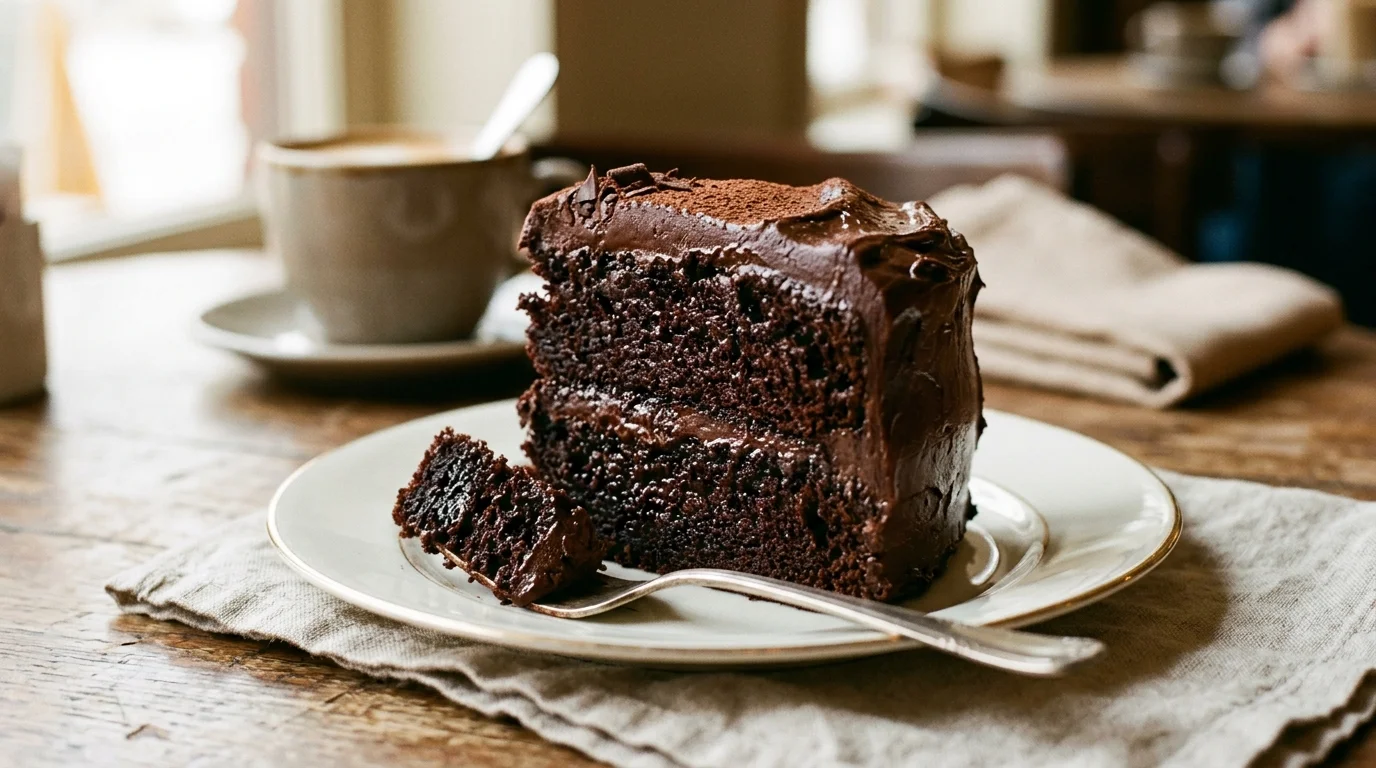
A moist chocolate cake is the one recipe every home baker needs to have completely dialled in — deeply chocolatey, tender all the way through, with a crumb that stays soft and rich for days without drying out. This is not a compromise cake. It works as a birthday centrepiece, a celebration layer cake, a simple sheet cake for a crowd, or a single-layer afternoon treat that needs nothing more than a dusting of powdered sugar. No complicated steps — just pure moist chocolate cake perfection, baked and ready in 1 hour.
Ingredients
For the Moist Chocolate Cake (makes two 9-inch layers or one 9×13-inch sheet cake):
- 2 cups (240g) all-purpose flour
- ¾ cup (75g) unsweetened cocoa powder [Dutch-process for deepest colour and richest flavour]
- 2 cups (400g) granulated sugar
- 2 tsp baking soda
- 1 tsp baking powder
- 1 tsp fine salt
- 2 large eggs, room temperature
- 1 cup (240ml) buttermilk [or whole milk + 1 tbsp white vinegar, rested 5 minutes]
- 1 cup (240ml) strong brewed coffee, cooled [the moisture secret — enhances chocolate without coffee flavour]
- ½ cup (120ml) vegetable oil [not butter — oil produces a reliably moister crumb]
- 2 tsp pure vanilla extract
For the Chocolate Buttercream Frosting:
- 1 cup (225g) unsalted butter, softened
- ½ cup (50g) unsweetened cocoa powder, sifted
- 3 cups (360g) powdered sugar, sifted
- ¼ cup (60ml) heavy cream [or whole milk — add one tablespoon at a time]
- 2 tsp pure vanilla extract
- Pinch of fine salt
Optional Additions:
- 1 tsp espresso powder [added to the batter — amplifies the chocolate] (optional)
- ½ cup chocolate chips, folded into the batter (optional)
- Flaky sea salt, for finishing the frosted cake (optional)
Step-by-Step Instructions
Step 1: Gather and Prep Your Ingredients
Remove eggs and buttermilk from the refrigerator 30 minutes before baking — room-temperature ingredients combine more smoothly and produce a more evenly risen cake. Brew the coffee and cool it completely before measuring. Grease two 9-inch round cake pans thoroughly with butter, dust with cocoa powder instead of flour — flour leaves white residue on a dark chocolate cake — and line the bases with parchment paper circles.
Pro Tip: Dust pans with cocoa powder not flour — it disappears into the dark cake with no white residue on the edges.
Step 2: Mix the Dry Ingredients
In a large bowl, whisk together the flour, cocoa powder, sugar, baking soda, baking powder, and salt for 30 full seconds. This aerates the dry mixture, breaks up any cocoa clumps, and ensures the leavening agents are evenly distributed before any liquid touches them. Uneven distribution of baking soda creates bitter spots and uneven rise — 30 seconds of whisking prevents both problems entirely.
Pro Tip: Sift the cocoa powder before adding — unsifted cocoa clumps never fully dissolve into the batter.
Step 3: Combine Wet and Dry Ingredients
In a separate jug, whisk the eggs, buttermilk, cooled coffee, oil, and vanilla extract until smooth and uniform. Pour the wet ingredients into the dry ingredients and whisk until just combined — stop the moment no dry flour streaks remain visible. The batter will be noticeably thinner than a standard cake batter. This is correct. The high liquid content — from buttermilk, coffee, and oil — is precisely what makes this a genuinely moist chocolate cake.
Pro Tip: Thin batter is correct — resist adding more flour, which produces a dry, dense result.
📖 Read More: Chocolate Cherry Cake
Step 4: Bake the Cake Layers
Divide the batter evenly between the prepared pans — use a kitchen scale for perfectly level layers. Bake at 350°F (175°C) for 32–36 minutes. Do not open the oven door before 28 minutes — early cold air causes the centre to sink before the crumb structure has set. The cake is ready when a toothpick inserted in the centre comes out with moist crumbs. Moist crumbs are correct — a clean toothpick means the cake is overbaked.
Pro Tip: Moist crumbs on the toothpick is the target — a clean toothpick means it’s already overdone.
Step 5: Make the Chocolate Buttercream
Beat the softened butter on medium-high speed for 2 full minutes until pale and noticeably fluffy. Add the sifted cocoa powder and beat for another 60 seconds. Add the sifted powdered sugar one cup at a time on low speed. Add the heavy cream one tablespoon at a time until the buttercream reaches a smooth, spreadable consistency. Add vanilla and salt. Taste — adjust with extra salt for balance or extra cream for spreadability.
Pro Tip: Beat the butter for the full 2 minutes before adding anything — this step builds the light, fluffy base the buttercream needs.
Step 6: Assemble and Frost the Cake
Cool the cake layers completely before any frosting is applied — warm cake melts buttercream on contact and the frosting slides off rather than adhering. Apply a thin crumb coat of buttercream across the entire cake — a thin layer that seals any loose crumbs. Refrigerate for 15 minutes until the crumb coat sets firm. Apply the final frosting layer generously. Finish with flaky sea salt scattered across the top if using.
Pro Tip: Crumb coat first, chill 15 minutes, then final coat — this two-step method produces a smooth, professional finish every time.
Cook Time
Total Time: 1 hour 20 minutes | Prep: 15 minutes | Bake: 35 minutes | Cool: 30 minutes | Frost: 15 minutes Two round pans — moist chocolate cake ready to slice in 1 hour 20 minutes.
Servings
Serves 12–16 slices from a standard two-layer 9-inch round cake.
Nutritional Information (approx. per serving — based on 14 slices, with chocolate buttercream)
| Nutrient | Amount |
|---|---|
| Calories | 520 kcal |
| Fat | 24g |
| Saturated Fat | 12g |
| Carbohydrates | 74g |
| Protein | 5g |
| Sugar | 56g |
| Fiber | 3g |
| Sodium | 280mg |
| Vitamin C | 0mg |
| Potassium | 180mg |
| Calcium | 60mg |
Values are approximate and will vary based on ingredients used.
Storage Instructions
A moist chocolate cake stays remarkably soft for up to 4 days at room temperature when stored correctly. Cover cut edges with plastic wrap pressed directly against the exposed crumb — air dries out cut cake within hours. Store the whole frosted cake under a cake dome or loosely tented with plastic wrap at room temperature. Do not refrigerate unless the kitchen is very warm — refrigeration dries the crumb faster than room temperature storage.
For freezing, the unfrosted cake layers freeze exceptionally well for up to 3 months. Wrap each cooled layer tightly in two layers of plastic wrap followed by a layer of foil. Thaw at room temperature overnight still wrapped. The buttercream freezes for up to 2 months — thaw overnight in the refrigerator and re-whip with an electric mixer before using. For a fully frosted cake, freeze individual slices wrapped in plastic wrap for up to 1 month.
Suggestions
- Chocolate Fudge Cake: Replace the buttercream with a dark chocolate ganache — heat 240ml of heavy cream until just simmering, pour over 240g of chopped dark chocolate, stir until smooth, and cool until pourable. Pour over the assembled cake and let it drip naturally down the sides. The ganache version is denser, richer, and more intensely chocolate than the buttercream build.
- Triple Chocolate Cake: Fold ½ cup of chocolate chips into the batter before baking. Use the standard chocolate buttercream between the layers. Pour warm chocolate ganache over the frosted cake as a final finish. Three distinct chocolate textures — tender crumb, fluffy buttercream, and glossy ganache — in every slice.
- Chocolate Peanut Butter Cake: Replace the chocolate buttercream with a peanut butter buttercream — beat 1 cup of softened butter with ¾ cup of smooth peanut butter, then add 2 cups of sifted powdered sugar and 3 tablespoons of cream. The peanut butter and chocolate combination against the moist cake layers is genuinely outstanding.
- Sheet Cake Version: Pour the full batter into a greased 9×13-inch baking pan and bake at 350°F for 35–40 minutes. Frost directly in the pan with the full buttercream recipe. This format serves up to 24 people, requires no layering, and is the most practical version for large gatherings and casual celebrations.
- Cupcake Version: Fill paper-lined muffin cavities two-thirds full with the batter and bake at 375°F for 18–22 minutes. Pipe the chocolate buttercream using a star tip for a bakery-style finish. Makes 24 cupcakes from the full batter recipe — the most versatile and portable format for any occasion.
- Dairy-Free Moist Chocolate Cake: Replace buttermilk with oat milk and 1 tablespoon of apple cider vinegar. Replace the butter in the buttercream with a good-quality dairy-free butter alternative. The coffee and oil in the batter are already dairy-free — no other adjustment needed. The moist, tender crumb is fully preserved without any dairy.
- Gluten-Free Version: Replace all-purpose flour with a 1:1 gluten-free baking flour blend containing xanthan gum. Add 1 tablespoon of extra oil to compensate for the drier texture that gluten-free flour typically produces. Bake for 5 extra minutes and verify doneness with the toothpick test. The coffee and cocoa combination is so dominant that the flavour difference is minimal.
- Weight-Conscious Version: Replace ½ cup of sugar with unsweetened applesauce. Use light buttercream — beat 4 tablespoons of softened butter with 1½ cups of powdered sugar and 1 tablespoon of cocoa and thin with skim milk to a spreading consistency. Serve in smaller slices — a thin slice of this deeply flavoured cake is genuinely satisfying without a large portion.
Seasonal Relevance
A moist chocolate cake is a genuinely year-round bake — the pantry-based ingredient list has no seasonal dependency whatsoever. From October through February it earns its place as the most frequently requested celebration cake — birthdays, holidays, and winter gatherings all call for something rich and deeply satisfying. The ganache version suits winter specifically — darker, richer, and more indulgent in flavour and appearance. From May through September, the sheet cake format with fresh seasonal berry garnishes and lighter buttercream suits outdoor celebrations and summer gatherings where a formal layered cake feels too heavy.
Conclusion
A perfectly made moist chocolate cake is the benchmark recipe that every home baker should have locked in — the result you can rely on for any celebration and any occasion without second-guessing the method. Use oil not butter, add the coffee without hesitation, cool completely before frosting, and apply the crumb coat before the final layer. Those four things produce a moist chocolate cake that earns every compliment it receives. Try the ganache version for pure indulgence, the peanut butter build for contrast, or the sheet cake for a crowd. Make it once properly and it becomes the only chocolate cake recipe you’ll ever need.
FAQs
Q: Why is oil better than butter in a moist chocolate cake? Oil remains liquid at room temperature while butter solidifies — this is the direct reason oil-based cakes stay moister for longer after baking. Butter produces a richer flavour but a firmer, drier crumb that stales faster. For a cake where moisture is the primary goal, vegetable oil is always the correct choice. The chocolate buttercream frosting and the cocoa powder provide all the richness and flavour that butter in the batter would otherwise contribute.
Q: What does coffee do in a chocolate cake recipe? Coffee does not make the cake taste of coffee — it amplifies the chocolate flavour by enhancing the bitter, roasted compounds already present in the cocoa powder. The result is a more intensely chocolatey cake that tastes deeper and more complex than one made with water or milk as the liquid. Use strong brewed coffee or dissolve 1 teaspoon of instant coffee in 1 cup of hot water as an equivalent substitute. Either form works identically.
Q: How do I get my chocolate cake layers to be level and even? Three things produce level cake layers — weighing the batter into each pan equally rather than estimating by eye, using cake strips wrapped around the outside of each pan during baking to insulate the edges and prevent the sides from cooking faster than the centre, and levelling the tops with a serrated knife after cooling if a slight dome has formed. A kitchen scale is the most important of the three — perfectly equal batter weight produces perfectly equal layers every time.