Swordfish Steak Recipe Bold, Meaty & Ready in 20 Minutes
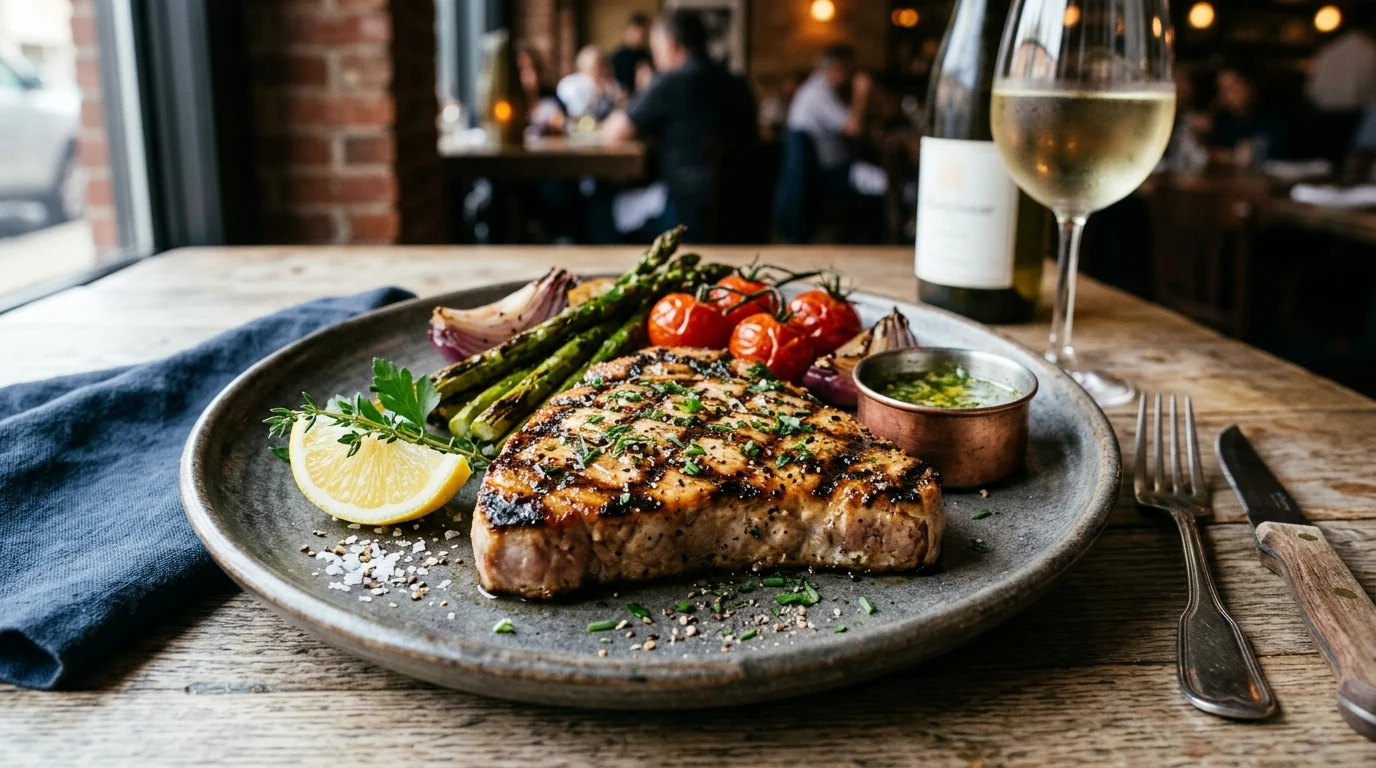
A swordfish steak recipe is the seafood dinner that converts people who think they don’t like fish. Thick, meaty, and mild — swordfish holds a sear like few other fish can, developing a golden caramelised crust while staying juicy and tender inside. It works as a fast weeknight dinner, an impressive dinner party main, or a lighter alternative to red meat that delivers genuine satisfaction. No complicated steps — just pure swordfish steak satisfaction, golden and ready in 20 minutes.
Ingredients
For the Swordfish Steaks (serves 2):
- 2 swordfish steaks [approximately 200–250g / 7–9 oz each, at least 2.5cm / 1 inch thick]
- 1 tbsp olive oil
- ½ tsp fine salt
- ¼ tsp black pepper, freshly ground
- ½ tsp smoked paprika
- ½ tsp garlic powder
For the Lemon Caper Butter Sauce:
- 3 tbsp unsalted butter, cold and cut into cubes
- 2 cloves garlic, minced
- 2 tbsp capers, drained
- Juice of 1 lemon [approximately 3 tbsp]
- 1 tsp lemon zest
- 2 tbsp fresh flat-leaf parsley, finely chopped
- ¼ cup dry white wine [or extra broth]
- Salt and black pepper, to taste
Optional Marinades (use instead of dry seasoning):
- Mediterranean: olive oil, lemon juice, garlic, oregano, and dried chili flakes (optional)
- Teriyaki-style: soy sauce, honey, garlic, and fresh ginger (optional)
- Herb: olive oil, Dijon mustard, fresh thyme, and lemon zest (optional)
For Serving:
- Lemon wedges
- Fresh parsley or basil
- Roasted cherry tomatoes [optional]
- Simple green salad or steamed asparagus
- Crusty bread [for the sauce]
Step-by-Step Instructions
Step 1: Gather and Prep Your Ingredients
Remove the swordfish steaks from the refrigerator 15 minutes before cooking — room-temperature fish sears more evenly than cold fish straight from the fridge. Pat each steak completely dry with paper towels — moisture on the surface prevents browning and causes the fish to steam rather than sear. Have the sauce ingredients measured and at the counter. A swordfish steak recipe moves fast — everything must be staged before the pan goes on.
Pro Tip: Completely dry fish + properly hot pan = a golden crust. Either step skipped produces pale, steamed results.
Step 2: Season the Swordfish
Drizzle olive oil over both sides of each swordfish steak and rub to coat evenly. Season generously with salt, pepper, smoked paprika, and garlic powder on both sides. The seasoning should be visible on the surface before the steak goes into the pan — under-seasoned swordfish is one of the most common reasons this fish disappoints at the table. Press the seasoning gently into the flesh to help it adhere during searing.
Pro Tip: Season both sides generously — swordfish has a mild flavour that needs bold surface seasoning to shine.
Step 3: Sear the Swordfish Steaks
Heat a large, heavy cast iron or stainless skillet over medium-high heat for 2 minutes until hot. Add the olive oil and let it shimmer. Place the swordfish steaks in the pan — press gently for the first 10 seconds to ensure full contact. Sear for 3–4 minutes without moving until the underside is a deep golden-brown and releases cleanly from the pan. Flip once and sear for 2–3 minutes on the second side.
Pro Tip: If the steak sticks when you try to flip it, it is not ready — wait 30 more seconds and it will release cleanly.
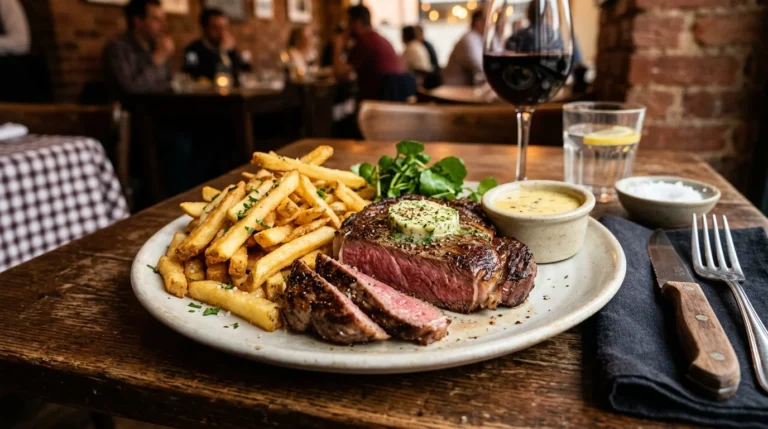
📖 Read More: Steak Frites Recipe
Step 4: Check Doneness and Rest
A properly cooked swordfish steak is opaque all the way through with no translucent grey centre remaining. The internal temperature should read 130–135°F (54–57°C) for a moist, just-cooked result — swordfish becomes dry and chalky above 145°F. Remove the steaks from the pan and rest on a warm plate for 3 minutes while the sauce is built. Resting allows the juices to redistribute evenly through the thick flesh before cutting.
Pro Tip: Pull at 130–135°F — swordfish continues cooking from residual heat during the rest period.
Step 5: Build the Lemon Caper Butter Sauce
In the same skillet over medium heat, add 1 tablespoon of the cold butter. Add the minced garlic and stir for 45 seconds until golden. Add the capers and cook for 30 seconds. Pour in the white wine and let it reduce by half — approximately 90 seconds. Add the lemon juice and zest. Remove the pan from the heat completely. Swirl in the remaining cold butter cubes one at a time until fully melted and the sauce is glossy and emulsified.
Pro Tip: Cold butter added off the heat produces a silky, stable sauce — warm butter added over heat breaks into grease.
Step 6: Plate and Serve Immediately
Place each rested swordfish steak on a warm plate. Spoon the lemon caper butter sauce generously over and around each steak — don’t be reserved with it. Scatter fresh parsley across the top. Add a lemon wedge on the side. Serve immediately with crusty bread alongside to mop up the sauce, and a simple green salad or steamed asparagus. Swordfish waits for no one — serve the moment it’s plated.
Pro Tip: Warm plates before serving — cold plates cool a butter sauce within 90 seconds and it loses its gloss.
Cook Time
Total Time: 20 minutes | Prep: 5 minutes | Sear: 7 minutes | Rest: 3 minutes | Sauce: 4 minutes One skillet — swordfish steak on the table in 20 minutes.
Servings
Serves 2 as a generous main course.
Nutritional Information (approx. per serving — 1 swordfish steak with lemon caper butter sauce)
| Nutrient | Amount |
|---|---|
| Calories | 480 kcal |
| Fat | 30g |
| Saturated Fat | 12g |
| Carbohydrates | 4g |
| Protein | 46g |
| Sugar | 1g |
| Fiber | 0g |
| Sodium | 560mg |
| Vitamin C | 18mg |
| Potassium | 820mg |
| Calcium | 40mg |
Values are approximate and will vary based on steak size and sauce quantity used.
Storage Instructions
Swordfish steak is best eaten immediately — the flesh dries out relatively quickly during storage and the lemon butter sauce loses its gloss once refrigerated. If storing leftovers, keep the steak and sauce separately in airtight containers in the refrigerator for up to 2 days. Reheat the swordfish gently in a covered skillet over the lowest heat with a splash of broth or white wine — never microwave, which overcooks the flesh instantly and produces a rubbery, dry result.
For the sauce, reheat in a small saucepan over the lowest heat, swirling continuously. Add a small knob of cold butter off the heat to restore the emulsion and gloss before serving. Never freeze cooked swordfish — the texture degrades irreversibly on thawing. For meal prep, the Mediterranean or herb marinade can be made up to 3 days in advance and refrigerated — marinate the fish for 30 minutes maximum before cooking for the best flavour without the texture being affected.
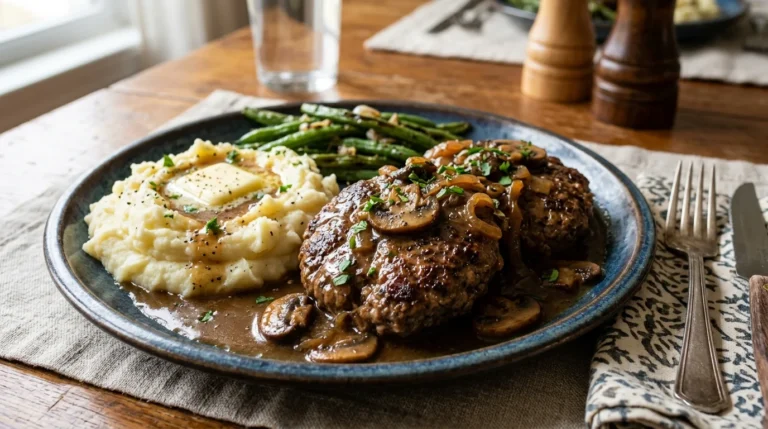
📖 Read More: Salisbury Steak Recipe
Suggestions
- Grilled Swordfish Steak: Brush with the Mediterranean marinade and grill over high heat for 4–5 minutes per side. The char from the grill adds a smoky depth that pan-searing cannot replicate. Swordfish holds up to direct grill heat better than any other fish — it won’t break apart or fall through the grates.
- Swordfish Steak With Tomato Salsa: Make a quick fresh salsa — diced ripe tomatoes, red onion, jalapeño, cilantro, lime juice, and olive oil. Serve cold directly over the hot seared swordfish. The bright acidity of the salsa cuts through the richness of the fish and the searing fat beautifully. No butter sauce needed.
- Swordfish Steak With Pesto: Skip the lemon caper sauce and instead spread 2 tablespoons of basil pesto directly over the rested swordfish immediately after it comes off the heat. The warm fish gently melts the pesto into a fragrant coating. Serve with a simple arugula salad dressed in lemon and olive oil.
- Asian-Inspired Swordfish: Marinate in soy sauce, honey, fresh ginger, garlic, and sesame oil for 30 minutes. Sear as directed and finish with a drizzle of the remaining marinade — reduced in a small saucepan for 2 minutes. Serve over steamed jasmine rice with sliced spring onion and toasted sesame seeds.
- Swordfish Steak Tacos: Slice the seared swordfish into chunks. Serve in warm corn tortillas with shredded purple cabbage, chipotle crema, fresh pico de gallo, and a squeeze of lime. Swordfish tacos are lighter than most fish taco versions — the meaty texture holds up in a taco better than delicate white fish.
- Swordfish With Roasted Cherry Tomatoes: Roast 1 cup of cherry tomatoes with olive oil, garlic, and fresh thyme at 400°F for 15 minutes until burst and caramelised. Spoon directly over the seared swordfish instead of the butter sauce. A lighter, no-dairy alternative that is genuinely excellent with the meaty fish.
- Swordfish Steak Salad: Slice the cooked swordfish thinly and serve over a bed of arugula, shaved fennel, cherry tomatoes, and Kalamata olives. Dress with lemon juice and extra virgin olive oil. A genuinely restaurant-quality salad that uses the same searing technique with a completely different serving format.
- Weight-Loss Swordfish Steak: Use the dry seasoning only — no butter sauce. After searing, squeeze lemon directly over the fish and add a tablespoon of capers. Serve over steamed greens with a lemon dressing. Each serving comes in under 300 calories with 46g of protein — one of the highest protein-to-calorie seafood meals available.
Seasonal Relevance
Swordfish is at its best and most affordable from May through October when it is in peak season in most North American and Mediterranean markets — the flesh is at its firmest, freshest, and most flavourful during these months. The grilled version and the tomato salsa build specifically suit summer — outdoor grilling, peak-season tomatoes, and fresh herbs make both variations genuinely outstanding from June through August. From November through April, pan-searing with the lemon caper butter sauce is the most appropriate method — a rich, warming preparation that suits the cold-weather appetite for a lighter alternative to red meat.
Conclusion
A swordfish steak recipe earns its reputation as the most approachable, most satisfying seafood dinner in any home kitchen — meaty enough to satisfy a steak lover, light enough to fit any health goal, and fast enough to produce genuinely impressive results on a Tuesday night. Dry the fish, season boldly, sear without moving, pull at 130°F, and build the sauce off the heat. Those five things produce a swordfish steak that genuinely impresses. Try the grilled version in summer, the Asian marinade for bold flavour, or the pesto finish for effortless elegance. Make it tonight — it takes less time than you think.
FAQs
Q: How do I stop swordfish from drying out? Swordfish dries out from overcooking — the margin between perfectly moist and dry and chalky is narrow. Pull the fish at 130–135°F internal temperature and rest for 3 minutes off the heat. The residual heat carries it to the safe 145°F without the direct heat continuing to drive out moisture. A thick steak — at least 1 inch — gives more time to develop a crust before the interior overcooks. Thin swordfish steaks are far less forgiving.
Q: Can I marinate swordfish steak before cooking? Yes — but keep the marinade time short. Thirty minutes maximum for any acid-based marinade containing lemon juice, lime juice, or vinegar. Acid begins denaturing the protein in fish within 30 minutes — too long and the flesh becomes mushy and falls apart during searing rather than holding a clean crust. Oil-based marinades without citrus can be left for up to 2 hours. Always marinate in the refrigerator, never at room temperature.
Q: What does swordfish taste like compared to other fish? Swordfish has a mild, slightly sweet flavour with a firm, meaty texture that is closer to chicken or pork than to delicate white fish like cod or tilapia. It has almost no fishy taste or smell when fresh — which is exactly why it converts fish-averse eaters so reliably. The firm texture holds up to high-heat searing, grilling, and bold sauces that would overwhelm or break apart more delicate fish varieties.