Steak Frites Recipe Crispy, Juicy & Ready in 40 Minutes
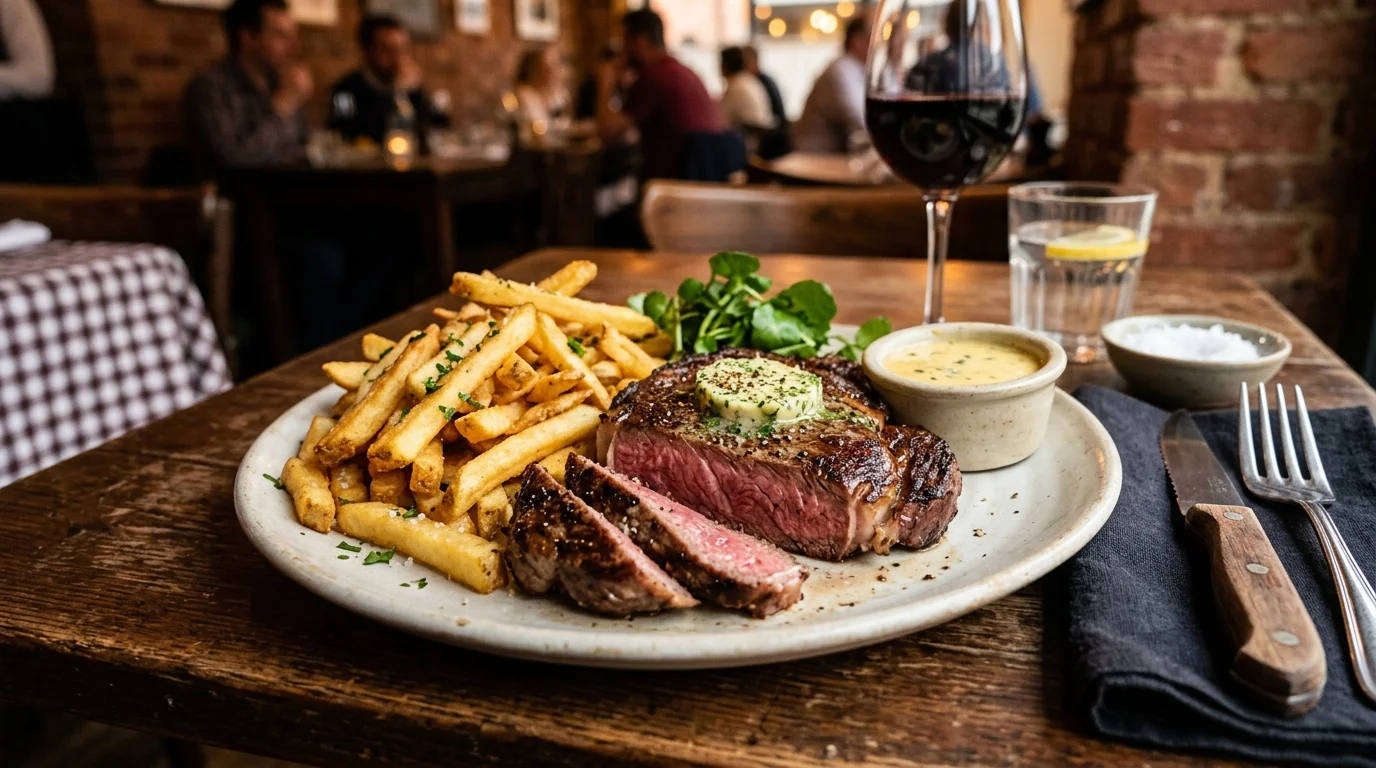
A steak frites recipe is the French bistro classic that belongs in every home cook’s repertoire — a perfectly seared steak beside a pile of golden, shatteringly crispy fries, finished with a herb butter or simple pan sauce. It sounds like a restaurant-only meal and is genuinely achievable in 40 minutes at home. It works as a special weeknight dinner, a date-night meal, or a weekend treat worth the effort. No complicated steps — just pure steak frites satisfaction, golden and seared and ready in 40 minutes.
Ingredients
For the Steak:
- 2 ribeye, sirloin, or strip steaks [approximately 250–300g / 9–10 oz each, at least 1 inch thick]
- 1 tsp fine salt [applied generously to both sides]
- ½ tsp black pepper, freshly ground
- 1 tbsp neutral oil [vegetable or canola — high smoke point]
- 2 tbsp unsalted butter
- 3 cloves garlic, lightly crushed [skin on]
- 3 sprigs fresh thyme [or rosemary]
For the Herb Butter (Compound Butter):
- 4 tbsp unsalted butter, softened
- 1 clove garlic, minced
- 1 tbsp fresh flat-leaf parsley, finely chopped
- 1 tsp fresh thyme leaves
- ½ tsp lemon zest
- Pinch of fine salt
For the Frites (Serves 2):
- 4 medium Russet potatoes [Russet is essential — high starch produces the crispiest fries]
- 1 litre neutral oil [for frying — vegetable or canola]
- 1 tsp fine salt [for seasoning immediately after frying]
- ½ tsp smoked paprika [optional — adds colour and depth]
For Serving:
- Dijon mustard
- Fresh watercress or green salad
- Extra flaky sea salt, for finishing the steak
- Lemon wedge
Step-by-Step Instructions
Step 1: Gather and Prep Your Ingredients
Before anything goes on the heat, make the compound butter and prep the potatoes. Cut the potatoes into ¼-inch thick matchsticks — uniform thickness is essential for even frying. Soak the cut potatoes in cold water for at least 20 minutes to remove excess surface starch. Remove the steaks from the refrigerator 30 minutes before cooking — room temperature steak sears more evenly than cold steak straight from the fridge.
Pro Tip: Room-temperature steak + ice-cold potato soak — both resting steps are non-negotiable for the best result.
Step 2: Make the Compound Butter
Beat the softened butter with a fork until fluffy. Add the minced garlic, parsley, thyme, lemon zest, and salt. Mix until evenly combined. Spoon the butter onto a sheet of plastic wrap, roll into a tight log, and refrigerate for at least 20 minutes until firm. Cold compound butter placed on a hot steak melts slowly into a glossy, aromatic pool — this is the classic French bistro finish for steak frites.
Pro Tip: Make a double batch and freeze the extra log — it keeps for 3 months and is ready for the next steak night.
Step 3: First Fry the Potatoes (Double Fry Method)
Drain and dry the soaked potatoes completely with paper towels — any residual moisture causes dangerous oil splatter. Heat the oil in a large, deep pot to 325°F (160°C). Fry the potatoes in batches for 4–5 minutes until cooked through but still pale and soft — they should not colour at this stage. Remove and drain on a wire rack. The first fry cooks the interior; the second fry creates the crispy exterior.
Pro Tip: Never skip the double fry — a single fry at high heat burns the outside before the inside cooks through.
📖 Read More: Steak Burritos
Step 4: Sear the Steak
Heat a cast iron or heavy stainless skillet over the highest heat your stove produces for 3 minutes until smoking. Add the neutral oil — it should shimmer immediately. Season the steak generously with salt and pepper on both sides. Place in the skillet and do not move for 3 minutes. Flip once. Add the butter, crushed garlic, and thyme sprigs. Baste the steak continuously with the foaming butter for 2 minutes.
Pro Tip: Baste with a tilted pan and a spoon — continuous basting produces golden, evenly cooked edges the dry heat alone cannot achieve.
Step 5: Rest the Steak and Second Fry the Frites
Transfer the seared steak to a wire rack and rest for 5–8 minutes — mandatory, not optional. While the steak rests, increase the oil temperature to 375°F (190°C). Fry the par-cooked potatoes in batches for 2–3 minutes until deeply golden, shatteringly crispy, and audibly crunchy when tapped. Drain immediately on a wire rack — never on paper towels, which trap steam and soften the crust. Season immediately with salt.
Pro Tip: Season the frites the moment they leave the oil — salt only adheres to a hot, oily surface.
Step 6: Slice the Steak and Plate
Slice the rested steak against the grain into thick slices — or serve whole, which is the traditional bistro presentation. Place a generous slice of compound butter directly on the hot steak and let it melt slowly across the surface. Plate the steak alongside a tall pile of golden frites. Finish the steak with a pinch of flaky sea salt and a squeeze of lemon. Serve with Dijon mustard alongside — non-negotiable in any steak frites recipe.
Pro Tip: Slice against the grain for tender slices — with the grain produces long, chewy fibres every time.
Cook Time
Total Time: 40 minutes | Prep and Soak: 20 minutes | First Fry: 5 minutes | Sear Steak: 6 minutes | Rest: 7 minutes | Second Fry: 3 minutes One skillet, one frying pot — steak frites on the table in 40 minutes.
Servings
Serves 2 generously.
Nutritional Information (approx. per serving — 1 steak with compound butter and frites, no sides)
| Nutrient | Amount |
|---|---|
| Calories | 880 kcal |
| Fat | 52g |
| Saturated Fat | 20g |
| Carbohydrates | 48g |
| Protein | 54g |
| Sugar | 2g |
| Fiber | 4g |
| Sodium | 720mg |
| Vitamin C | 22mg |
| Potassium | 1,240mg |
| Calcium | 60mg |
Values are approximate and will vary based on steak cut and cooking fat used.
Storage Instructions
Steak frites is a cook-and-eat meal — both components deteriorate significantly within 20 minutes of cooking. The frites lose their crunch rapidly as steam from the interior migrates to the surface. The steak continues cooking from residual heat if left wrapped. Store each component separately and never together. Refrigerate leftover steak in an airtight container for up to 3 days and reheat in a hot skillet for 60–90 seconds per side — never in a microwave.
Leftover frites cannot be reliably revived to their original crispy state — reheat in a single layer on a wire rack at 425°F for 5–7 minutes as the closest alternative. For meal prep, the compound butter keeps refrigerated for 1 week or frozen for 3 months. The par-cooked first-fried potatoes can be refrigerated on a wire rack for up to 24 hours before the second fry — this is the best make-ahead method for a dinner party.
Suggestions
- Classic Béarnaise Sauce Version: Replace the compound butter with a béarnaise sauce — egg yolks, clarified butter, tarragon, and white wine vinegar whisked into a silky, rich emulsion. Béarnaise is the traditional French pairing for steak frites and elevates the dish significantly for a special occasion dinner.
- Garlic Aioli Frites: Serve the second-fried frites alongside a homemade garlic aioli — 1 egg yolk, 1 clove of minced garlic, lemon juice, and neutral oil whisked into a thick, creamy dipping sauce. The aioli makes the frites the star of the plate rather than supporting cast.
- Blue Cheese Butter Version: Replace the herb compound butter with a blue cheese compound butter — softened butter blended with crumbled gorgonzola, chopped walnuts, and a pinch of black pepper. The funky, salty blue cheese against the hot seared steak is deeply satisfying for anyone who loves bold flavours.
- Oven-Baked Frites: For a lower-fat alternative, toss the soaked, dried potato matchsticks in 2 tablespoons of olive oil, salt, and smoked paprika. Spread in a single layer on a lined baking sheet and bake at 425°F for 25–30 minutes, turning halfway. The result is less shatteringly crispy than deep-fried but genuinely good and significantly lighter.
- Steak Frites With Pan Sauce: After removing the steak to rest, pour off excess fat from the skillet. Add 1 minced shallot and cook for 60 seconds. Deglaze with ½ cup of red wine and reduce by half. Add ½ cup of beef broth and reduce again until slightly thickened. Finish with cold butter off the heat. A quick, restaurant-style jus in 5 minutes.
- Truffle Frites: Toss the hot second-fried frites with ½ teaspoon of truffle oil, grated Parmesan, and fresh flat-leaf parsley immediately after seasoning with salt. Add the truffle oil off the heat — it should coat, not cook. This upgrade takes 30 seconds and turns the frites into the most impressive part of the plate.
- Lighter Steak Frites: Use a lean sirloin rather than ribeye to reduce the fat significantly. Reduce the compound butter to 1 tablespoon per steak. Use the oven-baked frites method. Each serving comes in under 600 calories while retaining the core flavour experience — well-seared steak, crispy potato, and herb butter finishing.
- Chicken Frites: Replace the steak with a flattened, pounded chicken breast — seasoned with salt, pepper, and smoked paprika. Sear for 4–5 minutes per side until cooked through. Use the same compound butter, the same frites, and the same plating. A lighter, more accessible version that uses the identical method and produces genuinely excellent results.
Seasonal Relevance
Steak frites is a natural autumn and winter dish — the searing, the butter basting, and the deep-frying all suit a cold kitchen and a cold-weather appetite for rich, warming, indulgent food. From October through February it earns its place as the most impressive weeknight special available from a single skillet and one frying pot. From May through September, steak frites transitions naturally to outdoor cooking — steak seared on a hot grill rather than a cast iron skillet and baked frites rather than deep-fried suit warm-weather cooking without any loss of the core experience.
Conclusion
A steak frites recipe earns its status as one of the most satisfying meals in any cuisine because every element serves the whole — the crispy frites contrast the tender steak, the compound butter ties everything together, and the Dijon on the side sharpens every bite. Rest the steak, double fry the potatoes, baste with butter, and season the frites the moment they leave the oil. Get those four things right and steak frites at home is genuinely better than most restaurants charge for it. Try the béarnaise version for occasion dining, the truffle frites for a quick upgrade, or the pan sauce for a full bistro experience.
FAQs
Q: Why do my frites go soggy instead of staying crispy? Soggy frites come from three causes — not soaking the potatoes to remove surface starch, frying at insufficient oil temperature, and draining on paper towels rather than a wire rack. Soak for at least 20 minutes in cold water, maintain oil at 375°F for the second fry, and always drain on a wire rack that allows air circulation beneath. Season immediately while the surface is hot and oily — salt will not adhere once they cool.
Q: What steak cut works best for steak frites? Ribeye is the most flavourful choice — the intramuscular fat bastes the steak from within during searing and produces the richest result. Strip steak and sirloin are leaner alternatives that still sear beautifully and are more budget-friendly. All three should be at least 1 inch thick — thinner steaks overcook to well-done before the outside has time to develop a proper crust. Avoid anything pre-marinated — the excess moisture prevents browning.
Q: How do I know when the steak is cooked to the right temperature? An instant-read thermometer is the most reliable method. Pull the steak off the heat at 125°F for rare, 130–135°F for medium-rare — the classic steak frites temperature — and 140°F for medium. The steak will rise 5°F during the rest period, so always pull it 5 degrees below the target. Pressing the steak with a finger gives a rough guide — soft like the base of the thumb is rare, firmer with some resistance is medium-rare.