Hamburger Casserole Recipes Hearty, Cheesy & Ready in 45 Minutes
Hamburger casserole recipes are the weeknight dinner category that consistently earns its place on the table without any effort to justify it. Seasoned ground beef, pasta or potatoes, a rich sauce, and a melted cheese topping baked together in one dish — it’s filling, affordable, feeds a crowd, and produces leftovers that reheat better than most things in the refrigerator.
The format is forgiving, the technique is straightforward, and the result is the kind of food that people clear completely and then ask when it’s happening again. Whether you’re building the classic cheesy pasta version, a potato-topped bake, a Mexican-spiced skillet casserole, or a simple rice and beef dish, this guide covers the base method and every variation worth making. No complicated steps — just pure hamburger casserole recipe satisfaction, hot from the oven and on the table in 45 minutes.
Ingredients
For the Hero Recipe — Classic Cheesy Hamburger Casserole (serves 6):
- 500g (1.1 lb) lean ground beef [80/20 for flavour — drain excess fat after browning]
- 300g (10 oz) penne or rotini pasta, uncooked
- 1 medium yellow onion, finely diced
- 4 cloves garlic, minced
- 1 medium green bell pepper, diced
- 2 tbsp olive oil
- 1 can (15 oz) diced tomatoes, drained
- 1 can (15 oz) tomato sauce
- 2 tbsp tomato paste
- 1 tsp Worcestershire sauce
- 1 tsp dried Italian seasoning
- 1 tsp smoked paprika
- 1 tsp garlic powder
- ½ tsp onion powder
- ½ tsp fine salt
- ½ tsp black pepper
- ½ cup low-sodium beef broth
- ½ cup sour cream [adds creaminess and tang]
For the Cheese Topping:
- 2 cups shredded sharp cheddar cheese, divided
- ½ cup shredded mozzarella cheese
- ¼ cup freshly grated Parmesan cheese
For Serving:
- Fresh parsley or chives, chopped
- Sour cream, for topping
- Crushed red pepper flakes, for heat
Optional Add-Ins:
- 1 can (15 oz) kidney beans or black beans, drained (optional)
- 1 cup frozen corn, thawed (optional)
- 1 cup sliced mushrooms, sautéed (optional)
- ½ cup cream cheese, softened — for extra richness (optional)
- 1 tsp chili powder — for a Tex-Mex direction (optional)
Step-by-Step Instructions
Step 1: Gather and Prep Your Ingredients
Before the skillet goes on, dice the onion, mince the garlic, dice the bell pepper, and measure the spices into a small bowl. Open and drain the canned tomatoes. Measure the sour cream and set it aside at room temperature — cold sour cream stirred into a hot sauce can cause it to split into grainy curds rather than blending smoothly. Having everything prepped before the beef goes into the pan keeps the cook moving at the right pace and prevents any element from sitting on heat too long while you catch up. Hamburger casserole recipes are a momentum cook — the prep work done before the first onion hits the pan is what determines how clean and consistent the finished dish tastes.
Pro Tip: Dry the ground beef patted briefly with a paper towel before it goes into the pan if there’s visible surface moisture — dry beef browns properly while wet beef steams. The Maillard browning on the surface of the ground beef is where a significant portion of the casserole’s final flavour comes from, and it only develops when the meat makes direct, dry contact with a properly hot surface.
Step 2: Brown the Ground Beef
Heat 2 tablespoons of olive oil in a large oven-safe skillet or sauté pan over medium-high heat. Add the diced onion and cook for 3 minutes until softened. Add the ground beef and break it apart thoroughly with a wooden spoon — spread it across the full surface of the pan and leave it undisturbed for 2 minutes to develop browning before breaking and stirring. Cook for 6–8 minutes total until no pink remains and the beef has some golden-brown colour at the edges. Drain all but about 1 tablespoon of fat from the pan — too much fat in the casserole makes the final dish greasy rather than rich. Add the minced garlic and diced bell pepper and stir for 90 seconds until the garlic is fragrant.
Pro Tip: Drain the fat after browning rather than before — the fat released during browning is what gives the beef its flavour during the sear. Draining before browning removes the lubrication the beef needs to make proper contact with the pan surface. Draining after means you get all the flavour benefit of the fat during browning and the cleaner finished dish of having removed most of it before the sauce goes in.
Step 3: Build the Sauce and Cook the Pasta
Add the tomato paste to the browned beef and stir for 60 seconds until it caramelises slightly against the pan surface. Add the diced tomatoes, tomato sauce, Worcestershire sauce, Italian seasoning, smoked paprika, garlic powder, onion powder, salt, pepper, and beef broth. Stir to combine and bring to a gentle simmer. Meanwhile, cook the pasta in a separate pot of heavily salted boiling water for 2 minutes less than the package directions — it will finish cooking in the oven inside the casserole. Drain and toss with a drizzle of olive oil. Remove the beef sauce from the heat and stir in the sour cream — add it off the heat to prevent it from curdling. Fold the drained pasta through the beef sauce until every piece is coated.
Pro Tip: The tomato paste caramelisation step takes 60 seconds and adds a depth of flavour that raw tomato paste dissolved directly into sauce never achieves. The paste darkens slightly and develops a concentrated, slightly sweet savouriness that makes the entire hamburger casserole taste like it’s been simmering far longer than it has. It costs nothing extra and takes one minute — always worth doing.
📖 Read More: Hamburger Meat Recipes
Step 4: Assemble the Casserole
Preheat the oven to 375°F (190°C). Transfer the beef and pasta mixture to a lightly greased 9×13-inch baking dish if your skillet isn’t oven-safe, or leave it in the oven-safe skillet and proceed directly. Spread the mixture into an even layer — press it gently so it fills every corner and lies flat rather than sitting in mounds. Scatter 1 cup of the shredded cheddar evenly across the surface and press it gently into the top of the beef mixture — this first layer of cheese bonds to the surface and creates a foundation for the final cheese topping. Add the remaining cheddar, mozzarella, and Parmesan across the top in an even layer. The cheese topping should be generous — a thin layer of cheese on a hamburger casserole disappears into the dish during baking and produces none of the bubbling, golden top that makes this format worth making.
Pro Tip: Use a combination of shredded cheeses rather than a single type — sharp cheddar provides flavour and colour, mozzarella provides the stretch and pull, and Parmesan provides the golden, slightly crispy top. Any one of these cheeses alone produces a less interesting result than the three working together. The combination is what produces the signature look and taste of a properly finished hamburger casserole.
Step 5: Bake and Finish
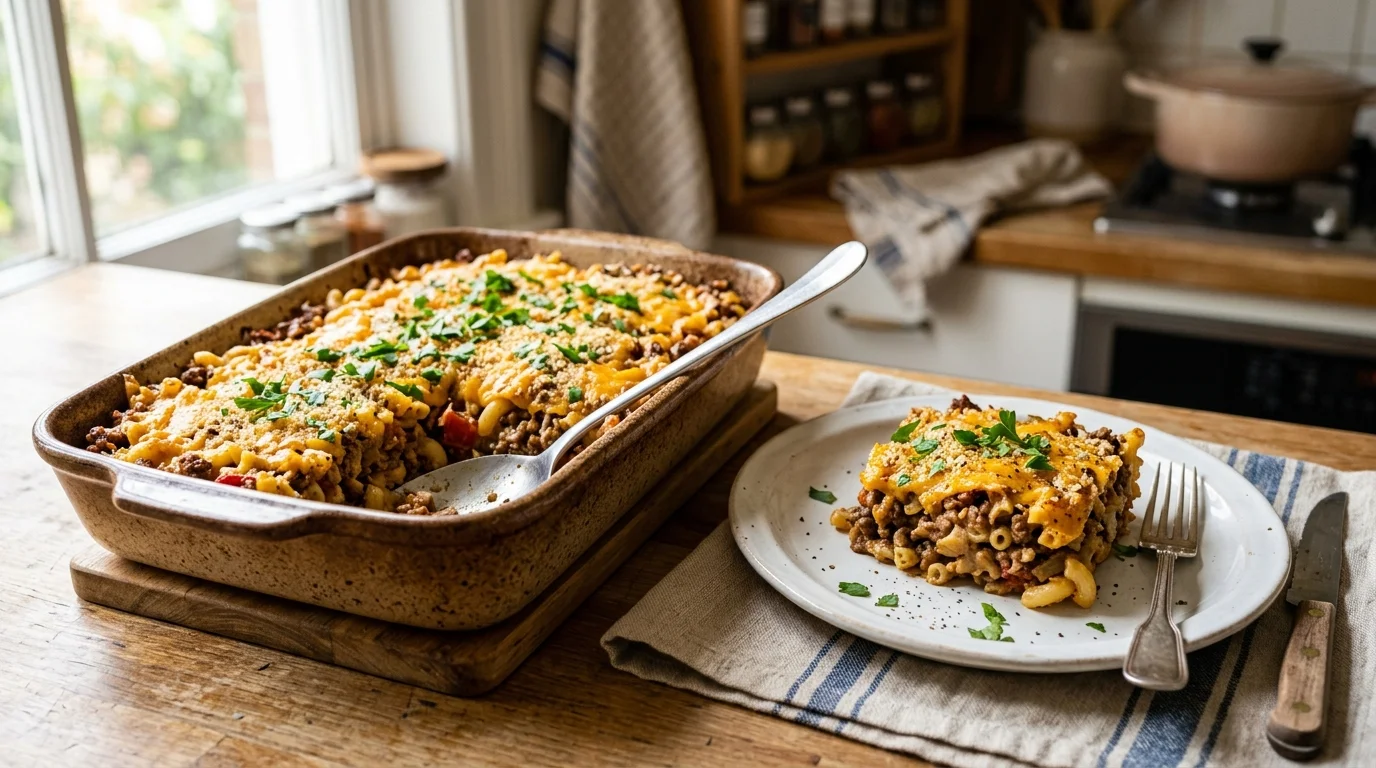
Bake the assembled casserole uncovered at 375°F for 20–25 minutes until the cheese is completely melted, visibly bubbling at the edges, and developing golden patches across the surface. The uncovered bake is intentional — covering the casserole traps steam and produces a pale, wet cheese top rather than the golden, slightly caramelised crust that is the visual signature of a well-made hamburger casserole. For an extra-golden, slightly crispy cheese finish, switch the oven to broil for the final 2–3 minutes and watch closely — cheese moves from golden to burnt in under a minute under direct broiler heat. Remove from the oven when the cheese is exactly where you want it and rest for 5 minutes before serving.
Pro Tip: The 5-minute rest after baking is not optional. A casserole pulled from the oven and served immediately will be too loose to cut into clean portions — the sauce is actively bubbling and hasn’t had time to set. Five minutes off the heat allows the sauce to thicken, the cheese to firm slightly, and the whole dish to settle into a cohesive, sliceable structure. The portion that goes on each plate looks significantly more presentable than a casserole served straight from the oven.
Step 6: Garnish and Serve
Scatter freshly chopped parsley or chives across the golden cheese top — the green herbs against the golden melted cheese is the visual that makes a hamburger casserole recipe look finished and intentional rather than just a baked pasta dish. Add a small dollop of sour cream to each portion at the table, a crack of black pepper, and red pepper flakes for anyone who wants heat. Serve directly from the baking dish with a wide serving spoon or spatula. The first portion is always the hardest to lift cleanly — subsequent portions come out more neatly once the first one has opened the structure of the casserole. Serve with a simple green salad and crusty bread to complete the meal.
Pro Tip: Score the cheese topping with a sharp knife into portion-sized squares before using the serving spoon — cutting through the set cheese layer first means each portion comes out with a clean, intact cheese top rather than dragging and tearing the melted surface across adjacent portions as the spoon moves through the dish.
Cook Time
Total Time: 45 minutes | Prep: 10 minutes | Stovetop: 15 minutes | Bake: 22 minutes | Rest: 5 minutes One skillet, one baking dish — hamburger casserole on the table in 45 minutes.
Servings
Serves 6 generous portions from a standard 9×13-inch baking dish.
Nutritional Information (approx. per serving — classic cheesy hamburger casserole, based on 6 servings)
| Nutrient | Amount |
|---|---|
| Calories | 520 kcal |
| Fat | 26g |
| Saturated Fat | 12g |
| Carbohydrates | 40g |
| Protein | 34g |
| Sugar | 7g |
| Fiber | 3g |
| Sodium | 680mg |
| Vitamin C | 18mg |
| Potassium | 560mg |
| Calcium | 320mg |
Values are approximate and will vary based on ingredients used.
Storage Instructions
Hamburger casserole recipes are one of the best meal prep options available — the flavour deepens overnight as the beef and sauce settle together and the pasta absorbs the seasoned liquid. Allow the casserole to cool completely before covering the baking dish tightly with plastic wrap or foil — sealing a hot casserole traps steam that makes the topping soggy and the sauce watery by morning. Refrigerate for up to 4 days. Reheat individual portions in the microwave covered loosely with a damp paper towel in 60-second intervals until heated through. For reheating the full casserole, cover with foil and warm at 325°F for 20–25 minutes, then uncover for the final 5 minutes to re-crisp the cheese surface. Add a small splash of beef broth or water over the surface before reheating — the pasta continues to absorb the sauce during refrigeration and needs a small amount of additional liquid to restore the correct consistency. For freezing, hamburger casserole freezes very well for up to 3 months. Cool completely, cover tightly with foil and then plastic wrap, and freeze. Thaw overnight in the refrigerator before reheating as above. The pasta texture is slightly softer after freezing and thawing than on the day it was made, but the flavour and overall dish quality hold up well. For the best freeze result, slightly undercook the pasta before assembling — less cooked pasta absorbs less sauce during storage and produces a less soft, more pleasant texture after reheating from frozen.
Suggestions
- Mexican Hamburger Casserole: Replace the Italian seasoning with 2 teaspoons of taco seasoning, add 1 can of drained black beans, 1 cup of frozen corn, and ½ cup of salsa alongside the tomato sauce. Top with pepper jack cheese instead of cheddar and mozzarella. Serve with sour cream, sliced jalapeños, and fresh cilantro. This is the most crowd-pleasing variation in the list — the Mexican spice profile is familiar, the beans and corn add substance, and the pepper jack topping adds a slow heat that builds through each portion.
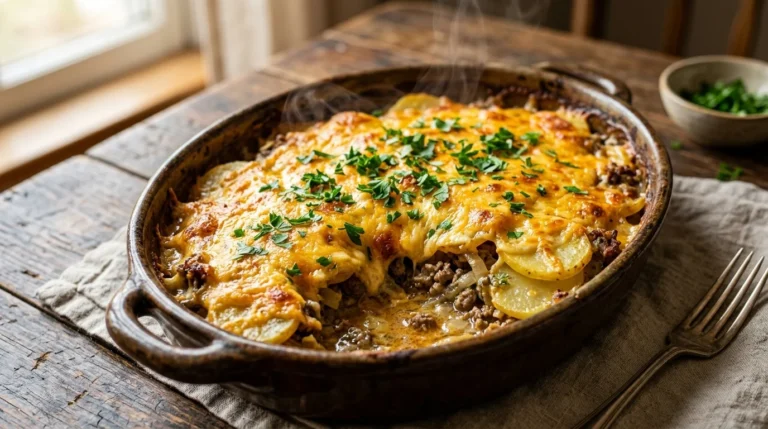
- Potato-Topped Hamburger Casserole: Skip the pasta entirely and replace it with 3 cups of thinly sliced potato layered across the top of the beef and sauce mixture before the cheese goes on. Cover with foil and bake at 375°F for 35 minutes until the potatoes are tender, then uncover and add the cheese topping for the final 15 minutes. This is the most comforting, starchiest version in the list — the potato top absorbs the beef sauce from below as it bakes and develops a crispy, golden-edged surface under the melted cheese that no pasta version can replicate.
- Rice Hamburger Casserole: Replace the cooked pasta with 2 cups of uncooked long-grain white rice. Add an extra cup of beef broth to the sauce base — the rice needs the additional liquid to cook through fully during the bake. Cover tightly with foil and bake at 375°F for 35 minutes before checking the rice for doneness, then uncover and add the cheese topping for the final 12 minutes. A hamburger casserole built on rice is slightly softer in texture than the pasta version but absorbs the beef sauce more deeply and produces an even more cohesive, single-dish result.
- Hamburger Casserole With Cream of Mushroom: Replace the tomato sauce and diced tomatoes with 2 cans of cream of mushroom soup thinned with ½ cup of beef broth. Skip the Italian seasoning and use garlic powder, onion powder, and a generous amount of Worcestershire sauce for the flavour base. The cream of mushroom version produces a paler, richer casserole that is closer to a traditional stroganoff in character — deeply savoury, creamy, and particularly popular with younger eaters who prefer a less tomato-forward dish.
- Stuffed Pepper Hamburger Casserole: Add 3 diced bell peppers — red, yellow, and green — to the beef and sauce mixture and use rice instead of pasta. The three peppers add sweetness, colour, and the signature flavour of classic stuffed peppers in a significantly easier, no-rolling-required format. This deconstructed stuffed pepper casserole delivers every flavour of the traditional dish in a fraction of the time and feeds twice as many people from the same amount of ingredients.
- Cheesy Hamburger Noodle Casserole: Use egg noodles instead of penne — cook them 3 minutes less than the package directions and fold them into the beef sauce exactly as the base recipe directs. Egg noodles have a softer, more tender bite than penne and absorb the sauce more completely during baking, producing a creamier, more cohesive casserole that is particularly satisfying in cold weather. Add cream cheese to the sauce base for an extra layer of richness that makes this version the most indulgent in the list.
- Low-Carb Hamburger Casserole: Replace the pasta entirely with riced cauliflower — use 3 cups of fresh or frozen cauliflower rice stirred into the beef and sauce mixture before baking. The cauliflower absorbs the beef sauce during baking and takes on its flavour almost completely, making the low-carb version taste significantly more like the original than most cauliflower substitutions manage. Top with the full cheese amount — generous cheese on a low-carb casserole is one of the most effective ways to make the reduced carbohydrate version feel genuinely satisfying rather than compromised.
- Make-Ahead Hamburger Casserole: Prepare the beef and pasta mixture completely — brown the beef, build the sauce, cook and fold in the pasta — and transfer to the baking dish. Cover tightly without adding the cheese topping and refrigerate for up to 24 hours. When ready to bake, add the cheese topping cold from the refrigerator and bake covered with foil at 375°F for 30 minutes, then uncover for the final 12–15 minutes. The make-ahead version actually tastes marginally better than same-day baking because the beef and pasta have had time to absorb the sauce fully overnight, producing a more cohesive, deeply flavoured result.
Seasonal Relevance
Hamburger casserole recipes are built for the cooler months — from October through February they are the natural weekly dinner, the kind of food that justifies turning the oven on and warming the kitchen in the process. Autumn is when the potato-topped version and the cream of mushroom build feel most seasonally right — earthy, warm, and appropriately heavy for the season’s appetite. December and January are when the cheesy pasta and rice versions appear most frequently on family tables — filling, budget-friendly, and requiring minimal active effort during the busiest social months of the year. From March through May, the Mexican variation transitions naturally into spring — lighter spice profile, brighter garnishes, and a less heavy sauce make it the appropriate casserole for warming weather. In summer, June through August, hamburger casseroles are best made early in the morning before the heat builds — they reheat perfectly at dinner and the oven needs to be on for only 25 minutes rather than sitting on a stovetop through the hottest part of the day. Fresh summer tomatoes stirred into the sauce base instead of canned make a meaningful flavour difference during peak season and are worth substituting when available.
Conclusion
Hamburger casserole recipes earn their permanent place in the weeknight rotation because they solve the recurring dinner problem — a filling, flavourful, crowd-feeding meal that uses affordable ingredients, requires minimal technique, and produces leftovers that work as well the next day as they did the night before. The base method is fast and forgiving, the cheese topping is satisfying regardless of which variation you use, and the make-ahead option removes every timing pressure from the equation. Master the classic cheesy pasta version first, then move through the suggestions — the Mexican build, the potato top, the cream of mushroom — and find the two or three hamburger casserole recipes that earn a permanent spot in the household rotation. Every version feeds the table completely and asks very little in return.
FAQs
Q: Can I use ground turkey instead of ground beef in hamburger casserole recipes? Yes — ground turkey works as a direct substitute with no technique adjustment required. The flavour is milder and the fat content is lower than ground beef, which means two compensating steps improve the result significantly. First, increase the Worcestershire sauce to 2 teaspoons and add 1 tablespoon of soy sauce to the beef sauce — both are umami amplifiers that add the savoury depth that ground beef fat contributes naturally. Second, use 1 tablespoon of olive oil to cook the turkey rather than relying on its own fat for browning. The finished hamburger casserole made with ground turkey is lighter in calories and equally satisfying with these two adjustments.
Q: Do I have to pre-cook the pasta before adding it to the casserole? Yes — but only to the al dente stage, not fully cooked. Pasta that goes into the casserole fully cooked will be overcooked and mushy by the time the cheese is melted and golden at 375°F. Pasta that goes in completely raw will absorb all the sauce liquid during baking and produce a dry, starchy casserole with undercooked pasta. The correct approach — cooking 2 minutes less than the package directions — produces pasta that finishes cooking in the oven inside the sauce and arrives at the table at exactly the right texture. This timing applies consistently across every pasta shape used in hamburger casserole recipes.
Q: Why does my hamburger casserole turn out watery? Excess water in a hamburger casserole comes from one of three sources — undrained fat from the ground beef, excess liquid from canned tomatoes that weren’t properly drained, or pasta that carried too much water into the dish after boiling. Drain the cooked beef thoroughly, drain the canned tomatoes completely before adding, and shake the drained pasta in the colander to remove residual water before folding it into the sauce. If the assembled casserole still looks wetter than expected before it goes into the oven, bake it uncovered from the start rather than covered — the evaporation from an uncovered bake removes excess liquid during the first 15 minutes and produces a properly thickened sauce by the time the cheese is melted and golden.