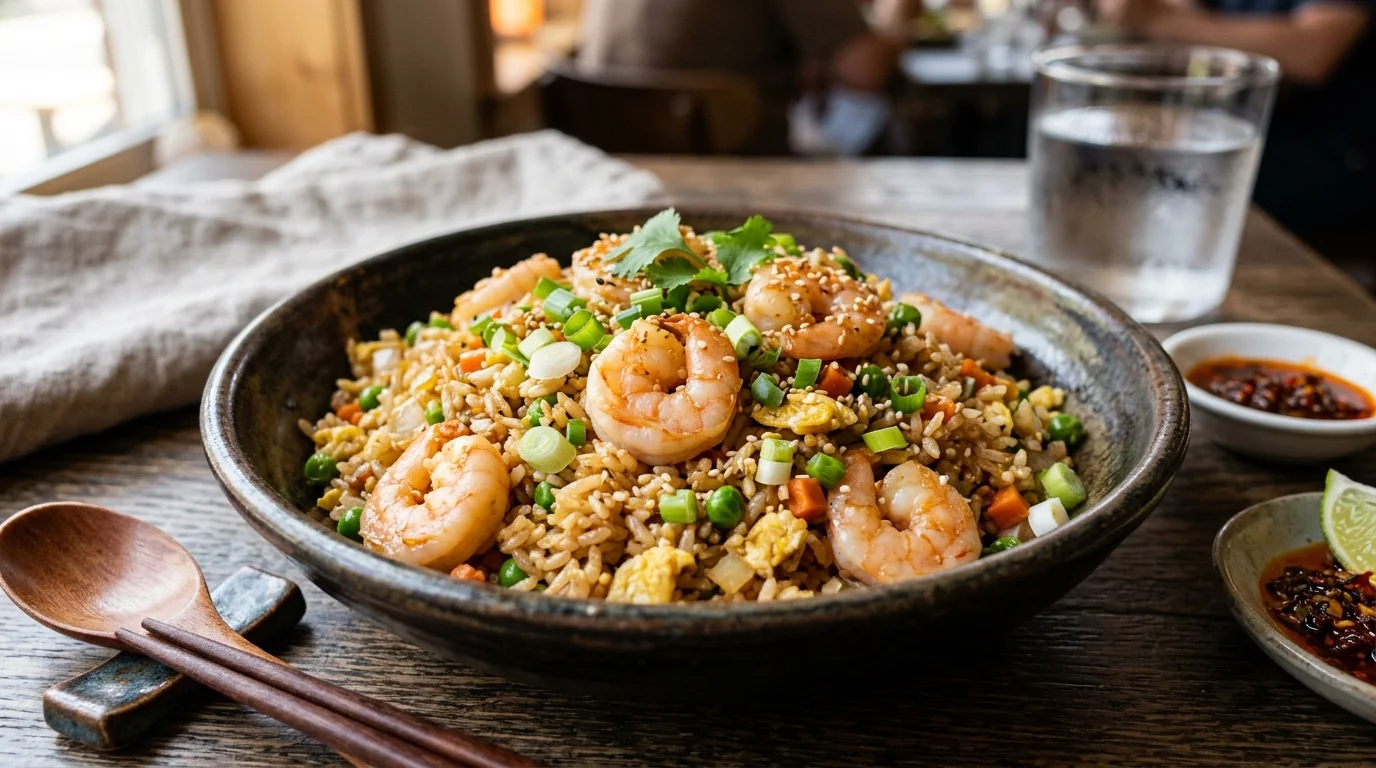
Shrimp Fried Rice Recipe Savoury, Satisfying & Ready in 20 Minutes
A shrimp fried rice recipe is one of those weeknight meals that comes together faster than anything you could order and tastes significantly better than anything that arrives in a box. The shrimp cook in under 3 minutes, the rice goes in hot and ready, and the whole dish is done before the table is even set. What makes it genuinely great — not just fast — is the combination of properly seasoned rice, golden scrambled egg, sweet shrimp, and a sauce that ties everything together with deep, savoury flavour.
Whether it’s a quick solo dinner, a weekend family meal, or the best possible use of leftover rice in the refrigerator, this shrimp fried rice recipe delivers every single time. No complicated steps — just pure shrimp fried rice satisfaction, on the table in 20 minutes flat.
Ingredients
For the Fried Rice:
- 3 cups cooked long-grain white rice [day-old and cold — this is non-negotiable]
- 400g (14 oz) large raw shrimp, peeled and deveined
- 3 large eggs, lightly beaten
- 1 cup frozen peas and carrots, thawed
- 4 spring onions, white and green parts separated and sliced
- 4 cloves garlic, minced
- 1 tbsp fresh ginger, finely grated
- 2 tbsp neutral oil [vegetable or canola]
- 1 tbsp sesame oil
For the Sauce:
- 3 tbsp soy sauce [low-sodium preferred]
- 1 tbsp oyster sauce
- 1 tsp dark soy sauce [for colour and depth]
- 1 tsp sesame oil
- ½ tsp sugar
- ¼ tsp white pepper
Optional Add-Ins:
- ½ cup corn kernels, fresh or frozen (optional)
- ½ cup diced bell pepper (optional)
- 1 tbsp chili oil or chili crisp, for heat (optional)
- Toasted sesame seeds, for garnish (optional)
- Extra sliced spring onion, for garnish (optional)
- Lime wedges, for serving (optional)
Step-by-Step Instructions
Step 1: Gather and Prep Your Ingredients
Before the wok goes anywhere near the heat, get every single component prepped and within arm’s reach. Peel and devein the shrimp if not already done, pat them completely dry with paper towels, mince the garlic, grate the ginger, slice the spring onions, and beat the eggs in a small bowl. Mix all the sauce ingredients together in a separate bowl and set aside. A shrimp fried rice recipe moves at wok speed — there is no time to pause mid-cook for any prep work without something burning or overcooking in the meantime.
Pro Tip: Day-old refrigerated rice is the single most important ingredient in any fried rice recipe. Fresh rice is too moist and soft — it steams in the wok rather than frying, and the grains clump together into a sticky mass. Cold rice from the refrigerator has dried out on the surface, which means each grain moves freely in the wok, picks up colour, and absorbs the sauce without turning mushy. If you only have fresh rice, spread it thin on a baking sheet and refrigerate for 1 hour before cooking.
Step 2: Mix the Sauce
In a small bowl, combine the soy sauce, oyster sauce, dark soy sauce, sesame oil, sugar, and white pepper. Stir until the sugar is fully dissolved and everything is well combined. Taste the sauce — it should be deeply savoury, slightly sweet, and boldly flavoured. It will taste intensely salty at this stage, which is correct — it dilutes significantly once it’s tossed through three cups of rice. Pre-mixing the sauce before cooking means it goes into the wok in one pour rather than multiple additions, which keeps the heat consistent and the cook time short.
Pro Tip: Make a double or triple batch of this sauce and store it in a sealed jar in the refrigerator for up to 2 weeks. It works across every fried rice variation — chicken, vegetable, egg — and having it pre-mixed reduces the active cook time of any weeknight shrimp fried rice recipe to under 10 minutes from a cold start.
Step 3: Cook the Shrimp
Heat the wok or a large heavy skillet over the highest heat your stovetop can produce for 2–3 minutes until smoking. Add 1 tablespoon of neutral oil and swirl to coat. Add the dried shrimp in a single layer — do not crowd the pan. Cook undisturbed for 60 seconds until the underside turns pink and slightly charred at the edges, then flip and cook for another 30–45 seconds until just cooked through. The shrimp are done when they curl into a loose C shape and turn fully opaque — an O shape means they are overcooked. Remove the shrimp from the wok immediately and set aside on a plate.
Pro Tip: Remove the shrimp from the wok the moment they’re done and don’t return them until the very last 30 seconds of the cook. Shrimp that stay in the wok through the rice and egg stages become rubbery and overcooked by the time everything else is ready. Cooking them first, setting aside, and returning them at the end is the method that keeps every shrimp in the finished shrimp fried rice recipe perfectly tender.
📖 Read More: Chicken Rice Casserole
Step 4: Scramble the Eggs and Add the Aromatics
Without cleaning the wok, reduce the heat to medium-high and add a small drizzle of oil if the pan looks dry. Pour the beaten eggs into the wok and let them set for 10–15 seconds without stirring — then scramble gently with a spatula into large, soft curds. Remove the scrambled egg from the wok before it is fully cooked through — it will finish cooking from the residual heat of the rice. Push the egg to the side and add the remaining tablespoon of oil. Add the spring onion whites, minced garlic, and grated ginger and stir vigorously for 30–45 seconds until fragrant. Add the thawed peas, carrots, and any optional vegetables and stir-fry for 60 seconds.
Pro Tip: Remove the eggs slightly before they look done — they carry over and firm up the moment the hot rice goes in. Eggs left in the wok until fully cooked before the rice is added will be overcooked and rubbery by the time the dish reaches the plate. Soft, barely-set curds folded through hot fried rice is the correct result and the one worth protecting.
Step 5: Fry the Rice and Add the Sauce
Increase the heat back to maximum. Add the cold day-old rice to the wok and press it against the hot surface with a spatula — hold the pressure for 30 seconds to build colour on the bottom, then toss and press again. Repeat this press-and-toss motion for 2–3 minutes until the rice is heated through, slightly toasted, and individual grains are moving freely rather than clumped together. Pour the pre-mixed sauce over the rice and toss continuously for 60 seconds until every grain is evenly coated and the sauce has absorbed into the rice rather than pooling at the bottom of the wok. The rice should look uniformly golden-brown and smell deeply savoury.
Pro Tip: Break up any clumps of cold rice with your hands before it goes into the wok — large clumps take longer to heat through and can cause uneven sauce distribution. Loose, separated grains enter the wok ready to fry immediately rather than spending the first minute just breaking apart from each other under the spatula.
Step 6: Return the Shrimp, Garnish, and Serve
Return the cooked shrimp to the wok along with the scrambled egg. Toss everything together for 30 seconds until the shrimp are warmed through and fully integrated into the shrimp fried rice. Drizzle the sesame oil over the entire wok in the final 10 seconds and toss once more — this finishing drizzle adds fragrance and gloss that goes in at the end rather than during cooking because high heat destroys the delicate aroma of sesame oil. Divide immediately between warm bowls, scatter the spring onion greens and toasted sesame seeds across the top, add a drizzle of chili oil if using, and serve with lime wedges on the side. Shrimp fried rice is at its absolute best the moment it leaves the wok.
Pro Tip: Serve the shrimp fried rice recipe the moment it comes off the heat — fried rice sitting in the wok for even 5 minutes continues to steam in its own heat and the grains lose the distinct, slightly crispy texture that defines a properly made version. Have the bowls warm and the garnishes ready before the rice goes into the wok.
Cook Time
Total Time: 20 minutes | Prep: 8 minutes | Sauce: 2 minutes | Cook: 10 minutes One wok, zero fuss — shrimp fried rice on the table in 20 minutes.
Servings
Serves 3 to 4 as a main course.
Nutritional Information (approx. per serving — based on 4 servings)
| Nutrient | Amount |
|---|---|
| Calories | 420 kcal |
| Fat | 14g |
| Saturated Fat | 2g |
| Carbohydrates | 48g |
| Protein | 28g |
| Sugar | 4g |
| Fiber | 3g |
| Sodium | 860mg |
| Vitamin C | 10mg |
| Potassium | 420mg |
| Calcium | 80mg |
Values are approximate and will vary based on ingredients used.
Storage Instructions
Shrimp fried rice stores well in the refrigerator for up to 3 days in an airtight container, making it one of the better make-ahead options in this format. The rice absorbs the sauce as it sits and the flavours actually deepen overnight — day-two fried rice often tastes more developed than the freshly cooked version. Reheat in a hot wok or skillet with a small splash of water tossed in immediately — the water creates a burst of steam that heats the rice through without drying it out, and 2–3 minutes of tossing over high heat revives much of the original texture. Avoid microwaving where possible as it heats unevenly and produces soft, slightly gummy grains rather than the distinct, separated texture of freshly cooked fried rice. The shrimp in particular reheat better in a pan than a microwave — high microwave heat overcooks them further and turns the texture rubbery within seconds. For freezing, cooked shrimp fried rice freezes adequately for up to 1 month, though the shrimp texture is noticeably softer after thawing. Freeze in individual portions, thaw overnight in the refrigerator, and reheat in a hot wok as described. For the best practical result, freeze without the shrimp and add freshly cooked shrimp when reheating.
Suggestions
- Vegetable Fried Rice Version: Skip the shrimp entirely and double the vegetables — add diced zucchini, baby corn, snap peas, and extra egg for protein. Season the vegetables with a pinch of salt and white pepper before adding them to the wok. A fully vegetable-forward fried rice built on this sauce base is deeply satisfying and works well as a side dish alongside other proteins or as a standalone meal for anyone avoiding seafood.
- Spicy Sriracha Shrimp Fried Rice: Stir 1 tablespoon of sriracha and ½ teaspoon of chili flakes directly into the sauce before cooking. Add an extra drizzle of chili crisp over the finished bowl at the table for anyone who wants more. The heat level is adjustable — start with half the sriracha if you’re cooking for mixed preferences and add more to individual portions. Spicy shrimp fried rice pairs particularly well with a cool sliced cucumber salad alongside.
- Pineapple Shrimp Fried Rice: Add ½ cup of fresh or tinned pineapple chunks — well drained — to the wok alongside the vegetables. The natural sweetness and acidity of the pineapple cuts through the soy and oyster sauce base and creates a Thai-inspired balance that makes the whole dish taste lighter and more tropical. Finish with fresh lime juice and a handful of chopped fresh cilantro instead of spring onion for a completely different flavour direction.
- High-Protein Build: Add 2 extra eggs to the scramble and increase the shrimp to 500g. Use brown rice instead of white for additional fibre and a lower glycaemic impact. This version of the shrimp fried rice recipe delivers over 38g of protein per serving — a genuinely filling meal that works well for post-workout recovery or any day when a high-protein lunch or dinner is the priority.
- Garlic Butter Shrimp Fried Rice: Replace 1 tablespoon of neutral oil with 1 tablespoon of unsalted butter when searing the shrimp. Add an extra clove of minced garlic directly to the shrimp in the pan during the final 20 seconds before removing. The butter-garlic shrimp carries a richness and fragrance into the finished fried rice that neutral oil alone doesn’t provide — the sauce picks up the garlic butter residue left in the wok and distributes it through every grain of rice.
- Dairy-Free and Gluten-Free Version: The base shrimp fried rice recipe is naturally dairy-free. For a fully gluten-free build, replace the regular soy sauce with tamari or a certified gluten-free soy sauce, and swap the oyster sauce for a gluten-free oyster sauce alternative. Both substitutions behave identically in the wok and produce the same flavour result — the dish loses nothing in the translation and is entirely safe for anyone with gluten sensitivity or coeliac disease.
- Kid-Friendly Mild Shrimp Fried Rice: Skip the chili oil, reduce the garlic to 2 cloves, and use a mild soy sauce in slightly reduced quantities. Replace the spring onion with finely diced mild onion cooked until soft before the rice goes in — the sweetness of a softened onion is more approachable than the sharper flavour of raw spring onion for younger palates. Dice the shrimp into smaller pieces before cooking so they integrate into the rice more evenly and are less identifiable as the seafood component for selective eaters.
- Weight-Loss Friendly Shrimp Fried Rice: Use cauliflower rice or a 50/50 blend of cauliflower rice and regular rice in place of all white rice. The cauliflower absorbs the sauce beautifully and reduces the carbohydrate content of each serving by over 60% without meaningfully changing the flavour profile of the finished dish. Keep the shrimp and egg quantities identical for full protein content, reduce the oil to 1 tablespoon total across the whole cook, and skip the sugar in the sauce. Each serving comes in under 280 calories on this build.
Seasonal Relevance
A shrimp fried rice recipe works in every season and requires no meaningful seasonal adjustment to the core technique or sauce. In summer, May through September, it’s the fastest hot dinner available when the kitchen needs to stay cool — the whole cook takes under 10 minutes of active wok time, which limits how much residual heat builds up in the room. Summer is also when fresh corn, snap peas, and bell pepper are at their best and cheapest for optional add-ins. In autumn and winter, October through February, the pineapple version feels out of place and the garlic butter variation or the spicy sriracha build feels more appropriate — warming, savoury, and suited to colder appetites. Fresh ginger is at its most pungent and affordable from October through December, which makes the ginger note in the aromatics more pronounced during those months. Spring, March through May, is when frozen pea and carrot mixes are joined by fresh alternatives at the market — fresh peas straight from the pod add a sweetness to the fried rice that frozen simply cannot replicate and are worth using when available.
Conclusion
A shrimp fried rice recipe earns its place in the permanent weeknight rotation because it converts a bowl of cold leftover rice and a bag of frozen shrimp into something genuinely worth sitting down for — in 20 minutes, with one pan, and without any technique that takes more than one attempt to get right. Get the rice cold, dry the shrimp, move fast over high heat, and add the sesame oil last. Those four things done correctly produce a bowl of shrimp fried rice that tastes deliberate and considered rather than thrown together. Work through the variations from there — the garlic butter version, the pineapple build, the spicy sriracha bowl — and find the version that becomes your default. Every iteration is built on the same foundation and every one is better than whatever else you were going to make with that leftover rice.
FAQs
Q: Why does my shrimp fried rice always come out soggy and clumped together? The cause is almost always fresh rice used directly from the pot or rice that wasn’t cold and dry when it entered the wok. Fresh rice has too much surface moisture — it steams in the wok rather than frying and the grains stick together no matter how hot the pan is. Always use rice that has been cooked, cooled, and refrigerated for at least several hours — overnight is ideal. Spread it out in the refrigerator rather than leaving it covered in a pot so the surface moisture evaporates fully. Cold, dry grains separate immediately in a hot wok and fry properly rather than steaming into a clump.
Q: Can I use frozen shrimp for this shrimp fried rice recipe? Yes — and frozen shrimp is often the better practical choice for this recipe since it’s available year-round and typically just as fresh as supermarket counter shrimp, which has usually been previously frozen anyway. Thaw frozen shrimp by placing the sealed bag in a bowl of cold water for 10–15 minutes until fully thawed. Drain, then pat completely dry with paper towels before seasoning and cooking. Properly thawed and dried frozen shrimp sears and cooks identically to fresh — the drying step is the one that matters most, regardless of whether the shrimp started frozen or fresh.
Q: What type of rice works best for a shrimp fried rice recipe? Long-grain white rice — jasmine or standard long-grain — is the best choice. The individual grains are longer and drier than short-grain varieties, which means they separate cleanly in the wok and don’t clump during frying. Jasmine rice has a subtle floral fragrance that complements the soy and sesame sauce particularly well. Short-grain or sushi rice has a higher starch content that makes the grains sticky — fine for its intended purpose, but not suitable for fried rice. Brown rice works and adds nutritional value, but it takes longer to cook from scratch and has a slightly chewier texture in the finished dish. Regardless of variety, it must be cooked, cooled, and refrigerated before it goes into the wok.