Starbucks Matcha Drinks Creamy, Earthy & Ready in 5 Minutes
Starbucks matcha drinks have earned a devoted following for good reason — they deliver the calm, focused energy of matcha in a format that’s creamy, beautifully presented, and available in both hot and iced versions that suit any season or mood. The matcha green tea latte is the flagship, but the matcha menu extends to Frappuccinos, shaken lattes, pink layered drinks, and smoothie-style blends that make the earthy, slightly sweet character of matcha genuinely accessible to anyone who wants it.
Recreating Starbucks matcha drinks at home is one of the most rewarding copycat projects available — the ingredients are simple, the technique is straightforward once you understand it, and the result costs a fraction of the café price. No complicated steps — just pure Starbucks matcha drink satisfaction, creamy and ready in 5 minutes.
Ingredients
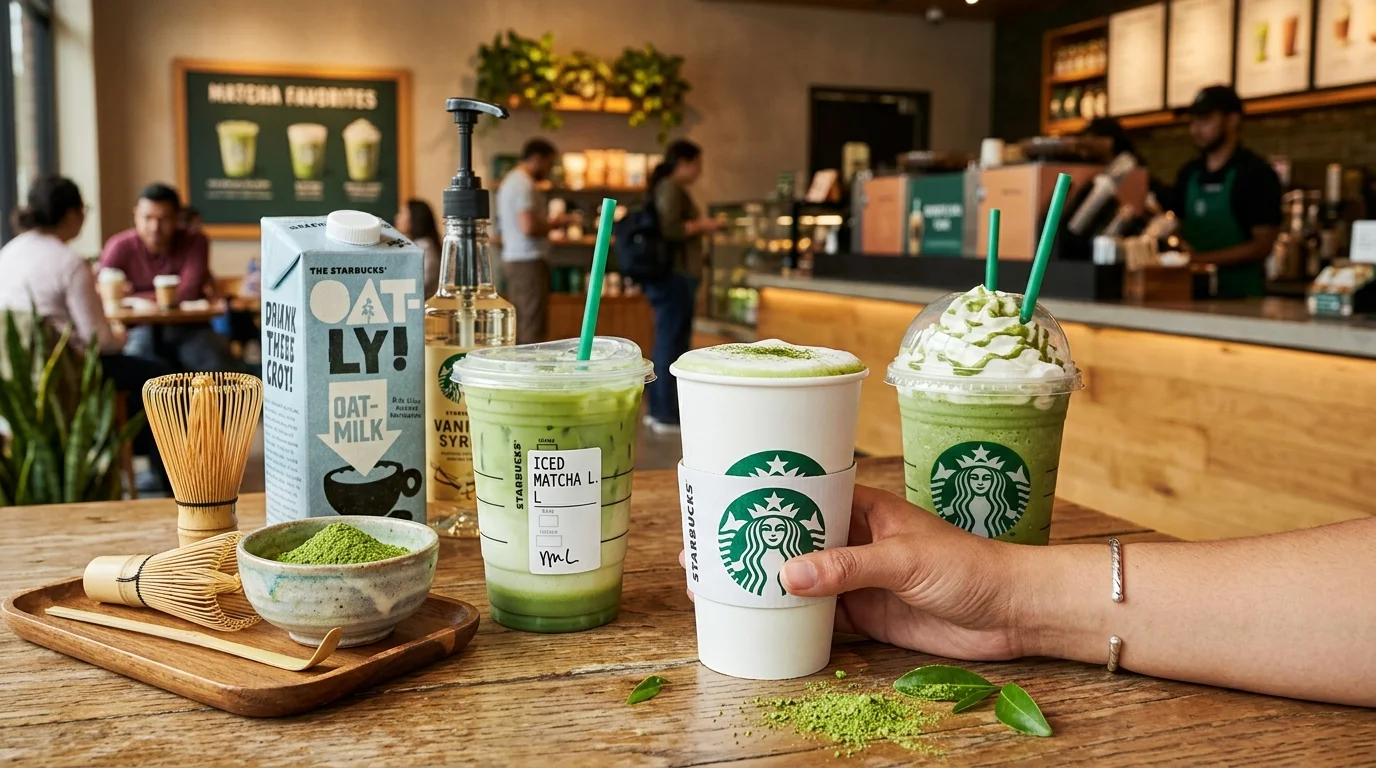
For the Classic Starbucks Iced Matcha Latte (serves 2):
- 2 tsp ceremonial or culinary grade matcha powder [sifted]
- 4 tbsp warm water [around 70°C — not boiling]
- 2 tsp simple syrup [or honey — Starbucks uses vanilla syrup]
- 1½ cups oat milk [Starbucks standard — or whole milk, almond, or coconut]
- 1½ cups ice cubes
For the Hot Matcha Latte Version:
- 2 tsp matcha powder, sifted and whisked into 4 tbsp warm water
- 2 tsp vanilla syrup or simple syrup
- 1½ cups oat milk, steamed or warmed to 150°F [or heated and frothed]
For the Matcha Frappuccino Version:
- 1½ tsp matcha powder, sifted and dissolved in 2 tbsp warm water
- 1 cup whole milk
- 2 tbsp vanilla simple syrup
- 1½ cups ice
- Whipped cream, for topping
- Matcha dusting, for finishing
For the Simple Syrup and Vanilla Syrup:
- ½ cup water + ½ cup sugar [simmer 2 minutes until clear — base syrup]
- Add ½ tsp vanilla extract to base syrup for vanilla syrup
Optional Add-Ins:
- 1 shot espresso — for a Matcha Espresso Fusion (optional)
- ½ tsp ground cinnamon — warm spice pairing (optional)
- 1 tsp honey — natural sweetener alternative (optional)
- ¼ tsp lavender extract — for a lavender matcha build (optional)
- Pinch of fine salt — amplifies the matcha sweetness (optional)
- 1 tbsp coconut cream — for extra richness on top (optional)
Step-by-Step Instructions
Step 1: Gather and Prep Your Ingredients
Before the matcha touches anything, organise every component at the counter and have the milk cold and ready. Pull out a small bowl and a fine mesh sieve — both are required for the matcha preparation step, not optional. Sift the matcha powder through the sieve into the bowl before doing anything else — unsifted matcha contains microscopic clumps that don’t dissolve fully in liquid and leave bitter, gritty pockets throughout the finished drink regardless of how well you whisk afterward. Have the simple syrup made and cooled, the ice measured into a cup, and the milk at hand before the matcha gets any water near it. Two minutes of organisation here produces a consistently smooth, professional-quality result every time.
Pro Tip: Sifting matcha is the step that separates smooth, vibrant Starbucks matcha drinks from gritty, clumpy ones. Press the matcha powder through the fine mesh sieve using the back of a spoon — it takes 20 seconds and makes the whisking step significantly more effective. Clumps of matcha that pass unsifted into warm water never fully dissolve even with vigorous whisking — they simply become smaller, less visible clumps that still contribute bitterness and an uneven texture.
Step 2: Dissolve the Matcha Properly
Add 4 tablespoons of warm water — approximately 70°C — to the sifted matcha in the bowl. This temperature is critical for both flavour and colour. Water above 80°C burns the delicate chlorophyll compounds in matcha that give it the vivid green colour and the characteristic sweet-earthy flavour — burned matcha tastes more bitter and astringent and looks more yellow-green than vibrant emerald. Water below 60°C doesn’t hydrate the matcha particles fully and leaves the mixture grainy and dull. Using a matcha whisk or a small regular whisk, whisk vigorously in a rapid W or M motion for 30–45 seconds until the matcha is completely smooth, lump-free, and slightly frothy on top. Add the simple syrup to the matcha paste at this stage and stir to combine.
Pro Tip: The W or M whisking motion is more effective than a circular stirring motion at dissolving matcha. Circular motion builds a centrifugal vortex that pushes undissolved matcha to the outer edges of the bowl — the W motion cuts through the liquid in multiple directions simultaneously and breaks down clumps from every angle. If you don’t have a matcha whisk, a small handheld milk frother run through the matcha paste for 15 seconds produces an equally smooth result.
Step 3: Build the Iced Matcha Latte
Fill two tall clear glasses completely with ice — pack it generously, because ice is what keeps the drink cold and creates the visual separation between the matcha layer and the milk layer that defines the presentation of Starbucks matcha drinks. Pour the whisked matcha paste evenly between the two glasses, letting it settle at the bottom beneath the ice. Then pour the chilled oat milk slowly over the back of a large spoon held just above the ice level — this slow pour allows the milk to settle in a white layer above the green matcha, creating the signature two-tone layered effect visible through the glass. The layered appearance holds for 1–2 minutes before the ice naturally stirs the components together.
Pro Tip: For the most defined visual layer — green matcha at the bottom, white milk on top — use a tall, narrow glass rather than a wide one. The narrower the glass, the longer the distinct layers hold their separation before mixing. A wide glass allows the matcha to spread horizontally and the milk to fall through more quickly on the pour. The narrower format also makes the green-on-white colour contrast more dramatic and photogenic.
📖 Read More: Starbucks Coffee
Step 4: Build the Hot Matcha Latte Version
For the hot version, prepare the matcha paste exactly as described in Step 2 — sifted matcha dissolved in warm water with simple syrup, whisked smooth. Heat the oat milk in a small saucepan over medium-low heat to approximately 150°F — hot enough to steam slightly but not boiling, which scorches the milk and produces a slightly bitter flavour that competes with the matcha. For the frothiest result, use a handheld milk frother in the warmed milk for 20–30 seconds until a stable foam forms on the surface. Pour the hot frothed milk over the matcha paste in a large mug — pour from height to incorporate the two components — and spoon the foam over the top. Dust lightly with sifted matcha through a small sieve for the Starbucks presentation finish.
Pro Tip: Add the matcha paste to the mug before the milk rather than the other way around. Pouring hot milk onto matcha in the mug allows the force of the pour to do some of the mixing work — the milk falls through the thick matcha paste and partially incorporates it from below. Adding matcha paste into an already-full mug of milk requires aggressive stirring to fully incorporate and often leaves matcha pooled at the bottom of the mug.
Step 5: Build the Matcha Frappuccino Version
Add the dissolved matcha paste, cold whole milk, vanilla simple syrup, and ice to the blender in that exact order — liquid components first, ice last. Start the blender on low speed for 10–15 seconds to draw the ice into the vortex before increasing to maximum speed. Blend on high for 45–60 seconds until completely smooth — no visible ice chunks, uniform pale green colour throughout, and thick enough to coat the inside of the blender jar as it spins. Pour immediately into chilled tall glasses, top with whipped cream applied in a spiral from the outer edge inward, and finish with a light dusting of sifted matcha powder through a fine mesh sieve for the signature Starbucks Matcha Frappuccino presentation. Serve with a wide straw immediately.
Pro Tip: The Matcha Frappuccino should be a pale, even green rather than the deeper green of a plain matcha latte — the milk dilutes the colour significantly during blending, which is correct and expected. If the colour looks too pale or yellowish, the matcha quality is low or the quantity was insufficient. Use a minimum of 1½ teaspoons per 2-serving batch and ensure the matcha was properly dissolved before blending — undissolved matcha doesn’t distribute colour evenly through the blended drink.
Step 6: Taste, Garnish, and Serve
Before any Starbucks matcha drink goes to the table, taste through a straw and adjust. The iced latte should taste creamy, lightly sweet, and clearly matcha-forward — the oat milk provides a neutral sweet creaminess that supports rather than masks the earthy matcha. The hot latte should taste slightly richer and warmer in flavour, with the foam adding a lighter, airier texture to the top. The Frappuccino should taste sweet and creamy with a milder matcha note than either latte version — the blending process and the higher milk ratio mellow the matcha flavour considerably. If any version tastes bitter, add a small extra amount of simple syrup and a pinch of salt — both adjustments reduce bitterness perception immediately without masking the matcha character.
Pro Tip: Warm the serving mugs for the hot matcha latte by filling them with boiling water for 60 seconds, then emptying and drying before adding the drink. A warm mug keeps the latte at drinking temperature from the first sip to the last — cold ceramic pulls heat from the drink rapidly and the matcha latte becomes lukewarm within 3–4 minutes in a room-temperature mug regardless of how hot it was when poured.
Cook Time
Total Time: 5 minutes | Prep: 2 minutes | Matcha Preparation: 1 minute | Build: 2 minutes One bowl, one whisk, one glass — Starbucks matcha drinks ready in 5 minutes.
Servings
Each recipe makes 2 servings — approximately 350–400ml per serving.
Nutritional Information (approx. per serving — Iced Matcha Latte with oat milk and simple syrup)
| Nutrient | Amount |
|---|---|
| Calories | 110 kcal |
| Fat | 3g |
| Saturated Fat | 0g |
| Carbohydrates | 18g |
| Protein | 3g |
| Sugar | 12g |
| Fiber | 1g |
| Sodium | 80mg |
| Vitamin C | 2mg |
| Potassium | 180mg |
| Calcium | 180mg |
Values are approximate and will vary based on milk type, matcha grade, and sweetener quantity used.
Storage Instructions
Starbucks matcha drinks are best consumed immediately after building — the iced latte’s layered effect disappears within minutes, the hot latte’s foam collapses, and the Frappuccino’s blended ice texture thins as it sits. That said, the components of every matcha drink version store exceptionally well and make daily preparation fast and consistent. The matcha paste — sifted matcha whisked into warm water with simple syrup — keeps in a sealed small jar in the refrigerator for up to 48 hours without any significant change in flavour or colour. Add a small squeeze of lemon juice before sealing to slow oxidation and maintain the vivid green colour. When ready to use, the cold paste goes directly into the glass over ice and the milk is poured over the top — the entire build takes under 60 seconds from pre-made paste. The vanilla simple syrup keeps refrigerated in a sealed jar for up to 2 weeks — make a full batch once and it serves every Starbucks matcha drink build for the entire week. Oat milk keeps refrigerated according to its carton date — shake well before each use since oat milk separates more than dairy milk during storage. Whole milk and almond milk keep according to their standard refrigerator life. The matcha powder itself keeps in a sealed, airtight container away from light, heat, and moisture — refrigeration is the best long-term storage environment and extends the freshness window significantly beyond room-temperature storage in a pantry. Never store matcha powder in a transparent container in a sunny location — UV light degrades the chlorophyll rapidly and turns the vibrant green powder yellow and bitter within weeks.
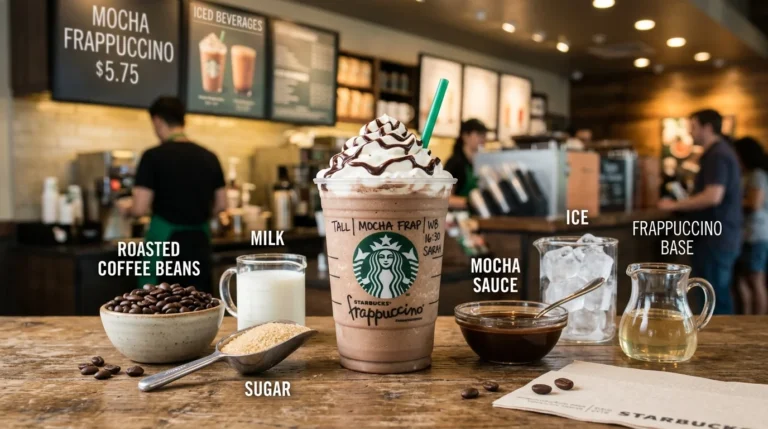
📖 Read More: Starbucks Drink Frappuccino
Suggestions
- Iced Matcha Latte With Espresso: Add 1 shot of cooled espresso to the matcha paste before pouring it over the ice. The combination of matcha’s L-theanine caffeine and espresso’s direct caffeine produces a layered energy effect — a fast initial lift from the espresso followed by the sustained, calm focus of the matcha. This version is the most caffeinated Starbucks matcha drink build in the list and works well as a pre-workout or early-morning drink for anyone who needs serious focus energy.
- Lavender Matcha Latte: Add ¼ teaspoon of culinary lavender extract — or steep 1 tablespoon of dried culinary lavender in the warm water before dissolving the matcha — and incorporate a lavender simple syrup in place of the standard vanilla syrup. The lavender and matcha combination produces a floral, aromatic drink that has become one of the most photographed seasonal Starbucks matcha drinks. Use oat milk for the creamiest result and serve iced in a tall glass with a few dried lavender buds scattered across the foam for garnish.
- Matcha Lemonade: Dissolve the matcha paste as standard, pour it over a glass packed with ice, and top with fresh lemonade — approximately ½ cup per serving — instead of milk. The sharp acidity of the lemon cuts through the earthy sweetness of the matcha in a way that is genuinely refreshing and surprisingly balanced. This version is completely dairy-free, significantly lower in calories than any milk-based matcha build, and one of the most uniquely Starbucks-associated matcha drinks on the seasonal menu. Serve with a green or yellow straw.
- Matcha Coconut Latte: Replace the oat milk with full-fat coconut milk from a carton for a tropical, creamy alternative to the standard latte build. The coconut sweetness complements the earthy matcha in a way that is distinct from the oat milk version — slightly richer, more tropical, and with a flavour profile that sits closer to a Thai milk tea than a standard café latte. Add a tiny pinch of cardamom to the matcha paste before whisking for a spiced dimension that elevates the whole drink.
- Matcha Brown Sugar Shaken Latte: Dissolve the matcha paste in warm water with 1 tablespoon of brown sugar and a pinch of cinnamon instead of standard simple syrup. Transfer to a cocktail shaker or sealed mason jar, add ice, and shake vigorously for 10–15 seconds. Pour over fresh ice in a tall glass and top with chilled oat milk poured slowly over a spoon. The shaking creates a light foam in the matcha layer and the brown sugar adds a molasses-tinged warmth that is considerably more interesting than plain simple syrup in any version of Starbucks matcha drinks.
- Matcha Smoothie-Style Build: Blend the matcha paste with 1 cup of oat milk, 1 frozen banana, 1 tablespoon of honey, and 1 cup of ice until completely smooth. The frozen banana adds natural sweetness and a thick, creamy texture that makes this version the most filling and meal-appropriate matcha build in the list. Top with granola and sliced banana for a bowl format or drink immediately through a wide straw. This version is the furthest from the standard Starbucks matcha drink format but delivers all the matcha benefits in a genuinely satisfying, complete breakfast.
- Dairy-Free Matcha Latte: Use oat milk as the standard Starbucks substitution — it produces the creamiest, most neutral-flavoured dairy-free result for any matcha latte build. Almond milk is the lighter alternative at approximately 30 calories per cup — it produces a thinner latte with a slightly nutty background note. Coconut milk from a carton sits in between — creamier than almond, lighter than oat, with a subtle tropical flavour that pairs naturally with matcha. All three work hot or iced and require no technique adjustment from the standard recipe.
- Low-Calorie Starbucks Matcha Drink: Use unsweetened almond milk instead of oat milk — saving approximately 40 calories per cup — and reduce the simple syrup to 1 teaspoon rather than 2. The matcha itself is nearly calorie-free and provides meaningful antioxidants, amino acids, and a clean caffeine lift at essentially no caloric cost. Skip the whipped cream on the Frappuccino version and replace it with a matcha powder dusting only. The iced latte version built this way comes in under 70 calories per large serving while still tasting like a proper, well-built matcha drink.
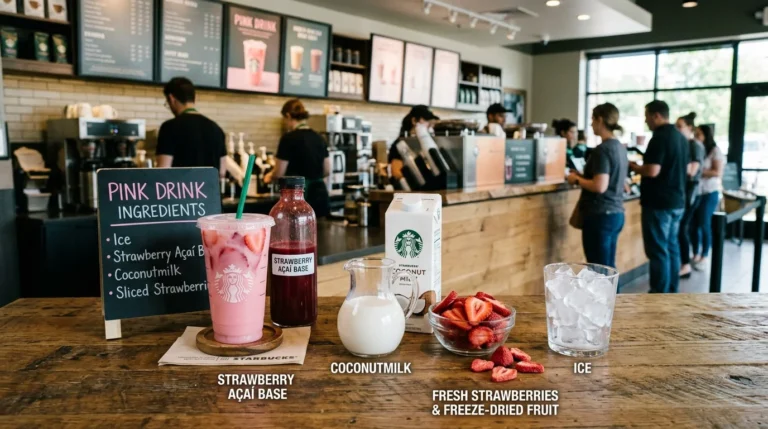
📖 Read More: Pink Drink Starbucks Recipe
Seasonal Relevance
Starbucks matcha drinks occupy an unusual position in the seasonal calendar — they work genuinely well in every season, which makes them one of the most year-round drinks on the entire Starbucks menu. From May through September, the iced matcha latte and the matcha lemonade are the natural daily builds — cold, refreshing, and lighter in calories than most other café drinks during the months when people are most conscious of what they’re consuming. The Matcha Frappuccino specifically is a summer drink — blended ice, whipped cream, and the vivid green colour are at their most appropriate and most photographed during the warmest months of the year. From October through February, the hot matcha latte comes fully into its own — a warm, frothed oat milk matcha latte on a cold morning is one of the most genuinely comforting hot drinks available and delivers both warmth and the calm, focused energy that makes matcha a better cold-weather choice than a second cup of coffee. The lavender matcha build suits spring — March through May — when floral flavours feel most seasonally aligned and the first warm days of the year call for something lighter and more aromatic than the heavier builds of winter. Matcha brown sugar shaken latte suits autumn particularly well — the brown sugar and cinnamon note is a warm-spice addition that feels appropriately seasonal from September through November without the full pumpkin spice intensity that dominates the autumn menu.
Conclusion
Starbucks matcha drinks earn their popularity because matcha is one of the few ingredients that is simultaneously a genuinely functional food — antioxidants, L-theanine, sustained caffeine — and a genuinely beautiful, flavourful drink ingredient that makes every build it appears in more interesting. Making them at home removes the queue, eliminates the cost, and gives you complete control over the sweetness, the milk type, the matcha quality, and the presentation. Sift the matcha, dissolve it in warm rather than hot water, whisk it smooth before it touches anything cold, and taste before serving. Those four steps done correctly produce a Starbucks matcha drink at home that is better than the original in every measurable way. Work through the variations — the lavender build, the matcha lemonade, the brown sugar shaken version — and find the Starbucks matcha drink that earns a place in your daily routine.
FAQs
Q: What matcha does Starbucks use in their matcha drinks? Starbucks uses a proprietary matcha blend that combines Japanese matcha green tea powder with sugar as a pre-sweetened mix — which is why the Starbucks matcha latte is always sweeter than a standard matcha latte made with pure matcha powder. For the most accurate at-home recreation, use culinary grade matcha powder and add simple syrup or vanilla syrup separately — this gives you the same sweetness level as the Starbucks version but with full control over how much sweetener goes in. Ceremonial grade matcha produces a superior flavour with less bitterness and a brighter green colour than culinary grade, and is worth using if the matcha flavour is the primary reason you order these drinks.
Q: How much caffeine is in Starbucks matcha drinks? One teaspoon of matcha powder contains approximately 60–70mg of caffeine — roughly two-thirds of a standard espresso shot. A grande Starbucks Matcha Green Tea Latte uses approximately 2 teaspoons of matcha powder, delivering around 80mg of caffeine in a serving. However, matcha’s caffeine is released more gradually than coffee’s because it’s bound to the amino acid L-theanine — the result is a steadier, longer-lasting energy curve without the sharp spike and crash associated with coffee. Most people who switch from a daily coffee to a daily matcha latte report feeling more consistently alert and focused without the jitteriness that coffee produces.
Q: Why does my homemade matcha latte look yellow-green instead of vivid green? Yellow or dull green matcha almost always indicates one of three problems — low quality matcha that has been oxidised, water that was too hot when dissolving the matcha which burned the chlorophyll, or matcha that wasn’t sifted before dissolving. Fresh, high-quality matcha is a vivid, bright emerald green — if the powder itself looks yellow-green or brown in the tin, it has been oxidised and no preparation technique will recover the colour or the flavour. Use water at approximately 70°C rather than boiling, always sift before dissolving, and store matcha in an airtight container away from light and heat. These three practices maintain the vivid colour and sweet-earthy flavour that makes Starbucks matcha drinks worth recreating at home.