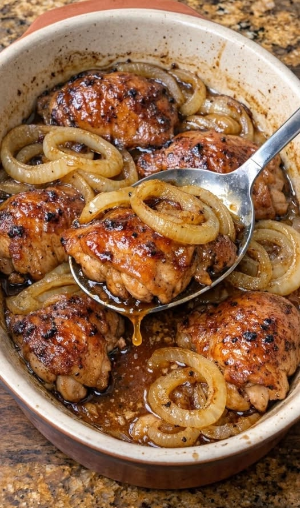
Chicken Thigh Recipes Crispy, Juicy & Ready in 35 Minutes
Chicken thigh recipes are the most forgiving, most flavourful, and most consistently satisfying category of weeknight cooking available. Where chicken breast demands precise timing and punishes overcooking with dryness, chicken thighs respond to high heat with a crispy, rendered skin and a juicy interior that stays that way even if you leave them in the pan a few minutes longer than planned.
The higher fat content in the thigh muscle is what makes the difference — it bastes the meat from within as it cooks, keeps every bite moist and rich, and produces the kind of golden-brown, deeply caramelised exterior that makes a home kitchen smell like a proper restaurant. Whether you’re baking them, pan-searing them, braising them, or building them into a weeknight one-pan dinner, chicken thigh recipes deliver results that are difficult to get wrong and genuinely difficult to stop eating. No complicated steps — just pure chicken thigh recipe satisfaction, on the table in 35 minutes.
Ingredients
For the Chicken Thighs:
- 8 bone-in, skin-on chicken thighs [approximately 150–180g / 5–6 oz each]
- 2 tbsp olive oil
- 1 ½ tsp fine salt
- 1 tsp black pepper, freshly ground
- 1 tsp garlic powder
- 1 tsp smoked paprika
- ½ tsp onion powder
- ½ tsp dried thyme [or Italian seasoning]
- ¼ tsp cayenne pepper [optional]
For the Pan Sauce:
- 4 cloves garlic, minced
- ½ cup low-sodium chicken broth
- 2 tbsp unsalted butter
- 1 tbsp fresh lemon juice
- 1 tsp Dijon mustard
- 2 tbsp fresh parsley or thyme, chopped
- Salt and black pepper, to taste
For Serving:
- Lemon wedges
- Fresh herbs — parsley, thyme, or rosemary
- Roasted vegetables, mashed potato, steamed rice, or crusty bread
Optional Marinade Variations (choose one):
- Honey Garlic: 3 tbsp honey, 4 cloves garlic minced, 2 tbsp soy sauce, 1 tbsp olive oil (optional)
- Lemon Herb: juice and zest of 1 lemon, 2 tbsp olive oil, 1 tsp dried oregano, 3 cloves garlic (optional)
- Harissa: 2 tbsp harissa paste, 1 tbsp olive oil, 1 tsp cumin, juice of ½ lemon (optional)
- Teriyaki: 3 tbsp soy sauce, 2 tbsp honey, 1 tbsp rice vinegar, 1 tsp fresh ginger grated (optional)
Step-by-Step Instructions
Step 1: Gather and Prep Your Ingredients
Pull the chicken thighs out of the refrigerator 20–30 minutes before cooking. Room-temperature chicken thighs cook more evenly than cold ones — the temperature differential between the exterior and the interior is smaller, which means both cook through at a more consistent rate. Pat every thigh completely dry with paper towels, including the skin side. Dry skin is the single non-negotiable prerequisite for crispy chicken thigh recipes — any moisture sitting on the skin surface turns to steam in the pan rather than crisping, and wet skin will never achieve the deep golden colour and audible crunch that makes bone-in thighs worth making in the first place. Have the garlic minced, herbs chopped, and pan sauce ingredients measured and ready before the pan goes on the heat.
Pro Tip: For even crispier skin, place the patted-dry chicken thighs on a wire rack set over a baking sheet and refrigerate uncovered for 1–2 hours — or overnight — before cooking. The exposed cold air of the refrigerator draws out additional surface moisture from the skin, producing a result that crisps faster and more dramatically in the pan than skin that was simply patted dry immediately before cooking.
Step 2: Season the Chicken Thighs
Mix together the salt, pepper, garlic powder, smoked paprika, onion powder, dried thyme, and cayenne in a small bowl. Drizzle the olive oil over the chicken thighs and use your hands to coat every surface evenly — under the skin where possible, across the skin, and on the underside of each thigh. Apply the spice mixture generously across all surfaces, pressing it gently into the skin rather than simply dusting it on loosely. The skin of a chicken thigh can handle significantly more seasoning than the equivalent surface area of a chicken breast — it’s thicker, fattier, and absorbs the seasoning into the rendered fat as it cooks, which carries flavour into every bite rather than just coating the exterior. Season assertively and don’t second-guess it.
Pro Tip: If you have time, season the chicken thighs and leave them uncovered on a wire rack in the refrigerator for at least 1 hour before cooking — or up to 24 hours for the best result. This technique, known as dry brining, draws out a small amount of surface moisture which is then reabsorbed back into the meat along with the seasoning. The result is chicken that is seasoned from within the muscle rather than just on the surface, producing measurably juicier and more deeply flavoured chicken thigh recipes every time.
Step 3: Sear the Chicken Thighs Skin-Side Down
Heat a large, heavy oven-safe skillet — cast iron is ideal — over medium heat for 2–3 minutes. Add the olive oil and let it shimmer. Place the seasoned chicken thighs skin-side down in the cold — or barely warm — pan before the heat goes to full, which helps the fat under the skin render gradually rather than seizing up from sudden intense heat. Increase the heat to medium-high once the chicken is in the pan. Cook skin-side down for 10–12 minutes without touching, moving, or pressing the chicken. The thighs will release a significant amount of rendered fat into the pan — this is correct and expected. When the skin is ready to flip, it will release from the pan surface cleanly on its own. A properly rendered, crispy skin does not stick — it lifts away from the pan surface with zero resistance.
Pro Tip: Don’t be tempted to increase the heat to speed up the skin-side sear. Medium to medium-high is the correct temperature for rendering the fat under the skin fully — high heat crisps the surface before the fat beneath it has time to render out, which produces skin that looks golden but feels flabby and greasy when you bite through it. Patient, moderate heat produces a skin that is genuinely, structurally crispy from the outside all the way through.
📖 Read More: Chicken Breast Recipes
Step 4: Flip and Finish in the Oven
Preheat your oven to 400°F (200°C) while the chicken sears skin-side down — the oven should be ready by the time the skin is golden. Flip the thighs and cook the flesh side in the pan for 2 minutes. Transfer the entire skillet — chicken and all the rendered fat — to the preheated oven. Roast for 15–18 minutes until the internal temperature at the thickest part of the thigh, not touching the bone, reads 165°F (74°C). The oven finishes cooking the thighs through the centre without any further risk of burning the skin — the dry, circulating oven heat also continues to crisp and colour the skin during this final stage, producing a result that the stovetop alone cannot achieve. Remove from the oven and let the chicken rest in the skillet for 5 minutes before serving.
Pro Tip: If you don’t have an oven-safe skillet, sear in any pan and transfer the thighs to a wire rack set over a baking sheet for the oven stage. The wire rack allows hot air to circulate under the chicken as well as over it — this means the skin crisps evenly on all surfaces rather than steaming against a flat baking sheet on the underside. The rack is a small change that produces a noticeably better result.
Step 5: Make the Pan Sauce
Remove the rested chicken thighs from the skillet to a warm plate. Pour off all but about 1 tablespoon of the rendered fat from the pan — keep it for roasting vegetables later, it is outstanding. Return the skillet to medium heat and add the minced garlic, stirring for 30–45 seconds until golden and fragrant. Pour in the chicken broth and scrape every caramelised bit from the bottom of the pan — the fond that accumulated during the skin-side sear is the most flavourful part of the entire pan sauce and should not be left behind. Stir in the Dijon mustard and lemon juice. Let the sauce simmer for 2–3 minutes until it has reduced by about a third and smells deeply savoury. Remove from the heat and swirl in the cold butter one tablespoon at a time until the sauce is glossy, slightly thickened, and fully emulsified. Taste and adjust salt and pepper.
Pro Tip: The cold butter added off the heat is called mounting the sauce, and it is what transforms a thin pan dripping into a glossy, restaurant-quality finish. The butter must go in cold and the pan must be off direct heat — if the pan is too hot when the butter is added, it breaks into grease rather than emulsifying into the sauce. Swirl continuously as each piece melts and add the next one only when the previous one has been fully incorporated.
Step 6: Plate, Garnish, and Serve
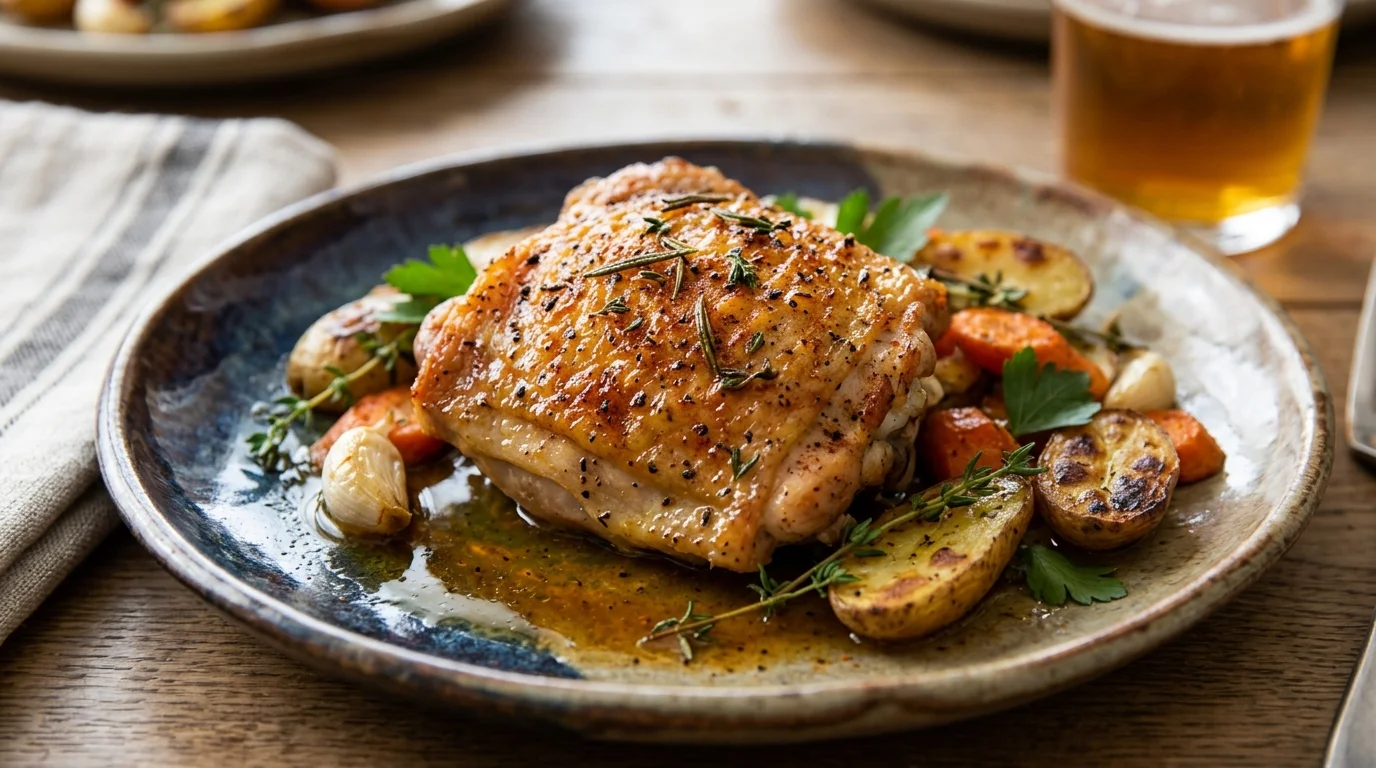
Arrange the rested chicken thighs skin-side up on warm plates or a serving platter — skin-side up always, because placing them any other way lets the steam from the plate soften the crispy skin you spent 10 minutes building. Spoon the pan sauce generously across the flesh side and around the plate rather than directly over the skin — pouring sauce over the crispy skin softens it immediately. Scatter fresh chopped parsley or thyme across the top, add a wedge of fresh lemon to each plate, and serve immediately alongside roasted vegetables, mashed potato, or steamed rice to soak up the pan sauce. Chicken thigh recipes are at their best the moment the skin is still audibly crisp and the pan sauce is still steaming.
Pro Tip: Serve the pan sauce on the side in a small jug rather than poured over the chicken if you’re serving a group and want to maintain the crispy skin until everyone is seated. A jug of pan sauce on the table lets each person control how much goes on their thigh and keeps the skin crispier for longer during the inevitable gap between plating and the first bite.
Cook Time
Total Time: 35 minutes | Prep: 8 minutes | Sear: 12 minutes | Oven: 16 minutes | Rest: 5 minutes One skillet, one oven — perfectly cooked chicken thigh recipes on the table in 35 minutes.
Servings
Serves 4 — two chicken thighs per person with pan sauce.
Nutritional Information (approx. per serving — 2 bone-in thighs with pan sauce, no sides)
| Nutrient | Amount |
|---|---|
| Calories | 520 kcal |
| Fat | 34g |
| Saturated Fat | 11g |
| Carbohydrates | 3g |
| Protein | 46g |
| Sugar | 1g |
| Fiber | 0g |
| Sodium | 620mg |
| Vitamin C | 4mg |
| Potassium | 580mg |
| Calcium | 40mg |
Values are approximate and will vary based on ingredients used.
Storage Instructions
Chicken thigh recipes store exceptionally well — better than most other chicken cuts — because the fat content that keeps them juicy during cooking continues to protect against drying out during refrigeration and reheating. Let the cooked thighs cool to room temperature before transferring to an airtight container, and store in the refrigerator for up to 4 days. The pan sauce stores separately in a small sealed jar for up to 3 days and reheats perfectly in a small pan over low heat with a splash of broth to loosen it. For reheating the chicken thighs, the oven is the best method for preserving both the crispy skin and the juicy interior — place the thighs skin-side up on a wire rack over a baking sheet and reheat at 375°F (190°C) for 12–15 minutes until heated through. The oven method re-crisps the skin significantly better than any other reheating approach. The microwave works for the interior but destroys the skin entirely — if the crispy skin matters, use the oven. For meal prep purposes, boneless skinless chicken thighs cooked using this same method are the most practical option — they slice and dice easily for use in salads, rice bowls, wraps, and pasta throughout the week without losing moisture the way cooked breast does. For freezing, raw chicken thighs freeze well for up to 3 months sealed tightly in freezer bags with as much air removed as possible. Cooked thighs also freeze for up to 2 months — wrap individually in foil and then into a sealed bag, thaw overnight in the refrigerator, and reheat in the oven at 375°F for 15–18 minutes from thawed. Never refreeze chicken that has already been thawed from frozen.
📖 Read More: chicken enchiladas with white Sauce
Suggestions
- Honey Garlic Chicken Thighs: Marinate the seasoned thighs in a mixture of 3 tablespoons of honey, 4 minced garlic cloves, 2 tablespoons of soy sauce, and 1 tablespoon of olive oil for at least 30 minutes. Sear and finish in the oven as described, then pour the remaining marinade into the pan in the final 5 minutes of oven time — it caramelises around the thighs into a sticky, intensely savoury glaze that coats the skin and pools in the pan for serving. This is consistently the most popular version of chicken thigh recipes for a reason — the honey and garlic combination is close to universally loved and works over rice, in wraps, or sliced cold the following day.
- Harissa Roasted Chicken Thighs: Rub each thigh generously with harissa paste mixed with olive oil, cumin, and lemon juice at least 1 hour before cooking — overnight in the refrigerator is better. The harissa penetrates deeply into the skin and produces a reddish, slightly charred crust that is intensely aromatic and warmly spiced without being overwhelmingly hot depending on the brand of harissa used. Serve over a bed of couscous with a dollop of plain yogurt and a handful of fresh mint leaves — the cool yogurt against the spiced thigh is one of the best flavour contrasts in this list.
- Braised Chicken Thighs With Tomatoes and Olives: Sear the thighs skin-side down as described, flip, then add 1 can of crushed tomatoes, ½ cup of Kalamata olives, 4 cloves of sliced garlic, a pinch of dried chilli, and ½ cup of chicken broth directly to the pan. Bring to a simmer, reduce the heat to medium-low, cover, and cook for 25 minutes until the thighs are tender and the sauce has thickened around them. This braised version of chicken thigh recipes is the cold-weather build — rich, deeply savoury, and designed to be mopped up with crusty bread.
- Teriyaki Chicken Thighs: Marinate boneless, skinless thighs in a mixture of 3 tablespoons of soy sauce, 2 tablespoons of honey, 1 tablespoon of rice vinegar, and 1 teaspoon of grated fresh ginger for at least 30 minutes. Pan-sear over medium-high heat for 5–6 minutes per side, adding the remaining marinade in the final 2 minutes to glaze the exterior. The marinade reduces to a dark, sticky, beautifully lacquered coating that pairs naturally with steamed jasmine rice, sliced spring onion, and toasted sesame seeds. This version of chicken thigh recipes is one of the fastest and most satisfying builds in the entire list.
- One-Pan Chicken Thighs With Root Vegetables: Arrange seasoned chicken thighs skin-side up on top of a bed of diced potato, carrot, parsnip, and red onion tossed with olive oil, garlic, and rosemary in a roasting tin. Roast at 400°F for 40–45 minutes until the skin is golden, the vegetables are caramelised at the edges, and everything smells like a proper Sunday dinner. The rendered fat from the thighs bastes the vegetables beneath them throughout the roasting time — the potatoes and carrots cooked in chicken fat are reason enough to make this version weekly throughout autumn and winter.
- Crispy Baked Boneless Chicken Thighs: Toss boneless, skinless thighs in a mixture of olive oil, garlic powder, smoked paprika, salt, and pepper. Place on a wire rack over a baking sheet and bake at 425°F (220°C) for 25–28 minutes until the exterior is deeply coloured and slightly charred at the thinnest edges. The high oven temperature and wire rack produce a result remarkably close to pan-seared in terms of exterior colour and texture, without any stovetop management required. This is the easiest, most hands-off version of chicken thigh recipes and the best option when cooking for a larger group.
- Lemon and Herb Chicken Thighs: Marinate the thighs in lemon juice, lemon zest, olive oil, minced garlic, and dried oregano for at least 1 hour. Sear skin-side down, finish in the oven, and make the pan sauce with extra lemon juice and fresh flat-leaf parsley rather than the Dijon version in the base recipe. This is the lightest and most versatile build in the list — clean, bright, and herbaceous enough to work as easily alongside a simple Greek salad in summer as it does next to roasted root vegetables in winter.
- Weight-Loss Friendly Chicken Thigh Recipes: Use boneless, skinless chicken thighs rather than bone-in, skin-on — they still retain more moisture and flavour than breast during cooking but without the skin and bone add significantly less fat per serving. Season and cook using the same method but reduce the olive oil to 1 tablespoon. Skip the pan sauce butter and replace it with a squeeze of fresh lemon and a tablespoon of olive oil stirred into the pan drippings with fresh herbs for a lighter finish. Each serving comes in under 280 calories while still delivering the characteristic juiciness and flavour that makes chicken thigh recipes worth choosing over breast.
Seasonal Relevance
Chicken thigh recipes are genuinely year-round, but the builds that feel most right shift meaningfully with the season. From May through September, the grilled, teriyaki-glazed, and lemon herb versions are the natural choice — leaner marinades, brighter aromatics, and the outdoor grill all suit the warmer months. Boneless thighs on a hot grill develop char marks and a caramelised marinade crust in under 15 minutes, making them the most practical high-heat summer protein. Peak summer is also when fresh herbs — flat-leaf parsley, basil, oregano, and thyme — are at their most aromatic and affordable, which makes herb-forward chicken thigh recipes disproportionately good during June, July, and August. From October through February, the braised versions and one-pan roasted builds are exactly what the season calls for — long, slow cooking in tomato and wine, rendered fat basting root vegetables in the oven, and the kind of deep, savoury warmth that belongs on a cold-weather table. The harissa version also suits autumn and winter particularly well — its warm, smoky spice is more appealing in October than it is in August. Spring, March through May, is the transition period — lighter marinades return, fresh herbs reappear at the market, and the move back toward the grill begins as the weather starts to allow it.
Conclusion
Chicken thigh recipes earn their reputation as the most reliable weeknight protein because the ingredient itself is practically failure-proof when handled with even basic technique. Dry the skin, season generously, render the fat slowly on the skin side, finish in the oven, rest before serving — that five-step foundation produces outstanding results across every flavour direction you take it. Once you’ve cooked chicken thighs this way once, the technique becomes automatic and the variations become the interesting part. Work through the honey garlic glaze, the harissa rub, the braised tomato version — each one is a different dinner built on the same reliable method. Chicken thigh recipes done well are the kind of food people request specifically rather than just accept, and that is the only standard worth cooking to.
FAQs
Q: Should I use bone-in or boneless chicken thighs? Both work well but they serve different purposes. Bone-in, skin-on thighs deliver the crispiest skin, the most flavour, and the juiciest interior — they are the best choice for a proper sit-down dinner where presentation and eating quality are the priority. Boneless, skinless thighs cook faster — 20–22 minutes in the oven versus 35 — and are significantly easier to slice, dice, and use across other dishes during the week. They’re the right choice for meal prep, quick weeknight stir-fries, and any recipe where the chicken is going to be combined with other ingredients. The base technique in this recipe applies to both — the timing is what changes, not the method.
Q: Why is the skin on my chicken thighs not crispy? Wet skin is almost always the cause — either the skin wasn’t dried properly before cooking, or the pan temperature was too high and the outside seared before the fat beneath the skin had time to render out. Pat the skin aggressively dry with paper towels and ideally air-dry in the refrigerator uncovered for 1–2 hours before cooking. Start the thighs in a moderately warm pan rather than a screaming hot one and cook skin-side down for the full 10–12 minutes at medium to medium-high heat. Patience in this stage is non-negotiable — the fat needs time to render fully, and rushing it with excessive heat produces skin that looks done but feels flabby when bitten.
Q: What temperature should chicken thighs reach when cooked? The USDA safe minimum for chicken thighs is 165°F (74°C) measured at the thickest part of the meat, not touching the bone. Unlike chicken breast, which becomes noticeably dry and unpleasant beyond 165°F, chicken thighs benefit from being cooked slightly beyond the minimum — the collagen and connective tissue in the thigh muscle breaks down more fully between 175°F and 185°F (79–85°C), producing a more tender, fall-off-the-bone texture that the breast cut cannot replicate at any temperature. An instant-read thermometer is the most reliable tool for hitting either target consistently and is the single most recommended piece of equipment for anyone cooking chicken thigh recipes regularly.