
Pizza Casserole Ready in 45 Minutes
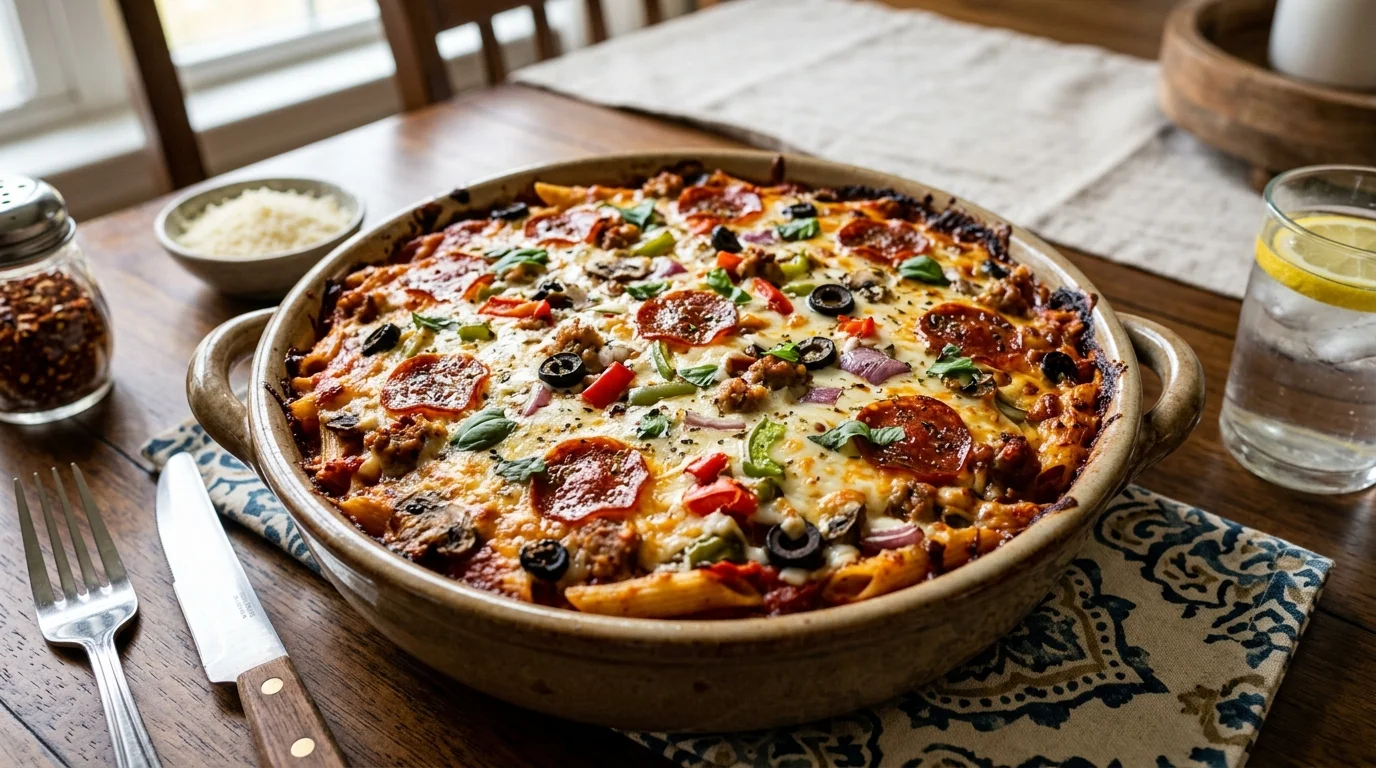
Pizza casserole is what happens when everything you love about a loaded pizza gets baked into a deep, bubbling dish that feeds a crowd without any of the fuss of making actual pizza dough. It has all the same flavours — seasoned beef, tangy tomato sauce, gooey melted cheese, pepperoni, and Italian herbs — but in a format that comes together in one baking dish and holds beautifully for leftovers. It works on a weeknight when you need something fast and filling, at a potluck where you need something that travels and reheats well, and on a weekend when the whole family wants comfort food without compromise. No complicated steps — just pure pizza casserole goodness, hot from the oven and ready to serve.
Ingredients
For the Casserole:
- 350g (12 oz) penne or rigatoni pasta, uncooked
- 500g (1.1 lb) lean ground beef [or Italian sausage, or a mix of both]
- 1 medium yellow onion, finely diced
- 4 cloves garlic, minced
- 1 medium green bell pepper, diced
- 1 cup sliced mushrooms [cremini or button]
- 1 can (24 oz) crushed tomatoes
- 1 can (15 oz) tomato sauce
- 2 tbsp tomato paste
- 1 tsp dried oregano
- 1 tsp dried basil
- 1 tsp garlic powder
- 1 tsp onion powder
- ½ tsp smoked paprika
- ½ tsp crushed red pepper flakes [optional, adjust to taste]
- Salt and black pepper, to taste
- 2 tbsp olive oil
For the Cheese Layer:
- 2 cups shredded mozzarella cheese, divided
- ½ cup freshly grated Parmesan cheese
- 1 cup ricotta cheese [optional, for a creamier layer]
For the Toppings:
- 80g (3 oz) pepperoni slices
- ½ cup sliced black olives (optional)
- ¼ cup sliced banana peppers or pepperoncini (optional)
- Fresh basil leaves, for garnish
- 1 tsp Italian seasoning, for finishing
Step-by-Step Instructions
Step 1: Gather and Prep Your Ingredients
Before anything goes on the stove, get every component measured and ready. Dice the onion and bell pepper, mince the garlic, slice the mushrooms, and open your canned tomatoes. Cook the pasta separately while you build the meat sauce — timing both so they finish close together keeps the whole process efficient. Prepping everything in advance before the ground beef hits the pan means you move from one step to the next without stopping, which is exactly what keeps a weeknight casserole from turning into an hour-long production.
Pro Tip: Pull the ricotta out of the refrigerator 20 minutes before you need it. Room-temperature ricotta spreads more easily across the casserole and incorporates into the layers without tearing the meat sauce underneath it.
Step 2: Cook the Pasta
Bring a large pot of heavily salted water to a rolling boil. Add the pasta and cook for 2 minutes less than the package directions indicate — you want it firmly al dente because it will continue cooking inside the oven during the bake. Overcooked pasta going into a casserole becomes mushy and loses all its texture by the time the cheese is melted and golden. Drain the pasta, drizzle with a teaspoon of olive oil, toss to coat, and set aside. The oil prevents the pieces from clumping together while you finish the meat sauce.
Pro Tip: Reserve ½ cup of the pasta cooking water before draining. If your meat sauce looks thicker than you’d like when you combine everything in the baking dish, a splash of starchy pasta water loosens it without diluting the flavour the way plain water would.
📖 Read More: Focaccia Sandwich
Step 3: Brown the Meat and Build the Sauce
Heat 2 tablespoons of olive oil in a large skillet or sauté pan over medium-high heat. Add the diced onion and cook for 3 minutes until softened, then add the garlic and stir for 60 seconds until fragrant. Add the ground beef and break it apart with a wooden spoon, cooking until no pink remains — about 6–8 minutes. Drain any excess fat from the pan. Add the diced bell pepper and sliced mushrooms and cook for another 3 minutes until slightly softened. Stir in the tomato paste and cook for 1 minute, letting it caramelise slightly against the pan — this small step deepens the flavour of the entire sauce considerably.
Pro Tip: Don’t rush the tomato paste step. That 60 seconds of direct pan contact cooks out the raw, acidic edge and turns the paste darker and more complex. It’s the difference between a sauce that tastes layered and one that tastes flat.
Step 4: Simmer the Pizza Sauce
Pour the crushed tomatoes and tomato sauce into the pan with the browned meat. Stir in the dried oregano, basil, garlic powder, onion powder, smoked paprika, and red pepper flakes. Season generously with salt and black pepper. Bring the sauce to a gentle simmer over medium heat and cook uncovered for 8–10 minutes, stirring occasionally, until it thickens slightly and the flavours have had time to come together. Taste the sauce at this point — it should be bold, well-seasoned, and rich. Adjust salt, pepper, or herbs as needed before combining with the pasta.
Pro Tip: Pizza casserole sauce should be slightly more aggressively seasoned than a regular pasta sauce, because it gets diluted when mixed with the pasta and spread across the baking dish. Season it a notch beyond what tastes right in the pan alone.
Step 5: Combine and Layer the Casserole
Preheat your oven to 375°F (190°C). Lightly grease a 9×13-inch baking dish with olive oil or non-stick spray. Add the cooked pasta directly into the meat sauce and stir to combine, making sure every piece is coated. Transfer half of the pasta and meat sauce mixture into the prepared baking dish and spread it into an even layer. If you’re using ricotta, drop spoonfuls across the top of this first layer and spread gently — it doesn’t need to be perfectly even. Sprinkle 1 cup of the shredded mozzarella and half of the Parmesan over the ricotta layer. Add the remaining pasta and sauce mixture on top and spread level.
Pro Tip: The ricotta layer in the middle of the casserole is optional but highly recommended — it adds a creamy, slightly sweet richness that sits between the meat sauce layers and makes every forkful feel more indulgent. It also helps the casserole hold its structure when served.
Step 6: Top with Cheese, Pepperoni, and Bake
Scatter the remaining mozzarella and Parmesan evenly across the top of the casserole. Arrange the pepperoni slices in a single overlapping layer over the cheese — just like you’d place them on an actual pizza. Add any optional toppings now: sliced black olives, banana peppers, or extra mushrooms. Sprinkle Italian seasoning over the entire top. Bake uncovered at 375°F for 25–28 minutes until the cheese is fully melted, bubbling at the edges, and starting to turn golden on the pepperoni. Remove from the oven and let the pizza casserole rest for 5 minutes before serving. Top with fresh basil leaves just before bringing it to the table.
Pro Tip: For crispy, slightly charred pepperoni — the best kind — switch the oven to broil for the final 2–3 minutes of baking. Watch it closely and pull it the moment the edges of the pepperoni start to cup and darken. It goes from perfect to burnt in under a minute under a broiler.
Cook Time
Total Time: 50 minutes | Prep: 15 minutes | Stovetop: 20 minutes | Bake: 25–28 minutes One skillet, one pot, one baking dish — minimal cleanup for maximum output.
Servings
Serves 8 generous portions from a standard 9×13-inch baking dish.
Nutritional Information (approx. per serving)
| Nutrient | Amount |
|---|---|
| Calories | 540 kcal |
| Fat | 24g |
| Saturated Fat | 10g |
| Carbohydrates | 46g |
| Protein | 34g |
| Sugar | 7g |
| Fiber | 4g |
| Sodium | 780mg |
| Vitamin C | 16mg |
| Potassium | 580mg |
| Calcium | 280mg |
Values are approximate and will vary based on ingredients used.
Storage Instructions
Pizza casserole stores exceptionally well, which makes it one of the most practical dishes you can have in your weekly meal prep lineup. Allow the casserole to cool completely at room temperature — about 30 minutes — before covering or transferring. Store leftovers in an airtight container in the refrigerator for up to 4 days. The flavour actually improves overnight as the pasta continues to absorb the seasoned meat sauce, so day-two leftovers are genuinely worth looking forward to. When reheating individual portions, add a small splash of water or marinara sauce over the top before microwaving — this prevents the pasta from drying out and the cheese from turning rubbery. Cover loosely with a damp paper towel and heat in 60-second intervals, stirring between each pass, until heated through. For reheating the full casserole, cover with foil and warm in a 350°F oven for 20–25 minutes until hot throughout, then uncover for the final 5 minutes to re-crisp the cheese. Pizza casserole freezes beautifully. Let it cool completely, portion into freezer-safe containers or wrap the entire dish tightly in two layers of plastic wrap followed by foil, and freeze for up to 3 months. Thaw overnight in the refrigerator and reheat as above, adding a fresh handful of shredded mozzarella on top before the final oven run to revive the cheese layer.
📖 Read More: Hamburger Meat Recipes
Suggestions
- Italian Sausage Version: Swap the ground beef for 500g of mild or spicy Italian sausage, removed from its casings and crumbled into the pan. Italian sausage brings built-in fennel, garlic, and herb seasoning that deepens the pizza flavour without any additional spice adjustments. Use a mix of sweet and hot sausage for a balance that works for most tables without being divisive.
- Vegetarian Build: Skip the meat entirely and double up on vegetables — add diced zucchini, sliced mushrooms, baby spinach, black olives, and roasted red peppers directly into the tomato sauce. The vegetables break down into the sauce and create a filling, deeply savoury base that needs no meat to feel substantial. This version of pizza casserole is genuinely satisfying and works well at tables where dietary needs vary.
- Dairy-Free Option: Use a high-quality dairy-free mozzarella shred — several good options melt reliably now — skip the ricotta and Parmesan, and replace them with a cashew cream layer in the middle. Make cashew cream by blending ½ cup of soaked raw cashews with ¼ cup of water, a squeeze of lemon, and a pinch of salt until completely smooth. It adds the same creamy richness as ricotta without any dairy.
- Low-Carb Version: Replace the pasta with cauliflower florets that have been roasted at 425°F for 15 minutes until golden and slightly charred at the edges. The cauliflower holds up well in the baking process and absorbs the meat sauce beautifully. This swap cuts the carbohydrate count by more than half while keeping everything else about the pizza casserole entirely intact — flavour, cheese, pepperoni, and all.
- Kid-Friendly Mild Build: Skip the red pepper flakes, use a mild Italian sausage or plain ground beef, and keep the toppings simple — just mozzarella and pepperoni, which are reliably the most popular elements with younger eaters. Cut the casserole into small squares before serving so it’s easy for kids to manage. This version disappears faster than any other at a family table and reheats perfectly in lunchboxes the next day.
- Supreme Pizza Casserole: Load the topping layer with everything — pepperoni, sliced Italian sausage, diced green and red bell pepper, sliced mushrooms, black olives, and banana peppers — exactly like a supreme pizza but baked into the casserole format. This version is the most impressive to serve to a crowd and benefits from an extra 5 minutes of bake time to ensure all the toppings heat through.
- High-Protein Meal Prep Version: Use 600g of ground beef or a mix of beef and ground turkey, add an extra can of crushed tomatoes to extend the sauce, and portion into individual meal prep containers immediately after the casserole comes out of the oven and rests. Each portion delivers over 40g of protein and reheats in under 3 minutes. It keeps well for 4 days in the refrigerator and makes a genuinely satisfying weekday lunch.
- Weight-Loss Friendly Option: Use extra-lean ground turkey instead of beef, reduce the mozzarella to 1 cup across the entire dish, skip the ricotta, and replace half the pasta with diced zucchini or riced cauliflower mixed into the sauce. Choose a low-sodium crushed tomato and tomato sauce. The calorie count drops to around 380 per serving without meaningfully compromising the flavour or the satisfaction of the finished pizza casserole.
Seasonal Relevance
Pizza casserole is built for the cooler months and earns its place at the table from September straight through to March. In autumn and winter, it’s the kind of meal that justifies turning the oven on for 30 minutes — the kitchen warms up, the cheese bubbles, and the whole house smells like a pizzeria. From October through February, lean into hearty additions like Italian sausage, roasted mushrooms, and caramelised onion that match the season’s appetite for richer, more warming food. As spring arrives in March and April, lighten the filling by loading the sauce with fresh zucchini, spinach, and cherry tomatoes — these bring colour and freshness to a dish that can otherwise skew heavy. In summer, June through August, pizza casserole works best made early in the day before the heat sets in, then served at room temperature or reheated briefly for dinner — fresh basil from the garden scattered over the top makes the finished dish feel genuinely seasonal rather than out of place in the warmer weather.
Conclusion
Pizza casserole earns its place in the regular rotation because it delivers everything a comfort food dinner should — bold flavour, satisfying texture, crowd-pleasing toppings, and leftovers that hold up for days. The base is reliable, the method is forgiving, and the variations give you a different experience every time you make it without requiring a new recipe. Once you’ve nailed the meat sauce and layering technique, the rest is just topping choices. Make your first pizza casserole this week, try the supreme version next time, and work your way through the suggestions. Every table it lands on gets cleared completely — and that’s the only measure of a recipe that really matters.
FAQs
Q: Do I have to pre-cook the pasta before adding it to the pizza casserole? Yes — but only to the al dente stage, not fully cooked. The pasta finishes cooking in the oven as it absorbs moisture from the tomato sauce, so pulling it out 2 minutes early is deliberate and important. Fully cooked pasta going into a casserole will be overcooked and mushy by the time the cheese is melted and golden. The firmer the pasta when it enters the baking dish, the better the texture in the final result.
Q: Can I use a different pasta shape? Absolutely. Penne and rigatoni are the best choices because their tubes and ridges trap the meat sauce and hold up well during baking. Ziti, cavatappi, and rotini also work very well. Avoid long pasta shapes like spaghetti or linguine — they’re difficult to layer evenly in a casserole dish and don’t distribute the sauce and cheese as efficiently as short, sturdy shapes do.
Q: Can I make pizza casserole ahead of time? Yes — and it’s one of the best make-ahead dishes in this format. Assemble the full casserole, cover tightly with foil, and refrigerate unbaked for up to 24 hours. When you’re ready to bake, add 10 extra minutes to the covered bake time since the dish is going in cold. Uncover for the final stage of baking as usual. The assembled casserole can also be frozen unbaked for up to 2 months — thaw overnight in the refrigerator before baking, following the same adjusted timing.
Q: My casserole came out dry — how do I fix it next time? A dry pizza casserole almost always comes from one of two things: too little sauce or pasta that was overcooked before baking. Make sure every piece of pasta is generously coated in sauce before layering, and that the sauce itself is loose enough to see it pooling slightly between pieces when you press down on the unbaked casserole. If it looks tight before it goes in, add a splash of pasta water or an extra ladle of marinara across the top before the cheese layer. The sauce tightens significantly in the oven, so starting slightly wetter than seems necessary gives the right result.
Q: What’s the best cheese combination for pizza casserole? The classic combination is mozzarella for melt and stretch, Parmesan for sharpness and flavour, and ricotta in the middle layer for creaminess and body. If you want more flavour in the topping, add a handful of provolone mixed into the mozzarella — it melts well and brings a slightly tangy, more complex character to the cheese pull. Avoid pre-shredded cheese bags where possible; they contain anti-caking agents that inhibit melting and produce a grainier result than freshly shredded cheese.
Q: Can I use jarred marinara sauce instead of making the tomato sauce from scratch? Yes — a good quality jarred marinara is a legitimate shortcut that cuts prep time significantly. Choose a marinara with minimal ingredients and no added sugar. Brown the meat and vegetables as directed, then stir in the jarred marinara in place of the crushed tomatoes, tomato sauce, and tomato paste. You may need to adjust the seasoning since jarred sauces vary in salt and herb levels — taste before it goes into the casserole and adjust accordingly.
Q: Is pizza casserole suitable for freezing? Yes — it’s one of the most freezer-friendly casseroles you can make. Cool completely before freezing, portion or wrap the whole dish tightly, and freeze for up to 3 months. For best results, freeze before baking rather than after — the texture and cheese quality are noticeably better when the casserole goes into the oven fresh from the freezer after thawing, rather than being baked, frozen, and reheated a second time. Label each container with the date and reheating instructions so nothing gets forgotten at the back of the freezer.
