Raspberry Cottage-Cheese Scones
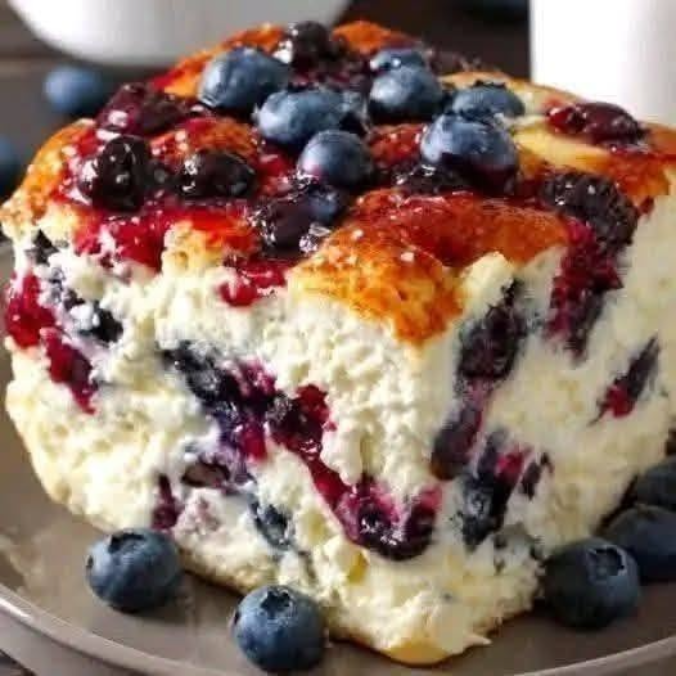
The photo appears to show soft, rustic raspberry scones made with cottage cheese, with fresh raspberries folded into the dough and a raspberry glaze/jam drizzle on top. The exact original recipe can’t be recovered from the image alone, so the recipe below is a carefully developed version designed to produce the same look and texture.
Cottage cheese works especially well here because it adds moisture and protein while keeping the scones tender. Low-fat cottage cheese is particularly protein-rich; USDA-linked nutrition data lists about 12.4 g protein per 100 g for 1% cottage cheese.
Yield
8 large scones
Prep: 20 minutes
Chill: 15–20 minutes
Bake: 18–23 minutes
Total: about 1 hour
Ingredients
For the scones
Ingredient Amount
All-purpose flour 2 cups / 250 g
Granulated sugar ⅓ cup / 67 g
Baking powder 2½ tsp
Baking soda ¼ tsp
Fine salt ½ tsp
Cold unsalted butter 6 tbsp / 85 g
Cottage cheese ¾ cup / 170 g
Large egg 1
Vanilla extract 1 tsp
Fresh raspberries 1 cup / 125 g
Lemon zest 1 tsp
For the raspberry glaze
½ cup fresh or frozen raspberries
2 tbsp granulated sugar
1 tsp lemon juice
¾ cup powdered sugar, approximately
1–2 tsp milk or lemon juice, as needed
Optional finishing
1 tbsp coarse sugar
A few extra raspberries
Powdered sugar
Full Instructions
1. Prepare the oven
Heat oven to 400°F / 200°C.
Line a baking sheet with parchment paper.
For especially tall scones, place the prepared tray in the refrigerator while the oven finishes heating.
2. Prepare the dry ingredients
In a large bowl, whisk together:
flour
sugar
baking powder
baking soda
salt
Mix thoroughly so the raising agents are evenly distributed.
3. Cut in the butter
Cut the cold butter into small cubes.
Add it to the flour mixture and work it in with your fingertips or a pastry cutter.
Stop when you have a mixture containing pea-sized pieces of butter.
Don’t completely blend the butter into the flour. Those little pieces melt during baking and help create flaky layers.
4. Mix the wet ingredients
In another bowl, whisk together:
cottage cheese
egg
vanilla
lemon zest
If your cottage cheese is extremely watery, drain it for about 5–10 minutes first.
Don’t blend the cottage cheese completely smooth. Small curds are fine and help give the finished scones their characteristic texture.
5. Combine
Pour the cottage-cheese mixture into the flour/butter mixture.
Use a fork or spatula to gently combine.
The dough should look shaggy and slightly sticky.
Don’t knead it like bread.
6. Add the raspberries
Very gently fold in the raspberries.
Fresh raspberries are easiest to work with.
If using frozen raspberries:
Do not thaw them first.
Add them frozen and fold them in with as little handling as possible. Frozen berries help prevent excessive juice from turning the dough into a paste.
A few berries breaking apart is actually desirable—it creates the beautiful raspberry streaks seen in the photo.
7. Form the dough
Lightly flour your work surface.
Turn the dough onto it.
With lightly floured hands, gently bring it together into a round approximately:
7–8 inches / 18–20 cm wide and about 1½ inches / 4 cm thick.
Don’t add lots of extra flour. A slightly sticky dough produces a softer scone.
8. Cut
Cut the round into 8 wedges.
Place them on the parchment-lined baking sheet, leaving approximately 1–2 inches between them.
For taller, more defined scones, refrigerate them for 15–20 minutes before baking.
9. Bake
Bake at 400°F / 200°C for approximately 18–23 minutes.
They’re ready when:
the tops are golden
the edges are lightly browned
the centers feel set
the scones have visibly puffed
Don’t wait until they’re deeply brown or they can become dry.
Raspberry Glaze
While the scones bake, make the raspberry topping.
Step 1
Put raspberries, sugar and lemon juice into a small saucepan.
Cook over medium-low heat for approximately 4–6 minutes, crushing the berries with a spoon.
Step 2
Strain through a fine-mesh sieve to remove the seeds.
Step 3
Allow the raspberry syrup to cool.
Step 4
Mix about 1½–2 tablespoons raspberry syrup with the powdered sugar.
Add a tiny amount of milk or lemon juice if necessary.
You want a glaze that’s thick enough to drizzle but thin enough to flow.
Finishing
Let the scones cool for about 10–15 minutes.
Drizzle generously with the raspberry glaze.
Add a few fresh raspberries around the scones for presentation.
Serve warm or at room temperature.
ALL NUT / ALLERGEN INFORMATION
Tree nuts
No tree nuts are required in this recipe.
There are no:
almonds
walnuts
pecans
cashews
pistachios
hazelnuts
macadamia nuts
Brazil nuts
However, check the labels of your flour, cottage cheese, butter, powdered sugar and other packaged ingredients if you’re cooking for someone with a severe nut allergy, because cross-contact can occur during manufacturing.
Peanuts
No peanuts are used.
Dairy
YES — contains dairy.
The cottage cheese and butter contain milk.
Egg
YES — contains egg.
Gluten
YES — contains wheat/gluten because the recipe uses all-purpose flour.
Soy
There is no intentional soy ingredient, but packaged ingredients should be checked for manufacturer allergen statements.
Coconut
No coconut is required.
🥛 Dairy-Free Version
Replace:
butter → cold dairy-free butter
cottage cheese → thick dairy-free cottage-cheese alternative
The texture will change somewhat because cottage cheese contributes both moisture and protein.
Gluten-Free Version
Use a 1:1 gluten-free baking flour containing xanthan gum.
Because gluten-free flour can absorb moisture differently, hold back about 1–2 tablespoons of flour initially and add it only if the dough is excessively wet.
Fresh vs. Frozen Raspberries
Fresh — best for appearance
Fresh berries give you larger, more recognizable raspberry pieces.
Frozen — best for structure
Frozen raspberries are less likely to completely collapse while you’re forming the dough.
Important: use them frozen.
Raspberries naturally contain substantial water and fiber; USDA SNAP data lists about 8 g fiber per cup of raspberries.
Why Your Dough Might Be Too Wet
This is the most important troubleshooting point.
Cottage cheese varies enormously in moisture.
If your cottage cheese is very wet, the dough can become sticky.
Fix:
Add flour 1 tablespoon at a time, gently folding after each addition.
Don’t dump in a large amount of flour, because that can make the finished scones heavy.
Also avoid crushing all the raspberries—their juice can make the dough considerably wetter.
Storage
Room temperature
Best within 1 day in an airtight container.
Refrigerator
Keep for approximately 3–4 days.
Warm for 10–20 seconds in the microwave or several minutes in a low oven.
Freezer
Freeze unglazed baked scones for approximately 2–3 months.
Thaw and warm before serving, then add fresh glaze.
Freezing unbaked scones
This is actually my preferred method.
Cut the raw scones, place them on a tray and freeze until solid.
Transfer to a freezer container.
Bake directly from frozen, adding approximately 3–6 minutes to the baking time.
Approximate Nutrition
For 1 of 8 scones, including a modest amount of glaze:
Calories: ~300–330
Protein: ~8–10 g
Carbohydrates: ~45–50 g
Fat: ~11–13 g
Fiber: ~2–3 g
Sugar: ~15–18 g
These are estimates rather than laboratory-tested values. Actual nutrition varies considerably with the cottage cheese, butter, size of the scones and amount of glaze. Raspberries themselves are relatively nutrient-dense; USDA data lists about 64 calories and 8 g fiber per cup.
Recipe Q&A
Q: Can I use low-fat cottage cheese?
Yes. In fact, 1% cottage cheese works very well. It contains substantial protein while keeping the dough relatively light.
Q: Can I use full-fat cottage cheese?
Absolutely. The scones will generally taste richer and may be slightly more tender.
Q: Should I blend the cottage cheese?
No. You can if you want an exceptionally smooth texture, but small cottage-cheese curds are perfectly fine and work beautifully in rustic scones.
Q: Why are my scones flat?
Usually one of these:
Butter became too warm.
Dough was overworked.
Too much liquid.
Baking powder was old.
Dough wasn’t chilled.
Chilling the shaped scones before baking is particularly helpful.
Q: Why did my raspberries disappear?
They were probably overmixed.
Fold them in only a few times. Some will remain whole while others will burst into the dough, which creates the attractive marbled appearance.
Q: Can I use blueberries instead?
Yes. Substitute blueberries in approximately the same quantity.
Q: Can I use strawberries?
Yes, but dice them very small and pat them dry first. Strawberries release more water than raspberries.
Q: Can I make these without the glaze?
Yes. They’re delicious plain, especially while warm.
Q: Can I make them less sweet?
Yes. Reduce the dough sugar from ⅓ cup to ¼ cup and omit or reduce the glaze.
Q: Can I make them sweeter?
Increase the dough sugar to ½ cup, or simply use more raspberry glaze.
Q: Can I add white chocolate?
Yes. Add ½ cup / 85–90 g white chocolate chips along with the raspberries.
Q: Can I add lemon?
Definitely. Add 1–2 tsp lemon zest to the dough and use lemon juice in the glaze.
Q: Why is the inside gummy?
The most common causes are:
oversized scones
excessive cottage-cheese moisture
too many raspberries
underbaking
cutting them while extremely hot
Allow them to cool for at least 10 minutes before judging the interior.
Q: How do I get the golden top shown in the photo?
Brush the tops lightly with milk or beaten egg immediately before baking. A sprinkle of coarse sugar also gives a beautiful bakery-style crust.
Q: Can I use almond flour?
You can substitute a portion, but don’t replace all the wheat flour 1:1. Almond flour has very different structural properties and will produce a much softer, more fragile scone.
Also, almond flour would change the recipe from nut-free to containing tree nuts.
Q: Are these high protein?
They’re higher in protein than a conventional flour-and-butter scone, largely because of the cottage cheese. They aren’t a protein supplement food, however. The exact amount depends on the cottage cheese and flour brands.
Q: Can I make mini scones?
Yes. Cut the dough into 12–16 smaller pieces and start checking them around 14–18 minutes.
Q: Can I prepare the dough the night before?
Yes. Shape the scones, cover them and refrigerate overnight. Bake cold the next morning. If the dough becomes very firm, simply give it a few extra minutes in the oven.
Best Tips for Getting the Photo-Like Result
Use cold butter.
Use cold or chilled cottage cheese.
Don’t overwork the dough.
Use fresh or frozen raspberries rather than raspberry jam inside the dough.
Keep some raspberries intact.
Chill the shaped scones before baking.
Bake at 400°F / 200°C.
Don’t overbake.
Let them cool slightly before glazing.
Make the raspberry glaze fairly thick so it sits on the ridges instead of soaking completely into the scone.
The combination of raspberry and a rich dairy ingredient is a well-established scone pairing, although the pictured cottage-cheese version