Flourless Lemon Greek Yogurt Cake
Soft • Moist • Lemon-Loaded • Gluten-Free
Yield
8–10 slices
Prep
15 minutes
Bake
35–40 minutes
Oven
350°F / 175°C
FULL INGREDIENTS
For the cake
1 cup (240 g) full-fat Greek yogurt
3 large eggs, preferably room temperature
½ cup (100–110 g) granulated sugar
1½ cups (150 g) finely ground almond flour
2 tablespoons finely grated lemon zest — about 2 lemons
¼ cup (60 ml) fresh lemon juice
1 teaspoon vanilla extract
1 teaspoon baking powder
¼ teaspoon salt
Optional lemon glaze
½ cup (60 g) powdered sugar
1–2 tablespoons fresh lemon juice
½ teaspoon lemon zest, optional
Optional toppings
Fresh blueberries or raspberries
Thin lemon slices
Powdered sugar
Whipped cream
Toasted sliced almonds
A very similar published version uses 1½ cups almond flour, 1 cup Greek yogurt, 3 eggs, ½ cup honey/maple syrup, lemon zest and juice, vanilla, baking powder and salt.
STEP-BY-STEP
1. Prepare the pan
Preheat oven to 350°F (175°C).
Use an 8-inch or 9-inch round cake pan/springform pan.
Grease the sides and line the bottom with parchment paper.
Tip: If using an 8-inch pan, the cake will be taller. A 9-inch pan produces a slightly thinner cake.
2. Prepare the lemons
Wash and dry 2 lemons.
Finely grate the yellow outer skin to obtain approximately 2 tablespoons zest.
Avoid grating the white pith underneath because it can make the cake bitter.
Juice the lemons and measure ¼ cup (60 ml).
3. Mix the wet ingredients
In a large bowl, add:
Greek yogurt
Eggs
Sugar
Lemon zest
Lemon juice
Vanilla
Whisk until smooth and well combined.
Don’t worry if the mixture looks somewhat thin.
4. Mix the dry ingredients
In another bowl combine:
Almond flour
Baking powder
Salt
Whisk well so the baking powder and salt are evenly distributed.
5. Combine
Add the dry mixture to the yogurt mixture.
Use a spatula or whisk and mix just until combined.
Do not overmix.
The finished batter should be thick but pourable.
6. Fill the pan
Pour the batter into the prepared pan.
Smooth the surface with a spatula.
Gently tap the pan once or twice on the counter to remove large air bubbles.
7. Bake
Bake at:
350°F / 175°C for approximately 35–40 minutes.
Start checking around 32–35 minutes.
The cake is ready when:
The top is golden.
The edges are lightly browned.
The center is set.
A toothpick comes out clean or with a few moist crumbs.
Don’t expect the toothpick to be completely dry—the yogurt and almond flour make this cake naturally moist.
8. Cool
Remove from the oven.
Let the cake cool 10–15 minutes in the pan.
Run a thin knife around the edge and carefully remove the cake.
Transfer to a cooling rack.
Allow it to cool completely before glazing or slicing.
EASY LEMON GLAZE
Mix:
½ cup powdered sugar
1 tablespoon lemon juice
Add additional lemon juice ½ teaspoon at a time until you reach your desired consistency.
For a thick glaze → use less juice.
For a thin drizzle → use more juice.
Drizzle over the completely cooled cake.
FOR AN EXTRA-LEMONY CAKE
For stronger lemon flavor:
Use the full 2 tablespoons zest
Use fresh lemon juice
Add ½ teaspoon lemon extract, if desired
Add extra lemon zest to the glaze
The zest is particularly important because much of the lemon’s aromatic flavor is concentrated in the peel.
NUT / ALLERGEN INFORMATION
Contains
Almonds:
The almond flour makes this a nut-containing cake.
Eggs:
Contains 3 eggs.
Milk/dairy:
Greek yogurt is dairy unless you use a dairy-free alternative.
Does NOT contain
Wheat flour
All-purpose flour
Butter
Soy, assuming your ingredients are soy-free
Gluten-containing flour
Important
Although the cake is flourless, it is not nut-free because of the almond flour.
If you’re baking for someone with a nut allergy, don’t simply replace almond flour with wheat flour—the structure and liquid balance are different.
A published flourless version specifically recommends almond flour and notes that substitutions can change the texture.
NUT-FREE VERSION
If you need a nut-free cake, a better approach is to use a cornstarch-based flourless yogurt cake rather than simply substituting wheat flour.
For example, another flourless Greek-yogurt style uses Greek yogurt, eggs, sugar, cornstarch, baking powder and lemon zest, with the egg whites whipped separately for a lighter texture.
So:
Almond allergy → don’t use the almond-flour version.
DAIRY-FREE OPTION
You can experiment with thick unsweetened coconut yogurt in place of Greek yogurt.
However, choose a very thick yogurt; watery yogurt can make the cake too wet.
Dairy-free coconut-yogurt substitutions are also used in similar published versions.
CAN I USE HONEY INSTEAD OF SUGAR?
Yes.
Replace the ½ cup sugar with approximately:
⅓–½ cup honey
Because honey is liquid, the batter will be somewhat different.
A published version specifically uses ½ cup honey or maple syrup with almond flour and Greek yogurt.
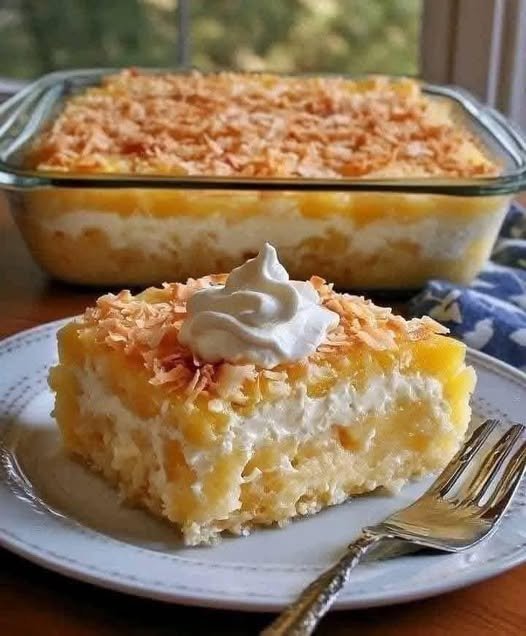
For the closest texture to the pictured cake, however, granulated sugar is my preference.
CAN I USE MAPLE SYRUP?
Yes.
Use approximately ½ cup pure maple syrup.
The cake will have:
A slightly darker color
A mild maple flavor
A softer/moister texture
🫐 BLUEBERRY LEMON VERSION
Add:
½ cup fresh blueberries
Gently fold them into the batter immediately before putting it into the pan.
Don’t overmix.
Lemon + blueberry works particularly well with this cake. Similar recipes also suggest berries as a topping or add-in.
OTHER FLAVOR VARIATIONS
Lemon + poppy seed
Add 1 tablespoon poppy seeds.
Lemon + coconut
Add ¼ cup unsweetened shredded coconut.
Lemon + cardamom
Add ¼–½ teaspoon ground cardamom.
Orange cake
Replace lemon zest/juice with orange zest/juice.
Lime cake
Use lime zest and juice instead of lemon.
FREQUENTLY ASKED QUESTIONS
Why is my cake sinking?
A small amount of sinking after cooling is normal for a flourless cake.
A large collapse usually means the center wasn’t fully set, the batter was overmixed, or the cake was removed too early. Flourless yogurt cakes can naturally settle as they cool.
Why is the middle wet?
Greek yogurt adds considerable moisture.
Check that the center is set rather than liquid before removing the cake.
If the top is already brown but the center isn’t done, loosely cover the cake with foil and continue baking.
Can I use low-fat Greek yogurt?
Yes.
However, full-fat Greek yogurt gives the richest and creamiest result.
Low-fat yogurt can produce a slightly lighter but less rich cake.
Can I use regular yogurt?
Yes, but Greek yogurt is thicker.
If using regular yogurt, strain it through cheesecloth or a fine sieve for a while to remove excess liquid.
Can I use almond meal instead of almond flour?
Yes, but the texture will be somewhat more rustic.
Fine blanched almond flour gives the smoothest, most cake-like crumb.
Can I use coconut flour?
Not as a 1:1 replacement.
Coconut flour absorbs dramatically more liquid than almond flour, so the recipe would need to be reformulated.
Can I use all-purpose flour?
Not as a direct substitution.
This recipe is specifically formulated around almond flour and a flourless structure. Replacing it gram-for-gram with wheat flour will change the cake considerably.
Can I make it without baking powder?
Yes, but it will generally be denser.
For a lighter flourless cake, you can separate the eggs and whip the whites before gently folding them into the batter. This technique is used in other flourless Greek-yogurt cakes.
Why use room-temperature eggs?
Room-temperature eggs incorporate more easily and help create a more uniform batter.
Take them out of the refrigerator approximately 20–30 minutes before baking.
Can I make this in a loaf pan?
Yes.
Use a standard loaf pan, but expect a longer baking time. Start checking around 45 minutes and continue until the center is set. Similar flourless versions give roughly 45–55 minutes for loaf-pan baking.
How do I know when it’s completely baked?
Look for:
Golden top + set center + slight spring when gently pressed + toothpick with moist crumbs rather than wet batter.
Should I refrigerate it?
Yes, particularly because it contains yogurt and eggs.
Once completely cool, cover and refrigerate.
It should keep for approximately 4 days refrigerated; similar versions recommend refrigeration for several days.
Can I freeze it?
Yes.
Cut into individual slices and wrap well.
Freeze for approximately 1 month for best quality.
Thaw overnight in the refrigerator.
APPROXIMATE NUTRITION
Nutrition depends heavily on the exact yogurt, almond flour and sweetener used.
For an 8-slice cake without glaze, a reasonable estimate is approximately:
Nutrient Per slice
Calories ~220–260 kcal
Protein ~7–9 g
Carbohydrates ~20–25 g
Fat ~12–15 g
Fiber ~2–3 g
Sugar ~13–16 g
For comparison, published versions of similar almond-flour Greek-yogurt lemon cakes report roughly 180–280 calories per serving, depending on ingredients and serving size.
MY BEST-TEXTURE TIPS
Use full-fat Greek yogurt.
Use fresh lemons, not bottled juice.
Don’t skip the zest.
Bring eggs and yogurt close to room temperature.
Use fine almond flour.
Don’t overmix once the almond flour goes in.
Don’t overbake.
Let the cake cool completely before cutting.
Refrigerating it for several hours actually improves the texture.
Add the glaze only after the cake is completely cool.
The result
You should get a moist, tender, lemony crumb with a lightly golden top—somewhere between a soft almond cake and a yogurt cheesecake, rather than a conventional fluffy flour cake. Flourless yogurt cakes naturally have a more moist/dense interior.