Pita Bread Recipe Soft, Pillowy & Ready in 45 Minutes
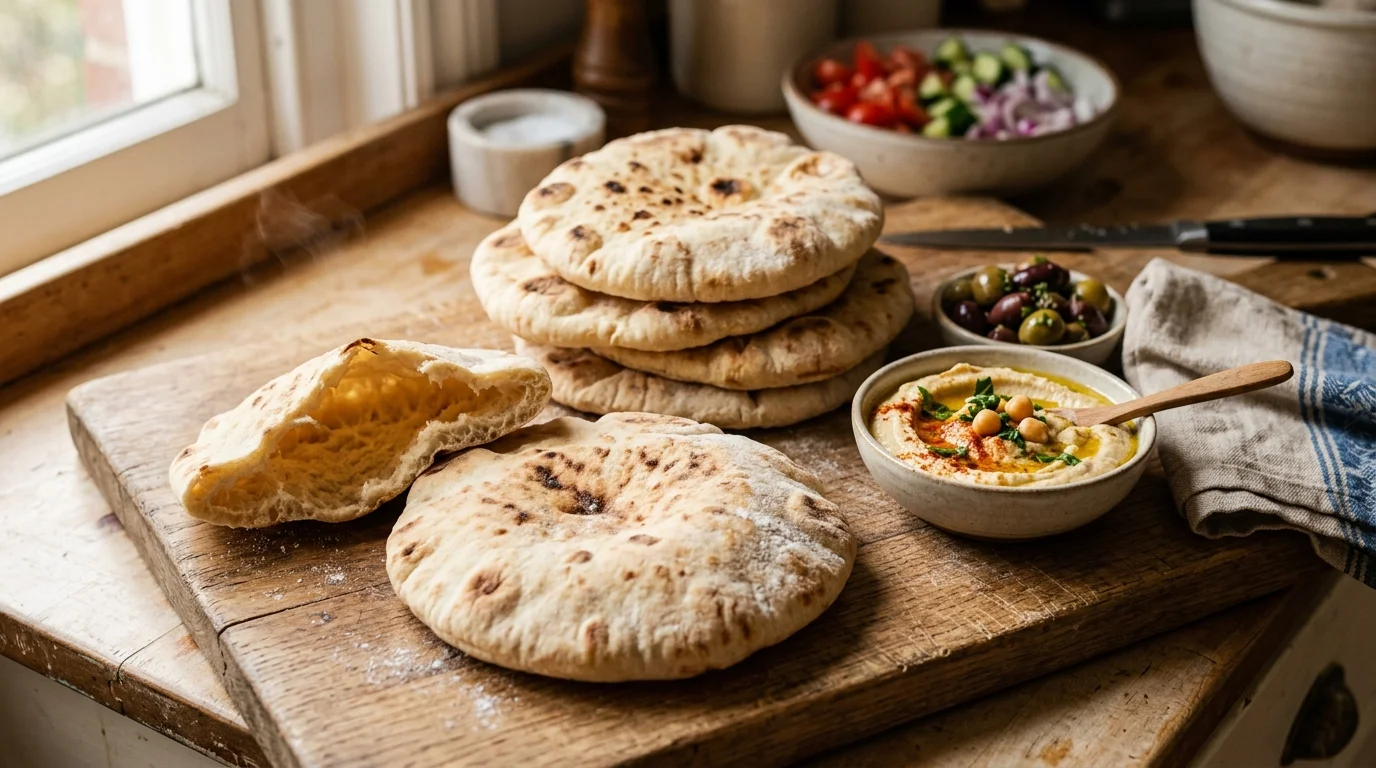
A good pita bread recipe is one of those kitchen skills that quietly changes everything. Warm, soft rounds that puff up beautifully in the oven — nothing from a supermarket bag comes close. Serve them alongside hummus for a quick snack, stuff them with grilled meat and vegetables for a satisfying lunch, or tear them warm for dipping into soups and stews. No complicated shaping, no special equipment — just pure pita bread goodness straight from your oven.
Ingredients List
For homemade pita bread (makes 8 pitas):
- 2¼ tsp active dry yeast (one standard packet; instant yeast also works)
- 1 cup warm water (between 100–110°F — too hot kills the yeast, too cold won’t activate it)
- 1 tsp granulated sugar (feeds the yeast; honey works as a substitute)
- 3 cups all-purpose flour, plus extra for dusting (bread flour gives a slightly chewier result)
- 1½ tsp salt
- 2 tbsp olive oil, plus extra for coating the bowl
- ½ tsp garlic powder (optional — adds subtle savory depth)
- 1 tbsp plain yogurt (optional — makes the dough slightly more tender and soft)
Step-by-Step Instructions
Step 1: Gather and Prep Your Ingredients
Measure out all ingredients before starting — yeast-based doughs move through stages that don’t pause well. Having everything within reach means you can focus on the dough rather than scrambling for the flour bag mid-knead.
Check the temperature of your water carefully. Between 100–110°F is the ideal range — warm enough to activate the yeast, but not so hot that it kills it. A kitchen thermometer takes all the guesswork out, but if you don’t have one, the water should feel comfortably warm on your wrist, not hot.
Pro Tip: If your kitchen is cold, warm your mixing bowl with hot tap water first, then dry it. A warm bowl helps the yeast activate more reliably.
Step 2: Activate the Yeast
Combine the warm water, sugar, and active dry yeast in a large mixing bowl and stir gently. Let the mixture sit undisturbed for 5–10 minutes. During this time, the yeast feeds on the sugar and begins producing carbon dioxide — you’ll see a foamy, frothy layer form on the surface.
Foam means the yeast is alive and active. Flat, unchanged water after 10 minutes means the yeast is dead or the water temperature was off — discard and start again. Using inactive yeast is the most common reason homemade pita bread comes out flat and dense instead of puffed and airy.
Pro Tip: Always check the expiry date on your yeast packet before using it. Old yeast is the number one cause of flat bread.
Step 3: Mix and Knead the Dough
Add olive oil and salt to the activated yeast mixture and stir to combine. Gradually add the flour one cup at a time, mixing with a wooden spoon until a shaggy dough forms. Turn the dough out onto a lightly floured surface and knead by hand for 8–10 minutes.
Proper kneading develops the gluten network that gives pita bread its characteristic chew and, most importantly, the structural strength to trap steam and puff up in the oven. Well-kneaded dough should feel smooth, elastic, and slightly tacky — not sticky, not tight. If it tears easily, knead for another 2 minutes.
Pro Tip: Use a stand mixer with a dough hook on medium speed for 6 minutes if you prefer — the result is identical and far less effort.
📖 Read More: Artisan Bread Recipes
Step 4: First Rise — Let the Dough Rest
Shape the kneaded dough into a smooth ball and place it in a lightly oiled bowl, turning once to coat all sides. Cover the bowl with a clean kitchen towel or plastic wrap and set it in a warm, draft-free spot.
Allow the dough to rise for 1 hour, or until it has roughly doubled in size. During cold months, the inside of an oven with just the light on provides a consistently warm environment. Alternatively, placing the bowl near a warm stovetop works well. Skipping or shortening this rise produces pitas that are dense and don’t puff properly.
Pro Tip: Dough can rise overnight in the refrigerator — slow fermentation actually improves flavor. Just bring it back to room temperature for 30 minutes before shaping.
Step 5: Divide, Shape, and Rest Again
Punch the risen dough down gently to release the gas, then turn it out onto a lightly floured surface. Divide it into 8 equal portions — using a kitchen scale for consistency here gives you evenly sized pitas that cook at the same rate.
Roll each portion into a smooth ball, then use a rolling pin to flatten each one into a round disc approximately 6 inches in diameter and ¼-inch thick. Place the shaped rounds on a floured surface, cover loosely, and let them rest for 15–20 minutes. Resting relaxes the gluten so the rounds don’t spring back during rolling and cook more evenly in the oven.
Pro Tip: Don’t roll the pitas too thin — under ¼ inch and they won’t puff. The steam needs enough dough thickness to create a pocket.
Step 6: Bake, Watch the Puff, and Serve
Preheat your oven to 500°F (260°C) and place a heavy baking sheet, cast iron skillet, or baking stone on the middle rack while the oven heats. Working in batches, carefully slide 2–3 pita rounds onto the preheated surface.
Bake for 3–4 minutes only — pitas bake fast at high heat. Watch for the dramatic puff that happens around the 2-minute mark — that’s the steam pocket forming. Remove them as soon as they’re puffed and lightly golden on the bottom. Wrap finished pitas immediately in a clean kitchen towel to trap steam, which keeps them soft and pliable rather than dry and brittle.
Pro Tip: Never open the oven door in the first 2 minutes — the sudden drop in temperature can prevent the puff from forming fully.
Cook Time
Total Time: 1 hour 45 minutes | Prep: 20 minutes | Rise Time: 1 hour 20 minutes | Bake: 4 minutes per batch No special equipment required.
Servings
Makes 8 pitas | Approximately 6 inches in diameter per piece
Nutritional Information (approx. per pita)
| Nutrient | Amount |
|---|---|
| Calories | 185 kcal |
| Fat | 4g |
| Saturated Fat | 0.5g |
| Carbohydrates | 33g |
| Protein | 5g |
| Sugar | 1g |
| Fiber | 1g |
| Sodium | 220mg |
| Vitamin C | 0mg |
| Potassium | 65mg |
| Calcium | 10mg |
Values are approximate and will vary based on ingredients used.
Storage Instructions
Fresh pita bread is best eaten on the day it’s made — warm from the oven, wrapped in a towel, it’s genuinely hard to beat. Once cooled completely, store leftover pitas in an airtight zip-lock bag at room temperature for up to 2 days. Beyond that, they begin to dry out and turn leathery. Revive day-old pitas by wrapping them in a damp paper towel and microwaving for 20 seconds.
Freezing works extremely well for pita bread. Stack cooled pitas with a small square of parchment paper between each one, seal in a freezer bag, and freeze for up to 3 months. Reheat straight from frozen — wrap in foil and warm in a 350°F oven for 8 minutes, or microwave individually wrapped in a damp towel for 30–40 seconds. For the freezer pack method, portion raw dough balls after the first rise, freeze on a tray, then bag. Thaw overnight in the fridge and shape fresh the next day.
📖 Read More: Focaccia Bread Recipes
Suggestions
- Whole Wheat Version: Replace half the all-purpose flour with whole wheat flour for a nuttier, more complex flavor and extra fiber. Whole wheat dough absorbs more liquid, so add an extra tablespoon of water if the dough feels tight during kneading. The pitas puff slightly less dramatically but still form a usable pocket with good texture.
- High-Protein Version: Substitute ½ cup of all-purpose flour with chickpea flour or add 2 tablespoons of unflavored protein powder to the dry ingredients. Chickpea flour adds a subtle earthiness that pairs naturally with Middle Eastern fillings like falafel, spiced lamb, or roasted vegetables — and it boosts the protein content meaningfully per serving.
- Dairy-Free Option: Every ingredient in the base recipe is naturally dairy-free as written. Skip the optional yogurt addition entirely, or replace it with a tablespoon of unsweetened coconut yogurt — it delivers the same tenderizing effect without any dairy. The finished pitas are completely plant-based and suitable for vegan diets.
- Kid-Friendly Pizza Pitas: Split baked pitas in half horizontally to create two thin rounds. Spread each with tomato sauce, top with shredded mozzarella and any toppings your kids enjoy, and bake at 400°F for 6–8 minutes. Mini pita pizzas come together in under 10 minutes and are an ideal quick lunch or after-school snack that kids can help assemble themselves.
- Weight-Loss Version: Use only 1 tablespoon of olive oil instead of 2, and swap all-purpose flour for a 50/50 blend of all-purpose and oat flour. Oat flour adds fiber that slows digestion, helps with satiety, and lowers the overall glycemic impact compared to refined white flour alone. Each pita clocks in around 160 calories with this adjustment.
- Herbed Garlic Pita: Brush freshly baked pitas with a mixture of melted butter, minced garlic, and chopped fresh herbs — parsley, oregano, or thyme all work beautifully. Serve immediately as a side bread alongside soups, salads, or grilled meats. Additionally, sprinkling za’atar and a drizzle of olive oil onto the rounds before baking creates an aromatic Middle Eastern flatbread variation.
- Stovetop Version: No oven? Cook the shaped pita rounds in a dry cast iron skillet over high heat for 1–2 minutes per side. Cover the pan with a lid to trap steam — this is what creates the pocket on the stovetop. The result is slightly more charred and less even than oven-baked, but equally delicious and ready in a fraction of the time.
📖 Read More: Banana Bread Recipe
Seasonal Relevance
Homemade pita bread fits naturally into every season, though the way you use it shifts throughout the year. From June through August, fresh pitas are the ideal companion to summer grilling — stuff them with charred chicken, cucumber, tomato, and a generous spoonful of tzatziki while produce is at its peak. September and October bring hearty stews and roasted vegetable dishes that beg for warm bread on the side. During the colder months of November through February, pita bread pairs beautifully with thick soups, braised meats, and warm dips. Spring — particularly March and April — is when lighter fillings like fresh herbs, grilled fish, and seasonal greens make pita a natural vehicle for the season’s first bright flavors.
Conclusion
Mastering a reliable pita bread recipe opens up a genuinely wide range of meals — from quick weeknight wraps to elaborate mezze spreads — with nothing more than pantry staples and a hot oven. The process is straightforward, the results are far superior to anything pre-packaged, and once you’ve watched that first pita puff up in the oven, you’ll understand exactly why people bother making bread from scratch. Try the whole wheat version for everyday use, or the herbed garlic variation when you want something a little more special. Either way, warm homemade pita is always worth the effort.
FAQs
Q: Why didn’t my pita bread puff up in the oven?
Flat pitas are almost always caused by one of three things: dough rolled too thin, an oven that wasn’t hot enough, or a baking surface that wasn’t preheated properly. Pitas need intense, immediate heat from below to generate the steam pocket fast enough. Make sure your oven is fully at 500°F and your baking sheet has been heating inside it for at least 10 minutes before the first batch goes in.
Q: Can I use instant yeast instead of active dry yeast?
Instant yeast works perfectly in this recipe — and it’s actually more forgiving. Unlike active dry yeast, instant yeast doesn’t need to be proofed in water first. Simply mix it directly into the flour with the other dry ingredients, then add the warm water and olive oil. The rise time may be slightly shorter, so start checking the dough at the 45-minute mark rather than waiting the full hour.
Q: How do I get a proper pocket in my pita bread?
Consistent thickness when rolling is the key — aim for exactly ¼ inch throughout, with no thick center and thin edges. Also, make sure the pita rounds rest for the full 15–20 minutes before baking, as this relaxes the gluten and allows even puffing. Finally, bake on a preheated surface at the highest oven temperature available to create rapid steam from the start.
Q: Can I make pita bread without a stand mixer?
Hand kneading works completely fine — in fact, many bakers prefer it because you can feel the dough’s texture change as the gluten develops. Knead for a full 8–10 minutes on a lightly floured surface, using the heel of your hand to push and fold the dough. The finished dough should be smooth, springy, and slightly tacky when ready — not sticky, and not stiff.
Q: What is the best way to reheat leftover pita bread?
Wrapping pitas in foil and warming them in a 350°F oven for 6–8 minutes is the most reliable method — it revives the soft, flexible texture without drying them out. For a quicker option, wrap individually in a slightly damp paper towel and microwave for 20–25 seconds. Avoid reheating uncovered in a dry oven or toaster — direct dry heat turns pita stiff and brittle rather than soft.