Hamburger Stroganoff Rich, Creamy & Ready in 30 Minutes
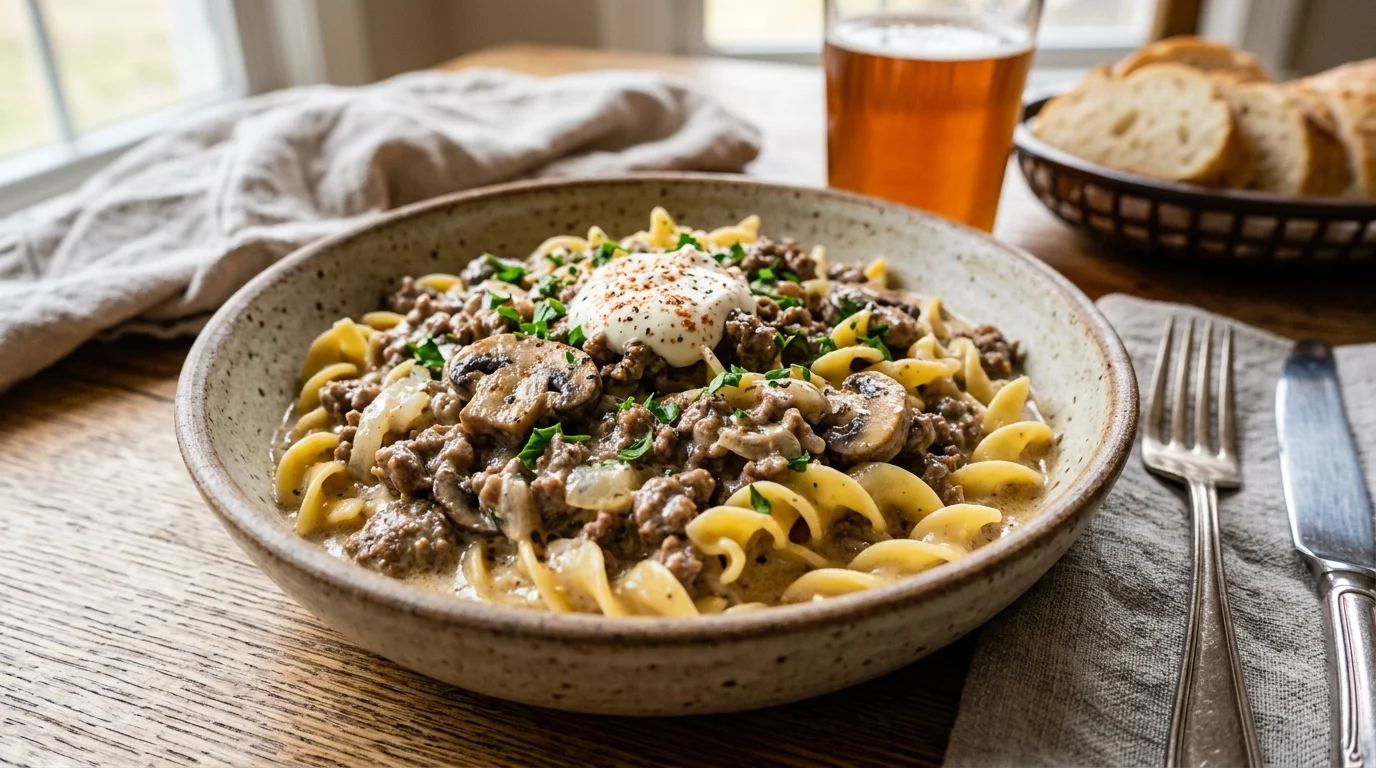
Hamburger stroganoff takes everything you love about the classic Russian dish and makes it accessible on a Tuesday night. Seasoned ground beef, golden mushrooms, and a silky sour cream sauce come together over egg noodles in under half an hour — no expensive cuts, no long braise, no fuss. Perfect for a quick family dinner, satisfying meal prep, or a post-workout meal that actually feels like a reward. No complicated steps — just pure hamburger stroganoff goodness in a bowl.
Ingredients List
For hamburger stroganoff (serves 4):
- 1 lb ground beef (80/20 fat ratio for best flavor; 93/7 for a leaner result)
- 8 oz wide egg noodles (pappardelle or fettuccine work as substitutes)
- 1 medium yellow onion, finely diced
- 3 cloves garlic, minced
- 8 oz cremini mushrooms, sliced ¼-inch thick (white button mushrooms also work)
- 2 tbsp unsalted butter
- 1 tbsp olive oil
- 2 tbsp all-purpose flour (cornstarch works as a gluten-free substitute)
- 1½ cups beef broth, low-sodium preferred
- 1 tbsp Worcestershire sauce
- 1 tsp Dijon mustard
- 1 tsp smoked paprika
- 1 tsp salt, plus more to taste
- ½ tsp black pepper
- ¾ cup full-fat sour cream, room temperature (plain Greek yogurt for a lighter swap)
- 1 tbsp cream cheese (optional — adds extra body to the sauce)
- ½ tsp red pepper flakes (optional — for a gentle kick)
- Fresh flat-leaf parsley, chopped, for garnish
Step-by-Step Instructions
Step 1: Gather and Prep Your Ingredients
Dice the onion, mince the garlic, and slice the mushrooms before anything hits the stove. Stroganoff moves fast once cooking starts — stopping mid-recipe to prep means your beef overcooks while you’re searching for a cutting board.
Pull the sour cream from the fridge at least 15 minutes ahead of time. Room-temperature sour cream blends into a hot sauce smoothly, whereas cold sour cream can cause the sauce to break and turn grainy. That one step alone separates a silky result from a ruined one.
Pro Tip: Pat the ground beef dry with a paper towel before cooking — less moisture means a better sear and deeper flavor from the start.
Step 2: Boil the Egg Noodles
Bring a large pot of generously salted water to a rolling boil. Cook the egg noodles one minute less than the package directions indicate — they’ll finish in the sauce later, so pulling them slightly underdone prevents a mushy final texture.
Before draining, scoop out ½ cup of the starchy pasta water and set it aside. Toss the drained noodles with a small drizzle of olive oil to keep them from clumping while you finish the sauce.
Pro Tip: Properly salted pasta water seasons the noodles from the inside out — it should taste like mild seawater, not plain tap water.
Step 3: Brown the Ground Beef
Heat olive oil in a large skillet or wide Dutch oven over medium-high heat until it shimmers. Add the ground beef in one flat, even layer and leave it completely undisturbed for 2 full minutes. That contact time is what builds the brown crust where all the deep, savory flavor lives.
After 2 minutes, break the beef apart and continue cooking until no pink remains — about 6–8 minutes total. Drain most of the rendered fat, leaving roughly one tablespoon in the pan. Removing every drop of fat strips out flavor and leads to a noticeably flat sauce.
Pro Tip: Cook in a wide pan rather than a deep saucepan. More surface area means faster browning and less steaming.
📖 Read More: Ground Hamburger Recipes
Step 4: Sauté the Vegetables
Push the browned beef to the edges of the pan and add butter to the center. Once it melts, add the diced onion and cook for 3–4 minutes until softened and translucent. Add the garlic and sliced mushrooms, stir everything together, and cook for 5–6 minutes until the mushrooms are deeply golden.
Patience here pays off. Mushrooms release a lot of water before they brown — if you rush this step and add flour too early, the excess moisture clumps the flour and makes the sauce lumpy. Wait until that liquid has fully cooked off before moving on.
Pro Tip: Don’t salt the mushrooms until they’ve fully released their liquid and started to brown — salting too early draws out more water and slows the browning process significantly.
Step 5: Build the Sauce
Sprinkle flour over the beef and mushroom mixture and stir constantly for 60 seconds to cook out the raw flour taste. Pour in the beef broth gradually while stirring — adding it all at once increases the risk of lumps. Follow with Worcestershire sauce, Dijon mustard, and smoked paprika.
Bring the sauce to a gentle simmer and cook uncovered for 4–5 minutes, stirring occasionally, until it thickens enough to coat the back of a spoon. Taste at this point and adjust salt and pepper before the sour cream goes in — it’s far easier to correct seasoning now than after the dairy is incorporated.
Pro Tip: Keep the heat at medium-low once the broth is in. A hard boil reduces the sauce too aggressively and can make it gluey.
Step 6: Finish, Combine, and Serve
Remove the pan from the heat entirely before stirring in the sour cream. Adding sour cream to a pan still over high heat causes it to curdle — the proteins seize, the sauce breaks, and no amount of stirring fixes it. Off-heat, it folds in silky and smooth every time.
Stir until fully incorporated, then add the cooked egg noodles directly to the pan and toss to coat. If the sauce looks too thick, add the reserved pasta water one tablespoon at a time until it loosens to the right consistency. Garnish with fresh parsley and serve immediately.
Pro Tip: Serve in pre-warmed bowls — a cold bowl causes the sour cream sauce to thicken and set within minutes, before you’ve had a chance to enjoy it properly.
Cook Time
Total Time: 30 minutes | Prep: 10 minutes | Cook: 20 minutes No oven required.
Servings
Serves 4 | Approximately 10–12 oz per serving
Nutritional Information (approx. per serving)
| Nutrient | Amount |
|---|---|
| Calories | 520 kcal |
| Fat | 24g |
| Saturated Fat | 10g |
| Carbohydrates | 46g |
| Protein | 32g |
| Sugar | 4g |
| Fiber | 3g |
| Sodium | 610mg |
| Vitamin C | 5mg |
| Potassium | 580mg |
| Calcium | 90mg |
Values are approximate and will vary based on ingredients used.
Storage Instructions
Hamburger stroganoff is best eaten fresh, straight from the pan while the sauce is at its creamiest. Refrigerate leftovers in an airtight container within two hours of cooking — they’ll keep for up to 3 days. Reheat gently on the stovetop over low heat, stirring frequently, and add a splash of beef broth or water to loosen the sauce as it warms back up.
Freezing this dish as-is is not recommended — sour cream separates when frozen and thawed, leaving a grainy, broken sauce. Instead, use the freezer pack method: freeze only the browned, seasoned ground beef base (without any sauce or noodles) in portioned zip-lock bags for up to 3 months. Thaw overnight in the fridge, then reheat and build the sauce fresh when you’re ready to serve.
📖 Read More: Hamburger Steak Recipes
Suggestions
- Stroganoff Bowl Version: Skip the egg noodles and serve the creamy beef sauce over steamed white or brown rice instead. Top with sliced green onions and a pinch of sesame seeds for a simple garnish. It naturally lowers the carbohydrate count and still carries every bit of the rich, savory flavor the dish is known for.
- High-Protein Version: Blend ½ cup of smooth cottage cheese into the sour cream before adding it to the sauce — most people can’t taste the difference, and the protein content jumps significantly. Equally effective is swapping regular sour cream for full-fat plain Greek yogurt, which delivers the same tang with considerably more protein per serving.
- Dairy-Free Option: Replace the sour cream with full-fat coconut cream and use a plant-based butter substitute throughout. The sauce holds together well and carries the savory base flavors cleanly. Coconut cream adds a subtle natural sweetness that actually complements the Worcestershire and Dijon in a way that works surprisingly well.
- Kid-Friendly Version: Reduce the Dijon mustard to ¼ teaspoon and skip the red pepper flakes entirely for a milder, more approachable flavor. Stirring in a small spoonful of ketchup alongside the sour cream adds a gentle sweetness that kids respond to well. Serving over familiar egg noodles keeps the whole dish firmly in comfort-food territory.
- Weight-Loss Version: Use 93/7 lean ground beef, swap full-fat sour cream for plain Greek yogurt, and add diced zucchini and extra mushrooms to increase volume without significantly raising calories. Serving over zucchini noodles instead of egg noodles cuts carbohydrates dramatically while keeping the sauce — which is really the star of the dish — completely intact.
- Spicy Cajun Twist: Season the ground beef with a Cajun spice blend in place of smoked paprika, and stir a teaspoon of hot sauce directly into the broth before simmering. The result is smoky, bold, and heat-forward — a sharp departure from the original that works beautifully. Balance the spice level with a generous scoop of sour cream folded in at the end.
- Cheesy Baked Variation: After combining the sauce with noodles, transfer everything to a greased baking dish, top generously with shredded Gruyère or sharp cheddar, and broil for 3–4 minutes until golden and bubbling. This turns a simple stovetop recipe into a crowd-pleasing baked casserole — ideal for feeding a larger group without adding much extra effort.
📖 Read More: Hamburger Buns
Seasonal Relevance
Hamburger stroganoff earns its place most naturally from October through March, when cold evenings call for something warm, rich, and filling on the table fast. During fall — particularly September and October — cremini and wild mushroom varieties hit their seasonal peak and add genuine earthy depth to the sauce that dried or frozen mushrooms simply can’t replicate. Winter months, November through February, are when this dish becomes a weekly staple in most households. Summer adaptations work too: swap the egg noodles for a lighter pasta and use fresh garden herbs in place of dried. Out of season, standard white button mushrooms and frozen herb blends perform reliably without compromising the final dish.
Conclusion
Few dishes deliver the combination of speed, comfort, and real flavor that hamburger stroganoff manages so consistently. Built from affordable, accessible ingredients and ready in 30 minutes flat, it’s the kind of recipe that earns a permanent spot in your weekly rotation — not because it’s trendy, but because it works every single time. Try the Greek yogurt swap for a lighter version, or go the cheesy baked route when you want something more indulgent. Either way, this is a dish worth knowing by heart. Straightforward cooking, done well — that’s always worth coming back to.
FAQs
Q: Can I use frozen ground beef for hamburger stroganoff?
Frozen ground beef works perfectly well — thaw it completely in the refrigerator overnight before cooking. Avoid thawing at room temperature, as uneven warming affects both safety and texture. Once thawed, pat the meat dry with a paper towel before it hits the pan. Handled correctly, the flavor and texture are essentially identical to fresh.
Q: Why did my stroganoff sauce turn grainy and separate?
A broken sauce almost always comes from adding sour cream to a pan still over high heat. Sour cream curdles aggressively when it contacts direct heat — the proteins seize and the fat separates out. Remove the pan completely from the burner before stirring in the sour cream, and ensure it’s at room temperature before adding. Those two steps prevent the problem entirely.
Q: Can I make hamburger stroganoff without mushrooms?
Definitely — mushrooms add earthiness and texture, but the dish functions perfectly without them. For comparable depth of flavor, add an extra tablespoon of Worcestershire sauce and a teaspoon of soy sauce directly into the broth. Diced zucchini or finely chopped bell peppers substitute well if you want some vegetable texture in the sauce.
Q: What can I substitute for egg noodles?
Wide egg noodles are traditional, but pappardelle, fettuccine, rotini, and even mashed potatoes all work well with the creamy sauce. For a low-carb option, cauliflower mash or zucchini noodles are both reliable — the sauce clings to them more than you’d expect. Rice is another solid base, particularly if you’re serving someone who avoids pasta.
Q: How do I thicken the sauce if it turns out too thin?
Simmer the sauce uncovered for an additional 3–5 minutes before adding the sour cream — evaporation concentrates it naturally. Alternatively, stir a tablespoon of cream cheese in alongside the sour cream at the end. Cream cheese melts in smoothly, adds immediate body, and thickens the sauce without altering the flavor in any meaningful way.