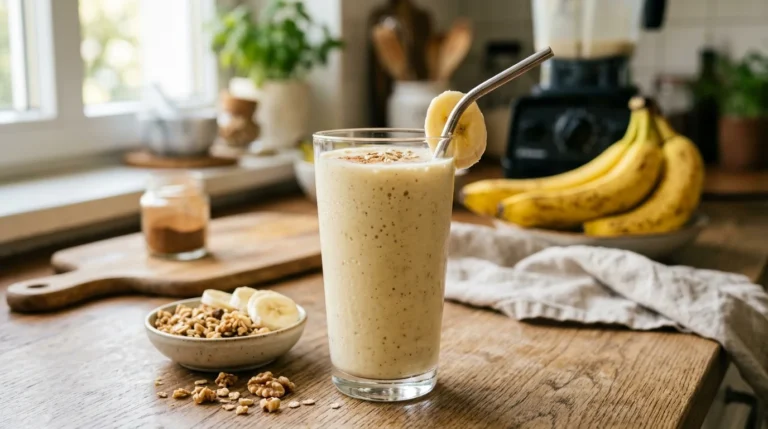
Protein Smoothie Thick, Filling & Ready in 5 Minutes
A protein smoothie is the most efficient thing you can make in a blender — one glass that covers your protein target, keeps you full for hours, and takes less time to prepare than any alternative breakfast or post-workout meal you could name. When it’s built properly — with real ingredients alongside the protein powder rather than just powder and water — the result is something that actually tastes good, has real nutritional depth, and supports whatever fitness or health goal brought you to the blender in the first place.
Whether you’re drinking it after a training session, replacing a rushed breakfast on a weekday morning, or building a high-protein snack into your afternoon, this protein smoothie delivers everything it needs to without anything it doesn’t. No complicated steps — just pure protein smoothie results, in a glass and ready in 5 minutes.
Ingredients
For the Protein Smoothie Base (serves 1–2):
- 1 scoop (30–35g) vanilla or chocolate protein powder [whey, casein, or plant-based]
- 1 medium banana [fresh or frozen — frozen produces a thicker result]
- 1 cup unsweetened almond milk [or whole milk, oat milk, or coconut milk]
- ½ cup plain Greek yogurt [adds protein and creaminess]
- 1 tbsp almond butter or peanut butter [healthy fat and extra protein]
- ½ cup ice cubes [skip if using frozen banana]
- ½ tsp pure vanilla extract
- Pinch of cinnamon [optional]
Optional Add-Ins for Extra Nutrition:
- 1 tbsp chia seeds or ground flaxseed (optional)
- 1 tbsp rolled oats — for extra thickness and fibre (optional)
- ½ cup baby spinach — adds nutrients, won’t affect flavour (optional)
- 1 tsp honey or maple syrup — only if sweetness is needed (optional)
- ¼ tsp turmeric — anti-inflammatory boost (optional)
- 1 tbsp cocoa powder — for a chocolate protein smoothie (optional)
- ½ cup frozen berries — for antioxidants and natural sweetness (optional)
- 1 tsp creatine or collagen powder — extra performance support (optional)
For Serving:
- Sliced banana or fresh berries, for garnish
- Granola or crushed nuts, for topping
- Drizzle of nut butter or honey, for finishing
- Cacao nibs or dark chocolate shavings (optional)
Step-by-Step Instructions
Step 1: Gather and Prep Your Ingredients
Pull everything out and have it ready before the blender lid goes on. Peel and break the banana into chunks, measure the protein powder into a small bowl so it goes in cleanly without clumping on the blender jar walls, and set out any optional add-ins you’re using. If you’re adding chia seeds or rolled oats, they go in before the ice — not after — so they have the maximum contact time with the blades during blending. Getting everything staged takes 2 minutes and makes the actual blend seamless and fast.
Pro Tip: Measure protein powder into a separate small container before adding to the blender rather than scooping directly from the tub over the jar. Protein powder that hits the dry sides of a blender jar above the liquid level clings to the walls and doesn’t fully incorporate — it ends up clumped and partially unblended even after a full minute at high speed. Mixing it into the liquid first prevents this entirely.
Step 2: Make the Protein Smoothie Sauce — Mix the Liquid Base
In this case, the equivalent of building a sauce base is combining the liquid and protein powder before the other ingredients go in. Pour the milk into the blender first, followed by the protein powder. Pulse 3–4 times on low speed to dissolve the protein powder into the liquid before adding anything else — this ensures the powder is fully hydrated and distributed rather than sitting in a dry clump beneath the heavier ingredients. Add the Greek yogurt, vanilla extract, and almond butter directly on top of the dissolved protein base. This order prevents the powder from clumping against the banana and ice when everything hits the blades at once.
Pro Tip: If your protein powder tends to foam excessively, blend it into the milk at low speed first and let it sit for 60 seconds before adding the remaining ingredients. The brief rest allows the protein to fully hydrate and reduces the foam produced during the main blend — a foamy protein smoothie has an unpleasant airy texture that settles into a flat, thin drink within minutes of being poured.
Step 3: Add the Banana, Ice, and Any Add-Ins
Add the banana chunks directly on top of the protein and yogurt base, followed by any optional add-ins — chia seeds, rolled oats, spinach, cocoa powder, or frozen berries. Add the ice cubes last, sitting on top of everything else. This layering order creates the correct blending vortex — the liquid at the bottom pulls everything upward into the blades, and the ice on top gets drawn down through the softer ingredients rather than bouncing around the jar without making contact. The result is a faster, smoother blend that requires less total blending time and produces fewer lumps.
Pro Tip: Use frozen banana instead of fresh banana plus ice wherever possible. Frozen banana acts as both the thickener and the frozen element in a single ingredient — it chills the smoothie, creates a thick, milkshake-like consistency, and adds natural sweetness without diluting the flavour the way melting ice cubes do over time. Peel and freeze ripe bananas in chunks on a lined tray, then transfer to a bag — they last up to 3 months.
📖 Read More: Mango Smoothie Recipe
Step 4: Blend on Low, Then High
Start the blender on low speed for 15–20 seconds until the banana and ice have been pulled into the vortex and the initial resistance drops. This low-speed start prevents ice from bouncing against the sides of the jar and stops protein powder from creating a fine dust cloud that escapes under the lid. Once the blender sounds even and consistent, increase to the highest speed and blend for 45–60 seconds until completely smooth. Taste through a spoon before pouring — the protein smoothie should taste balanced, creamy, and well-flavoured rather than chalky, thin, or overly sweet. If it’s chalky, blend for another 20 seconds on high.
Pro Tip: A chalky or gritty texture in a finished protein smoothie almost always means the protein powder wasn’t fully dissolved before blending or the blend time was too short. Some protein powders — particularly plant-based varieties — require longer blend times than whey to break down completely. If chalkiness persists across multiple batches, try blending the powder into the milk alone for 30 seconds before adding any other ingredient.
Step 5: Check Consistency and Adjust
Lift the blender jar and tilt it — a properly made protein smoothie should flow slowly and evenly rather than rushing to one side like water or refusing to move at all. If it’s too thick to pour freely, add milk one tablespoon at a time and pulse 3–4 times — don’t blend fully again or the ice will melt further and thin it more than intended. If it’s too thin for your preference, add half a frozen banana or a tablespoon of rolled oats and blend for another 20 seconds. The ideal consistency is thick and creamy — it should coat the back of a spoon and pour in a slow, controlled stream.
Pro Tip: Add optional sweetener — honey, maple syrup, or a medjool date — only after tasting the blended smoothie, never before. Protein powder often contains sweeteners, the banana adds natural sugar, and the yogurt adds dairy sweetness. A smoothie that seems flat before tasting it is often adequately sweet once all the ingredients are blended and the flavours have merged. Sweetening before tasting leads to an over-sweet result every time.
Step 6: Pour, Garnish, and Serve
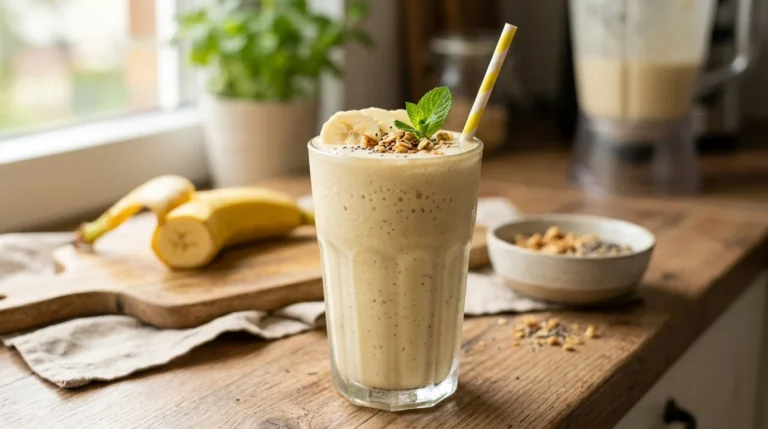
Pour the finished protein smoothie into a tall glass immediately — separation and ice melt begin within minutes of blending stopping, so the sooner it goes from blender to glass to mouth, the better the texture and flavour. Tap the base of the glass gently on the counter to settle the smoothie and remove air pockets. Garnish with a slice of banana across the rim, a small drizzle of almond butter or honey across the surface, a light dusting of cinnamon or cocoa powder, and a sprinkle of granola or cacao nibs if using. Serve immediately with a wide straw.
Pro Tip: For a thicker, bowl-style protein smoothie, reduce the milk to ⅓ cup and use two frozen bananas instead of one. Pour into a bowl rather than a glass and top with granola, fresh fruit, chia seeds, and a drizzle of nut butter. The spoonable consistency holds toppings in place far better than a pourable smoothie and turns the same recipe into a completely different eating experience — more satisfying, more visually appealing, and significantly more filling.
Cook Time
Total Time: 5 minutes | Prep: 2 minutes | Blend: 3 minutes One blender — a complete protein smoothie ready in 5 minutes.
Servings
Makes 1 large serving (approximately 450–500ml) or 2 smaller servings.
Nutritional Information (approx. per full single serving — with almond milk, Greek yogurt, banana, almond butter, vanilla whey protein)
| Nutrient | Amount |
|---|---|
| Calories | 420 kcal |
| Fat | 14g |
| Saturated Fat | 2g |
| Carbohydrates | 38g |
| Protein | 38g |
| Sugar | 18g |
| Fiber | 4g |
| Sodium | 280mg |
| Vitamin C | 8mg |
| Potassium | 620mg |
| Calcium | 320mg |
Values are approximate and will vary based on ingredients and protein powder brand used.
Storage Instructions
A protein smoothie is best consumed within 10–15 minutes of blending — the texture is at its peak immediately after the blender stops, and both the consistency and the flavour change noticeably as it sits. If you need to store it, pour into a sealed mason jar or airtight bottle filled as close to the top as possible to limit air exposure, and refrigerate for up to 24 hours. Shake vigorously before drinking as the ingredients will have separated — the protein and yogurt sink, the fruit floats, and without a re-shake the first half tastes different from the second. For the best make-ahead approach, use the freezer pack method — portion the banana, yogurt, and any solid add-ins into individual freezer bags and freeze flat. When ready to drink, tip the frozen pack directly into the blender, add the milk and protein powder fresh, and blend from frozen. The whole process takes under 3 minutes and produces a freshly-made texture that no pre-blended and refrigerated smoothie can replicate. Protein smoothies are not recommended for freezing once blended — the texture of the yogurt and banana changes significantly on thawing and the smoothie doesn’t re-blend back to its original consistency. The powder itself keeps well in its original container according to its expiry date — always seal the tub tightly after each use to prevent moisture from degrading the powder quality over time.
📖 Read More: Green Smoothie Recipes
Suggestions
- Chocolate Peanut Butter Protein Smoothie: Use chocolate protein powder, add 2 tablespoons of natural peanut butter, 1 tablespoon of unsweetened cocoa powder, and a frozen banana. Blend with oat milk for the richest possible base. This version tastes genuinely indulgent — closer to a thick chocolate milkshake than a health drink — while delivering over 40g of protein per serving. It’s the most popular protein smoothie variation for a reason.
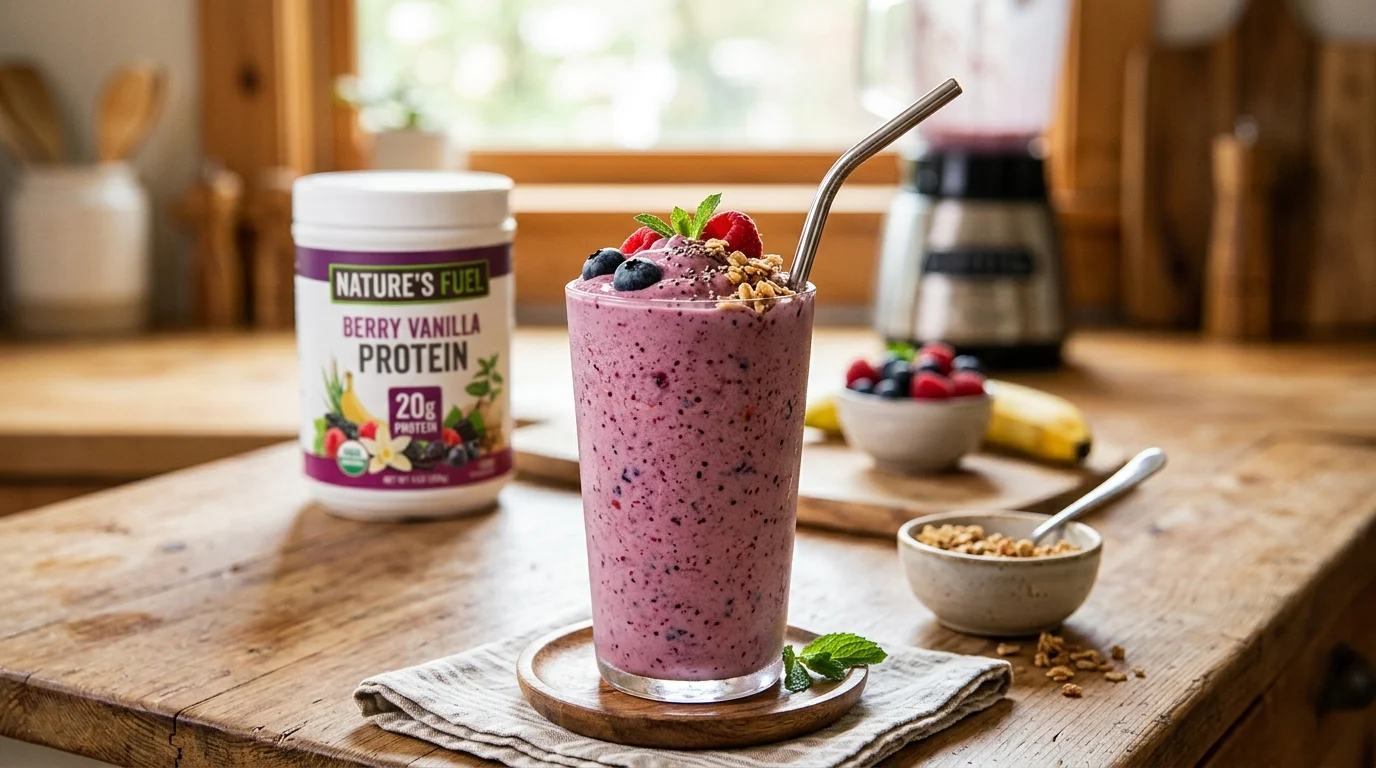
- Berry Protein Smoothie: Add 1 cup of mixed frozen berries — strawberries, blueberries, and raspberries — to the base recipe alongside the banana. Use vanilla protein powder and plain Greek yogurt. The natural acidity of the berries cuts through the sweetness of the banana and protein powder, producing a brighter, more refreshing smoothie that works particularly well in summer or as a lighter post-workout option.
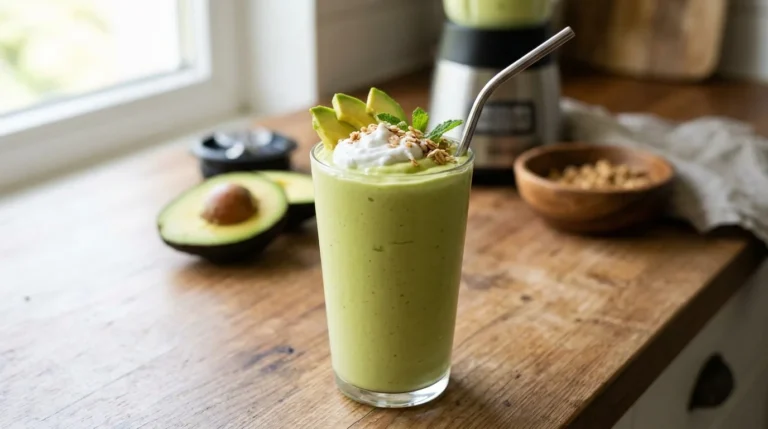
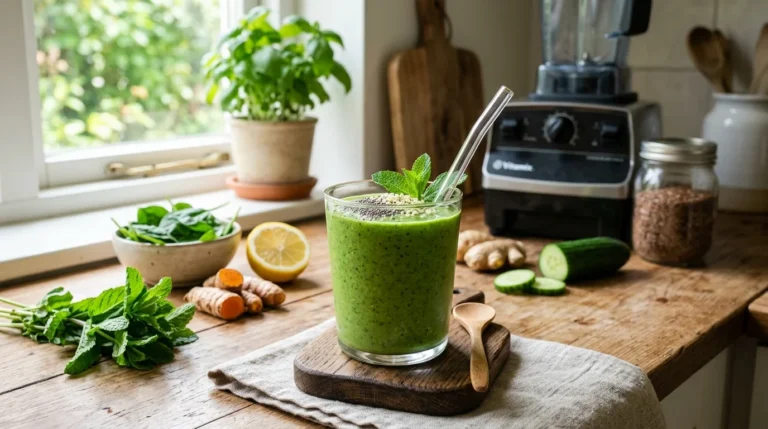
- Green Protein Smoothie: Add 1 cup of baby spinach and half a medium avocado to the base recipe. Use vanilla protein powder and almond milk. The spinach is completely undetectable in flavour once blended, and the avocado adds healthy monounsaturated fats that make the smoothie significantly more filling and provide a creamy texture that rivals any dairy-heavy version. This is the most nutritionally complete build in the list.
- Vegan Protein Smoothie: Use a plant-based protein powder — pea, rice, or hemp — replace the Greek yogurt with coconut yogurt, and use oat milk or coconut milk as the liquid base. Add an extra tablespoon of almond butter to compensate for the slightly lower fat content of most plant-based yogurts. Plant-based protein powders vary significantly in flavour quality — vanilla flavoured pea protein is generally the most palatable and best-blending option for a smoothie application.
- High-Calorie Muscle-Building Protein Smoothie: Use whole milk instead of almond milk, add 2 tablespoons of natural peanut butter, 2 tablespoons of rolled oats, 1 tablespoon of honey, 2 scoops of protein powder, and 2 frozen bananas. This version delivers over 700 calories and 55g of protein per serving — a genuine mass-gain shake built from real food rather than engineered supplement ingredients. It’s thick, filling, and requires a wide straw or a spoon to consume.
- Low-Calorie Protein Smoothie: Use unsweetened almond milk — 30 calories per cup — replace the banana with ½ cup of frozen strawberries for lower sugar content, use a zero-sugar protein powder, and skip the nut butter entirely. One tablespoon of chia seeds adds healthy fat and fibre without significant calories. This build delivers 28–30g of protein at under 250 calories per serving — a genuinely lean, high-protein drink that fits most calorie-controlled meal plans without any compromise on protein target.
- Mango Protein Smoothie: Replace the banana with 1 cup of frozen mango chunks and use coconut milk as the liquid base. Add vanilla protein powder, Greek yogurt, and a squeeze of fresh lime juice. The brightness of the mango and lime against the creamy protein and yogurt base produces a tropical protein smoothie that tastes nothing like a standard supplement drink and everything like something worth making every morning.
- Coffee Protein Smoothie: Add 1 shot of cooled espresso or ½ cup of cold brew coffee to the base recipe alongside the milk — reduce the milk by the same amount to maintain consistency. Use chocolate or vanilla protein powder and a frozen banana. The coffee adds caffeine alongside the protein, making this the most practical pre-workout version of the smoothie — it covers both the energy and protein requirements of a pre-training meal in a single drink that takes under 5 minutes to make.
📖 Read More: Banana Smoothie
Seasonal Relevance
A protein smoothie is genuinely year-round — the core ingredients of protein powder, banana, milk, and yogurt are available at consistent quality in every season without any meaningful price variation. The add-ins that make each variation most appealing shift with the calendar, though. From May through September, fresh or frozen berries at peak season, mango, and pineapple make the lightest, most refreshing protein smoothie versions — the berry and mango builds feel naturally right in warm weather when a cold, fruit-forward drink is more appealing than a heavy, nut-butter-loaded one. In autumn and winter, October through February, the chocolate peanut butter version, the coffee protein build, and the high-calorie muscle-building shake are more appropriate — warming flavour profiles, higher fat and calorie content, and the comfort of a thick, rich drink suit cold-weather mornings far better than a light fruit smoothie. Spring, March through May, is when green protein smoothies come back into prominence — fresh spinach, kale, and cucumber return to peak quality and the palate naturally shifts back toward lighter, greener flavours as the weather warms. In all seasons, the frozen banana base remains completely consistent — it is one of the best arguments for keeping a supply of peeled, frozen banana chunks in the freezer at all times.
Conclusion
A protein smoothie earns its place as one of the most practical and reliable things you can make in a blender because it solves the most common nutrition problem in one glass — getting enough protein quickly, conveniently, and without eating something you don’t actually want to eat. The technique is simple, the ingredients are flexible, and the variations are wide enough to prevent it from ever feeling repetitive. Get the layering order right, dissolve the protein powder into the liquid before blending, use frozen banana for the best texture, and taste before adding any sweetener. Then work through the variations — the chocolate peanut butter build, the coffee pre-workout version, the low-calorie lean option — and find the protein smoothie that fits your routine and your goals. Five minutes a day, one blender, and a consistent protein target — that is genuinely all it takes.
FAQs
Q: What type of protein powder works best in a protein smoothie? Whey protein is the most widely used and generally produces the smoothest, least chalky result in a blended smoothie — it dissolves well in cold liquid and has the mildest flavour of any common protein powder type. Casein protein produces a thicker, creamier texture and is a good choice for a smoothie intended as a meal replacement since it digests more slowly. Plant-based proteins — pea, rice, and hemp — vary significantly in texture and taste by brand. Vanilla-flavoured pea protein is the most consistently palatable plant-based option and blends most smoothly into fruit-forward smoothies. Whatever type you use, blend it into the liquid first before adding the other ingredients to avoid chalkiness.
Q: When is the best time to drink a protein smoothie? The most effective timing depends on the goal. For muscle building and recovery, drinking a protein smoothie within 30–60 minutes after a workout is widely recommended — this is the window when muscles are most receptive to protein synthesis. As a breakfast replacement, a protein smoothie with 35–40g of protein consumed within an hour of waking provides sustained energy and appetite control through the morning. As a between-meal snack, a smaller 20–25g protein version consumed mid-afternoon prevents the energy dip and hunger that typically leads to poor food choices before dinner. Any of these windows produces meaningful benefit — consistency matters more than the specific timing.
Q: Can I make a protein smoothie without protein powder? Yes — Greek yogurt, cottage cheese, and nut butters are the best whole-food protein sources that can partially replace protein powder in a smoothie. One cup of full-fat Greek yogurt delivers 17–20g of protein, half a cup of cottage cheese adds 14g, and 2 tablespoons of almond or peanut butter add 6–8g. Combined with a banana and milk, a protein smoothie built entirely from whole foods can deliver 25–30g of protein without any powder — the texture is often creamier and the flavour more naturally balanced than a powder-dependent version. The trade-off is slightly more calories and a higher carbohydrate content compared to a lean protein powder build.