Green Smoothie Recipes — 10 Easy, Healthy & Delicious Blends You’ll Actually Love
If you have ever avoided green smoothie recipes because you assumed they would taste like a glass of lawn clippings — this article is going to change your mind completely. The truth is, a well-made green smoothie is one of the most delicious, energizing, and nourishing drinks you can blend up, and the green color comes from whole leafy vegetables that you genuinely cannot taste once they are blended with the right fruits.
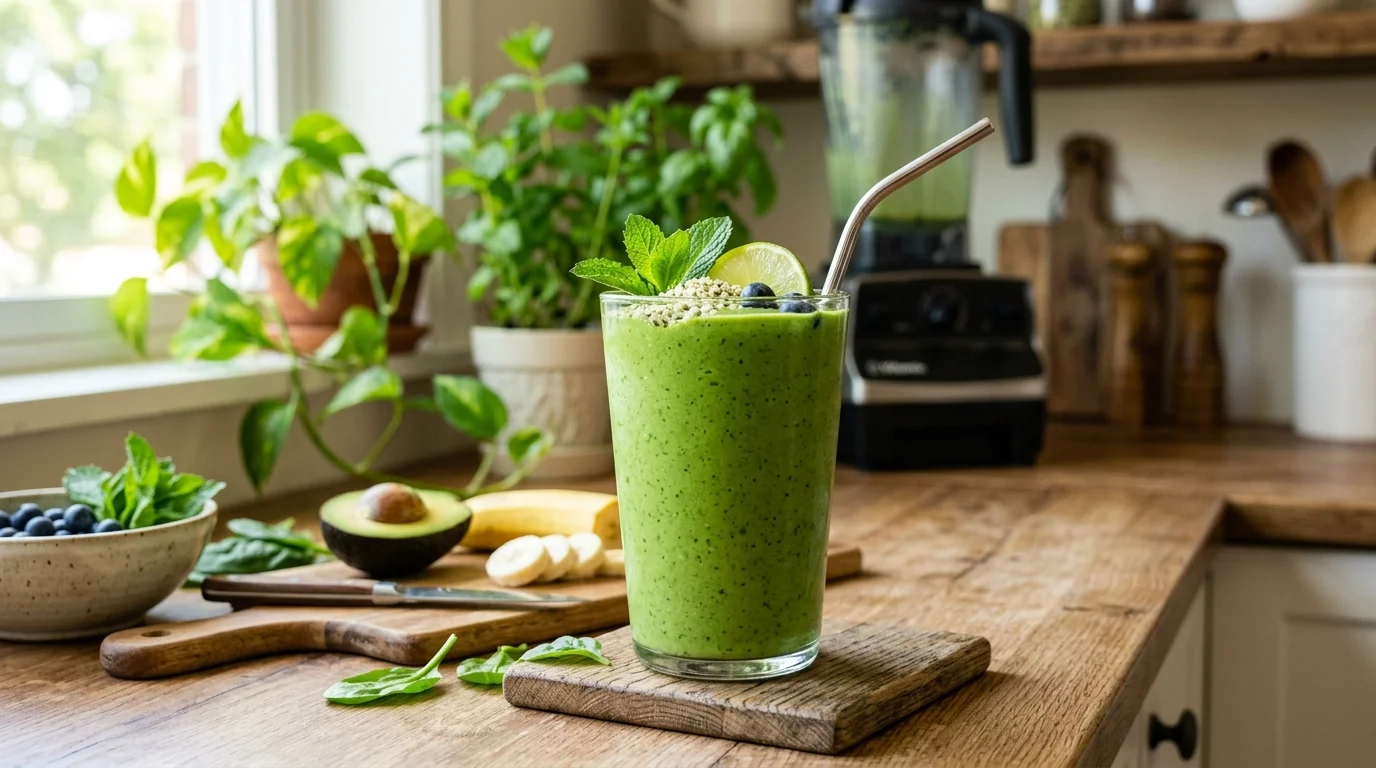
Green smoothies pack an extraordinary amount of vitamins, minerals, fiber, and plant-based antioxidants into a single drinkable glass. They are fast enough for a weekday morning, filling enough to replace a full breakfast, and flexible enough to match virtually any dietary goal — whether you are focused on weight loss, muscle recovery, immune support, or simply getting more vegetables into your daily routine.
In this guide, you will find 10 of the best green smoothie recipes — from simple beginner-friendly blends to high-protein post-workout builds — along with complete ingredient breakdowns, expert tips, health benefits, storage guidance, and every answer you need to make perfect green smoothies every single time.
📖 Read More: 15 Smoothie Recipes Healthy Enough to Replace Your Breakfast (And Taste Amazing)
What Is a Green Smoothie and Why Should You Drink One?
A green smoothie is a blended drink made primarily from leafy green vegetables — most commonly spinach, kale, or Swiss chard — combined with fruits, a liquid base, and optional boosters like yogurt, protein powder, seeds, or nut butter. The defining characteristic is the inclusion of whole raw greens, which turn the smoothie its signature green color.
What makes green smoothies genuinely powerful from a nutrition standpoint is the combination of two things that most people struggle to consume enough of daily: leafy vegetables and whole fruits. Together they provide:
- A complete range of fat-soluble vitamins (A, E, K) and water-soluble vitamins (C, B-complex, folate)
- Dietary fiber for digestive health and satiety
- Natural plant pigments — chlorophyll, carotenoids, anthocyanins — with proven antioxidant and anti-inflammatory effects
- Potassium, magnesium, calcium, and iron from whole food sources rather than supplements
- Natural sugars from fruit, paired with fiber to slow absorption and prevent blood sugar spikes
Unlike green juices, green smoothies retain all of the fiber from both the fruits and vegetables, making them far more filling and far better for digestive health.
📖 Read More: Strawberry Smoothie Recipe – Sweet, Creamy & Ready in 5 Minutes
The Best Greens to Use in a Smoothie (And Which to Avoid)
Not all leafy greens behave the same way in a blender. Here is a complete guide to choosing the right green for your smoothie:
✅ Best Greens for Smoothies
Baby Spinach — Best for Beginners Baby spinach is the most popular green smoothie ingredient for very good reason. It has an extremely mild, almost neutral flavor that disappears completely against the sweetness of fruit. It blends into a perfectly smooth texture in any standard blender, and it delivers impressive nutrition: Vitamin K, folate, iron, calcium, and the antioxidant lutein. If you are new to green smoothies, always start with spinach.
Baby Kale — Best for Nutrition Density Kale is more nutritionally dense than spinach — higher in Vitamins C, K, and A, and richer in calcium. Baby kale has a milder flavor than mature kale and blends more smoothly. Use a high-powered blender for best results. The flavor is slightly more earthy than spinach, which pairs particularly well with citrus fruits, mango, and pineapple.
Swiss Chard — Best for a Mild, Sweet Note Swiss chard has a slightly sweet, mild flavor that makes it one of the friendliest greens for smoothie beginners. It blends well and pairs beautifully with berry-based smoothies. It is rich in magnesium, potassium, and Vitamins C and E.
Romaine Lettuce — Best for Hydration Romaine is 95% water, which makes it a fantastic low-calorie addition for hydrating green smoothies. It has an extremely neutral flavor and blends into a light, refreshing texture. Pairs especially well with cucumber, mint, and citrus.
Cucumber — Best for a Light, Refreshing Smoothie Technically a vegetable rather than a leafy green, cucumber is one of the best additions to a green smoothie for hydration, a crisp fresh flavor, and a beautiful light green color. It contains silica, which supports skin and joint health, and adds almost zero calories.
⚠️ Greens to Use Carefully
Mature Kale: Blends less smoothly in standard blenders and has a pronounced bitter flavor. Use baby kale or blanch mature kale first. Arugula: Very peppery and assertive — can easily overpower the fruit. Use sparingly (1–2 leaves max) or skip if sensitive to bitter flavors. Collard Greens: Fibrous and tough — only suitable for very high-powered blenders like Vitamix or Blendtec. The flavor is strong and requires generous fruit to balance.
Essential Ingredients for a Great Green Smoothie
Every excellent green smoothie recipe is built on the same four-part foundation:
| Component | Role | Best Options |
|---|---|---|
| Leafy Greens (1–2 cups) | Nutrition, color | Baby spinach, baby kale, romaine, Swiss chard |
| Fruit (1–1½ cups) | Natural sweetness, flavor, creaminess | Banana, mango, pineapple, strawberry, apple |
| Liquid Base (½–1 cup) | Blending medium, texture control | Almond milk, oat milk, coconut water, orange juice, plain water |
| Boosters (optional) | Protein, healthy fats, extra nutrition | Greek yogurt, protein powder, chia seeds, flaxseed, nut butter, ginger |
The Golden Ratio for Beginners: 60% fruit + 40% greens. This ratio gives you a smoothie that is genuinely green in color but tastes overwhelmingly fruity — exactly what most people want when they are getting started.
As your palate adjusts over time, you can shift toward 50/50 or even 40% fruit + 60% greens for a deeper nutritional punch with a more vegetal flavor profile.
10 Best Green Smoothie Recipes
🥬 Recipe 1: The Classic Beginner Green Smoothie
Best for: First-timers, kids, anyone new to green smoothies Flavor Profile: Sweet, mild, fruity — almost no detectable green flavor
Ingredients (1 serving):
- 1 cup baby spinach
- 1 ripe banana (frozen for thickness)
- ½ cup frozen mango chunks
- ¾ cup almond milk or oat milk
- ½ tsp honey (optional)
Instructions:
- Add almond milk to blender first
- Add banana and mango
- Add spinach on top
- Blend on low for 10 seconds, then high for 45–60 seconds until smooth
- Taste and adjust sweetness; serve immediately
Nutrition (approx.): 220 kcal | 4g protein | 5g fiber | 85% Vitamin C
Why It Works: Frozen mango and banana create a naturally creamy, thick base that completely masks the mild spinach. This is the recipe that converts green smoothie skeptics. The color is vibrant green; the taste is entirely tropical.
📖 Read More: Mango Smoothie Recipe – Thick, Creamy & Bursting With Tropical Flavor
🍓 Recipe 2: Strawberry Spinach Green Smoothie
Best for: Berry lovers, post-workout recovery, immune support Flavor Profile: Bright, fruity, tangy — the strawberry dominates completely
Ingredients (1 serving):
- 1½ cups baby spinach
- 1 cup frozen strawberries
- ½ ripe banana
- ½ cup plain Greek yogurt
- ½ cup oat milk
- Juice of ¼ lemon
- ½ tsp vanilla extract
Instructions:
- Add oat milk and Greek yogurt to blender
- Add banana, vanilla, and lemon juice
- Add frozen strawberries and spinach on top
- Blend on low 15 seconds, then high for 60 seconds until completely smooth
- Pour into a chilled glass and serve immediately
Nutrition (approx.): 255 kcal | 13g protein | 7g fiber | 120% Vitamin C
Why It Works: Strawberries are so assertive in flavor — bright, tangy, and sweet — that even a generous handful of spinach disappears entirely. The Greek yogurt adds protein and a silky thickness. The lemon brightens everything. This is one of the most nutritionally complete single-serving green smoothie recipes you can make.
📖 Read More: Strawberry Smoothie Recipe – Sweet, Creamy & Ready in 5 Minutes
🍋 Recipe 3: Tropical Green Detox Smoothie
Best for: Detox, digestion support, morning energy boost Flavor Profile: Tropical, citrusy, light and refreshing
Ingredients (1 serving):
- 1 cup baby kale or baby spinach
- ½ cup frozen pineapple chunks
- ½ cup frozen mango chunks
- ½ cup cucumber, roughly chopped
- ¾ cup coconut water
- Juice of ½ lime
- 1 tsp fresh ginger, grated (or ¼ tsp ground ginger)
- Small handful of fresh mint leaves (optional)
Instructions:
- Add coconut water to blender
- Add cucumber, mango, pineapple, lime juice, and ginger
- Add kale and mint on top
- Blend on low 15 seconds, then high for 60 seconds
- Taste — add a little honey if needed — and serve over ice
Nutrition (approx.): 175 kcal | 3g protein | 6g fiber | 140% Vitamin C
Why It Works: Pineapple contains bromelain, a natural digestive enzyme. Ginger is a powerful anti-inflammatory. Coconut water provides natural electrolytes. Together they create a light, genuinely detoxifying green smoothie that feels as good as it tastes. The tropical fruits completely override the kale flavor.
🥑 Recipe 4: Creamy Avocado Green Smoothie
Best for: Healthy fats, sustained energy, skin health, keto-friendly adaptation Flavor Profile: Rich, creamy, mildly sweet — almost dessert-like
Ingredients (1 serving):
- 1 cup baby spinach
- ½ ripe avocado
- 1 frozen banana
- ¾ cup almond milk or coconut milk
- 1 tbsp honey or maple syrup
- ½ tsp vanilla extract
- Juice of ¼ lime
- 3–4 ice cubes
Instructions:
- Add almond milk to blender first
- Add avocado, banana, honey, vanilla, and lime juice
- Add spinach and ice on top
- Blend on low 10 seconds, then high for 60 seconds
- The smoothie will be exceptionally thick — thin with extra milk if preferred
Nutrition (approx.): 320 kcal | 5g protein | 10g fiber | 22g healthy fats
Why It Works: Avocado is arguably the best creaminess agent in all of smoothie-making — richer even than banana, with a completely neutral flavor that takes on whatever fruits and flavorings surround it. The result is a green smoothie with a texture closer to soft-serve ice cream than a standard blended drink. Rich in heart-healthy monounsaturated fats and fiber.
🏋️ Recipe 5: High-Protein Green Smoothie
Best for: Post-workout recovery, muscle building, meal replacement Flavor Profile: Creamy vanilla with mild fruit notes
Ingredients (1 serving):
- 1 cup baby spinach
- 1 frozen banana
- ½ cup frozen mango
- 1 scoop vanilla protein powder (whey or plant-based)
- ½ cup plain Greek yogurt
- ¾ cup oat milk
- 1 tbsp almond butter
- 1 tsp chia seeds
Instructions:
- Add oat milk to blender
- Add Greek yogurt, almond butter, chia seeds, and protein powder
- Add banana and mango
- Add spinach on top
- Blend high for 60–75 seconds until completely smooth and creamy
Nutrition (approx.): 420 kcal | 38g protein | 9g fiber | Excellent source of potassium and calcium
Why It Works: The combination of Greek yogurt + protein powder + almond butter delivers close to 40g of complete protein per serving — equivalent to 6 eggs. The banana and mango provide fast-acting carbohydrates that help transport amino acids into muscle tissue post-workout. This is a genuinely complete post-workout meal replacement in one glass.
⚖️ Recipe 6: Green Smoothie for Weight Loss
Best for: Calorie control, weight management, high satiety on low calories Flavor Profile: Light, fruity, refreshing — clean and bright
Ingredients (1 serving):
- 2 cups baby spinach (generous — extra fiber and volume)
- 1 cup frozen strawberries
- ½ cup cucumber, chopped
- 1 cup unsweetened almond milk
- 1 tbsp chia seeds
- Juice of ½ lemon
- ½ tsp vanilla extract
- 3–4 ice cubes
- No banana, no honey, no yogurt
Instructions:
- Add almond milk to blender
- Add cucumber, chia seeds, vanilla, and lemon juice
- Add frozen strawberries and spinach on top
- Add ice
- Blend high for 60 seconds — the chia seeds thicken the smoothie naturally
Nutrition (approx.): 145 kcal | 5g protein | 11g fiber | 120% Vitamin C
Why It Works: At just 145 calories, this smoothie is remarkably filling because of its extraordinary fiber content — 11g per serving from the spinach, chia seeds, strawberries, and cucumber combined. Dietary fiber slows gastric emptying, meaning this smoothie genuinely keeps you full for 3–4 hours. It is one of the most effective low-calorie, high-satiety breakfast options available.
📖 Read More: 15 Smoothie Recipes Healthy Enough to Replace Your Breakfast (And Taste Amazing)
🍏 Recipe 7: Apple Ginger Green Smoothie
Best for: Immune support, digestion, anti-inflammatory benefits, autumn/winter Flavor Profile: Crisp, slightly spiced, apple-forward with a warming ginger kick
Ingredients (1 serving):
- 1 cup baby spinach or romaine lettuce
- 1 green apple, cored and roughly chopped (fresh)
- ½ frozen banana
- 1 tsp fresh ginger, grated
- ½ cup coconut water
- ½ cup plain Greek yogurt
- Juice of ½ lemon
- Pinch of cinnamon
Instructions:
- Add coconut water and Greek yogurt to blender
- Add apple chunks, banana, ginger, and lemon juice
- Add spinach and cinnamon on top
- Blend high for 60 seconds
- For maximum smoothness, strain through a fine mesh sieve if using a standard blender
Nutrition (approx.): 240 kcal | 10g protein | 8g fiber | 60% Vitamin C
Why It Works: Green apple provides natural tartness and pectin fiber. Ginger is one of the most studied natural anti-inflammatory and digestive aids in the world. Cinnamon helps regulate blood sugar response. Together, they create a warming, immunity-supportive smoothie that works especially well during the colder months when tropical fruits feel out of season.
🌿 Recipe 8: Cucumber Mint Green Smoothie
Best for: Hydration, summer heat, post-exercise refreshment, glowing skin Flavor Profile: Clean, cool, minty, refreshing — almost spa-like
Ingredients (1 serving):
- 1 cup romaine lettuce or baby spinach
- 1 cup cucumber, chopped (approximately ½ large cucumber)
- ½ frozen banana
- ½ cup frozen pineapple
- ¾ cup coconut water
- Small handful of fresh mint leaves (10–12 leaves)
- Juice of ½ lime
- 4–5 ice cubes
Instructions:
- Add coconut water to blender
- Add banana, pineapple, lime juice, and mint
- Add cucumber and romaine on top
- Add ice
- Blend high for 60 seconds and serve immediately over ice in a tall glass
Nutrition (approx.): 160 kcal | 3g protein | 5g fiber | Excellent electrolyte profile
Why It Works: Cucumber is 95% water — one of the most hydrating whole foods available. Coconut water provides natural sodium and potassium — the two key electrolytes lost in sweat. Mint stimulates digestion and adds a cooling sensation. This is the single most refreshing green smoothie in this list, perfect for hot days and post-exercise rehydration.
🫐 Recipe 9: Blueberry Kale Green Smoothie
Best for: Brain health, antioxidant loading, anti-aging, eye health Flavor Profile: Deep, rich berry flavor with earthy undertones — bold and satisfying
Ingredients (1 serving):
- 1 cup baby kale
- ¾ cup frozen blueberries
- ½ frozen banana
- ½ cup plain Greek yogurt
- ½ cup almond milk
- 1 tbsp flaxseed (ground)
- ½ tsp vanilla extract
Instructions:
- Add almond milk and Greek yogurt to blender
- Add banana, vanilla, and ground flaxseed
- Add frozen blueberries and kale on top
- Blend high for 60–75 seconds — kale requires a longer blend time than spinach
- If chunks remain, blend an additional 30 seconds
Nutrition (approx.): 290 kcal | 14g protein | 9g fiber | Exceptional antioxidant content
Why It Works: Blueberries rank among the highest-antioxidant foods on the planet — rich in anthocyanins linked to improved memory, reduced cognitive decline, and cardiovascular protection. Kale delivers Vitamins K, C, and A plus calcium. Ground flaxseed adds omega-3 fatty acids and lignans (plant compounds with hormonal balancing properties). This is arguably the most nutritionally impressive green smoothie recipe in this entire list.
🌴 Recipe 10: Coconut Mango Green Smoothie (Tropical Green)
Best for: Tropical flavor lovers, dairy-free and vegan diets, mood boost Flavor Profile: Creamy, tropical, coconut-forward — like a healthy piña colada
Ingredients (1 serving):
- 1 cup baby spinach
- 1 cup frozen mango chunks
- ½ frozen banana
- ½ cup coconut yogurt (dairy-free)
- ½ cup coconut milk (light)
- Juice of ½ lime
- ½ tsp turmeric powder (optional — anti-inflammatory booster)
- Pinch of black pepper (activates turmeric’s curcumin by 2,000%)
Instructions:
- Add coconut milk and coconut yogurt to blender
- Add banana, lime juice, turmeric, and black pepper
- Add frozen mango and spinach on top
- Blend high for 60 seconds until smooth and creamy
- Pour into a glass and garnish with toasted coconut flakes
Nutrition (approx.): 265 kcal | 5g protein | 7g fiber | 80% Vitamin C | powerful anti-inflammatory profile
Why It Works: Mango is one of the best fruits for masking green flavor — its intense tropical sweetness is assertive enough to dominate any leafy green. Coconut yogurt makes this fully vegan and dairy-free while maintaining a rich, creamy texture. The optional turmeric and black pepper combination adds a meaningful anti-inflammatory boost with virtually no detectable flavor change.
📖 Read More: Mango Smoothie Recipe – Thick, Creamy & Bursting With Tropical Flavor
Complete Health Benefits of Green Smoothies
🌿 Why Green Smoothies Are Genuinely Good for You
1. Dramatically increases vegetable intake Most adults fall significantly short of the recommended 2–3 cups of vegetables per day. A single green smoothie containing two cups of spinach or kale covers that target before 9 AM — without any cooking, without any meal planning, and without having to taste a salad at breakfast.
2. Exceptional fiber content Green smoothies retain all dietary fiber from both the fruits and vegetables used — unlike green juices, which remove it during the pressing process. A well-made green smoothie delivers 7–11g of dietary fiber per serving, supporting healthy digestion, gut microbiome diversity, healthy cholesterol levels, and sustained satiety.
3. Rich in fat-soluble vitamins Vitamins A, E, and K are fat-soluble, meaning your body can only absorb them properly in the presence of dietary fat. When you blend greens with ingredients like avocado, almond butter, chia seeds, or full-fat yogurt, you dramatically increase the bioavailability of these vitamins compared to eating the raw greens alone.
4. Natural energy without caffeine The combination of B-vitamins from leafy greens, natural sugars from fruit, and magnesium supports cellular energy production (ATP synthesis) — providing a clean, sustained energy lift without the cortisol spike and subsequent crash associated with caffeine.
5. Skin and collagen support The Vitamin C from fruit and greens is an essential cofactor for collagen synthesis. The Vitamin K from leafy greens supports skin elasticity and wound healing. The antioxidants from both — particularly Vitamin E, beta-carotene, and anthocyanins — protect skin cells from UV and oxidative damage.
6. Gut health and the microbiome The diverse plant fiber in a green smoothie acts as prebiotic food for beneficial gut bacteria. Studies consistently show that dietary diversity — eating a wide range of different plants — is one of the most powerful predictors of microbiome health. A single green smoothie can contribute 4–6 different plant species to your daily total.
Expert Tips for the Best Green Smoothie Every Time
Start with more fruit, less green — then gradually shift the ratio as your palate adjusts over days and weeks. Most people who try a 50/50 green-to-fruit ratio on day one dislike it. Start at 30% greens and work up.
Always add liquid first — this creates the vortex that pulls all other ingredients into the blades evenly and prevents the dreaded air pocket that causes the blender to stall.
Use frozen fruit for thickness — frozen mango, frozen banana, and frozen strawberries all contribute to a thick, frosty consistency. Fresh fruit produces a thinner, less cold, less satisfying result.
Blend longer than you think necessary — greens, especially kale, require 60–90 seconds of high-speed blending to break down completely. Any visible green flecks in your smoothie mean the leafy material has not been fully processed.
Add a pinch of salt — a tiny pinch of fine sea salt (⅛ tsp) added before blending amplifies the perceived sweetness of fruit significantly and rounds out the flavor in a way that is difficult to identify but immediately noticeable. This technique is used by professional chefs across all sweet preparations.
Freeze your greens — if baby spinach in your fridge is about to go off, freeze it before it wilts. Frozen spinach blends just as well as fresh and retains full nutritional value. This also chills your smoothie without adding watery ice.
Add a citrus element — a squeeze of lemon, lime, or orange juice brightens the entire flavor profile and prevents oxidative browning that can make green smoothies look gray or brown within an hour. Citrus is both a flavor enhancer and a natural preservative.
Nutritional Comparison: All 10 Green Smoothie Recipes at a Glance
| Recipe | Calories | Protein | Fiber | Best For |
|---|---|---|---|---|
| 1. Classic Beginner | 220 kcal | 4g | 5g | First-timers, kids |
| 2. Strawberry Spinach | 255 kcal | 13g | 7g | Immune support |
| 3. Tropical Detox | 175 kcal | 3g | 6g | Digestion, detox |
| 4. Creamy Avocado | 320 kcal | 5g | 10g | Healthy fats, skin |
| 5. High-Protein | 420 kcal | 38g | 9g | Post-workout |
| 6. Weight Loss | 145 kcal | 5g | 11g | Calorie control |
| 7. Apple Ginger | 240 kcal | 10g | 8g | Immunity, digestion |
| 8. Cucumber Mint | 160 kcal | 3g | 5g | Hydration, summer |
| 9. Blueberry Kale | 290 kcal | 14g | 9g | Brain health, antioxidants |
| 10. Coconut Mango | 265 kcal | 5g | 7g | Vegan, tropical |
Storage and Meal Prep
How to Store a Green Smoothie
Green smoothies are always best within the first 5–10 minutes of blending when texture, color, and flavor are at their peak. If you need to store:
- Refrigerator: Pour into a sealed mason jar filled to the very top (minimizing air contact) and refrigerate for up to 24 hours. Add a squeeze of lemon juice before sealing to slow oxidation and preserve the color. Shake well before drinking.
- Do not freeze pre-blended: Freezing and thawing a blended smoothie destroys the emulsified texture and produces a watery, separated result.
Make-Ahead Green Smoothie Packs
The smartest way to drink green smoothies every day without morning effort:
- Portion your greens (1–2 cups) + fruit + any dry add-ins (chia seeds, flaxseed, protein powder) into individual zip-lock freezer bags
- Label each bag with the recipe name and date
- Freeze for up to 3 months
- Each morning: empty one bag into your blender, add liquid and any fresh/refrigerated ingredients (yogurt, avocado), and blend for 60 seconds
Prep 7 bags on Sunday. The rest of the week, your healthy green smoothie is literally 90 seconds away every single morning.
Common Mistakes to Avoid
Putting liquid in last: Always liquid first — this is the single most common blending mistake.
Using mature kale in a standard blender: Mature kale is fibrous and tough. A standard blender will leave unblended green chunks. Use baby kale or baby spinach unless you own a Vitamix or equivalent high-powered machine.
Adding too many “healthy” ingredients at once: Chia seeds + flaxseed + protein powder + spirulina + matcha + five different vegetables in one smoothie creates a muddled, unpleasant flavor. Pick 1–2 boosters per smoothie, maximum.
Not tasting before serving: Fruits vary enormously in sweetness depending on ripeness and season. Always taste and adjust before pouring — a tiny amount of honey, a squeeze of lemon, or a pinch of salt can completely transform an average smoothie into an excellent one.
Blending too briefly: Green smoothies need a full 60 seconds of high-speed blending minimum. Stopping at 20–30 seconds leaves leafy fibrous pieces that create an unpleasant mouthfeel, especially with kale.
Using too much liquid: A common mistake when the blender is struggling. Add liquid in small increments — 2 tablespoons at a time — and blend briefly between additions. Too much liquid turns a thick, creamy smoothie into a thin, unsatisfying drink.
Conclusion
Green smoothie recipes are not a health trend — they are one of the most practical and genuinely effective ways to nourish your body daily. In the time it takes to brew a cup of coffee, you can blend a breakfast that delivers two full servings of vegetables, a complete range of vitamins and minerals, meaningful protein, and enough fiber to keep you comfortably full for hours.
The 10 recipes in this guide cover every preference, goal, and lifestyle — from the lightest, most beginner-friendly tropical blend to a 38g-protein post-workout powerhouse. Start with the recipe that sounds most appealing to you. Master the basic technique, build the freezer pack habit, and within two weeks it will become the kind of daily routine you genuinely look forward to.
Pick up a bag of frozen spinach, a bag of frozen mango, and a bunch of bananas — and you are already 90% of the way there.
Frequently Asked Questions (FAQs)
Q: Do green smoothies actually taste like vegetables? No — when made correctly, green smoothies taste overwhelmingly like the fruit used to make them. Baby spinach has virtually no flavor, and baby kale’s mild earthiness disappears against sweet tropical fruits. The recipes in this guide are specifically designed so that even confirmed vegetable-haters enjoy them completely.
Q: Is it safe to drink a green smoothie every day? Yes, for most healthy adults. However, if you use raw kale, chard, or other high-oxalate greens daily, consider rotating your greens regularly (spinach one day, romaine another, cucumber the next) to avoid accumulating oxalates, which can contribute to kidney stones in susceptible individuals. Spinach is safe for daily use.
Q: Are green smoothies good for weight loss? Genuinely yes — when made without excessive calorie-dense add-ins. Recipe 6 in this guide delivers just 145 calories with 11g of fiber and 5g of protein, which makes it one of the most satiating low-calorie breakfasts possible. The key is choosing the right recipe for your calorie goals.
Q: Can I use frozen spinach instead of fresh? Yes — frozen spinach works well in smoothies and is actually more convenient and often more nutritious than fresh spinach that has been sitting in the refrigerator for several days. Use ½ cup frozen spinach in place of 1 cup fresh, as frozen spinach is more compressed.
Q: Do I need a high-powered blender for green smoothies? Not necessarily. Baby spinach, baby kale, romaine, cucumber, and most soft fruits blend perfectly well in a standard countertop blender. You only need a high-powered blender (Vitamix, Blendtec) for mature kale, collard greens, or very fibrous vegetables. Start with baby spinach — it works in literally any blender.
Q: Can I add protein powder to a green smoothie? Yes — and it works very well. Vanilla protein powder (whey or plant-based) blends seamlessly with the fruit flavors and does not alter the texture significantly. Add 1 scoop per serving and reduce liquid by 2 tablespoons to maintain consistency. See Recipe 5 for a fully optimized high-protein green smoothie build.
Q: How do I prevent my green smoothie from turning brown? Add a squeeze of lemon or lime juice before blending. The ascorbic acid (Vitamin C) in citrus juice acts as a natural antioxidant that prevents the enzymatic browning (oxidation) that turns blended fruit and greens brown or gray within 30–60 minutes. Storing in a fully sealed jar with minimal air also slows oxidation significantly.
Q: Can kids drink green smoothies? Absolutely — and this is one of the most effective strategies for increasing children’s vegetable intake. Start with Recipe 1 (Classic Beginner) using only baby spinach, banana, mango, and oat milk. The color is exciting and novel for children; the flavor is entirely fruity and sweet. Most children enjoy it enthusiastically once they taste it.