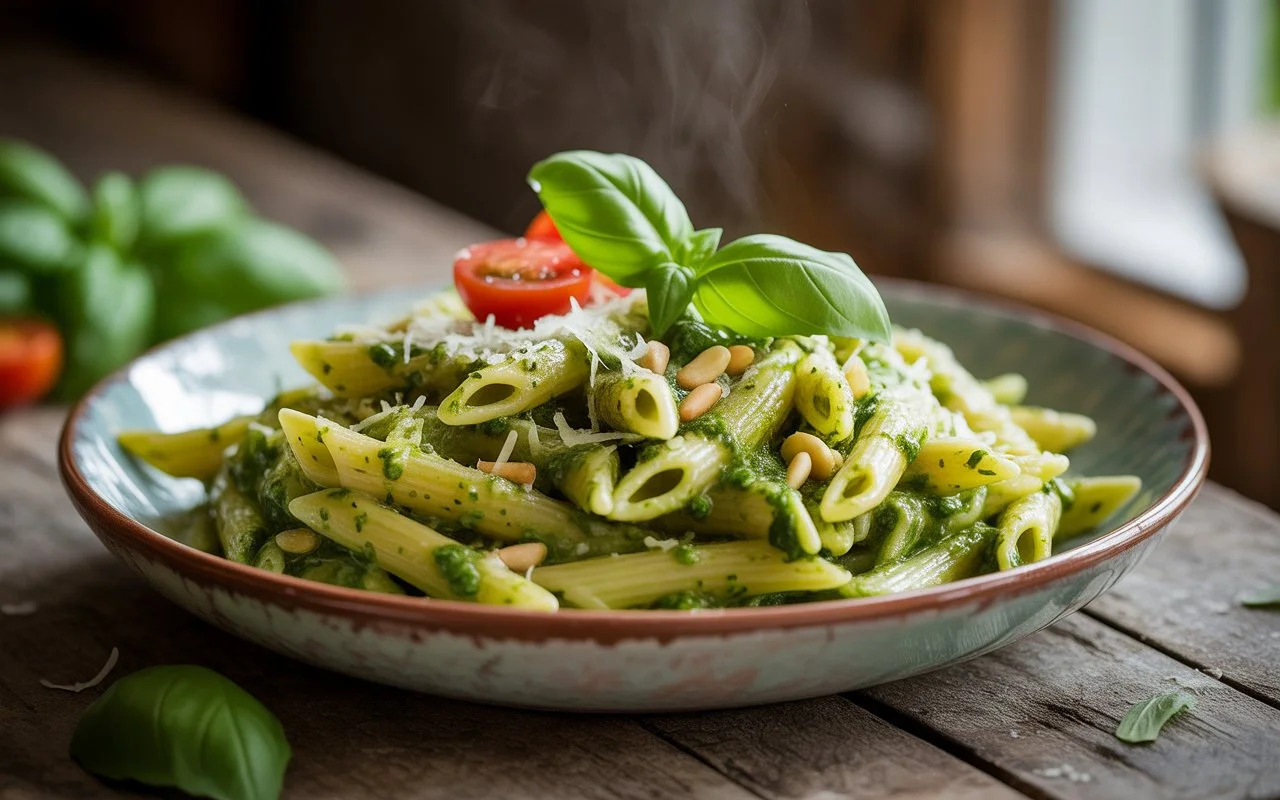
Pesto Pasta Fresh, Vibrant & Ready in 20 Minutes
Pesto pasta is the kind of dish that proves simple food done well will always outperform complicated food done adequately. A handful of fresh basil, good olive oil, garlic, Parmesan, and pine nuts blended into a silky green sauce and tossed through perfectly cooked pasta is one of the most complete, satisfying meals you can put on the table in under 20 minutes.
There are no shortcuts that meaningfully improve it and very few additions that are actually necessary the dish is already whole exactly as it is. Whether you’re making it for a quick weeknight dinner, a weekend lunch that needs to impress without any real effort, or a meal prep base that works cold the next day, pesto pasta delivers every single time. No complicated steps — just pure pesto pasta freshness in a bowl, done right in 20 minutes flat.
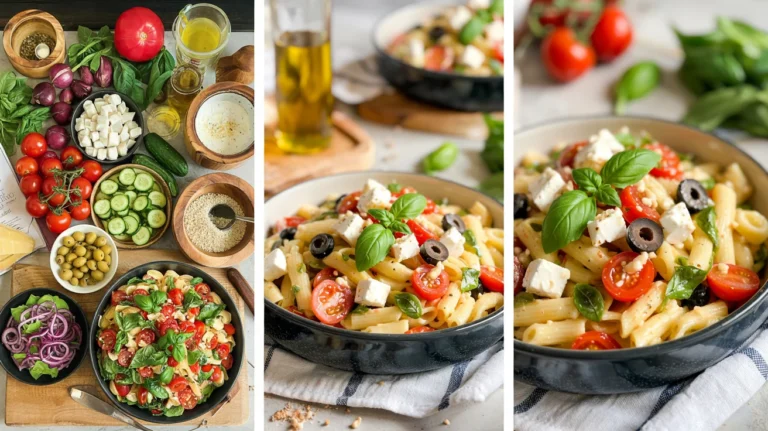
Ingredients
For the Homemade Basil Pesto:
- 2 cups fresh basil leaves, tightly packed [stems removed]
- ½ cup extra virgin olive oil [good quality — it’s the backbone of the sauce]
- ⅓ cup freshly grated Parmesan cheese [plus more for serving]
- ¼ cup toasted pine nuts [or toasted walnuts — more affordable and equally good]
- 3 cloves garlic, roughly chopped
- 1 tbsp fresh lemon juice
- ½ tsp fine salt [adjust to taste]
- ¼ tsp black pepper
- 2–3 tbsp reserved pasta water [to loosen and finish the sauce]
For the Pasta:
- 400g (14 oz) spaghetti, linguine, trofie, or fusilli
- 1 tbsp fine salt [for the pasta water]
Optional Add-Ins:
- 1 cup cherry tomatoes, halved — added fresh on top (optional)
- ½ cup fresh or frozen peas, thawed (optional)
- 1 cup baby spinach or arugula, wilted in (optional)
- 150g (5 oz) grilled chicken breast, sliced (optional)
- 100g (3.5 oz) fresh mozzarella, torn (optional)
- Toasted pine nuts, extra, for garnish (optional)
- Crispy pancetta or bacon bits (optional)
- Lemon zest, for finishing (optional)
Step-by-Step Instructions
Step 1: Gather and Prep Your Ingredients
Pull everything out before the water goes on. Strip the basil leaves from their stems, roughly chop the garlic, zest and juice the lemon, and measure the olive oil and Parmesan. Toast the pine nuts in a dry pan over medium heat for 2–3 minutes, stirring constantly, until they turn golden and fragrant — they go from golden to burnt in under 30 seconds so don’t walk away. Set them aside to cool completely before blending. If you’re adding any optional proteins or vegetables, prep and cook them now so they’re ready the moment the pasta is done. The pesto pasta comes together very fast at the end — everything being ready before the pasta hits the water is what keeps the whole process smooth and the sauce vibrant.
Pro Tip: Keep the basil leaves dry and whole until the very moment they go into the blender. Wet or bruised basil oxidises rapidly and turns the pesto from a bright, vivid green to a dull olive brown before it even hits the pasta. Dry basil handled gently right up until blending produces a pesto with the best colour and the longest shelf life in the refrigerator.
Step 2: Make the Homemade Pesto
Add the fresh basil, garlic, cooled toasted pine nuts, grated Parmesan, lemon juice, salt, and pepper to a blender or food processor. Pour the extra virgin olive oil over everything. Blend on high for 60–90 seconds, stopping once to scrape down the sides, until the sauce is completely smooth and a deep, consistent green. Taste carefully — it should be bright and herby, with the garlic present but not raw-tasting, the Parmesan adding savouriness and body, and the lemon providing a clean acidity that lifts the whole flavour. Adjust salt, lemon, or garlic as needed. Set the pesto aside at room temperature — refrigerating it before use causes it to seize up and coat the pasta unevenly when tossed.
Pro Tip: If the blender struggles to get the sauce moving, add the olive oil in a slow drizzle through the feed tube with the motor running rather than all at once. This gradual addition emulsifies the oil more completely into the basil and nut base and produces a smoother, creamier pesto than one where all the oil goes in at the start. A well-emulsified pesto clings to every strand of pasta — a poorly emulsified one sits oily and separated in the bowl.
Step 3: Cook the Pasta
Bring a large pot of water to a rolling boil and salt it heavily — it should taste like mild seawater. Add the pasta and cook to al dente according to package directions, checking 2 minutes before the stated time since you want the slightest bite remaining. The pasta finishes cooking in the residual heat of the pesto toss, so pulling it out 60–90 seconds early is not just acceptable — it’s the right call. Before draining, scoop out at least 1 full cup of the starchy pasta water and set it aside in a heatproof jug. This pasta water is the most important finishing ingredient in the dish — the starch it carries emulsifies with the olive oil in the pesto and transforms it from a thick, dense sauce into a glossy, fluid coating that moves freely around every strand.
Pro Tip: Pasta water salted at the correct level — generously — seasons the pesto pasta from the inside of each strand out. The pesto seasons the exterior. A pasta strand that was cooked in well-salted water tastes complete in a way that unsalted pasta never does regardless of how good the sauce is. Salt the water before it boils, taste it, and add more if it doesn’t taste meaningfully seasoned.
📖 Read More: Make Chicken Pasta Recipes
Step 4: Toss the Pasta With the Pesto
Drain the pasta and return it immediately to the warm, empty pot or transfer to a large wide bowl. Add the pesto directly over the hot pasta without any delay — the residual heat of the pasta is what loosens the sauce and helps it coat every strand evenly. Toss vigorously with tongs for 60–90 seconds, lifting from the bottom and turning through continuously. Add the reserved pasta water a few tablespoons at a time as you toss — the starchy water binds with the oil in the pesto and creates an emulsified, glossy coating that clings rather than pooling at the bottom of the bowl. Start with 3 tablespoons and add more until the sauce moves freely around every strand and the bowl looks uniformly green and glossy with no dry patches.
Pro Tip: Never add pesto to pasta over direct heat — the heat of the burner is too intense for a raw herb sauce and causes the basil to oxidise rapidly, turning the vibrant green sauce brown within seconds. The residual warmth of the drained pasta is exactly the right temperature to loosen and distribute the pesto without cooking it. Off heat, generous pasta water, and continuous tossing — that combination is everything.
Step 5: Taste and Fine-Tune
Before the pesto pasta goes anywhere near a plate, taste a full strand and adjust. Does it need more salt? Add a small pinch directly to the bowl and toss once more. Does it taste one dimension short of where it should be? A small extra squeeze of fresh lemon juice — no more than a teaspoon — almost always resolves it. Lemon is the element that separates a pesto pasta that tastes good from one that tastes genuinely alive. Fold in any optional add-ins now — thawed peas go directly into the hot pasta and warm through from the residual heat; fresh cherry tomatoes should be added raw at this stage so they stay bright and intact; baby spinach wilts in beautifully with a single toss through the warm pasta.
Pro Tip: Grate a small extra amount of Parmesan directly over the pasta in the tossing bowl before transferring to plates and toss once more. This final Parmesan addition melts slightly from the heat and thickens the sauce fractionally, adding a layer of savouriness that makes the whole dish feel more complete and rounded than the pesto alone delivers.
Step 6: Plate, Garnish, and Serve
Divide the pesto pasta between warm plates or bowls using tongs — twirl portions upward as you lift for height and visual appeal rather than scooping flat. Top each portion with extra freshly grated Parmesan, a small handful of toasted pine nuts, a few fresh whole basil leaves, and a final drizzle of good extra virgin olive oil across the top. Add cherry tomatoes, torn fresh mozzarella, or sliced grilled chicken if using. Finish with a thin curl of lemon zest and a crack of black pepper. Serve immediately — pesto pasta is at its absolute best the moment it’s plated, while every strand is warm, glossy, and fragrant with fresh basil.
Pro Tip: Warm the serving bowls or plates before plating by filling them with hot tap water for 60 seconds, then emptying and drying quickly. A warm plate keeps pesto pasta at the correct eating temperature from the first forkful to the last — cold plates pull heat from the pasta rapidly and the dish becomes lukewarm before it’s half finished, which affects both the flavour and the texture of the sauce.
Cook Time
Total Time: 20 minutes | Prep: 8 minutes | Pesto: 5 minutes | Cook: 10 minutes One blender, one pot — pesto pasta on the table in 20 minutes.
Servings
Serves 4 as a main course, or 6 as a starter portion.
Nutritional Information (approx. per serving — based on 4 servings, no optional add-ins)
| Nutrient | Amount |
|---|---|
| Calories | 610 kcal |
| Fat | 32g |
| Saturated Fat | 6g |
| Carbohydrates | 66g |
| Protein | 16g |
| Sugar | 3g |
| Fiber | 3g |
| Sodium | 480mg |
| Vitamin C | 8mg |
| Potassium | 280mg |
| Calcium | 180mg |
Values are approximate and will vary based on ingredients used.
Storage Instructions
Pesto pasta stores well and is genuinely worth making in a larger batch than you need on the day. Let the pasta cool completely before transferring to an airtight container — hot pasta sealed immediately traps steam that turns the sauce watery and makes the noodles soft. Refrigerate for up to 3 days. The pasta absorbs the pesto continuously as it sits, so leftover portions will look dry and dense when you open the container — this is expected and fully recoverable. Add a teaspoon of olive oil and a small splash of water to the container before reheating in a pan over medium-low heat with continuous tossing, or stir through before microwaving in 30-second intervals with a damp paper towel cover to introduce steam. A squeeze of fresh lemon juice and a fresh pinch of salt after reheating restores the brightness that fades during refrigeration — it is the single most impactful thing you can do to leftover pesto pasta. Pesto pasta also works excellently served cold — cold pasta absorbs the pesto more deeply overnight and often tastes more intensely flavoured than the freshly made version, making it a particularly practical meal prep option for weekday lunches eaten straight from the container. For the pesto sauce itself, store any leftover pesto in a sealed jar in the refrigerator with a thin layer of olive oil poured across the surface to prevent oxidation — it keeps for up to 5 days and extends to 2 months in the freezer. Freeze pesto in ice cube trays, transfer the solid cubes to a freezer bag, and thaw individual portions as needed — each cube is approximately one serving portion of sauce. Freezing the assembled pesto pasta is not recommended — the basil in the sauce turns brown and the pasta texture degrades on thawing.
Suggestions
- Pesto Pasta With Grilled Chicken: Slice 2 seasoned, grilled chicken breasts and lay them across each plated portion rather than mixing into the pasta. Season the chicken simply with olive oil, salt, pepper, and lemon zest before grilling so it complements rather than competes with the basil pesto. This is the most popular add-on to pesto pasta for a reason — the clean flavour of the chicken lets the sauce remain the star while adding a complete protein that turns the dish into a properly filling dinner.
- Pesto Pasta With Cherry Tomatoes and Mozzarella: Add 1 cup of halved cherry tomatoes and 100g of torn fresh mozzarella directly to the tossed pasta just before plating. The acidity of the tomatoes cuts through the richness of the pesto oil and the mozzarella adds a cool, milky creaminess that contrasts beautifully against the warm, herby pasta. This version is the Caprese-inspired build — minimal, ingredient-focused, and outstanding when the tomatoes are at peak season in July and August.
- Pesto Pasta With Peas and Pancetta: Cook 80g of diced pancetta in a dry pan until golden and crispy, then set aside on paper towels. Fold 1 cup of thawed frozen peas into the hot tossed pasta along with the crispy pancetta. The sweetness of the peas and the saltiness of the pancetta create a classic Italian pairing that works as naturally with pesto as it does with carbonara. This version is hearty enough for a cold-weather dinner without requiring any additional protein.
- Sun-Dried Tomato Pesto Pasta: Replace half the fresh basil in the pesto with ½ cup of drained, oil-packed sun-dried tomatoes before blending. The result is a deeper, more intense pesto with a pronounced sweetness and a rust-tinged colour that looks entirely different from the standard green version. Add extra Parmesan and an extra clove of garlic to compensate for the reduced basil volume. This version pairs particularly well with rigatoni or penne, where the sauce gets drawn inside the tubes.
- Vegan Pesto Pasta: Replace the Parmesan in the pesto with 3 tablespoons of nutritional yeast and an extra tablespoon of toasted pine nuts to compensate for the richness and savouriness of the missing cheese. Add a teaspoon of white miso paste to the blender for an extra layer of umami depth that nutritional yeast alone doesn’t fully deliver. The resulting pesto is completely dairy-free, genuinely flavourful, and indistinguishable from the original in texture and colour.
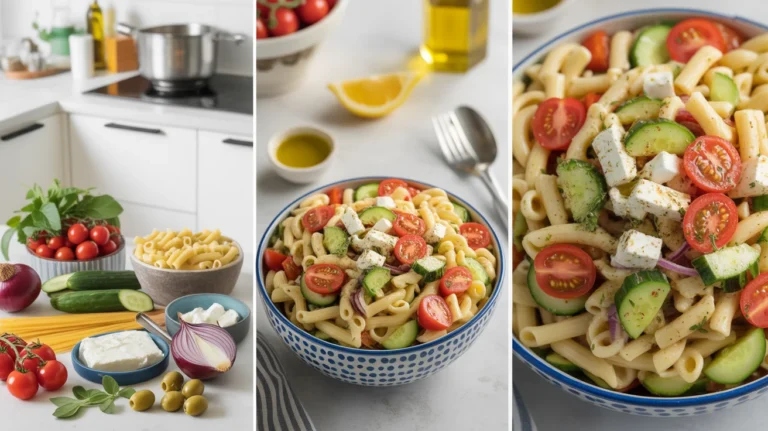
- Pesto Pasta Salad: Cook the pasta fully rather than al dente, rinse under cold water until completely cool, and toss with two-thirds of the pesto. Add halved cherry tomatoes, diced cucumber, sliced olives, and cubed provolone. Refrigerate for at least 30 minutes before serving and dress with the reserved pesto at the table. This cold version of pesto pasta works brilliantly as a potluck dish, a make-ahead lunch, or a side at a summer cookout that travels well and holds its flavour for hours.
- Whole Wheat or Legume Pasta Version: Swap standard pasta for whole wheat spaghetti or chickpea pasta for more fibre, more protein, and a lower glycaemic impact. The nuttier, more assertive flavour of whole wheat pasta pairs surprisingly well with a bold basil pesto — the earthiness of the pasta and the herbaceous brightness of the sauce complement each other rather than competing. Adjust pasta water quantity slightly as whole grain varieties tend to absorb more liquid than refined pasta during tossing.
- Weight-Loss Friendly Pesto Pasta: Reduce the olive oil in the pesto to 3 tablespoons and compensate with an extra tablespoon of lemon juice and 2–3 tablespoons of pasta water blended directly into the sauce for body and cohesion. Use 300g of pasta instead of 400g and bulk the bowl generously with 2 cups of baby spinach wilted through the hot pasta and 1 cup of halved cherry tomatoes added raw. Add a 100g portion of grilled chicken breast to each bowl for lean protein. Each serving comes in under 450 calories on this build while still delivering the full flavour impact of a proper pesto pasta bowl.
Seasonal Relevance
Pesto pasta is at its most exceptional from June through August when fresh basil is growing abundantly, intensely fragrant, and available at its most affordable. Peak summer basil — July and August specifically — has a sweetness and complexity that dried or out-of-season basil cannot replicate, and using it during those months in a pesto that showcases it as the primary flavour is one of the best uses of the summer herb garden or the market’s seasonal produce section. If you grow basil at home, pesto pasta is the recipe to make when the plant is at its most productive — the sauce uses a full two packed cups of leaves and can be made in large batches and frozen in ice cube trays to extend the season’s flavour into autumn and winter. From September through November, the pesto adapts well to a mix of basil and flat-leaf parsley as the basil becomes more expensive and less fragrant — the parsley adds a grassy depth that complements rather than replaces the basil and keeps the sauce bright through the transition into cooler weather. In winter and early spring, December through April, rely on baby spinach and parsley as the primary greens when fresh basil is either unavailable or flavourless and expensive — a spinach pesto with extra garlic and lemon produces a sauce that is less sweet and more savoury than a classic basil version but still entirely worth making on its own terms. The pasta component requires no seasonal adjustment whatsoever — only the herb base responds to what the season offers.
Conclusion
Pesto pasta earns its permanent place in the weeknight rotation because it is one of the rare dishes where the most minimal version is also the best version. Two minutes of blending, ten minutes of pasta cooking, and a generous toss with the right amount of pasta water — that is the entire recipe. Get the pesto bright and well-seasoned, cook the pasta properly, use the pasta water with a generous hand when tossing, and serve it the moment it’s plated. Then build out from there when the occasion calls for it — grilled chicken, fresh mozzarella, cherry tomatoes, crispy pancetta — each addition brings something real to the dish without disrupting the simplicity that makes it work. Make the classic version first, understand how the sauce should behave when it meets the pasta, and use that knowledge as the foundation for every variation you try after it. Pesto pasta done right is genuinely difficult to improve on, and that is exactly why it has earned its place on tables around the world for as long as it has.
FAQs
Q: Should I use store-bought or homemade pesto for pesto pasta? Homemade pesto produces a meaningfully better result than jarred store-bought — the flavour is brighter, the texture is silkier, and the colour is a vivid green rather than the muted, sometimes brownish tone that jarred versions develop during processing and storage. That said, a good quality refrigerated store-bought pesto — found in the fresh pasta or deli section rather than the shelf-stable pasta aisle — is a legitimate shortcut when time is short. Avoid shelf-stable jarred pesto in glass jars where possible; the heat processing required for long shelf life significantly dulls the flavour of the basil. Refrigerated fresh pesto is the best store-bought option by a clear margin.
Q: Why does my pesto turn brown instead of staying green? Oxidation — the cut surfaces of the basil react with air and darken quickly, particularly when warm. Three things slow this process: keeping the basil leaves dry and whole until the moment they go into the blender; adding lemon juice to the sauce before blending since the acid inhibits the oxidation reaction; and using the pesto immediately after making it rather than letting it sit exposed to air. Adding the pesto to warm rather than hot pasta is also important — excessive heat accelerates browning significantly. Pressing plastic wrap directly against the surface of any leftover pesto before refrigerating eliminates air contact and keeps the colour more vibrant for longer.
Q: What pasta shape works best for pesto pasta? The best shapes for pesto pasta are those that give the sauce something to cling to. Long pasta — spaghetti, linguine, and tagliatelle — works extremely well because the thin, oil-based pesto wraps around every strand during tossing and distributes evenly. Trofie, the short, twisted pasta traditionally served with pesto in Liguria where the sauce originates, is the most classical pairing — its irregular surface traps pesto beautifully. Fusilli and cavatappi also work well for short pasta options. Avoid very smooth, large shapes like rigatoni or ziti — the sauce pools inside them rather than coating the outside surface evenly.
Q: Can I make pesto pasta ahead of time for meal prep? Yes — with the same practical adjustment as any oil-based pasta. Toss the pasta with two-thirds of the pesto, drizzle a small amount of olive oil over each portion before sealing to prevent sticking, and refrigerate in airtight containers for up to 3 days. Add a squeeze of lemon and a fresh pinch of salt before eating to revive the flavour, and stir the reserved pesto through just before serving rather than adding it all upfront. Cold pesto pasta eaten directly from the refrigerator at room temperature is one of the best quick lunches available — the pasta absorbs the pesto overnight and tastes more intensely flavoured than the freshly made version.
Q: Can I use a different nut instead of pine nuts in the pesto? Yes — toasted walnuts are the most practical and widely used alternative. They produce a slightly more bitter, earthier pesto than pine nuts but are considerably more affordable and available in any grocery store. Toasted almonds produce a milder, slightly sweeter pesto with a finer texture after blending. Cashews produce the creamiest, richest pesto of any nut alternative and work particularly well in a dairy-free build where the extra richness compensates for the missing Parmesan. Toasting whichever nut you use is non-negotiable — raw nuts produce a flat, slightly astringent pesto that lacks the depth of a version made with toasted nuts.
Q: How much pasta water should I use when finishing pesto pasta? More than you think. Start with 3 tablespoons, toss thoroughly, and assess. The pasta should look glossy and uniformly green with the sauce moving freely around every strand when you tilt the bowl — not dry and clumped, not thin and soupy. If it looks at all dry or if the pesto is sitting in thick patches rather than coating evenly, add another 2–3 tablespoons and toss again. The cornstarch in pasta water emulsifies with the olive oil in the pesto and transforms the consistency of the sauce from thick and dense to flowing and cohesive. Most home cooks use less pasta water than the dish needs — the instinct is to keep the sauce from looking too loose, but a pesto pasta that looks slightly looser in the tossing bowl will tighten appropriately on the plate within a minute of plating.
Q: Is pesto pasta suitable for freezing? The assembled pesto pasta is not recommended for freezing — the basil in the sauce turns brown and loses its flavour on thawing, and the pasta texture degrades. The pesto sauce itself, however, freezes exceptionally well. Pour leftover pesto into ice cube trays, freeze until solid, transfer to a sealed freezer bag, and store for up to 2 months. Thaw individual cubes at room temperature for 15 minutes or in the refrigerator overnight. Each cube is approximately one generous serving portion of sauce and goes directly from thawed to tossed with freshly cooked pasta without any additional preparation needed.