
Spaghetti Verde Fresh, Vibrant & Ready in 25 Minutes
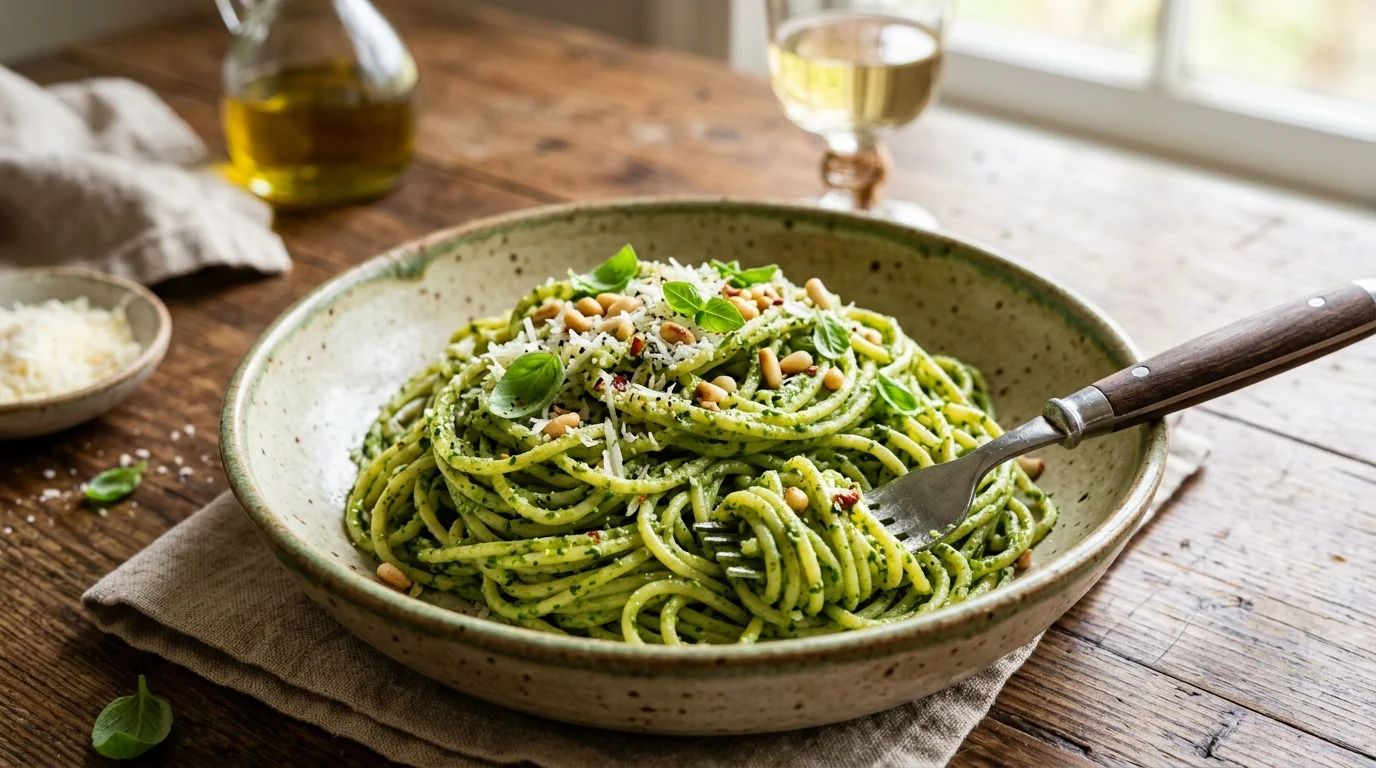
Spaghetti verde is the pasta dish that earns its place at the table on flavour alone — no tomato sauce, no meat, no heavy cream required. It’s built entirely around a blended green sauce made from fresh herbs, leafy greens, garlic, and good olive oil, tossed through perfectly cooked spaghetti until every strand is coated in something bright, aromatic, and genuinely alive with flavour.
It works as a weeknight dinner that comes together faster than a jarred sauce, as an impressive starter for a dinner party that looks far more elaborate than it is, and as a make-ahead lunch that tastes better after a few hours in the refrigerator. Once you’ve made a proper spaghetti verde, plain pasta with store-bought sauce starts feeling like a significant step down. No complicated steps — just pure spaghetti verde freshness in a bowl, ready in 25 minutes.
Ingredients
For the Verde Sauce:
- 2 cups fresh basil leaves, packed [stems removed]
- 1 cup fresh flat-leaf parsley, packed [stems mostly removed]
- 1 cup baby spinach [or arugula for a peppery edge]
- 4 cloves garlic, roughly chopped
- ½ cup extra virgin olive oil [good quality — it’s the backbone of this sauce]
- ¼ cup freshly grated Parmesan cheese [plus more for serving]
- 2 tbsp toasted pine nuts [or toasted walnuts — more affordable and equally good]
- 2 tbsp fresh lemon juice [approximately 1 large lemon]
- 1 tsp lemon zest
- ½ tsp fine salt [adjust to taste]
- ¼ tsp black pepper
- ¼ tsp crushed red pepper flakes [optional, for a gentle heat]
- 2–3 tbsp reserved pasta water [to adjust consistency]
For the Pasta:
- 400g (14 oz) spaghetti [or linguine, fettuccine, or spaghettini]
- 1 tbsp fine salt [for the pasta water]
Optional Add-Ins:
- ½ cup fresh peas or thawed frozen peas (optional)
- 1 cup cherry tomatoes, halved — added fresh on top (optional)
- 1 medium zucchini, ribboned with a peeler (optional)
- 2 tbsp capers, drained (optional)
- Toasted breadcrumbs, for texture and garnish (optional)
- Burrata or fresh mozzarella, torn, for serving (optional)
- Extra toasted pine nuts, for finishing (optional)
Step-by-Step Instructions
Step 1: Gather and Prep Your Ingredients
Pull everything out before the water goes on. Strip the basil leaves from their stems, wash the parsley and spinach, roughly chop the garlic, zest and juice the lemon, and measure the olive oil and Parmesan. Toast the pine nuts in a dry pan over medium heat for 2–3 minutes, stirring constantly, until golden and fragrant — watch them closely because they go from golden to burnt in under 30 seconds. Set them aside to cool before they go into the blender. The verde sauce comes together in the blender in under 2 minutes once everything is prepped, and having it ready before the pasta is cooked means the moment the spaghetti is drained you can toss and serve without losing any heat or momentum.
Pro Tip: Keep the basil leaves whole and dry until the moment they go into the blender. Bruised or wet basil oxidises faster and turns the sauce from a vivid, bright green to a dull olive colour before it even hits the pasta. A vibrant verde sauce starts with dry, undamaged herbs handled as gently as possible right up until they’re blended.
Step 2: Make the Verde Sauce
Add the fresh basil, parsley, baby spinach, and roughly chopped garlic to a blender or food processor. Add the toasted pine nuts, grated Parmesan, lemon juice, lemon zest, salt, pepper, and red pepper flakes if using. Pour the extra virgin olive oil over everything. Blend on high for 60–90 seconds, stopping once to scrape down the sides, until the sauce is completely smooth and a deep, uniform green. Taste it carefully — it should be bright, herby, garlicky, and rich with a clean acidity from the lemon cutting through the olive oil. Adjust salt, lemon, or pepper as needed. Set the sauce aside at room temperature — do not refrigerate it before using, as cold sauce seizes up and coats the pasta unevenly.
Pro Tip: If your blender struggles to get the sauce fully smooth, add an extra tablespoon of olive oil or a small splash of warm water to help it move. A slightly looser sauce at blending stage is fine — the pasta water added during tossing will bring the final consistency into the right range. A sauce blended too thick with no liquid help produces an uneven, clumpy coat on the spaghetti.
Step 3: Cook the Spaghetti
Bring a large pot of water to a rolling boil and salt it generously — it should taste like mild seawater. Add the spaghetti and cook according to the package directions until al dente — firm with a definite bite. The pasta will finish cooking as it gets tossed in the warm sauce, so pulling it out 60–90 seconds before the stated time is the right call. Before draining, scoop out at least 1 full cup of the starchy pasta water and set it aside — this is the single most important ingredient for finishing the sauce correctly. Drain the spaghetti and transfer immediately to a large wide bowl or back into the warm, empty pot.
Pro Tip: Properly salted pasta water is what seasons spaghetti verde from the inside out. The verde sauce itself brings herbaceous, oily flavour to the exterior of each strand, but salt that was never in the cooking water means the pasta tastes hollow at its core regardless of how good the sauce is. Salt the water early, salt it heavily, and taste it before the pasta goes in.
📖 Read More: steak tacos
Step 4: Toss the Pasta in the Verde Sauce
Pour the verde sauce over the hot, drained spaghetti immediately — the residual heat from the pasta helps loosen the sauce and coats every strand evenly. Using tongs, toss vigorously and continuously for 60–90 seconds, lifting the pasta from the bottom of the bowl and turning it through the sauce with each pass. Add the reserved pasta water a few tablespoons at a time as you toss — the starchy water emulsifies with the olive oil in the sauce and creates a glossy, cohesive coating that clings to the spaghetti rather than pooling at the bottom of the bowl. The finished spaghetti verde should look glossy, deeply green, and uniformly coated with no dry patches and no puddle of sauce sitting beneath the pasta.
Pro Tip: Use more pasta water than you think you need. The sauce tightens as it cools, and a spaghetti verde that looks perfectly coated in the bowl will look dry and clumped by the time it reaches the table if it doesn’t have enough liquid loosening it. Start with 3 tablespoons of pasta water and add more until the sauce moves freely around every strand when the bowl is tilted.
Step 5: Taste and Fine-Tune
Before the spaghetti verde goes anywhere near a plate, taste a full strand and adjust. Does it need more salt? More lemon? A sharper bite of garlic? Add a small extra squeeze of lemon juice if the whole dish tastes slightly flat — acid is almost always what’s missing when a finished pasta feels one dimension short of excellent. Fold in the optional add-ins now if using: fresh or thawed peas go directly into the hot pasta and warm through from the residual heat; zucchini ribbons can be folded in gently with tongs; capers add a briny, punchy note that works particularly well in spaghetti verde as a counterpoint to the rich olive oil base.
Pro Tip: Grate a small extra amount of Parmesan directly over the pasta in the tossing bowl before serving and toss once more — this final Parmesan addition melts slightly from the heat and thickens the sauce fractionally, adding a savouriness that makes the whole dish feel more complete than the verde sauce alone delivers.
Step 6: Plate, Garnish, and Serve
Divide the spaghetti verde between warm pasta bowls using tongs — twirl portions upward rather than scooping flat to create height and visual appeal on the plate. Top each bowl with extra freshly grated Parmesan, a small handful of toasted pine nuts, a few fresh basil leaves, and a final drizzle of good extra virgin olive oil across the top. Add cherry tomatoes, torn burrata, or toasted breadcrumbs if using. Finish each bowl with a crack of black pepper and a thin curl of lemon zest for brightness. Serve immediately — spaghetti verde is at its best the moment it’s plated, while the pasta is still warm and the sauce is still vivid green and fragrant from the fresh herbs.
Pro Tip: Warm the serving bowls before plating by filling them with hot tap water for 60 seconds, then emptying and drying quickly. A warm bowl keeps the spaghetti verde at the right temperature for eating from the first forkful to the last — cold bowls pull heat from the pasta rapidly and the dish becomes lukewarm before it’s half finished.
Cook Time
Total Time: 25 minutes | Prep: 10 minutes | Sauce: 5 minutes | Cook: 10 minutes One blender, one pot — dinner on the table in 25 minutes.
Servings
Serves 4 as a main course, or 6 as a starter portion.
Nutritional Information (approx. per serving — based on 4 servings)
| Nutrient | Amount |
|---|---|
| Calories | 580 kcal |
| Fat | 30g |
| Saturated Fat | 5g |
| Carbohydrates | 64g |
| Protein | 16g |
| Sugar | 3g |
| Fiber | 4g |
| Sodium | 520mg |
| Vitamin C | 22mg |
| Potassium | 380mg |
| Calcium | 160mg |
Values are approximate and will vary based on ingredients used.
Storage Instructions
Spaghetti verde stores better than most herb-based pasta dishes because the spinach in the sauce acts as a colour stabiliser that slows the oxidation process that turns fresh basil from bright green to dull brown. Store leftover spaghetti verde in an airtight container in the refrigerator for up to 3 days. Press plastic wrap directly against the surface of the pasta before sealing the container — this reduces air contact and keeps the sauce colour more vibrant over time. When reheating, add a generous splash of water or chicken broth to the container before warming in a pan over medium-low heat, tossing continuously as the liquid heats and re-emulsifies with the olive oil in the sauce. Avoid high heat — it breaks the olive oil out of the emulsion and leaves the pasta looking greasy rather than glossy. The microwave works for single portions in a pinch; add a tablespoon of water, cover loosely, and heat in 30-second intervals, stirring between each. Spaghetti verde also works well served at room temperature or cold — cold pasta absorbs the sauce more deeply over time, and a refrigerated portion eaten cold the following day often tastes more intensely flavoured than the freshly made version. For freezing, the verde sauce alone freezes very well — pour it into ice cube trays, freeze until solid, and transfer the cubes to a freezer bag for up to 2 months. Thaw at room temperature, adjust seasoning, and toss through freshly cooked spaghetti. Freezing assembled spaghetti verde is not recommended — the pasta texture degrades and the sauce separates on thawing in a way that can’t be recovered through reheating.
📖 Read More: chicken spaghetti
Suggestions
- Spaghetti Verde with Grilled Chicken: Slice 2 seasoned, grilled chicken breasts thinly and lay them across the plated spaghetti verde rather than mixing into the pasta. The clean separation of protein and pasta lets the verde sauce remain the star of the dish while adding a complete protein element that makes it a genuinely filling dinner. Season the chicken simply with salt, pepper, lemon zest, and a drizzle of olive oil before grilling — it should complement the sauce rather than compete with it.
- Vegan Spaghetti Verde: Skip the Parmesan entirely and replace it with 3 tablespoons of nutritional yeast, which provides the same umami depth and savoury finish without any dairy. Use extra toasted pine nuts and a slightly more generous amount of lemon juice to compensate for the missing sharpness of the cheese. The verde sauce is already built around olive oil and herbs — removing the Parmesan is a smaller adjustment than most people expect, and the vegan version stands confidently on its own.
- Spicy Calabrian Verde: Add 1–2 teaspoons of Calabrian chili paste or finely chopped Calabrian chilies directly into the blender with the other sauce ingredients. The heat from Calabrian chilies is slow-building, fruity, and deeply savoury rather than sharp — it integrates beautifully into the herbaceous verde base without overpowering the freshness of the basil and parsley. Finish each bowl with an extra drizzle of chili oil for anyone who wants more.
- Spaghetti Verde with Burrata: Serve the pasta as written and place half a ball of room-temperature burrata in the centre of each plated bowl. Break it open at the table and let the cream flow into the spaghetti verde — the richness of the burrata against the bright, acidic herb sauce is one of the best textural and flavour contrasts in pasta cooking. This version takes the dish from a weeknight dinner to something genuinely dinner-party worthy with zero additional cooking required.
- Avocado Verde Sauce: Add one ripe avocado to the blender alongside the standard verde sauce ingredients and blend until completely smooth. The avocado adds a creamy, buttery richness that thickens the sauce significantly and gives it a body closer to alfredo than a standard herb sauce — without any cream or additional fat beyond the olive oil already in the recipe. This version is particularly popular as a cold pasta dish in summer, served straight from the refrigerator with extra lemon juice stirred through.
- Whole Wheat or Legume Pasta Version: Swap standard spaghetti for whole wheat spaghetti, chickpea spaghetti, or lentil pasta for a higher fibre and higher protein version of spaghetti verde. The nuttier, more assertive flavour of whole wheat pasta actually complements the bold herb sauce extremely well — it stands up to the garlic and lemon rather than being overwhelmed by them the way a milder pasta might. Adjust pasta water quantity slightly as whole grain pasta tends to absorb more liquid than refined.
- Spaghetti Verde with Crispy Breadcrumbs: Toast ½ cup of coarse breadcrumbs in 2 tablespoons of olive oil with a pinch of garlic powder and lemon zest in a dry pan until deeply golden and crispy — about 4–5 minutes over medium heat. Scatter them generously over each plated bowl of spaghetti verde just before serving. The breadcrumbs add a savoury crunch that contrasts beautifully against the soft pasta and silky sauce, and they replace the textural role that Parmesan typically plays in a pasta dish — this variation works particularly well for dairy-free builds.
- Weight-Loss Friendly Spaghetti Verde: Reduce the olive oil in the sauce to 3 tablespoons and compensate with an extra tablespoon of lemon juice and 2 tablespoons of pasta water blended directly into the sauce for body. Use 300g of pasta instead of 400g and bulk the bowl with 2 cups of baby spinach or arugula wilted into the hot pasta as it’s being tossed — the greens add volume, fibre, and nutrition without meaningfully increasing calories. Each serving comes in under 420 calories on this build while still delivering the full flavour impact of the verde sauce.
Seasonal Relevance
Spaghetti verde is at its undeniable best from May through August when fresh basil is growing abundantly, flat-leaf parsley is bright and fragrant at the market, and the lemon-forward freshness of the sauce feels exactly right against the heat of the season. Peak summer basil — July and August specifically — has a sweetness and intensity that dried or out-of-season basil simply cannot replicate, and it’s worth making spaghetti verde frequently during those months just to take advantage of it. If you grow basil at home, this is the recipe to make when the plant is at its most prolific — the sauce uses a full two cups of packed leaves and is one of the best ways to work through a summer herb garden before the plants bolt. In autumn, September through November, the verde sauce adapts well to a mix of parsley, rocket, and the last of the season’s basil — leaning more heavily on the parsley produces a slightly more robust, less sweet sauce that suits the season’s shift toward heavier food. In winter and early spring, December through April, rely on baby spinach and parsley as the primary greens when fresh basil becomes expensive and flavourless — the sauce is less intensely fragrant but still entirely worth making, and a slightly more generous hand with the garlic and lemon compensates for what the herbs lose in their off-season form.
Conclusion
Spaghetti verde proves that the most satisfying pasta dishes don’t always need meat, cream, or a long-simmered sauce to deliver something genuinely memorable. Fresh herbs, good olive oil, a proper blender, and pasta cooked in well-salted water — that’s the entire foundation, and everything else is a variation on that core. Get the verde sauce bright and well-seasoned, cook the pasta to a proper al dente, and use the pasta water generously when tossing — those three things done correctly produce a bowl of spaghetti verde that is difficult to improve on. Make the classic version first and understand the balance of the sauce. Then try it with burrata, with grilled chicken, with avocado blended in, or with Calabrian chili heat running through it. Every version of spaghetti verde brings something worth coming back for, and every version starts from the same two minutes of blending that makes this one of the most rewarding pasta dishes in the regular rotation.
FAQs
Q: Can I make spaghetti verde with dried herbs instead of fresh? Fresh herbs are non-negotiable for spaghetti verde — dried herbs will not produce a sauce that is remotely comparable in flavour, colour, or texture. Dried basil and parsley have had their volatile oils and moisture removed in the drying process, which means they can’t be blended into a smooth, vibrant green sauce no matter how much you use. The entire character of spaghetti verde depends on the brightness that only fresh herbs deliver. If fresh basil is unavailable or very expensive, increase the parsley and spinach quantities to compensate — both are typically more affordable and available year-round.
Q: Why is my verde sauce turning brown instead of staying green? Oxidation is the cause — the cut surfaces of the basil and parsley react with air and turn brown rapidly, particularly when warm. Three things slow this process: keeping the herbs dry and whole until the moment they go into the blender, adding lemon juice to the sauce before blending since the acid slows oxidation, and using the sauce immediately after blending rather than letting it sit exposed to air. The spinach in this recipe acts as a natural colour stabiliser — its chlorophyll is more stable than basil’s and keeps the sauce green longer than a pure basil sauce would remain.
Q: Can I make the verde sauce ahead of time? Yes — up to 24 hours in advance. Transfer the blended sauce to an airtight jar, press plastic wrap directly against the surface to eliminate air contact, seal, and refrigerate. The colour will fade slightly overnight but the flavour will be entirely intact and often more developed than freshly blended. Let the sauce come to room temperature for 15 minutes before tossing with hot pasta — cold sauce straight from the refrigerator seizes up and coats the spaghetti unevenly. Stir well before using and adjust seasoning since cold mutes flavour perception.
Q: Can I use a food processor instead of a blender for the verde sauce? Yes — a food processor works well for spaghetti verde sauce. It may not produce as perfectly smooth a result as a high-powered blender, but a slightly textured verde sauce is entirely acceptable and still coats the pasta beautifully. Process in longer pulses, scraping down the sides frequently, and add the olive oil gradually through the feed tube while the motor runs for the smoothest possible result. A stick blender with a tall jar also works for smaller batches.
Q: What pasta shape works best for spaghetti verde? Long pasta is the traditional and most effective choice — spaghetti, linguine, and fettuccine all have the surface area per strand that allows a thin, oil-based sauce like verde to coat evenly through tossing. Short pasta works but tends to make the sauce feel slightly separated rather than integrated — the herb sauce clings to long strands in a way that it pools in the grooves of short pasta without the same cohesive result. If long pasta isn’t available, linguine is the closest substitute and behaves identically to spaghetti in this recipe.
Q: Is spaghetti verde suitable for meal prep? Yes — with one practical adjustment. Cook the pasta al dente, toss with the sauce, and portion into airtight containers. Drizzle a small amount of olive oil over each portion before sealing to prevent the pasta from drying out and sticking together as it cools. Refrigerate for up to 3 days. The cold spaghetti verde actually works beautifully eaten straight from the container at room temperature for lunch — the sauce deepens overnight and the pasta absorbs more of the herb flavour than it did when freshly made. Add a squeeze of lemon and a pinch of salt before eating to revive the brightness that fades slightly in the refrigerator.
Q: Can I add protein to spaghetti verde without overpowering the sauce? Yes — the key is using protein that complements rather than competes with the delicate herb flavour. Grilled or pan-seared chicken sliced on top works well and lets the sauce remain visible and dominant. Pan-seared shrimp with lemon and garlic are the most natural pairing with a verde sauce — the sweetness of the shrimp against the herby, acidic sauce is genuinely excellent. White beans stirred through the pasta add protein and substance for a fully vegetarian version. Avoid bold, heavily seasoned proteins like Italian sausage or spiced beef — they overwhelm the verde sauce and the dish loses its identity.
