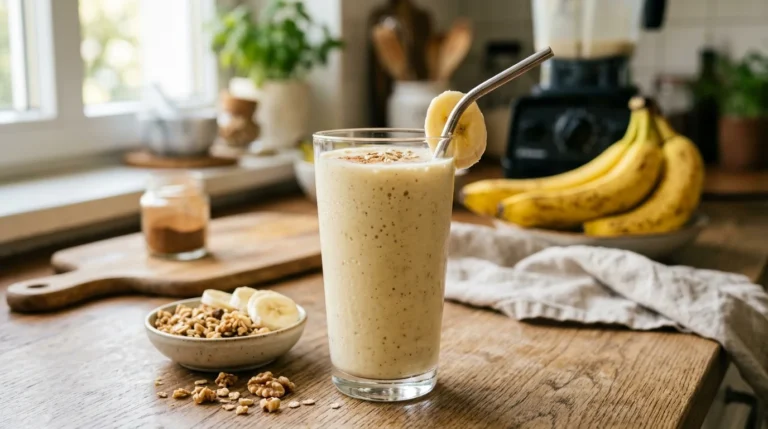
Peanut Butter Smoothie Rich, Creamy & Ready in 5 Minutes
A peanut butter smoothie is the one drink that tastes like a treat and performs like a proper meal. It’s thick, deeply satisfying, naturally high in protein and healthy fat, and built from ingredients that take under 5 minutes to blend into something genuinely outstanding. The peanut butter does what it always does — adds richness, body, and a savoury-sweet depth that makes every sip feel more substantial than any fruit-only smoothie can.
It works as a filling breakfast that carries you through a long morning, a post-workout recovery drink, a healthy afternoon snack that actually suppresses hunger, or a guilt-free dessert alternative when the craving for something rich hits at the wrong time of day. Whether you keep it simple or build it into a full meal replacement, this peanut butter smoothie delivers every single time. No complicated steps — just pure peanut butter smoothie satisfaction, thick and ready in 5 minutes.
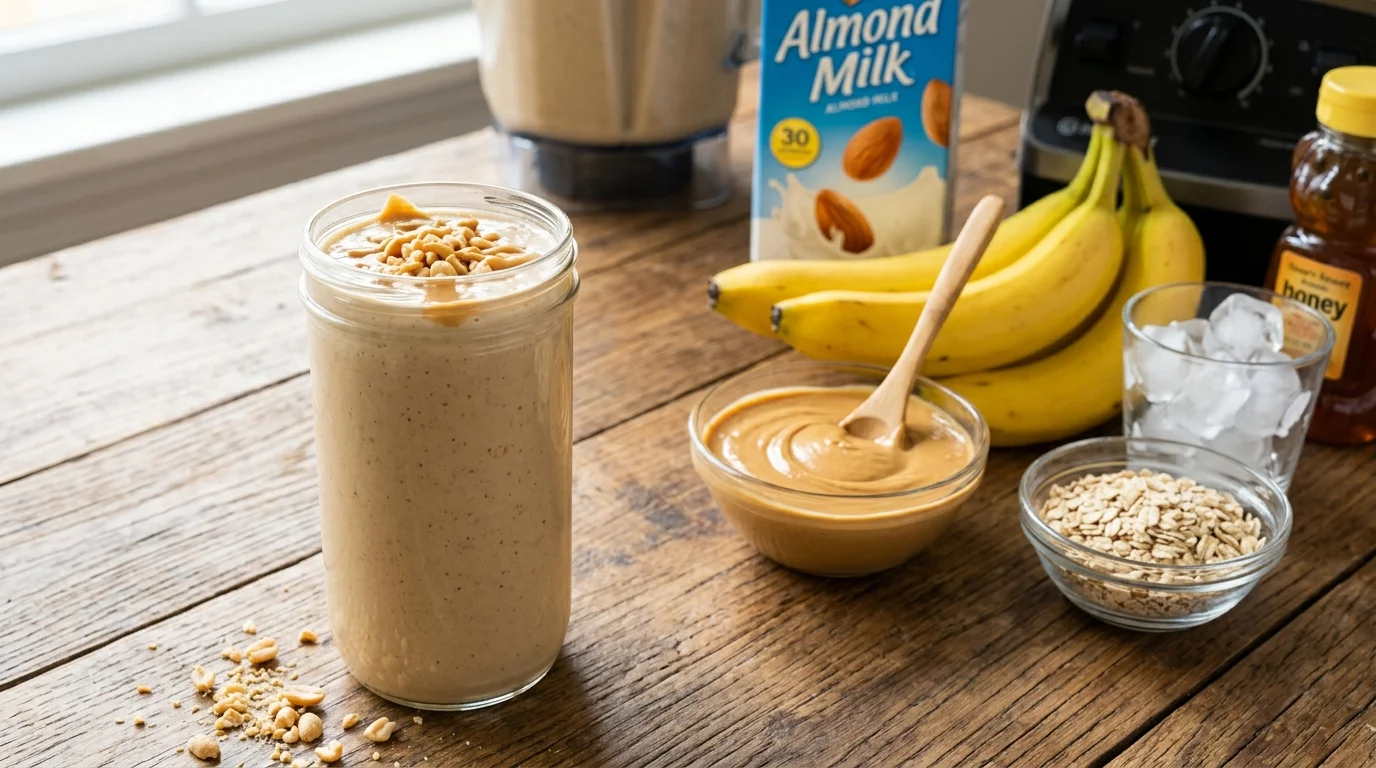
Ingredients
For the Peanut Butter Smoothie Base (serves 1–2):
- 2 tbsp natural peanut butter [smooth or chunky — natural, no added sugar]
- 2 medium bananas [frozen produces the thickest result]
- 1 cup whole milk [or almond, oat, or coconut milk]
- ½ cup plain Greek yogurt [adds protein and creaminess]
- 1 tbsp honey or maple syrup [optional — ripe bananas often need none]
- ½ tsp pure vanilla extract
- Pinch of fine salt [amplifies the peanut butter flavour]
- ½ cup ice cubes [skip if using frozen bananas]
Optional Add-Ins for Extra Nutrition:
- 1 scoop vanilla or chocolate protein powder (optional)
- 1 tbsp chia seeds or ground flaxseed (optional)
- 1 tbsp unsweetened cocoa powder — for a chocolate peanut butter version (optional)
- 1 tsp cinnamon — pairs naturally with peanut butter (optional)
- ½ cup rolled oats — for extra fibre and thickness (optional)
- 1 medjool date — natural sweetness alternative to honey (optional)
- ½ cup baby spinach — adds nutrients, won’t affect flavour (optional)
- 1 tsp maca powder — energy and hormonal support (optional)
For Serving:
- Drizzle of peanut butter, for topping
- Sliced banana, for garnish
- Crushed peanuts or granola, for crunch
- Dusting of cinnamon or cocoa powder
- Cacao nibs or dark chocolate shavings (optional)
Step-by-Step Instructions
Step 1: Gather and Prep Your Ingredients
Pull everything out before the blender lid goes on. Peel and break the bananas into chunks — if using frozen, remove from the freezer 3–4 minutes before blending so the edges soften slightly and the blender doesn’t have to work against completely solid banana from the start. Measure the peanut butter into a tablespoon and set it beside the blender — peanut butter added from the jar directly sometimes leaves a sticky residue on the sides of the blender that doesn’t fully incorporate without scraping down. Have the Greek yogurt, milk, and any optional add-ins measured and ready before anything goes into the jar.
Pro Tip: Use natural peanut butter — the kind where the only ingredients are peanuts and salt — rather than commercial peanut butter with added sugar, palm oil, and stabilisers. Natural peanut butter blends into a smoothie more cleanly, produces a purer peanut flavour, and doesn’t add unnecessary sugar to a drink that’s already naturally sweet from the banana. Stir the natural peanut butter in its jar before measuring to recombine the separated oil — unmixed peanut butter produces an oily, uneven result in the blender.
Step 2: Build the Blender in the Right Order
Add the ingredients in an order that sets the blender up to move efficiently from the first second. Pour the milk into the blender jar first — liquid at the base creates the vortex that pulls everything upward into the blades. Add the Greek yogurt and vanilla extract directly onto the milk and stir briefly with a spoon before the lid goes on — this pre-mixes the two liquids and gives the peanut butter better contact with the wet ingredients when it goes in next. Add the peanut butter, honey if using, banana chunks, and the pinch of salt. Place the ice cubes or frozen banana on top last.
Pro Tip: Add the peanut butter between the liquid base and the banana rather than on top of everything else. Peanut butter placed on top of frozen banana or ice sits above the blending vortex and doesn’t get pulled into the blades consistently — it ends up in large undissolved clumps in the finished smoothie. Sandwiched between the liquid and the fruit, it gets drawn into the vortex from both directions and blends completely smooth within the first 20 seconds of high-speed blending.
Step 3: Blend Low Then High for Maximum Creaminess
Start the blender on low speed for 15–20 seconds to break down the banana and begin dissolving the peanut butter into the liquid base before anything hits the ice. The low-speed start is particularly important for a peanut butter smoothie because peanut butter is dense and viscous — it needs the momentum of a building vortex to pull it fully into the mix rather than high-speed blades that push it to the sides of the jar. Once the blender sounds smooth and even, increase to the highest speed and blend for 60 seconds until completely creamy and uniformly thick. Stop and check — there should be no visible peanut butter streaks or banana chunks remaining.
Pro Tip: If the blender sounds strained or the mixture isn’t moving freely, add milk one tablespoon at a time through the lid opening with the motor running rather than stopping to add liquid. Small additions maintain the blending momentum and produce a smoother result than stopping, adding liquid, and restarting — which resets the vortex and can leave pockets of unblended peanut butter that were just beginning to incorporate.
📖 Read More: Avocado Smoothie
Step 4: Check Consistency and Adjust
Lift the blender jar and tilt it to assess the consistency. A properly made peanut butter smoothie should be thick enough to move slowly and coat the sides of the jar as it shifts — not pourable like water and not so thick it won’t move at all. If it’s too thick to blend freely, add milk one tablespoon at a time and pulse 3–4 times rather than blending fully again. If it’s thinner than preferred, add another tablespoon of peanut butter or half a frozen banana and blend for another 20 seconds. The target is a consistency closer to a thick milkshake than a drinkable fruit smoothie — this is a filling drink, not a light one.
Pro Tip: Don’t assess consistency immediately after stopping the blender — the smoothie is still moving and the air incorporated during blending makes it appear thicker than it actually is. Wait 10–15 seconds after stopping, then tilt the jar. The settled consistency is the accurate one. A smoothie that looks perfectly thick straight after blending often pours thinner than expected because the blending foam hasn’t settled yet.
Step 5: Taste and Fine-Tune
Taste through a spoon before pouring and adjust with purpose. A great peanut butter smoothie should taste primarily of peanut butter — rich, slightly savoury-sweet, and rounded by the banana rather than dominated by it. If the peanut butter flavour is too subtle, add another half tablespoon and blend for 10 seconds. If it tastes flat despite being well-sweetened, the pinch of salt is the answer — salt amplifies peanut butter flavour dramatically and is the most consistent fix for a smoothie that tastes like it’s missing something without tasting overtly wrong. If it needs more sweetness, a medjool date blended in for 15 seconds adds natural sweetness without the sharp edge of honey.
Pro Tip: Add the optional cocoa powder at this stage if you’re building the chocolate peanut butter version — taste the base first, then add 1 tablespoon of unsweetened cocoa powder and blend for 15 seconds. Cocoa added at this point gets assessed against the true flavour of the smoothie rather than guessed at during initial assembly. Start with 1 tablespoon and add a second only after tasting — it’s easy to overdo cocoa in a smoothie and difficult to correct once it’s too prominent.
Step 6: Pour, Top, and Serve
Pour the finished peanut butter smoothie into a chilled glass — a thick smoothie pours better into a glass that’s been briefly refrigerated or rinsed with cold water, which prevents the sides from warming the smoothie as it settles. For a particularly thick result, serve in a wide glass or bowl with a spoon rather than a straw. Drizzle an extra teaspoon of peanut butter in a thin spiral across the surface — it sits on top of the thick smoothie rather than sinking in, which looks intentional and tastes excellent when it mixes with each sip. Top with sliced banana, a dusting of cinnamon, crushed peanuts, or granola for crunch. Serve immediately.
Pro Tip: Warm the peanut butter drizzle for garnish by microwaving the tablespoon for 8–10 seconds before drizzling — warm peanut butter is significantly more fluid and produces a clean, even spiral rather than the thick globs that cold peanut butter produces when poured. A warm drizzle also sits on the surface attractively rather than sinking immediately into the smoothie below it.
Cook Time
Total Time: 5 minutes | Prep: 2 minutes | Blend: 3 minutes One blender — a thick, filling peanut butter smoothie ready in 5 minutes.
Servings
Makes 1 large serving (approximately 450–500ml) or 2 smaller servings.
Nutritional Information (approx. per full single serving — with whole milk, Greek yogurt, natural peanut butter, banana, no add-ins)
| Nutrient | Amount |
|---|---|
| Calories | 520 kcal |
| Fat | 20g |
| Saturated Fat | 6g |
| Carbohydrates | 62g |
| Protein | 24g |
| Sugar | 36g |
| Fiber | 5g |
| Sodium | 210mg |
| Vitamin C | 12mg |
| Potassium | 820mg |
| Calcium | 280mg |
Values are approximate and will vary based on ingredients used.
Storage Instructions
A peanut butter smoothie stores better than most fruit-based smoothies because the fat content of the peanut butter and yogurt slows separation significantly. Pour into a sealed mason jar or airtight bottle filled as close to the top as possible to limit air exposure and refrigerate for up to 24 hours. The smoothie will thicken noticeably as it chills — the peanut butter fat solidifies slightly at refrigerator temperature, which makes the cold version even thicker than the freshly blended one. Stir or shake before drinking and add a small splash of milk to loosen if needed. The flavour actually improves slightly after 2–3 hours in the refrigerator as the peanut butter fully permeates the banana and yogurt base. For make-ahead preparation, the freezer pack method works particularly well for this smoothie — portion the frozen banana chunks, Greek yogurt, and any solid add-ins into individual zip-lock bags and freeze flat. In the morning, tip the frozen pack into the blender, add the milk and peanut butter fresh, and blend from frozen for a perfectly consistent smoothie in under 3 minutes with no morning prep. For longer storage, freeze the blended smoothie in individual portions in sealed freezer bags for up to 1 month — thaw overnight in the refrigerator and stir well before drinking. The fat in the peanut butter means the blended smoothie freezes and thaws better than most fruit-only versions, though a brief re-blend after thawing produces the best texture recovery.
📖 Read More: Protein Smoothie
Suggestions
- Chocolate Peanut Butter Smoothie: Add 1 tablespoon of unsweetened cocoa powder and use chocolate protein powder in place of the vanilla add-in. This is consistently the most popular variation of the peanut butter smoothie — the combination of chocolate and peanut butter in a cold, thick, creamy drink tastes genuinely indulgent while delivering over 30g of protein per serving. Use oat milk for the richest, most milkshake-adjacent result.
- Peanut Butter Banana Oat Smoothie: Add ¼ cup of rolled oats directly to the blender with the other ingredients and blend fully — oats blend completely smooth within 60 seconds and add complex carbohydrates, soluble fibre, and a subtle nutty flavour that makes this version the most filling and sustaining in the list. This build works as a complete breakfast replacement that provides steady energy for 3–4 hours without any mid-morning energy dip.
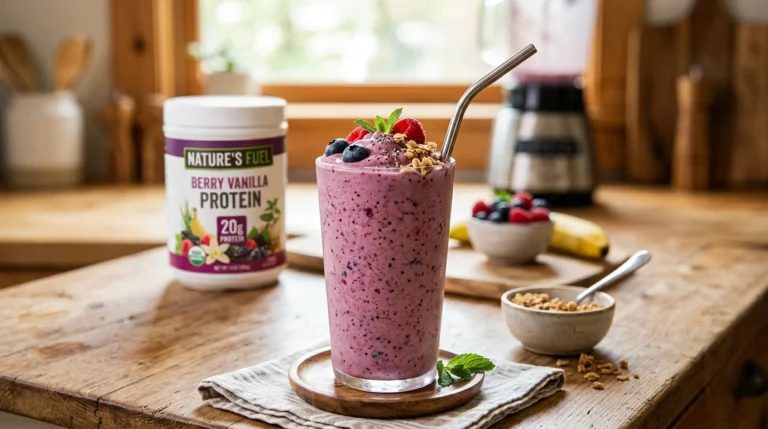
- Peanut Butter Berry Smoothie: Add 1 cup of frozen mixed berries — blueberries, strawberries, and raspberries — to the base recipe. The tartness of the berries cuts cleanly through the richness of the peanut butter and produces a flavour combination that’s brighter and more refreshing than the plain banana version. The berries also turn the smoothie a deep purple-pink that contrasts beautifully with the peanut butter drizzle garnish.
- Vegan Peanut Butter Smoothie: Replace the whole milk with full-fat oat milk or coconut milk and swap the Greek yogurt for coconut yogurt or silken tofu. Silken tofu blends completely smooth and adds a protein content similar to dairy yogurt without any detectable tofu flavour in the finished smoothie — it simply adds creaminess and body. Use maple syrup rather than honey to keep the entire build plant-based.
- Peanut Butter Coffee Smoothie: Add 1 shot of cooled espresso or ½ cup of cold brew coffee to the blender alongside the milk, reducing the milk quantity by the same amount to maintain the correct consistency. Use chocolate protein powder and 1 tablespoon of cocoa powder for a mocha-peanut butter build that covers caffeine and protein in a single pre-workout drink. The coffee amplifies the savoury depth of the peanut butter and makes this the most energising version in the list.
- High-Protein Peanut Butter Smoothie: Use 3 tablespoons of peanut butter instead of 2, add 1 full scoop of vanilla protein powder, 1 tablespoon of chia seeds, and use full-fat Greek yogurt as the dairy base. This version delivers over 40g of protein per serving — a complete, macro-balanced meal in a glass that works equally well as a post-workout recovery drink and a breakfast that carries you through a demanding morning.
- Low-Calorie Peanut Butter Smoothie: Reduce the peanut butter to 1 tablespoon, use unsweetened almond milk instead of whole milk — saving approximately 120 calories — replace the full-fat Greek yogurt with low-fat Greek yogurt, and use one banana instead of two. Skip the honey entirely. This build comes in under 300 calories per large serving while still delivering a creamy, peanut-forward smoothie that tastes satisfying rather than compromised. Add a tablespoon of chia seeds to increase the fibre content and extend satiety.
- Peanut Butter Green Smoothie: Add 1 cup of baby spinach to the base recipe before blending — the spinach is completely undetectable in flavour against the bold peanut butter and banana combination. This version adds iron, vitamin K, and a meaningful amount of folate to the nutritional profile of the smoothie without changing anything about the taste or texture that a plain peanut butter smoothie drinker would notice. It’s the most practical way to include leafy greens in a daily routine for anyone who doesn’t enjoy the flavour of green smoothies.
📖 Read More: Detox Smoothie
Seasonal Relevance
A peanut butter smoothie is genuinely a year-round drink — its core ingredients of peanut butter, banana, Greek yogurt, and milk are available at consistent quality and price in every month without any seasonal variation. The supporting ingredients and flavour directions that work best with it do shift across the calendar, though. From May through September, the berry version feels most seasonally right — fresh or frozen berries at peak season, a brighter, lighter flavour profile, and the cold, thick texture of the smoothie genuinely welcome in warm weather. Summer is also when the iced, dessert-style chocolate peanut butter version gets made most frequently — a thick, cold, chocolate and peanut butter drink on a hot afternoon occupies a specific and irreplaceable niche. From October through February, the oat version and the coffee peanut butter build come into their own — warming undertones, more substantial calorie and carbohydrate content, and flavours that feel appropriate for cold mornings when a light fruit smoothie isn’t enough. The cinnamon add-in specifically suits autumn and winter — a pinch of cinnamon in a peanut butter and banana smoothie in October is a genuinely satisfying combination that feels seasonally aligned in a way it doesn’t in July. Spring, March through May, is when the green peanut butter version gets most use — the impulse toward lighter, cleaner eating that comes with the season finds its balance in a smoothie that tastes indulgent but delivers greens without compromise.
Conclusion
A peanut butter smoothie earns its place as one of the most reliably satisfying drinks you can make in a blender because peanut butter is one of the very few ingredients that is simultaneously a flavour, a fat source, a protein source, and a texture agent all in one. Two tablespoons transform a basic banana smoothie into something rich, filling, and genuinely craveable — and the variations take it in every direction from there. Get the layering order right, blend low then high, taste before pouring, and garnish with a warm peanut butter drizzle. Then build through the suggestions — the chocolate version, the coffee build, the oat breakfast smoothie — and find the peanut butter smoothie that earns a permanent place in your daily routine. Five minutes, one blender, two tablespoons of peanut butter — it genuinely doesn’t need to be more complicated than that.
FAQs
Q: Is a peanut butter smoothie good for weight loss? It depends entirely on how it’s built. The base recipe at 520 calories per large serving is a substantial drink suited to meal replacement rather than a snack addition — drinking it alongside regular meals rather than in place of one will add meaningful calories to the day. Used as a breakfast replacement or post-workout meal, a peanut butter smoothie built with almond milk, low-fat Greek yogurt, one banana, and 1 tablespoon of peanut butter provides strong satiety and comes in under 300 calories — a genuinely effective weight-loss tool. The key is building it intentionally for the goal rather than adding everything in the suggestions list at once.
Q: Can I use peanut butter powder instead of regular peanut butter? Yes — peanut butter powder (PB2 or similar) is an excellent lower-fat, lower-calorie alternative that blends even more smoothly than regular peanut butter. Use 3 tablespoons of peanut butter powder in place of 2 tablespoons of regular peanut butter — the flavour is slightly less rich but still distinctly peanut-forward. The calorie reduction is significant: regular peanut butter has approximately 190 calories per 2 tablespoons while the equivalent peanut butter powder quantity has around 60. For anyone building a lower-calorie peanut butter smoothie, powder is the most effective single swap available.
Q: What milk works best in a peanut butter smoothie? Whole milk produces the richest, creamiest result — the fat in whole milk complements the fat in the peanut butter and creates a milkshake-quality texture that thinner milk alternatives can’t match. Oat milk is the best non-dairy substitute — it has a natural sweetness and enough body to behave similarly to whole milk in a thick smoothie. Almond milk produces a lighter, thinner result and is the right choice for anyone building a lower-calorie version. Coconut milk adds a subtle tropical note that works well in the vegan or tropical-direction builds. The one type to avoid is rice milk — it’s too thin and watery to provide any of the body a peanut butter smoothie needs to feel genuinely satisfying.