Mango Smoothie Recipe – Thick, Creamy & Bursting With Tropical Flavor
This mango smoothie is everything a great blended drink should be — thick, naturally sweet, creamy, and ready in under five minutes. Made with just a handful of simple ingredients, it delivers a full tropical experience in every sip. Whether you need a quick breakfast, a post-workout refresher, or a healthy afternoon treat, this mango smoothie recipe is the one you will come back to again and again.
Ingredients List
- 1½ cups frozen mango chunks
- 1 ripe banana (fresh or frozen)
- ½ cup plain Greek yogurt
- ½ cup coconut milk (or almond milk)
- 1 tablespoon honey or agave (optional, adjust to taste)
- ½ teaspoon fresh ginger, grated (optional, for brightness)
- Juice of ½ lime
- 3–4 ice cubes (skip if using frozen banana)
Step-by-Step Instructions
Step 1: Prep Your Ingredients
Measure out your frozen mango chunks straight from the freezer. If using a fresh banana, peel and slice it — or use a frozen one for an even thicker result. Grate fresh ginger if using, and juice your lime.
Step 2: Add Ingredients to the Blender
Layer ingredients in this order for easiest blending: liquid first (coconut milk), then yogurt, then frozen fruit on top. This order prevents the blender from struggling at the start.
Step 3: Blend Until Smooth
Start blending on low speed, then gradually increase to high. Blend for 45–60 seconds until completely smooth and creamy. There should be no visible fruit chunks.
Step 4: Check the Consistency
Tilt the blender gently. The smoothie should flow slowly and coat the sides thickly. If it is too thick, add a splash more coconut milk and pulse once. If too thin, add a few more frozen mango chunks and re-blend.
Step 5: Taste and Adjust
Taste before pouring. Add honey if the mango is less sweet than expected. Add more lime juice if it needs brightness. A pinch of salt can also enhance the mango flavor significantly.
Step 6: Pour and Serve
Pour into a tall chilled glass. Optionally garnish with a slice of fresh mango on the rim, a pinch of chili powder on top, or a sprig of fresh mint. Serve immediately for the best texture and flavor.
Cook Time
Total Time: 5 minutes Prep: 3 minutes Blend: 2 minutes No cooking required.
Servings
Makes 1 large smoothie (approximately 16 oz) or 2 small servings
Nutritional Information (approx. per serving)
| Nutrient | Amount |
|---|---|
| Calories | 290 kcal |
| Fat | 6 g |
| Saturated Fat | 4.5 g |
| Carbohydrates | 52 g |
| Protein | 9 g |
| Sugar | 40 g |
| Fiber | 4 g |
| Sodium | 55 mg |
| Vitamin C | 70% DV |
| Potassium | 620 mg |
Values are approximate and vary based on ingredients and brands used.
Storage Instructions
Mango smoothies are best enjoyed fresh immediately after blending. If you need to store it, pour the smoothie into an airtight jar or sealed cup and refrigerate for up to 24 hours. Shake or stir well before drinking as separation is natural. Do not freeze a blended smoothie — the texture becomes grainy after thawing. Instead, freeze smoothie ingredient packs (mango, banana, and ginger pre-portioned in zip-lock bags) and blend fresh each time.
Suggestions
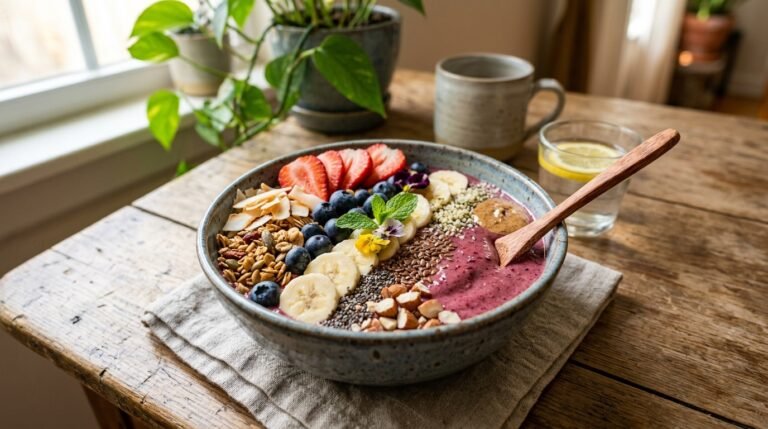
- For a thicker, bowl-style version: Reduce coconut milk to 2–3 tablespoons, pour into a bowl, and top with granola, fresh mango slices, chia seeds, and shredded coconut.
- For extra protein: Add a scoop of vanilla protein powder or an extra half cup of Greek yogurt.
- For a dairy-free version: Replace Greek yogurt with coconut yogurt or a quarter of a frozen avocado for creaminess.
- For a spiced tropical twist: Add a pinch of cardamom and a small piece of frozen turmeric for a golden mango smoothie with anti-inflammatory benefits.
- For a mango lassi style: Use full-fat plain yogurt, skip the banana, double the mango, and add a pinch of ground cardamom. This version is closer to the traditional Indian drink.
- For kids: Skip the ginger and lime, use a touch more honey, and blend with whole milk for a milder, crowd-pleasing version.
Seasonal Relevance
Mango smoothies are a year-round recipe thanks to the wide availability of frozen mango, but they truly shine in late spring and summer when fresh Alphonso, Ataulfo, and Kent mangoes are at their peak sweetness. During peak mango season, slice and freeze fresh ripe mangoes yourself — the flavor difference compared to store-bought frozen is remarkable. In winter months, good-quality frozen mango is the better choice and produces consistently thick, sweet results.
Conclusion
This mango smoothie recipe proves that the best drinks are often the simplest ones. With just a few frozen ingredients and two minutes of blending, you get a glass of something genuinely tropical, nourishing, and satisfying. Once you nail the basic recipe, the variations are endless — spiced, protein-packed, dairy-free, bowl-style, or lassi-inspired. Keep a bag of frozen mango in your freezer at all times and this will become your most-reached-for recipe.
FAQs
Q: Can I use fresh mango instead of frozen? Yes, but the smoothie will be thinner and less creamy. To compensate, add extra ice cubes and a half cup of frozen banana. For the thickest result, frozen mango is always the best choice.
Q: Why is my mango smoothie not thick enough? The most common cause is too much liquid. Start with less coconut milk than you think you need — you can always add more. Also make sure your mango is fully frozen, not partially thawed.
Q: Can I make a mango smoothie without a banana? Absolutely. Replace the banana with half a cup of extra frozen mango, a quarter of a ripe avocado for creaminess, or a few tablespoons of rolled oats soaked in coconut milk overnight. Each gives thickness and body without banana flavor.
Q: Is a mango smoothie healthy? Yes — when made with whole fruit, yogurt, and no added sugar, a mango smoothie is rich in Vitamin C, potassium, fiber, and natural antioxidants. The natural sugar from mango is paired with fiber and protein, which slows absorption and prevents energy spikes.
Q: Can I add spinach or greens to a mango smoothie? Yes, and mango is one of the best fruits to pair with greens because its strong sweetness completely masks the taste of spinach or kale. Add one large handful of fresh or frozen spinach before blending. The color will turn golden-green but the flavor stays tropical.
Q: What is the best type of mango for smoothies? Ataulfo (Champagne) mangoes are the sweetest and least fibrous — ideal for smooth blending. Alphonso mangoes are intensely aromatic and excellent if you can find them. For frozen, look for bags labeled “Alphonso” or “Champagne mango” for the best flavor, though any frozen mango works well.